Clarissa Tan

The Wipers Times – 100 years on, this newspaper still lives

From our UK edition

Funny what rises from the rubble. In 1916 British army officer Captain Fred Roberts was searching the bombed-out remains of Ypres. Among the ruins was a printing press. Soon words and sentences were flying from the old machine — cheeky, irreverent, bold. It was brazen of Roberts to start a satirical newspaper right on the front line, whose writers would be his men, soldiers who could not pronounce the name of the Belgian town they were in. (They called it ‘Wipers’.) Thus The Wipers Times was born. ‘Has your boy a mechanical turn of mind?’ ran a front-page headline of an early issue. ‘Then buy him a Flammenwerfer.
The ideal death show

From our UK edition

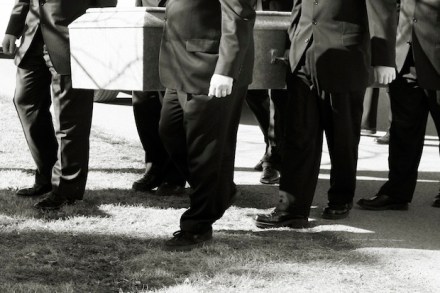
I am in a yurt, talking about death. Everyone is seated in a circle, and I am the next-to-last person to share. The last of the summer sun is shining through the entrance. At one end is a display coffin of biodegradable willow — there’s also tea and coffee, and coffin-shaped biscuits with skeleton-shaped icing. ‘I am a reporter,’ I say. ‘I’ve come to cover this event. But don’t worry, I won’t report what you share in this yurt. Also, I have cancer. I have been in treatment for one year, but now the treatment is over. I take one day at a time.’ There is silence, then hugs. I thought I would cry, but I don’t. Instead, I feel acceptance and a strange kernel of satisfaction.

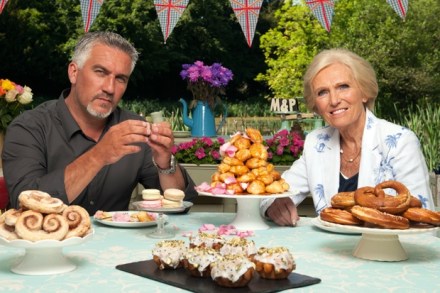
The sight of a rose-and-pistachio cake with lychee flavouring, strewn with petals, makes Clarissa Tan’s heart lift

From our UK edition

I’m not crazy about cookery shows. I suspect they indicate how little we are cooking, rather than how much. We’re fascinated with celebrity chefs because we think they’ve mastered something exotic and foreign to us — no surprise their shows are often slotted next to travel programmes. Looking at Jamie Oliver potter about his kitchen, we smugly feel we’ve given some time to cooking, though in reality we’ve done no such thing. On the whole, I think you are better off making yourself some buttered toast than spending an hour watching Anthony Bourdain experiment with spring rolls in Hanoi. The Great British Bake Off (BBC2, Tuesdays) is different.

Faulty towers

From our UK edition

Ever since the Arab Spring sprang its bright new dawn, the old regimes of the Middle East — along with their economies — have fallen like dominoes. But one authoritarian regime, at least, stands taller than ever: Saudi Arabia. Its shimmery skyline, its modern minarets, all testify to the infallibility of petroleum-rich power. Yet there’s one enormous sign that Saudi may be headed for the skids. This year, the Saudis started construction of the Kingdom Tower, a 200-floor skyscraper which is due to be completed in 2017. This citadel has the backing of Prince Alwaleed bin Talal, and will be built by the Bin Laden family (the late Osama was a relation, though they disavowed him years ago). The building will have 59 lifts, luxury apartments, offices and a Four Seasons hotel.

The Spectator’s Shiva Naipaul prize for outstanding travel writing is open for entries

From our UK edition

The Spectator, as it does every year, is offering you good money to write about your travels. What’s more, our £2,000 Shiva Naipaul Memorial Prize — named after the late Trinidad-born writer and brother of VS Naipaul — is not awarded for travel writing in the conventional sense. You need not have gone anywhere highly exotic or far away: the prize is for 'the most acute and profound observation of a culture alien to the writer.' You can write from outer space or from your back garden, what we’re looking for is writing that is fresh, current, different, intelligent, incisive, witty, sad or funny — or all of those things. Besides the cash prize, the winner will also get his or her entry published in The Spectator.

Big School left me po-faced

From our UK edition

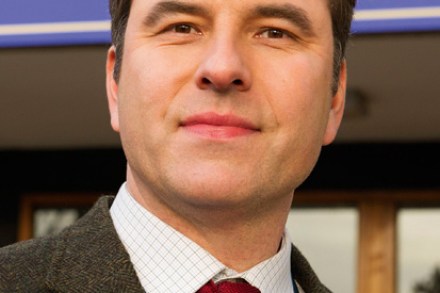
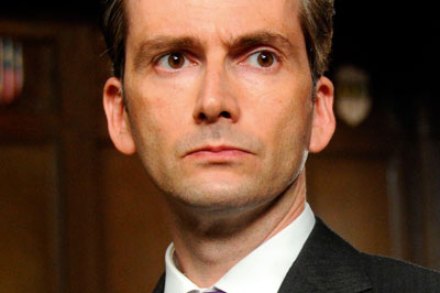
How did our comedies become so sad? BBC1’s new sitcom Big School (Fridays) opened with a scene that would probably tickle the ribs of many, but I, in my usual humourless way, found it depressing. Chemistry teacher Mr Church, played by David Walliams, hoped to excite his morbidly uninterested pupils about the effects of dunking a bottle of cold liquid nitrogen in warm water by using hundreds of table-tennis balls to dramatise the resultant explosion. But the bell rang, and his students filed out of class radiating boredom and contempt, leaving Mr Church gazing forlornly at a thousand ping-ponging shells.

If you’re on your summer holiday, why are you reading this?

From our UK edition

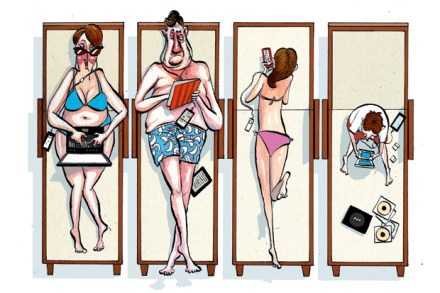
I’m in two minds about blogging this post. On the one hand, I’d really rather be on a sunny beach somewhere, reading a good old-fashioned book or staring at the blue horizon. On the other hand, I really, really want to publicise my Spectator cover story about summer and our addiction to technology (it’s fab!). Then I want monitor any comments it gets on this website, and post it on my Facebook and Twitter feeds. Each Like and retweet would give me a shot of satisfaction — ping! That’s where we’re all at, aren’t we? We now lead double lives, one in the real world and the other on the internet. While we go on holiday our other, internet self still occupies its usual place on the Web.

You’re never really on holiday with a smartphone

From our UK edition

I was sitting on some rocks by the Cornish coast when a teenager swanned by on the sun-warmed boardwalk in front of me. The boy stood on the burning deck, preparing to dash across the sand, dive. Then his phone rang. ‘Luce! Yes, I’m at the sea... Was just going to plunge... Ran back to my mobile... Ha ha!... No, didn’t forget, will share that file on Google Docs... How’s France?... Awesome... Ha ha!’ Rage washed over me. I was angry because the boy had broken the sound of the waves with his silly ringtone and sillier chatter. I was angry because he had spoiled my own picturesque vision of him by doing something as banal as taking a call. But most of all, I was angry because he had distracted me while I was trying to take a scenic photo on my smartphone.

Clarissa Tan experiences the greatest show on earth, and laughs

From our UK edition

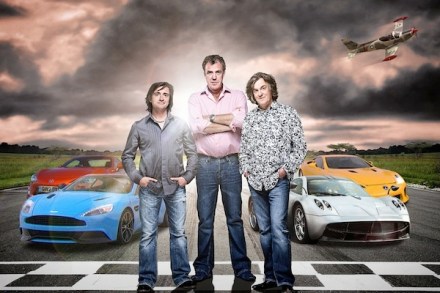
I watched Top Gear (BBC2, Sunday) for the first time in my life last week (the rock under which I’ve been living is pretty large, practically a boulder). I thought I’d better plug this knowledge gap before it got too embarrassing, seeing that Top Gear is the greatest show on earth, the travelling Big Top de nos jours, a daredevil combo of acrobatic stunts, mechanical wizardry and freakery. Fakery too, apparently, as it’s emerged that in a recent episode scenes that looked spontaneous were actually staged. These involved flashes of watery chaos, upturned tables and angry diners shaking their fists as an amphibious vehicle hastily built and even more hastily driven by Jeremy Clarkson & co. blasted past a bucolic restaurant by the River Avon, spraying all and sundry.

If you’re craving some Kiwi bush angst, Top of the Lake fits the bill

From our UK edition

I sincerely hope you’re not watching television. With the glorious summer sun we’re having, you should be having picnics and swims, not sitting in front of a screen. So this is my recommended viewing for the week: nothing. Get out. Still, if you must look for something, why not look for shows about looking? There are quite a few of them about. In the new sitcom Family Tree (Tuesdays, BBC2), Eeyore-faced Chris O’Dowd plays Tom Chadwick, a recently cuckolded, jobless single who’s inherited an old photo of someone he believes to be his great-grandfather. Tom embarks on a search to know more about his ancestors, discovering ever more exotic and esoteric branches of his genealogy.

TV review: Get out of my way, Tessa Jowell. Women are not all touchy-feely

From our UK edition

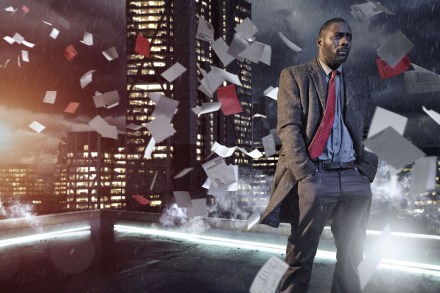
Luther is back, in Luther, and so is Donny Osmond, of Donny & Marie fame. Could there be two more differing cultural symbols of manhood? My feeling is no. Luther (Tuesdays, BBC1) fills our screens with sick foreboding. We are as victims pinned to the sofa, eyeballing the characters’ every action with terror as they move about menacingly in our living-rooms. It’s a cop show where the cops are not so much bent as twisted, their souls writhing to unarticulated inner torments, chief among them that of its anti-hero DCI John Luther (Idris Elba).

Television review: Channel 4’s mating season

From our UK edition

Channel 4 is deep into its summer of love. It’s having a Mating Season and — unusually for the network — it’s not all about sex. Instead, it’s about those fluttery butterflies that occur before the birds and the bees come in, when two people meet for the first time and get to know each other. Not mating then, but dating, which is scarier. When you watch Dates, it seems scarier still. The drama series is about ‘the social minefield’ of modern dating, and what a minefield it is. Ex-escorts, closet gay bankers, Cantonese lesbians — there’s the lot. The first episode, about two very different people on a blind date, was quite intriguing. But I got sidetracked. The female character, Mia, looked disconcertingly like Samantha Cameron.

Sex! Soap! Starkey! The Tudor invasion of British television

From our UK edition

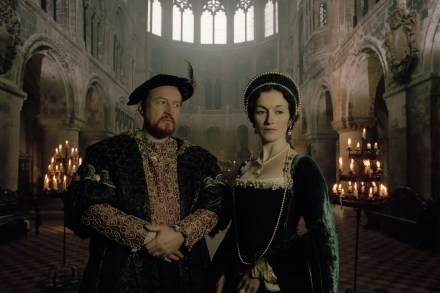
The Tudors have invaded television. Everywhere you look, it’s Henry VIII this, Henry VII that, Anne Boleyn this, Anne of Cleves that. On BBC2 is the continuing drama series The Tudors, whose Henry VIII looks like the lead singer in a boy band who’s stumbled on to the wrong film set. At any moment, you expect him to announce the execution of Anne Boleyn with those jabbing-the-air hand gestures that boy-band members use to semaphore emotion. Lushly soap operatic, The Tudors depicts the royal court not so much as a place of high political intrigue but as a hearth for dynastic family troubles where improbably good-looking people have lots of sex.

With 190,000 finance jobs gone, isn’t it time for banker bashing to stop?

From our UK edition

It's not going to be a popular rallying cry, I admit. Somehow 'Save the Bankers' doesn't quite pull at the heartstrings in the same way as 'Save the Whales' or 'Save the Pandas'. Yet the news comes to us today that UK banks will have slashed nearly 190,000 jobs worldwide by the end of next year from their peak staffing levels. That's equal to the whole population of Geneva. The figure applies only to the Big Four banks of RBS, HSBC, Lloyds and Barclays, so the number for all City-based banks is probably larger.

‘Bankers’ was not a documentary. It was a BBC hit job

From our UK edition

I like bankers. They’re an honest lot. All of us like money, but only they are upfront about it. I once witnessed a conversation between three financiers that started with them comparing their cars, then their houses, then their helicopters. None of the shilly-shallying you find at a society cocktail party, where people slyly suss out your income on the basis of your profession, your postcode, your accent and the school you went to — these bankers went straight to unvarnished one-upmanship. Such frankness can be refreshing. I like bankers because, these days, somebody has to. The second episode of Bankers (Wednesday), the BBC2 three-part documentary that’s just ended, started off in such a mean-spirited way I actually felt sorry for financial traders.

What Gove should know about Singapore schools

From our UK edition

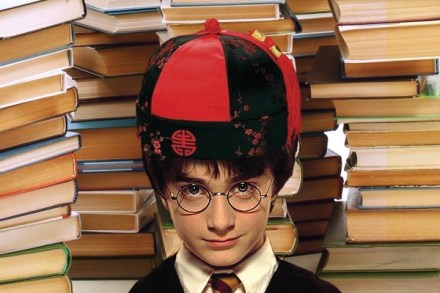
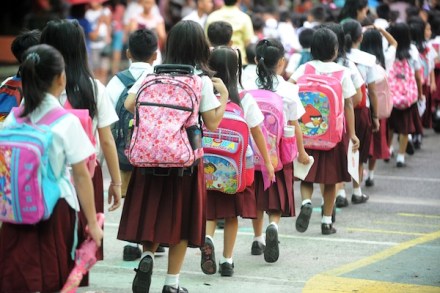
Excelliarmus! Why do East Asian children feel they can relate to Harry Potter? Because he wears glasses, like so many of them do. The fascination with British wizarding students extends to British schools, and it’s safe to say that many Asian youngsters, not to mention their parents, picture the ideal institution of learning as being very much like Hogwarts — an age-old establishment with neat timetables, clear rules, homework, team sports, and a dash of imagination and magicking on top. In other words, an old-school school.  I have been thinking quite a lot about Michael Gove (in a scholarly kind of way) ever since he declared that the British education system should emulate that of places such as Hong Kong and Singapore.

What Michael Gove should know about going to school in Singapore

From our UK edition

I like to tease my friend Wei about being a tiger mother. She once told me of an incident where her daughter Shu was making an artwork for a friend as a birthday present. Shu doodled for a few minutes, then showed her mother a sketch of a funny face. ‘I told her to knuckle down, spend more time, and come back with a far better drawing,’ said Wei. ‘It just wasn’t good enough.’ I said that was a bit harsh on her eight-year-old, especially since it was not schoolwork but part of Shu’s leisure time. Wei snorted. ‘It was a gift for her best mate, yet she hadn’t put any thought into it,’ she said. ‘She needs to know that you must make an effort for the things you really care about.

Will the internet save television?

From our UK edition

Forget The Apprentice. A ‘reality TV’ show where you have no say, and where you can only watch as Sir Alan Sugar does all the hiring and firing? That is so last decade. Forget, too, quaint programmes such as The X Factor, where you pick the contestants you like and the ones you don’t — a format that’s been kicking around since Eurovision. No, imagine if your power as a viewer extended way beyond deciding which participant stays and which goes: instead, you get to choose whether an entire TV series deserves to be born. ‘Out!’ you can say after watching a single episode of a wannabe series, and finding it wanting. ‘Cut! Next!’ Or, if you like a particular pilot episode, you could decree: ‘Fabulous.

François Hollande’s great haul of China

From our UK edition

François Hollande has just completed his visit to China. The two great socialist nations more or less embraced: 'I look forward to... working with you to make our relationship closer, healthier and more vibrant,' said Chinese president Xi Jinping. 'When China and France agree on a position, we can drive the world,' Hollande cooed back. Both countries agreed they wanted a 'multipolar world' rather than a 'superpower' one — meaning they're not comfortable with America's dominant position. While the French president's two-day tour of Beijing and Shanghai was probably hectic, it must have been positively Elysian compared to the troubles he's facing back home, where ministerial scandals abound and unemployment is at its highest ever.

Television: The United States of Television; The Politician’s Husband

From our UK edition

There are two American Dreams — the one that happens in real life and is experienced by people such as Barack Obama, and the one that happens on screens, both silver and small, shared by millions across the world. BBC2’s The United States of Television: America in Primetime (Saturday) traces the history of the latter, focusing on the TV series shown during those magical hours when Americans sit down to dinner after a hard day’s work chasing the former. Only the fittest, finest programmes survive in this slot, where Nielsen ratings mercilessly track the tastes of 300 million people as they chow down and chill out.