Clarissa Sebag-Montefiore

Making a home through food

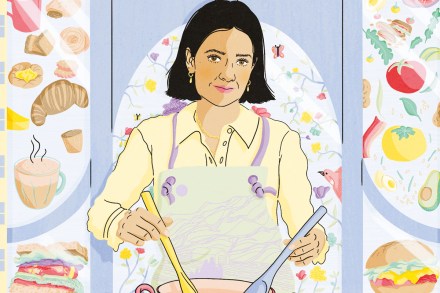
At the age of sixteen, chef and restaurateur Forough Vakili, now forty, left Iran to meet a brother she barely knew, eventually settling in America. She didn’t return for eleven years. As a member of the minority Baháʼí faith, which teaches the value of all people, regardless of gender or religion, Vakili had hit a wall in her homeland. “I came here so I could continue my education,” she says, when we speak over Zoom. “We didn’t have many rights back in Iran — there wasn’t a lot offered for us after finishing high school.” It was in Vienna, waiting for her American visa, that Vakili reconnected with her brother for the first time since she was a toddler. Six months later she moved in with him, his wife and three daughters in Atlanta.
Vakili

Meet Leonardo Bigazzi: the man behind the art in Inside

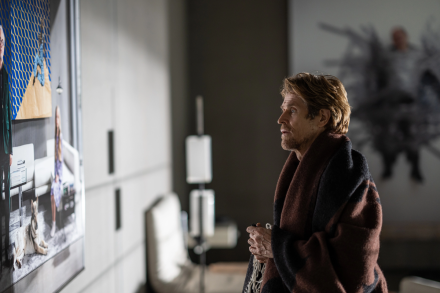
In the thriller Inside, an art thief named Nemo (Willem Dafoe) breaks into the New York penthouse of a renowned architect and collector. Once there he is all business, liaising with an unseen collaborator via walkie-talkie rather than stopping to admire the art.  It is no accident that the paintings he is there to steal, by the Austrian expressionist Egon Schiele, depict tortured souls, with emaciated frames and paper-thin skin. By the end of the movie Nemo will be a physical manifestation of Schiele’s works: a man living in wretched limbo, psychologically tortured and physically deplete.  Directed by Greek filmmaker Vasilis Katsoupis, Inside is a reworking of the one-man survival drama, at once euphoric and painful to watch.

inside leonardo bigazzi

An unapologetically Jewish Fiddler on the Roof returns to New York

Fiddler on the Roof is a study of Eastern European Jewry: it is based on Yiddish writer Sholem Aleichem’s short stories and is set in a Yiddish-speaking village in early twentieth-century Imperial Russia. Yet, in the hit musical, which premiered on Broadway in 1964, Sheldon Harnick’s lyrics only feature a handful of Yiddish words. Harnick later confessed that the creators downplayed the Jewishness of the story — something they thought might be too sticky; too specific — in order not to put off American audiences. As scriptwriter Joseph Stein said: “These were stories about characters who just happened to be Jewish.

The cast of Fiddler on the Roof (New World Stages)