Clarissa Sebag-Montefiore

Spring’s hottest theatrical openings on Broadway

Since closing its doors during the pandemic in 2020, Broadway has struggled. The Phantom of the Opera lowered the curtain in April last year after more than thirty-five years. Andrew Lloyd Webber’s new musical, Bad Cinderella, shut in June, less than three months after it opened, and other musicals, such as the tortuously-named Britney Spears-inspired Once Upon a One More Time, have fared little better. Meanwhile, productions are still scrambling to get butts on seats: audience numbers are down 17 percent from their pre-pandemic highs. And yet, for theater aficionados, there is hope.

theater
Ripert

Meeting Eric Ripert, chef of America’s best restaurant 

For Eric Ripert, cooking is like jazz. Ad-libbing, balance, motion. “One day the garlic is very pungent, one day it is not pungent. One day the onion is very juicy and sweet, one day it’s less, so you have to adapt all the time,” says the celebrated chef, who is the co-owner of Manhattan’s Le Bernardin, a close friend of the late Anthony Bourdain and a TV personality in his own right. “So, it’s very similar to music — I do not play the same notes all the time, I take a lot of freedom and liberties. Because I can.” Ripert is French but has — like his storied restaurant — become a New York institution. The chef lives on the Upper East Side with his glamorous, dark-haired wife Sandra (a real-estate broker who is Brooklyn born-and-raised, of Puerto Rican descent).

Beauty, terror and banality are uneasily juxtaposed in Harmony

If there is a central message in Harmony, it is that old cliché that evil flourishes when everyday people stand by and do nothing. That idea is returned to repeatedly, with increasing angst, as the central characters in the musical get swept up, and finally tossed aside, in Nazi Germany. Harmony revives the true story of the Comedian Harmonists, six men — three Jewish, three Gentile — who created an ensemble in 1927 during the waning days of the Weimar Republic. The group, who melded physical comedy with singing, sometimes using their vocal cords to mimic entire orchestras, became a surprise hit. They sold millions of records, appeared in movies, and performed worldwide.

Harmony

Here We Are is in many ways confused

“I have always conscientiously tried not to do the same thing twice,” American composer and song-writing legend Stephen Sondheim once told the New York Times Magazine. In his final ever musical, conceived over a decade ago and executed after his death aged ninety-one in 2023, Sondheim has once again, like a magician, conjured surprise. Here We Are is many things and it isn’t always successful. But this maverick musical is wildly original — not least in suspending the songs themselves almost entirely for the second act.

Tribeca’s fine dining l’abeille strives for comfort while pushing boundaries

When New York City restaurants closed their doors in March 2020, Rahul Saito and his husband Howard Chang took a radical step. They brought the dining-out experience home, hiring Mitsunobu Nagae, then the chef de cuisine at the Michelin-starred Shun, to prepare weekly dinners in their Manhattan apartment.   The food was unfussy, yet profound. “There was a gazpacho, very simple, a cherry gazpacho,” recalls Chang, thirty-two. “It felt like something you could make at home, but the taste and depth was something I’d never experienced. That’s when I was like: This guy really has something.”   Inspired, Chang and Saito, who both have backgrounds in finance, approached Nagae, thirty-six, to suggest they open a restaurant together.

abeille

Slow down, shop less and style more: lessons from Allison Bornstein

That Allison Bornstein’s family all operate in care is no surprise. True, Bornstein, thirty-five, a stylist and rising social media star based out of New York and Los Angeles, is the odd one out. Her father and brother are doctors, her grandfather is a psychoanalyst and her mother was once a therapist. But the services she offers are not so different from the shrink’s couch. Bornstein has created a dedicated following on TikTok and Instagram for her tips and scripted reels, in which she implores us all to craft self-love around our clothes. To slow down, shop less, and style more. And in the world of stylists and influencers, who make careers out of telling people to consume, consume, consume, Bornstein is quietly radical.

allison bornstein

Meet the telemarketer-turned-filmmaker behind HBO’s Telemarketers

In 2001, at the age of fourteen, Sam Lipman-Stern dropped out of high school in New Jersey and started working at the now defunct Civic Development Group (CDG) as a telemarketer. He stayed for seven years, calling up citizens to ask for money on behalf of police charities. It turned out to be a massive scam.  More than two decades later, Lipman-Stern, now thirty-six and a seasoned filmmaker, has exposed not only CDG — which underhandedly kept 90 percent of the proceeds it raised — but the entire industry in his frenetic, rip-roaring investigative HBO documentary Telemarketers.  Co-directed by Adam Bhala Lough and produced by the Safdie brothers, the three-part docuseries is a wild ride, largely due to Lipman-Stern’s archival footage.

Once Upon a One More Time is pat, prepackaged feminism

Britney Spears has always been mired in narrative, created by her managers, fans and the media as much as by herself. She has been, at different times, a virgin pop princess; a mega-stadium pop queen; a “cheating” girlfriend (on Justin Timberlake, no less — a falsehood drummed up by the tabloids); a girl gone off the rails; a mother; a “bad” mother suffering a mental health crisis. More recently, as interest in Spears has grown following her emergence from a thirteen-year legal conservatorship, the story is simpler: she was lost and now she is found. A victim and a hero. This summer another label got added to the list: feminist cultural icon with a legacy to protect.

spears

Plants meet Ebony G. Patterson’s sculptures at the New York Botanical Gardens

Nestled in the New York Botanical Gardens in the Bronx are a series of vultures, who lurk, grotesque and yet strangely beautiful, among the greenery.  The birds number in their hundreds, are larger than life and glint with glitter in the sun. They aren’t real, of course, but part of Jamaican artist Ebony G. Patterson’s expansive show, ...things come to thrive... in the shedding... in the molting... Works in the exhibition range from cast-glass leaves and body parts — including severed feet — peeking out from the plants to the imposing sculpture “… fester …”, a ten-foot wall covered with more than 1,500 red gloves on one side and tassels, beads and tapestry on the other.

Here Lies Love is too scared to be serious

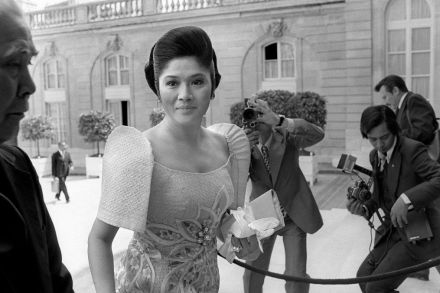
Imelda Marcos allegedly wants three words inscribed on her tombstone: Here Lies Love. It’s a poetic expression made grimly baleful by the reality of the Marcos regime: Imelda and her husband Ferdinand ruled the Philippines with an increasingly iron fist from 1965-86, committing countless human rights abuses as they robbed the country’s coffers. Yet the phrase has been borrowed by David Byrne and Fatboy Slim as the title of their musical about the Marcoses, Here Lies Love, now playing on Broadway (it premiered off-Broadway in 2013). Whether the phrase is used in earnest or irony is never quite clear in a show that apparently positions itself as a fun and fabulous karaoke dance party.

Here Lies Love

Camari Mick is making pastry, not solving crimes

"I was really fascinated with the process, the science behind everything,” recalls Camari Mick, the now twenty-nine-year-old star pastry chef, who studied anatomy in high school. “I love true crime: I was very into Snapped and crime junkie podcasts.” When she approached her parents, however, they asked her to reconsider. “My dad looked at my mom, looked at me, looked back at my mom and looked at me, and said: ‘Are you sure?’” At the time, Mick was running a mini-business from home, making baked goods to sell to friends, teachers and neighbors. “You’re doing really well, you clearly love being an entrepreneur, why don’t you go into this avenue?” her father asked her. His advice paid off.

mick
mammoth

Meet the men who want to bring back the woolly mammoth

A few minutes into celebrated Harvard geneticist Dr. George Church’s appearance on The Colbert Report, Stephen Colbert motioned towards him conspiratorially. “How do you think your work will eventually destroy all mankind?” asked the comedian, peering meaningfully over his glasses and tapping the table. “It’s a couple of options. Do you think it’s going to be like a killer virus? Or more like a giant, mutant, killer-squid-man, who arises from the Pacific, between Easter Island and Chile, and feasts on our flesh?” Colbert’s probing was tongue-in-cheek, of course. But the joke worked because it touched on real concerns. Dr. Church, sixty-eight, has had a long and storied career, including helping to launch the Human Genome Project in 1984.

The Sign in Sidney Brunstein’s Window is never comfortable

The Sign in Sidney Brunstein’s Window — set in the blustering world of 1960s New York bohemia — deals with so many hot-button issues it is hard to keep up. Patriarchy, anti-Semitism, gay rights, slavery, sex work, suicide, drugs, adultery, racism. It’s all there.  But as I watched Anne Kauffman’s superb, and at times transcendent, Broadway revival, it dawned on me that one theme unites them all: corruption.  The play’s moment of truth hangs on the revelation that a local Manhattan politician who preaches progress is actually a crook. But on a smaller, equally devastating level, it is also about the corruption of marriage, of bodies, of values, of morals and of hope.

Georgia O’Keeffe wants you to take your time

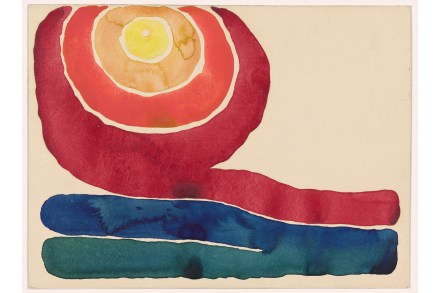
Georgia O’Keeffe is beloved for her oil paintings on canvas showing flowers and animal skulls: the first all soft, sensual openings; the second, spiky points and hardness.  Her works on paper are less well known. Yet, as MoMA’s exhibition, Georgia O’Keeffe: To See Takes Time, argues, paper played a key role in her early experimentation and art. As she told Alfred Stieglitz, the influential art gallerist and photographer who became her husband, “Why — it’s just like scrap paper. I throw it in the scrap heap and go on to something else.”  Paper is the beating heart of this retrospective, which shows 120 of O’Keeffe’s works from fifty-eight separate lenders, and which range from charcoal sketches to candy-colored pastels, rich watercolors to grainy graphite.

‘Evening Star No. III,’ 1917, by Georgia O’Keeffe (MoMa)

Aaron Sorkin’s new Camelot has nothing to say

The opening scene of Camelot is stark. White snow covers the floor, drifting past a gray sky; on stage, beneath curvaceous stone arches, stands a bench and a tree, shorn of leaves. It is a mood that is prescient of what is to come: an experience that is beautiful but empty.  Camelot first premiered in 1960, adapted from T. H White’s novel The Once and Future King. For this lavish revival, Aaron Sorkin has created a new book, departing from Alan Jay Lerner’s original, and teamed up with director Bartlett Sher. But, despite the retention of many of Frederick Loewe’s easy-to-the-ear songs, Camelot doesn’t know what it wants to be. Is it a frivolous comedy? A lovelorn tragedy? A study in good governance?

camelot

Pet portraitist Mimi Vang Olsen marches to the beat of her own drum

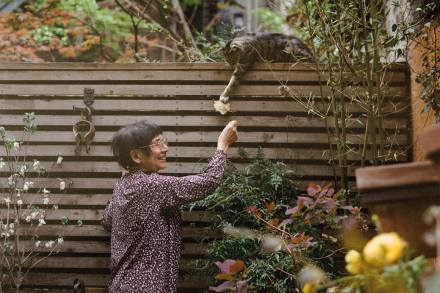
Mimi Vang Olsen operates in the West Village equivalent of a goldfish bowl. Every day, the eighty-five-year-old pet portraitist settles in a chair in her studio-cum-storefront on Hudson Street and gets to work, painting dogs, cats and the occasional guinea pig. Tourists stop to peer inside, cooing over a haphazard display of postcards and paintings. Locals tap on the glass to wave hello. During the pandemic, curiosity intensified: Vang Olsen’s shop became an Instagram sensation after she attached a blue mask onto a pug portrait hanging in the window for some much-needed levity. Vang Olsen, however, is nonchalant about the attention. She doesn’t have a cell phone or social media.

vang olsen

Are You There God? It’s Me, Margaret is dull and emotionally hollow

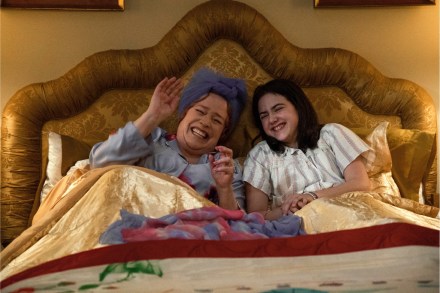
When I mentioned to friends that I was reviewing Are You There God? It’s Me, Margaret, the new film based on Judy Blume’s hit 1970 novel of the same name, I was hit by unabashed enthusiasm. This is a coming-of-age story about an eleven-year-old girl as she navigates school, puberty, religion and boys. My peers couldn’t wait to see it.  “‘We must, we must, we must increase our bust!’ was my mantra growing up,” gushed one new mom in her mid-thirties, referring to Margaret and her friend’s group chant as they try, unsuccessfully, to grow breasts.  I shouldn’t have been surprised. Are You There God?

are you there god?

Bryna Pomp is MAD about jewelry

Open Bryna Pomp’s wardrobe and you’ll find a uniform of near identical navy blue and black dresses. Yet squirreled away in dozens of boxes in her closet-cum-office are more than 500 pieces of contemporary jewelry: the bolder the better.  For the last thirteen years, Pomp has curated MAD About Jewelry, the Museum of Arts and Design’s popular annual pop-up that sees makers from across the globe travel to the Manhattan institution to show and sell their wares. In the process, she has built her own vast collection, ranging from brooches to earrings to necklaces.

Making a home through food

At the age of sixteen, chef and restaurateur Forough Vakili, now forty, left Iran to meet a brother she barely knew, eventually settling in America. She didn’t return for eleven years. As a member of the minority Baháʼí faith, which teaches the value of all people, regardless of gender or religion, Vakili had hit a wall in her homeland. “I came here so I could continue my education,” she says, when we speak over Zoom. “We didn’t have many rights back in Iran — there wasn’t a lot offered for us after finishing high school.” It was in Vienna, waiting for her American visa, that Vakili reconnected with her brother for the first time since she was a toddler. Six months later she moved in with him, his wife and three daughters in Atlanta.

Vakili

Meet Leonardo Bigazzi: the man behind the art in Inside

In the thriller Inside, an art thief named Nemo (Willem Dafoe) breaks into the New York penthouse of a renowned architect and collector. Once there he is all business, liaising with an unseen collaborator via walkie-talkie rather than stopping to admire the art.  It is no accident that the paintings he is there to steal, by the Austrian expressionist Egon Schiele, depict tortured souls, with emaciated frames and paper-thin skin. By the end of the movie Nemo will be a physical manifestation of Schiele’s works: a man living in wretched limbo, psychologically tortured and physically deplete.  Directed by Greek filmmaker Vasilis Katsoupis, Inside is a reworking of the one-man survival drama, at once euphoric and painful to watch.

inside leonardo bigazzi