Christopher Bray

Been there, done that

Lucky bastard. Such are the words that come constantly to mind while you’re reading Clancy Sigal’s two volumes of posthumously published autobiography. Blacklisted as a (self-confessedly lousy) actor for refusing to name names in the McCarthy era, working as the agent for the likes of Peter Lorre, Rod Steiger and — sigh — Barbara Stanwyck in 1950s Hollywood and freelancing on Fleet Street in countercultural London (including reviewing films for The Spectator), Sigal was at the centre of every piece of action going. Should Black Sunset and The London Lover ever be gathered into a single volume (perhaps taking Sigal’s earlier memoir, Going Away, along for the ride), ‘Been there, done that’ would make a good catch-all title.

Wonder of Wenders

From our UK edition

What know they of movies who only movies know? Wim Wenders’s latest collection of essays arrives at a time when the best-known film critic in England is unashamed to claim that tendentious tosh The Exorcist as the best picture ever made. Even though the slightest piece in The Pixels of Paul Cézanne is its title essay, it is good to know that there is still at least one film buff around who is alive to the first six arts. As a young man in Dusseldorf, Wenders fancied himself a painter — so much so that, before the movies lured him away, he was planning to further his studies in Paris.

Art and aspiration

From our UK edition

When Adam Gopnik arrived in Manhattan in late 1980 he was an art history postgrad so poor that he and his wife-to-be were reduced to sharing a 9’ x 11’ basement with a bunch of cockroaches. But everything was going to be all right because Gopnik had his guitar with him and he ‘knew someone who’d once had dinner with the sister of a close friend of Art Garfunkel’s psychotherapist’. Having sent a tape of his songs over, he settled down to ‘write jokes for comedians. It seemed like a plan for life’. In a way it was. Though Gopnik has yet to hear back from Garfunkel, his oratorio about Alan Turing played recently at the Barbican.

Band of bickering brothers

From our UK edition

There aren’t many downsides to being a film critic, but one of them is being asked to name your favourite movie. You bluster and bluff, and then cop out by saying the answer changes from year to year and sometimes from day to day. Then you read David Thomson’s new book and realise that from now on you’re going to say that while you’ll probably never have a definitive favourite film, you do have a favourite film factory. Any movie that starts with kettledrums and a blare of brass, and a black and white escutcheon (in later years, gold and blue) emblazoned with the initials WB is likely to be a cut above: intelligent, liberal and seriously amusing.

A man with an agenda

From our UK edition

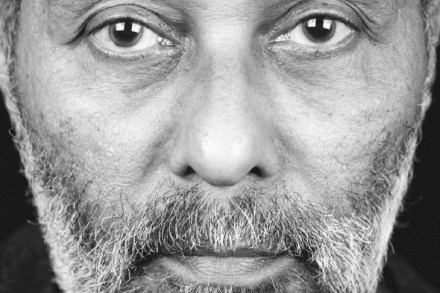
What’s this? An autobiography by Stuart Hall? Wasn’t he one of the guys who put the Eng. Lit. departments out to grass by arguing that it was senseless to talk about fictional characters as if they were real people when the truth was that real people were fictional constructs? Indeed he was; but don’t go thinking that just because Hall embarked, shortly before his death in 2014, on writing his life story, that he’d given up on the decentred subject. As he remarks early on in Familiar Stranger, despite our need to grasp our inner being, ‘we’ll never be ourselves’. It’s a nice line. It’s also a rare moment of clarity in a memoir that can be as cloudy and windy as a Turner sea study.

Boy wonder

From our UK edition

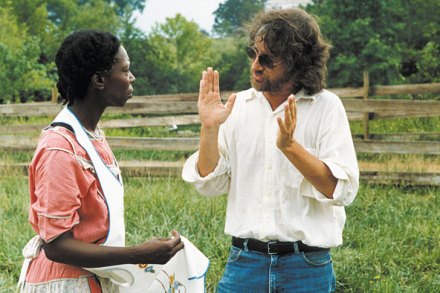
Back in 1978, a young and already successful Steven Spielberg told a bunch of would-be moviemakers at the American Film Institute not to ‘worry if critics like… Molly Haskell don’t like your movies’. Four decades on, and just in time to mark his 70th birthday, Haskell has written a biography of Spielberg for Yale’s series of Jewish Lives. Since the series is essentially celebratory, and since Haskell is one of the hanging judges of feminist film criticism, this is an interesting commission. But is it a wise one? Whatever you think of Spielberg’s work, its emphasis on motherhood and apple pie hardly makes it feminist fodder. Little wonder Haskell hesitated before agreeing to the project.

Hitchcock’s favourite bird

From our UK edition

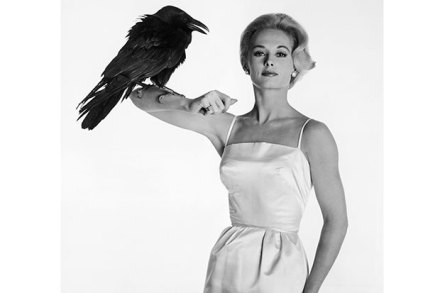
‘The Birds is coming’ screamed the posters for Tippi Hedren’s only famous film. Well, the cats is coming in her memoir. More than half the book is given over to Shambala Preserve, the lion and tiger sanctuary that Hedren set up in California in the 1980s. If you want to know how to stroke a big cat (‘strong and firm, under his chin or in his mane’), or what it means when they bare their teeth (‘it has nothing to do with anger; lions do their most effective sniffing from two holes in the roof of their mouths’), this is the book for you. But if you’re after the lowdown on what went on between Hedren and Alfred Hitchcock during the making of The Birds and Marnie, this memoir is rather less satisfying.

Frankly impenetrable

From our UK edition

One day in April 1969 Theodor Adorno began teaching a new course entitled ‘An Introduction to Dialectical Thinking’. Feel free, the sociologist-cum-philosopher told the packed hall at Frankfurt University, to ask questions as I go. Two of his charges did so immediately. When was Adorno going to apologise for having set the cops on those campus protesters three months earlier? Before Adorno could reply, another student scrawled ‘If Adorno is left in peace, capitalism will never cease’ on the blackboard. At which point the whole class shrieked ‘Down with the informer!’ Then a group of women surrounded Adorno, bared their breasts, and showered him with rose petals. Grabbing his hat and coat, the hapless prof ran.

She’s the top

From our UK edition

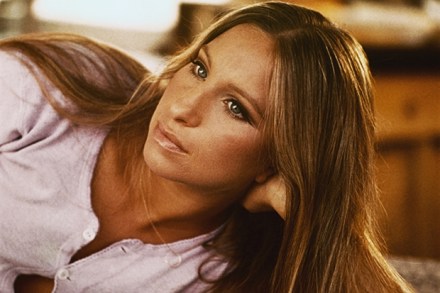
This book is the latest in Yale’s series of Jewish Lives — though in this case Jewish Loves might be nearer the mark. Neal Gabler adores Barbra Streisand. He purports to have written a critical biography, but pretty much the only bad thing he has to say about Streisand’s 50-odd-year career (and counting — who would bet against her returning to the White House to carol the Clintons come next January?) is that Peter Bogdanovich’s picture What’s Up, Doc? is ‘junk’. Actually it’s a work of genius, with Streisand at the top of her considerable comic game – though that’s a judgment you mightn’t want to trust any more than Gabler’s. Because when it comes to movies and records I love Barbra too.

Reclaiming Nietzsche

From our UK edition

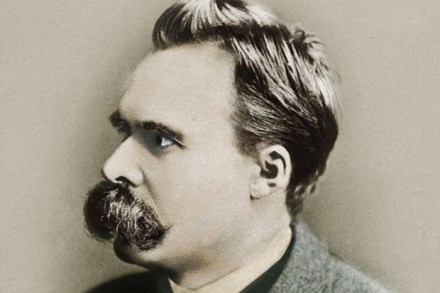
Had you been down at Naumburg barracks early in March 1867, you might have seen a figure take a running jump at a horse and thud down front first on the pommel with a yelp. This was Friedrich Nietzsche, midway through his 23rd year and, thanks to a sickly childhood, no stranger to hospitals. Nietzsche lost part of his sternum, leaving him not so much pigeon-chested as angle-grinded. Once recovered, he celebrated by having his picture taken in full uniform, sabre at the ready, glaring at the ‘miserable photographer’ like a warrior set for battle. Daniel Blue regards the photo as ‘unflattering’ — though it's nowhere near as unflattering as the picture Elisabeth Förster-Nietzsche painted of her brother after his death in 1900.

In the wrong club

From our UK edition

Groucho Marx was delighted when he heard that the script for one of his old Vaudeville routines was being reprinted in H.L. Mencken’s The American Language. ‘Nothing I ever did as an actor thrilled me more,’ he said. Indeed, argues Lee Siegel in his brief biographical study of the most verbal Marx Brother, Groucho’s ‘greatest regret in life … was that he had become an entertainer rather than a literary man’. How else to explain that excruciating evening in June 1964 when Groucho and his wife dined at the home of Mr and Mrs T. S. Eliot and Groucho thought to lecture Eliot on King Lear? To be fair, it was Eliot who, three years earlier, had written to the then 71-year-old Groucho requesting a photograph of his favourite funnyman.

Homage to awesome Welles on his centenary

From our UK edition

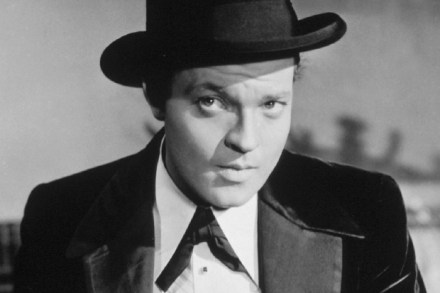
One day in May 1948 in the Frascati hills southeast of Rome, Orson Welles took his new secretary, Rita Ribolla, to lunch. After eating enough food for ‘a dozen hungry people’ and sinking ‘one glass of wine after another’, all the while enchanting his guest with gossip and conjuring tricks, Welles downed his coffee and said it was time to go. Ribolla smiled and waited for him to get the bill. And waited. Eventually she asked for it herself. When it arrived Welles passed it over, saying, ‘Leave a large tip for these nice waiters.’ ‘But Mr Welles, I can’t afford meals like this.’ Welles turned sulphurous: ‘How dare you go out with me with not enough money?’, he said as he stormed out.

Frank’s world

From our UK edition

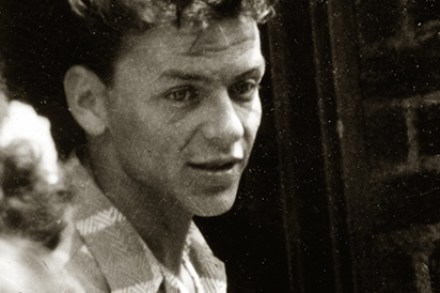
‘He never went away. All those other things that we thought were here to stay, they did go away. But he never did.’ Who was Bob Dylan talking about earlier this year? Woody Guthrie? Elvis Presley? Or maybe, halfway through the sixth decade of his own career, himself? But no. The man in question was Frank Sinatra — the inspiration behind Dylan’s latest album, Shadows in the Night. That record is a collection of covers —from the great American songbook — ‘Autumn Leaves’, ‘The Night We Called it a Day’, ‘What’ll I Do’. We call such songs standards, as if they have been set, if not in stone, then at least on the stave, forever. But that isn’t so.

What did Steve Davis do to succeed at snooker? Everything his dad told him

From our UK edition

Among the more intriguing insights into an election that seems to be taking longer than a Cliff Thorburn 50 break is the fact that Ed Miliband is a snooker fan. Which doesn’t mean he was a Steve Davis fan. Davis was ‘boring’, Miliband told the Guardian recently. The sentiment was widely shared during Davis’s 1980s heyday. Indeed, the writers of Spitting Image found him so dull they nicknamed him ‘Interesting’. Hence the hostage-to-fortune title of what is by my count Davis’s third volume of autobiography. Will the leader of the opposition find anything in the book’s turgidly ghostwritten pages to modify his opinion? One fears not. Yet if Interesting isn’t exactly unputdownable, nor is it unpickupable.

Fighting fear with fear

From our UK edition

‘Do it with scissors’ was Alfred Hitchcock’s advice for prospective murderers, though a glance at these two biographies reminds us that scissors are also the chosen implement of the silhouettist. Hitchcock’s profile —beaky nose, protuberant lips, conjoined chin and neck — is emblazoned on both dustjackets like a logo. A logo is what it was. You don’t get to be the most famous movie director in the world merely by directing movies. Hence the wordless walk-ons Hitchcock made in almost every one of his 53 pictures. Hence the city gent uniform (blue suit, white shirt, black tie) worn throughout even the most stifling Californian summers. Hence, one sometimes suspects, the pendulous jowls and gargantuan gut — trademarks made flesh.

Jean-Paul Sartre was perhaps the 20th century’s most famous thinker – if you can get beyond the verbiage

From our UK edition

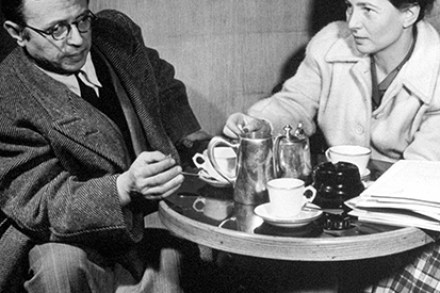
Thomas R. Flynn has written an avowedly ‘intellectual biography’ of Jean-Paul Sartre, which might seem fitting. Sartre was nothing if not an intellectual — so much so that one struggles to think of him as anything but an intellectual. Albert Camus, Sartre’s great rival for the title of the 20th century’s most famous thinker, was a strong swimmer and a stronger soccer player. A little adolescent boxing aside, Sartre did little but sit at zinc tables necking coffee and Corydrane (the amphetamine-based painkiller he was addicted to).

Composer, conductor, author, pianist, lecturer — was there anything Leonard Bernstein couldn’t do?

From our UK edition

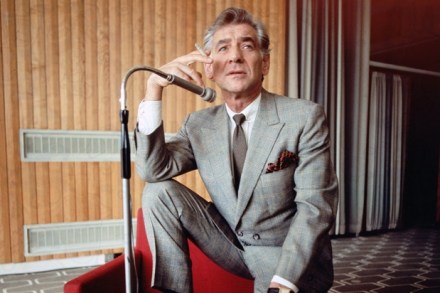
On 17 May 1969 Leonard Bernstein ended his 12-year run as musical director of the New York Philharmonic with a performance of Mahler’s Third. The next night he went to see Jimi Hendrix play Madison Square Gardens. And there you have him. Was Bernstein a fragile romantic or a firebrand rocker? Was he the spiritual visionary who gave us Chichester Psalms or the tin-pan-alley tunesmith behind West Side Story? Bernstein went to his grave claiming it was possible to be all these things and more — insisting that you could be a political activist and a concert pianist, a conductor of the challengingly atonal and a writer of the melodically unforgettable. Not everyone was convinced.