Chas Newkey-Burden

Chas Newkey-Burden is co-author, with Julie Burchill, of Not In My Name: A Compendium of Modern Hypocrisy. He also wrote Running: Cheaper Than Therapy and is the host of Jesus Christ They’ve Done It – the Threads podcast

Why do Zoomers ape old age?

When I was in my teens and twenties, older people told me that they were exhausted just watching how I lived my life. I careered through my youth in a fog of football matches, protest marches, pubs, clubs and raves. I treated sleep as an inconvenience and I’d increasingly arrive home at daylight, not quite sure how the evening ended or where that bruise came from.  ‘Wait until you’re our age,’ oldies would say. ‘You’ll slow down too. Then it’ll be your turn to look at the young with bewilderment.’  Well, I did the slowing down part. After we were all locked down in 2020, I never fully unlocked again.

Football is a sport for right-wingers

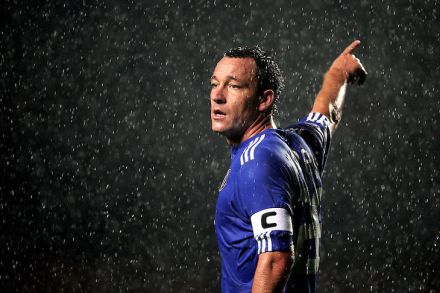
There were howls of disbelief when the former captain of Chelsea FC, John Terry, replied “100% yes” to a social media post by Rupert Lowe calling for “foreigners” to be barred from claiming benefits and for the deportation of migrants who can’t support themselves. How could a footballer – in 2026 for goodness sake! – lean to the right on politics? Haven’t we all quietly agreed that footballers are supposed to be cuddly liberals now? Terry is not alone in occupying football’s political right flank Ever since the England men’s team of the 2020 Euros was presented as a progressive collective with shin pads, there’s been a tendency to imagine the whole sport drifting gently leftwards.

Even vegans can’t stomach vegan cheese

I’m one of those gobby vegans who will happily tell anyone why they should stop consuming animal products. But I can still admit what’s obviously true: most vegan cheese isn’t particularly good. I was once ardently devoted to cheese. In my vegetarian years, paneer, mozzarella and halloumi were less foods than companions. I loved how paneer would soak up the spice of a curry like a sponge. Mozzarella was like a spectacle of tensile, elastic theatre and halloumi provided evocative, salty squeaks. I also took delight in the standard toasted cheddar sandwich. Yes, I did get quite fat. But when I learned about what goes on at dairy farms, everything changed.

Why are cows a TikTok sensation?

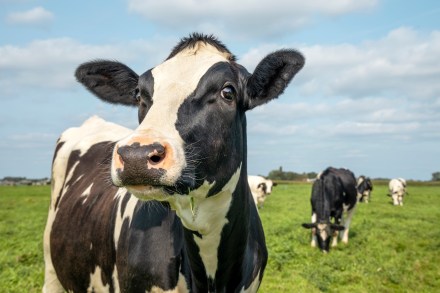
A farmer in Derbyshire is going to make his cows uglier to try to deter  modern agricultural impostors. These impostors are neither foxes nor badgers but social media influencers who keep showing up to film content with his animals.   They arrive in waves. On one occasion, dozens surrounded Alex Birch’s herd at the edge of a field. Another time, a yoga teacher unfurled her mat and filmed a class beside the cows, as though they were props in a bucolic stage set. Wearied by the intrusion, Birch now speaks of crossbreeding his Highland cows to make them ‘less photogenic’.

What has become of our table manners?

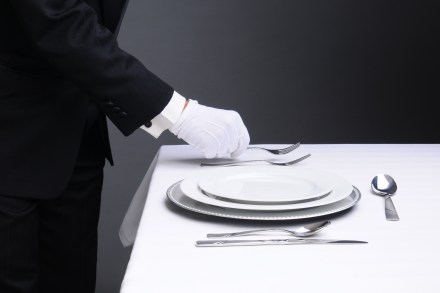
When I was a child, I always wanted to watch television during supper, but my dad wasn’t keen. He preferred family conversation and as we chatted over a meal he would try to gently steer us towards more pleasant subjects rather than the vulgar or provocative topics I tended to propose. ‘A meal is a sacred thing,’ he’d tell me.  I spent my secondary education at a bizarre school run by a quasi-Vedic cult, where table manners were also important. Before lunch, we chanted a Sanskrit mantra. The organic vegetarian food was to be offered, not grabbed. We sat upright, our backs as straight as any Himalayan yogi. We were told not to eat more than we needed. Naturally, I sneered at much of this as angrily as any teenage Clash fan would.

Why exercise music stops you from throwing in the towel

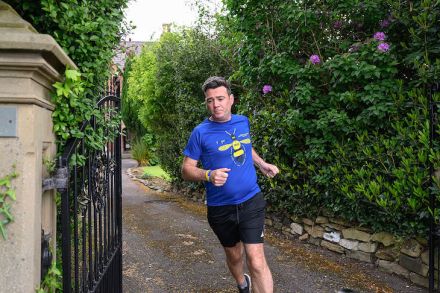
Over the past few months, I’ve been training for the London Marathon, so most weekends I’ve been out running more than 20 miles at a stretch. I carry the usual bits to make these long slogs vaguely civilised – energy gels, a water bottle, a couple of fruit pastilles. They help, of course. But there’s one thing I absolutely cannot do without: music.  Non-runners sometimes ask if I ever feel like giving up and trudging home. And honestly, the only times that’s happened is when my AirPods have died and the music – my invisible pacer, my emotional support DJ – has suddenly vanished mid-run.  This makes sense, according to Victoria Williamson, a researcher and lecturer in music psychology and the author of You Are the Music.

Lisa Haseldine, Matthew Parris, Damian Thompson, Peter Pomerantsev, Chas Newkey-Burden & Catriona Olding 

41 min listen

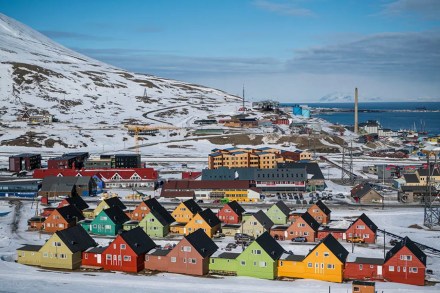
On this week’s Spectator Out Loud: Lisa Haseldine reports from Svalbard; Matthew Parris reflects on the Iran crisis during Holy Week; Damian Thompson assesses how Pope Leo XIV is quietly reshaping the Vatican; Peter Pomerantsev reviews Jack Watling’s Statecraft; Chas Newkey-Burden provides his notes on marathons; and finally, from Provence, Catriona Olding reflects on comfort and companionship. Produced and presented by Patrick Gibbons.

Who would ever run a marathon?

Like many good ideas, the London marathon was conceived over a drink in a pub. Inspired by their experience running the New York marathon in 1979, two British athletes met in the Dysart Arms, next to Richmond Park, to discuss staging a similar race in London. It became an iconic event and, such has been its success, organisers are now in talks to hold the London marathon over two days instead of one. The first Olympic marathon was held in 1896 in Athens. Of the 17 starters, only nine completed the gruelling course. The original distance was 25 miles but, for the 1908 London Olympics, the course was extended to 26.2 miles after the Queen asked for the route to start at Windsor Castle and end in front of the royal box at the Olympic stadium. From 1924, 26.2 miles became the standard.

There’s nothing wrong with Farage’s Ipswich Town football stunt

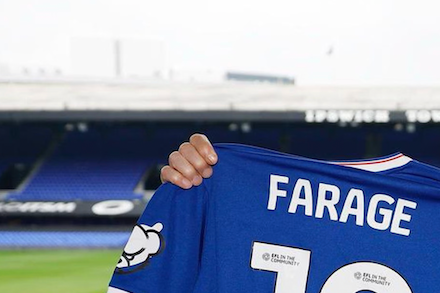
Nigel Farage’s social media posts from his visit to Ipswich Town’s football ground have caused exactly the sort of meltdown you’d expect. The Reform UK leader filmed himself inside the home dressing room at Portman Road, held up a replica shirt with the number 10 and his name on the back and quipped that he was in the mix for the manager’s job at the Championship club. Cue howls of outrage online. Ipswich Town supporters have been particularly livid, describing the episode as 'shameful', 'embarrassing' and 'PR suicide for a family club'. Some have threatened to boycott the club shop or cancel their season tickets. The club felt obliged to issue a statement insisting it is 'apolitical'. https://twitter.com/Nigel_Farage/status/2036418238956077147?

Hell is a treadmill

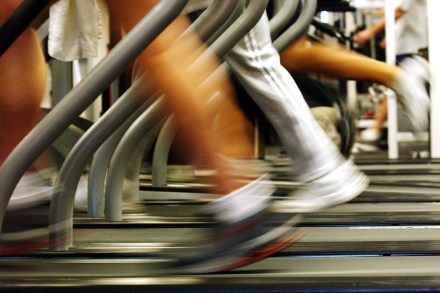
Life is riddled with things that impersonate something in a hideously disappointing way: the regret of Pepsi, the affront of the rail replacement bus and, for runners, the tedium of the treadmill.  They are one of the most tiresome inventions to scar this planet, offering a mind-numbing bastardisation of one of life’s joys. I’m a long-distance runner and I can run blissfully in the open air for hours on end but, on a treadmill, I want to give up after less than a minute. Running in the great outdoors is a blessed experience. The air is fresh and cooling, the scenery keeps changing and nature is all around you. The birds are singing and the time passes in that dreamy, accidental way – like when you’re deep in a brilliant conversation. It’s glorious.

Crufts holds the key to the British psyche

France is holding local elections and the candidates are falling over themselves to appeal to a peculiar demographic: dog lovers. A candidate in the south-west city of Albi is promising shared human-dog drinking fountains, with the upper level for the owner and the bottom level for the pet. Her opponent has bitten back with a plan for a pet cemetery. Other hopefuls are proposing dog-friendly parks, food banks for needy mutts and dog-friendlier policies on public transport.   Dog ownership is up in France, particularly among the country’s ageing electorate, so canines have become an indirect electoral force. I can’t help thinking that British politicians may be missing a trick.

The joy of a launderette

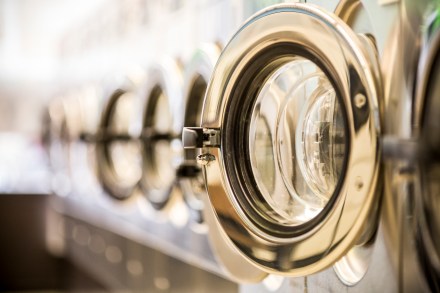
A broken-down washing machine is generally regarded as definitely a Bad Thing. There is the expense and hassle of repairing or replacing the machine, the prospect of a flooded kitchen, and the sudden realisation that your underwear stock is … less abundant than you hoped.   But when our washing machine expired recently, I was secretly thrilled because it gave me an excuse to go to one of the few places on the planet that always makes me happy: the launderette.  I feel soothed from the moment I walk into one of these womb-like environments. I love the warmth, the smell of detergent and the air of cleanliness.

It’s time to end the war on pigeons

Norwich has known some beef in its time: from the Kett’s Rebellion against land enclosures in 1549, to the Great Blow during the English Civil War. Now there’s something new dividing the East Anglian city: pigeons. The ‘pooping menaces’ are pushing the council to ‘adopt extreme measures’, says the Guardian, The Times compared local scenes to those in Alfred Hitchcock’s The Birds, while the Daily Telegraph’s intrepid David Wilkes has donned his tin hat to report from the ‘front line of Norwich’s pigeon feeding war’. A society that reserves its compassion for the exotic or photogenic reveals its shallowness.

A pet’s death is as painful as losing a family member

When a pet dies, grief doesn’t arrive alone. It brings with it an awkward entourage: embarrassment, self-consciousness, the creeping suspicion that our sorrow might look disproportionate or self indulgent. So we lower our voices when we speak of our loss. We apologise for being 'silly'. We add the expected caveat: I know it’s not the same as losing a person. But the truth resists such polite disclaimers: when a pet dies, the pain can be at least as sharp as that of any human bereavement. In a new study of 975 British adults, among those who had lost both a pet and a person close to them, more than one in five said the death of their pet was the most distressing loss they had ever experienced.

The National Trust should appreciate its eccentric volunteers

The National Trust has blacklisted a 71-year-old volunteer after he pointed out thousands of spelling mistakes and factual errors on the charity’s website, and then expressed irritation when his painstaking efforts were brushed aside. Sensible charity managers overlook minor human imperfections, concentrating instead on volunteers’ generosity Andy Jones had volunteered for the Trust for more than a decade, turning his hand to everything from gardening to membership queries and guiding visitors on walks. Acting entirely on his own initiative, he devoted more than 400 hours to compiling a detailed dossier of errors on the organisation’s website.

Giving up caffeine is a fool’s errand

Everyone is giving up something these days. Even before this week’s flood of new year’s resolutions, we’re in the age of subtraction as people shed vices like old skins. Cigarettes, alcohol – those villains have been booed off the stage by the newly health-conscious, whose accusing stare is now turning to a fresh culprit: caffeine. Like most sanitising trends, the anti-caffeine narrative is biggest across the pond. ‘Decaf desirability’ is ‘peaking’, the New York Times told us last month, as turmeric lattes, mushroom elixirs and chicory brews threaten to knock coffee off its perch.

Don’t assume Donald Trump wants nuclear Armageddon

Donald Trump is plotting to turn Britain into a ‘nuclear launchpad’, according to a startling report in the Daily Mail. Leaked Pentagon documents suggest a $264 million upgrade of RAF Lakenheath in Suffolk will end with US nuclear weapons on British soil for the first time since they were removed under Barack Obama in 2008. The bombs would be aimed at ‘facing down Putin’, the paper claims. The revelation comes just weeks after Trump ordered the US military to resume nuclear testing for the first time in more than 30 years, fuelling fears of a dangerous new global arms race. From the moment he first rolled into the White House in 2017, the discourse surrounding Trump and the nuclear arsenal has oscillated between dark comedy and barely suppressed dread.

Christmas dinner is hell for vegans

It’s one of the last bastions of national orthodoxy, one that people look forward to for months, but many vegans dread Christmas dinner. It’s not the food that’s the problem – it’s the conversation. Veganism is now as mainstream as oat milk lattes, so for 364 days of the year it barely raises an eyebrow, but come 25 December it’s often seen as a personal affront to centuries of tradition. Politely declining the turkey is treated as a personal assault upon centuries of gravy-soaked heritage.  As the seasonal sitting wears on, even mild-mannered relatives can metamorphose into belligerent barristers for Big Meat. 'But would you eat a pig if you were stranded on a desert island?' wonders an auntie, as though the Yuletide table were the Old Bailey.

A ban on animal testing is long overdue

I was 12 years of age and mooching along Putney high street when someone thrust into my hand a leaflet that changed my life. It bore a photograph of a cat with its head covered in electrodes, and the slogan: Curiosity Will Kill This Cat. I had a beloved cat of my own called Chippy. The sight of the leaflet’s tortured feline froze me to the spot. Last year alone there were 2.64 million animal tests in Britain This was the mid-1980s, when animal testing was the main animal rights issue. You didn’t hear much about veganism, instead it was a different ‘v’ word – vivisection – that was the focus of the conversation. I began handing out leaflets myself, imagining that others would be as moved as I had been.

Halloween is being spoilt

It may be a pagan festival but thank God for Halloween and all its joys: the child’s delight at being dressed up and out after dark, our thrill at pretending to be frightened, the faint sense that for one night, the ordinary world has slipped its moorings. On Halloween, the country briefly remembers how to laugh at fear, instead of scrolling through it. This crown jewel of autumn strikes me as one of those events that manages to be both utterly absurd and, in its way, rather necessary. Like the Eurovision song contest, or marriage. Everyone from kids in Poundland skeleton suits to adults with too much eyeliner join this grand communal theatre of the macabre. It’s democracy with fake blood and carnivalesque chaos powered by Haribo.