Chas Newkey-Burden

Chas Newkey-Burden is co-author, with Julie Burchill, of Not In My Name: A Compendium of Modern Hypocrisy. He also wrote Running: Cheaper Than Therapy and is the host of Jesus Christ They’ve Done It – the Threads podcast

Hell is a treadmill

From our UK edition

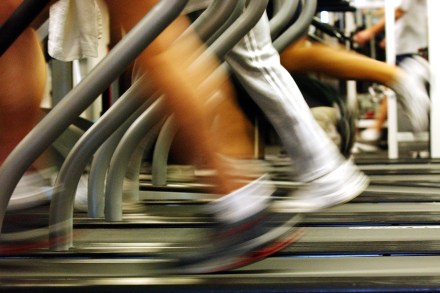
Life is riddled with things that impersonate something in a hideously disappointing way: the regret of Pepsi, the affront of the rail replacement bus and, for runners, the tedium of the treadmill.  They are one of the most tiresome inventions to scar this planet, offering a mind-numbing bastardisation of one of life’s joys. I’m a long-distance runner and I can run blissfully in the open air for hours on end but, on a treadmill, I want to give up after less than a minute. Running in the great outdoors is a blessed experience. The air is fresh and cooling, the scenery keeps changing and nature is all around you. The birds are singing and the time passes in that dreamy, accidental way – like when you’re deep in a brilliant conversation. It’s glorious.
Crufts holds the key to the British psyche

From our UK edition

France is holding local elections and the candidates are falling over themselves to appeal to a peculiar demographic: dog lovers. A candidate in the south-west city of Albi is promising shared human-dog drinking fountains, with the upper level for the owner and the bottom level for the pet. Her opponent has bitten back with a plan for a pet cemetery. Other hopefuls are proposing dog-friendly parks, food banks for needy mutts and dog-friendlier policies on public transport.   Dog ownership is up in France, particularly among the country’s ageing electorate, so canines have become an indirect electoral force. I can’t help thinking that British politicians may be missing a trick.

The joy of a launderette

From our UK edition

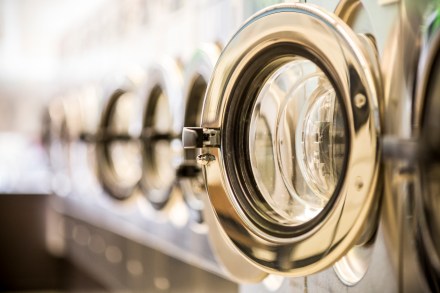
A broken-down washing machine is generally regarded as definitely a Bad Thing. There is the expense and hassle of repairing or replacing the machine, the prospect of a flooded kitchen, and the sudden realisation that your underwear stock is … less abundant than you hoped.   But when our washing machine expired recently, I was secretly thrilled because it gave me an excuse to go to one of the few places on the planet that always makes me happy: the launderette.  I feel soothed from the moment I walk into one of these womb-like environments. I love the warmth, the smell of detergent and the air of cleanliness.

It’s time to end the war on pigeons

From our UK edition

Norwich has known some beef in its time: from the Kett’s Rebellion against land enclosures in 1549, to the Great Blow during the English Civil War. Now there’s something new dividing the East Anglian city: pigeons. The ‘pooping menaces’ are pushing the council to ‘adopt extreme measures’, says the Guardian, The Times compared local scenes to those in Alfred Hitchcock’s The Birds, while the Daily Telegraph’s intrepid David Wilkes has donned his tin hat to report from the ‘front line of Norwich’s pigeon feeding war’. A society that reserves its compassion for the exotic or photogenic reveals its shallowness.

A pet’s death is as painful as losing a family member

From our UK edition

When a pet dies, grief doesn’t arrive alone. It brings with it an awkward entourage: embarrassment, self-consciousness, the creeping suspicion that our sorrow might look disproportionate or self indulgent. So we lower our voices when we speak of our loss. We apologise for being 'silly'. We add the expected caveat: I know it’s not the same as losing a person. But the truth resists such polite disclaimers: when a pet dies, the pain can be at least as sharp as that of any human bereavement. In a new study of 975 British adults, among those who had lost both a pet and a person close to them, more than one in five said the death of their pet was the most distressing loss they had ever experienced.

The National Trust should appreciate its eccentric volunteers

From our UK edition

The National Trust has blacklisted a 71-year-old volunteer after he pointed out thousands of spelling mistakes and factual errors on the charity’s website, and then expressed irritation when his painstaking efforts were brushed aside. Sensible charity managers overlook minor human imperfections, concentrating instead on volunteers’ generosity Andy Jones had volunteered for the Trust for more than a decade, turning his hand to everything from gardening to membership queries and guiding visitors on walks. Acting entirely on his own initiative, he devoted more than 400 hours to compiling a detailed dossier of errors on the organisation’s website.

Giving up caffeine is a fool’s errand

From our UK edition

Everyone is giving up something these days. Even before this week’s flood of new year’s resolutions, we’re in the age of subtraction as people shed vices like old skins. Cigarettes, alcohol – those villains have been booed off the stage by the newly health-conscious, whose accusing stare is now turning to a fresh culprit: caffeine. Like most sanitising trends, the anti-caffeine narrative is biggest across the pond. ‘Decaf desirability’ is ‘peaking’, the New York Times told us last month, as turmeric lattes, mushroom elixirs and chicory brews threaten to knock coffee off its perch.

Don’t assume Donald Trump wants nuclear Armageddon

From our UK edition

Donald Trump is plotting to turn Britain into a ‘nuclear launchpad’, according to a startling report in the Daily Mail. Leaked Pentagon documents suggest a $264 million upgrade of RAF Lakenheath in Suffolk will end with US nuclear weapons on British soil for the first time since they were removed under Barack Obama in 2008. The bombs would be aimed at ‘facing down Putin’, the paper claims. The revelation comes just weeks after Trump ordered the US military to resume nuclear testing for the first time in more than 30 years, fuelling fears of a dangerous new global arms race. From the moment he first rolled into the White House in 2017, the discourse surrounding Trump and the nuclear arsenal has oscillated between dark comedy and barely suppressed dread.

Christmas dinner is hell for vegans

From our UK edition

It’s one of the last bastions of national orthodoxy, one that people look forward to for months, but many vegans dread Christmas dinner. It’s not the food that’s the problem – it’s the conversation. Veganism is now as mainstream as oat milk lattes, so for 364 days of the year it barely raises an eyebrow, but come 25 December it’s often seen as a personal affront to centuries of tradition. Politely declining the turkey is treated as a personal assault upon centuries of gravy-soaked heritage.  As the seasonal sitting wears on, even mild-mannered relatives can metamorphose into belligerent barristers for Big Meat. 'But would you eat a pig if you were stranded on a desert island?' wonders an auntie, as though the Yuletide table were the Old Bailey.

A ban on animal testing is long overdue

From our UK edition

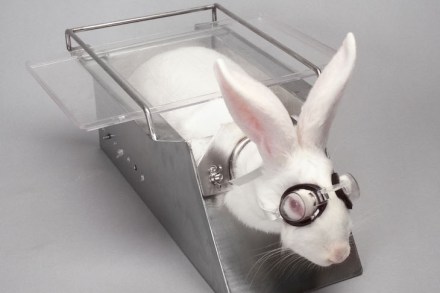
I was 12 years of age and mooching along Putney high street when someone thrust into my hand a leaflet that changed my life. It bore a photograph of a cat with its head covered in electrodes, and the slogan: Curiosity Will Kill This Cat. I had a beloved cat of my own called Chippy. The sight of the leaflet’s tortured feline froze me to the spot. Last year alone there were 2.64 million animal tests in Britain This was the mid-1980s, when animal testing was the main animal rights issue. You didn’t hear much about veganism, instead it was a different ‘v’ word – vivisection – that was the focus of the conversation. I began handing out leaflets myself, imagining that others would be as moved as I had been.

Halloween is being spoilt

From our UK edition

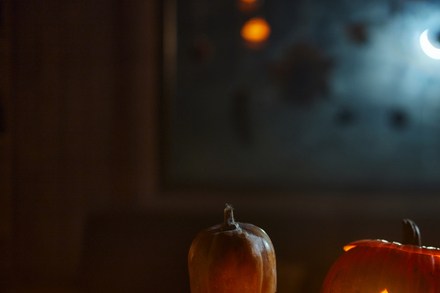
It may be a pagan festival but thank God for Halloween and all its joys: the child’s delight at being dressed up and out after dark, our thrill at pretending to be frightened, the faint sense that for one night, the ordinary world has slipped its moorings. On Halloween, the country briefly remembers how to laugh at fear, instead of scrolling through it. This crown jewel of autumn strikes me as one of those events that manages to be both utterly absurd and, in its way, rather necessary. Like the Eurovision song contest, or marriage. Everyone from kids in Poundland skeleton suits to adults with too much eyeliner join this grand communal theatre of the macabre. It’s democracy with fake blood and carnivalesque chaos powered by Haribo.

Strava is ruining running

From our UK edition

When I first started running 25 years ago, it was the simplicity that captured my heart. There were no complicated techniques to master, no ghastly membership fees or extortionate equipment to shell out on. You just needed to buy a pair of shoes, get out there in the fresh air and put one foot in front of another, more swiftly than usual. Strava is basically a cult In return for this modest outlay and effort, you were treated to an avalanche of physical and emotional health benefits. As you ran, you could truly live in the moment, bask in the solitude and enjoy the connection with nature. It felt like such a beautiful and simple trade. I even wrote a book about it, called Running: Cheaper Than Therapy.

Why you shouldn’t travel with your pets

From our UK edition

Transport for London is refusing to take down a social media video which encourages owners to take their cats on the tube network. The unhinged Instagram video shows two owners taking their cats on an escalator, in a lift and on a train, with the slogan: ‘This is your sign to start travelling with your pet around London.’ It’s true that most dogs emerge from flights unscathed but what sort of owner wants to even risk it? The charity Cats Protection asked TfL to take down the video, complaining that it’s ‘apparently normalising’ taking cats on the underground. ‘Busy stations and crowded Underground platforms with loud and sudden noises’ should be ‘off limits for cats’, a spokesperson said.

What’s wrong with ‘angry, middle-aged white men’, Gary Neville?

From our UK edition

Just when you thought we could all stop talking about flags, Gary Neville has arrived with his size ten boots to keep the ball in play. The ex-Man Utd footballer, turned property developer, said he removed a union flag from one of his Manchester sites because it was being 'used in a negative fashion'. He also complained in a video message posted on social media that we’re being divided by 'angry, middle-aged white men who know exactly what they’re doing'. I’m surprised it took Neville so long to wade in on flags because he’s always seemed up for a scrap. As a player, he wore his heart on his sleeve, goading opposition fans and refusing to shake Peter Schmeichel's hand after the Danish goalkeeper moved to rivals Manchester City.

The thought of Lucy Letby’s innocence is too appalling to bear

From our UK edition

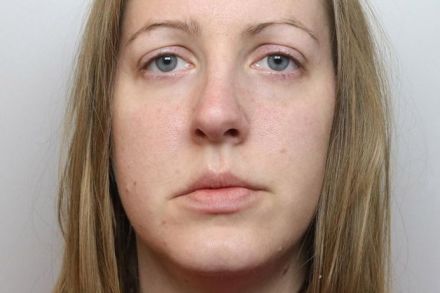
Lucy Letby’s barrister says she has 'new hope', as he prepares to submit 1,000 pages of fresh evidence that he believes will 'clear her name'. In an ideal justice system, evidence that proves an inmate’s innocence would of course lead to their release, but we don’t have an ideal justice system, as I learned as a student. During my late teens and early twenties, I spent a lot of time in maximum security prisons – thankfully, only as a visitor. My secondary school was run by a secretive cult which made me feel sad and trapped. Months before I left, I read Error of Judgement, Chris Mullin’s book about the case of the Birmingham Six, who were framed for the 1974 Birmingham pub bombings.

In defence of voice notes

From our UK edition

From emails to ‘breaking news’ alerts to texts, our phones come under a bombardment of notifications these days. But there’s one kind that always brightens my day – the one that tells me that a friend has sent me a voice note. This, however, seems to make me unusual. ‘I don't want to hear your mini-podcast,’ complains Emma Brockes in the Guardian; voice notes are ‘self-indulgent’, sniffs Anniki Sommerville in the i Paper; and the Independent's Lucie Tobin denounces them as ‘rude’ and ‘invasive’. In the latest issue of The Spectator, Mary Killen advises a correspondent who’s had enough of them to update their WhatsApp profile ‘to clarify their tastes… “please do not leave voice notes”’.

London needs more – not fewer – ‘headphone dodgers’

From our UK edition

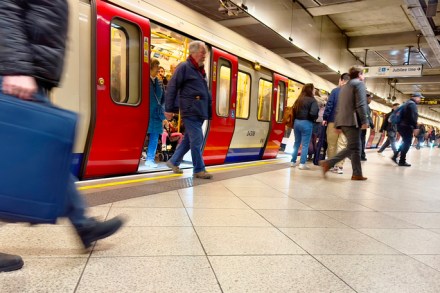
When you’re travelling abroad, a good way of getting the measure of any city is the culture of its public transport. I visited Australia several times as a child and I was surprised by how chatty strangers were on trains and buses. People sat down and struck up a conversation with whoever was sitting next to them. I’ve noticed that natural connection between passengers in many other countries. It’s different in London, where passengers generally sit in tense silence, avoiding any interaction with each other and not even acknowledging that anyone had the temerity to travel at the same time as them.

The tide is turning against firework displays

From our UK edition

News headlines about a Labour council banning fireworks to avoid upsetting baby pandas are certainly eye-catching. It’s true that Edinburgh city council has banned fireworks in nine neighbourhoods between Halloween and November 9, after the death of a baby red panda and its mother in Edinburgh Zoo last year were linked to the din of fireworks. The Edinburgh bans are an overdue acknowledgement of the long-term consequences of short-term thrills But it’s also true that Edinburgh originally banned fireworks in four areas in August last year, months before the pandas met their maker. The council has now voted to extend the bans in those areas and introduce a set of bans in five new areas, including where the zoo is based.

Can Taylor Swift save us from the Oasis bore-off?

From our UK edition

The news that Taylor Swift is releasing her 12th album in October will thrill her fans but perhaps we should all be grateful because this might mean we can move on from the endless chatter about the Oasis reunion tour. From the moment the Gallaghers announced their lucrative concerts it was clear that a lot of people were going to absolutely lose their minds. News of the shows and ticket sales hit the front pages and stayed there for months. Would the brothers fall out before a note was sung? The suspense could have killed us.

There’s nothing extreme about veganism

From our UK edition

At a time when Britain feels increasingly unstitched – with families queuing at food banks and sewage drifting from rivers to seas – it’s almost impressive that anyone has the emotional energy to be annoyed by vegans. Yet we continue to provoke strong feelings, and Katie Glass gave strong voice to them in these pages last week. So allow me to be annoying again, and disagree. Katie says veganism is becoming an ‘extremist’ lifestyle. But to be vegan is, quite simply, to opt out. We choose, as consistently as possible, not to hurt, kill or exploit animals – nor to induce others to do it on our behalf. That’s it. What’s truly extreme is the cruelty that vegans refuse to be part of. More than 92 billion land animals are slaughtered for food each year.