Charlotte Moore

Too good for words

From our UK edition

I confess myself baffled by this fable. The narrative is as clear, the prose as uncluttered, as one expects from Susan Hill, but its very simplicity leaves me wondering whether I’ve missed the point. I confess myself baffled by this fable. The narrative is as clear, the prose as uncluttered, as one expects from Susan Hill, but its very simplicity leaves me wondering whether I’ve missed the point. The strapline tells me to expect a tale of ‘greed, goodness, and an extraordinary miracle’. Well, it doesn’t seem to be about greed at all. There isn’t a greedy person in it. Needy, yes; it deals with need. ‘Goodness’ is more like it.
Land of lost content

From our UK edition

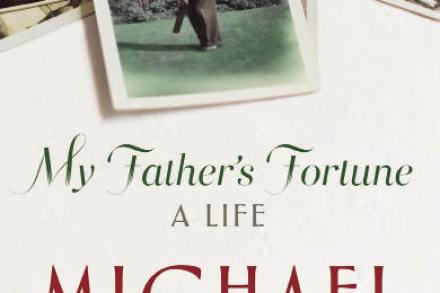
Tom Frayn, says his son Michael in this admirable memoir, trod lightly upon the earth. He belonged to a class and a generation who didn’t think their story mattered. Even his profession — he was an asbestos salesman — has ceased to exist. At the request of his own children, who felt that they had ‘risen from an unknown place’, Michael Frayn has collected the few scraps of evidence and pieced together this unobtrusive life. His father was a ‘smart lad’, youngest of a family of seven housed in two rooms off the Holloway Road, and the only one not born deaf. (He suffered hearing loss later, but, characteristically, used it to enhance his comic timing.) Tom’s wit and charm found plenty of customers for his toxic wares.

A tireless campaigner

From our UK edition

Why haven’t we heard of Phillis Bottome? In her 60-year career she published 33 novels, several of them bestsellers, short stories, essays, biographies and memoirs. Why haven’t we heard of Phyllis Bottome? In her 60-year career she published 33 novels, several of them bestsellers, short stories, essays, biographies and memoirs. She lectured widely in Britain and America. She was translated into nine languages. Her 1937 novel The Mortal Storm predicted the horrific consequences of Fascism. MGM made a film of it, starring James Stewart — the studio’s first openly anti-Nazi film. It premiered in America in 1940, just as Hitler’s troops entered Paris, and was arguably influential in persuading the US to abandon its isolationist stance.

Aunt Barbara’s fireplace

From our UK edition

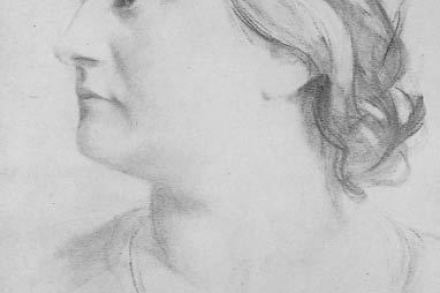
Charlotte Moore on her intrepid relative, who numbered many of the great Victorians — Rossetti, Gertrude Jekyll, George Eliot — among her closest friends ‘A young lady... blessed with large rations of tin, fat, enthusiasm, and golden hair, who thinks nothing of climbing up a mountain in breeches, or wading through a stream in none.’ So Dante Gabriel Rossetti described his new friend Barbara Leigh Smith, later Bodichon. ‘Aunt Barbara’ stood out, vibrant even among a pretty exceptional bunch. She was an artist, traveller, journalist, feminist agitator, co-founder of Girton College, architect of the Married Women’s Property Act, philanthropist, plantswoman and friend.

Last year is best

From our UK edition

The Birth of Love, Joanna Kavenna’s first novel since her prize-winning Inglorious, is clever, ambitious and not wholly successful. The Birth of Love, Joanna Kavenna’s first novel since her prize-winning Inglorious, is clever, ambitious and not wholly successful. It is a tribute to her skill that she handles her four narrative strands without lapsing into confusion; the reader is deftly directed on a journey through time and place. The danger is that emotional resonance is sacrificed to an over-schematic insistence on concept. Her first story is based on historical fact. In 1865, Ignaz Semmelweis is confined to a Viennese lunatic asylum where he is barbarously treated.

A slave to her past

From our UK edition

It is to Andrea Levy’s credit that for this, her eagerly-awaited fifth novel, she adopts a narrative approach strikingly different from that of the best-selling, prize-winning, televised Small Island. It is to Andrea Levy’s credit that for this, her eagerly-awaited fifth novel, she adopts a narrative approach strikingly different from that of the best-selling, prize-winning, televised Small Island. The Long Song is also an historical fiction, but it is as much a critique of the way history is made and distorted as it is an evocation of time and place. Miss July was born a slave on a Jamaican sugar plantation.

Delight and horror

From our UK edition

‘Everything that the lovingest of husbands can express to the best of wives, & love to the little ones, not forgetting the kicker in the dark,’ Jack Verney wrote to his pregnant wife in 1683. ‘Everything that the lovingest of husbands can express to the best of wives, & love to the little ones, not forgetting the kicker in the dark,’ Jack Verney wrote to his pregnant wife in 1683. I read this 326 years later with a pleasurable frisson. I don’t know why it is so charming to find that our ancestors felt as we do, but it is. In Louisa Lane Fox’s fascinating anthology, that thrill of recognition is found on nearly every page. Lane Fox has used letters, diaries and memoirs; nothing fictional.

All washed-up

From our UK edition

Ordinary Thunderstorms is a thriller with grand ambitions. It is set in contemporary London, much of the action taking place on or near the Thames. The timeless, relentless river represents the elemental forces which subvert the sophisticated but essentially temporary structures raised by modern man to showcase his ambition, ingenuity and greed. William Boyd has attempted to write a Great London Novel for our times.

A literate despair

From our UK edition

This large and ambitious novel is timely, given the apparent rise in popularity of extremist political parties throughout Europe. Lucy Beckett sets her story in inter-war Germany. She shows, painstakingly, how Nazism spread its poisonous roots in the fertile soil of a disrupted, demoralised and divided country, and how those who refused to accept its doctrine were turned into aliens within their own homeland. In 1961, Max Hofmann, a violin teacher, is dying in London, where he has lived in safe but empty exile. He was once Max von Hofmannswaldau, a Prussian aristocrat and an intellectual lawyer. On his deathbed he charges his favourite pupil, a girl of 17, to uncover his story and that of his friends. He gives her a postcard with seven names on it, the last name his own.

Trying to pick winners is a losers’ game

From our UK edition

One dark evening in October 1994, I was standing in a small meeting room that faced on to Fleet Street, waiting for my last interview before I could escape into the rainy streets. Then a young trader strode in and asked me an unforgettably difficult question: why should Goldman Sachs — for that is where I had applied for a job — bother to spend money training a raw graduate like me to become an investment analyst when it could probably make better returns with a trading programme run by a computer? In light of the awful performance of the investment management industry over the last year and a half, that question has particular pertinence today. It has been debated among finance professionals and academics for many years.

The actress and the orphan

From our UK edition

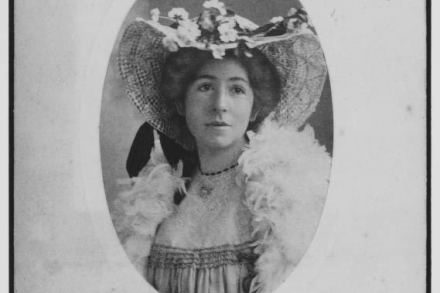
Ask Alice combines two narratives, one beginning in 1904 in the emptiness of the American Midwest, the other in the muffled stasis of Edwardian rural England. The first follows the swift trajectory of Alice, a pretty orphan from Kansas who thinks ‘it must be fun to go places’. Alice, on the train shuttling between one set of backwoods relations and another, is waylaid by a predatory travelling salesman named Drouett; before long she really is ‘going places’. Alice is an adventuress, a red-haired opportunist, a Becky Sharp without the wit.

My ancestor’s private memories of Darwin

From our UK edition

Sir Norman Moore was Charles Darwin’s doctor and friend for many years. Charlotte Moore, his great-granddaughter, reveals the intimate recollections in his private correspondence I live in the house my family have occupied since 1888. My great-grandfather, a tremendous letter-writer and note-taker, never threw anything away. Sorting through barrowloads of his correspondence, I built up an intimate picture of Darwin family life, as well as finding many accounts of the great man’s experiments and conversation. My great-grandfather’s was a remarkable Victorian success story.

A mystic and an administrator

From our UK edition

Florence Nightingale, by Mark Bostridge No eminent Victorian has shaped our daily lives in more ways than Florence Nightingale. Her influence continued far beyond her 20 months of bloodsoaked toil in Scutari and the Crimea. Her vision of a public health-care system was the foundation of the National Health Service. Disassociating nursing from religious vocation and charity work, she initiated the systematic training of hospital nurses. We are rightly shocked when poor hospital hygiene causes preventable disease; it was Nightingale who taught us to be shocked. She reformed army conditions, overturning Wellington’s dictum that British private soldiers were ‘the scum of the earth enlisted for drink’.

Meet the disposable family

From our UK edition

The Stepmother’s Diary, by Fay Weldon ‘These modern, all-inclusive families of ours, created by the passing sexual interest of a couple in each other … can give birth to chaos’, observes Emily, a promiscuous north London Freud- ian analyst and mother of Sappho, the stepmother of the title. The novel begins when pregnant Sappho, on the run from her older, widowed husband, Gavin, thrusts a bag bulging with diaries and fictionalised autobiography into Emily’s hand. ‘Please don’t read them’, says Sappho. Of course I meant to read them, Emily silently tells the reader. I am a mother, and have my daughter’s best interests at heart.

A new angle on autism

From our UK edition

When Roy Richard Grinker’s daughter Isabel was diagnosed with autism in 1994, the condition was considered rare. It was thought to affect three in every 10,000 children. Now, the rate is closer to one in 100. Many see this rise as evidence of a catastrophic epidemic. Grinker, controversially, sees it as a cause for optimism. Grinker is an American anthropologist. Unstrange Minds is both a memoir of life with Isabel and a survey of the way autism is interpreted worldwide. His view is that autism has always existed in every society and that the numbers have probably been fairly constant.

Getting to the heart of the matter

From our UK edition

Andrew Taylor’s latest thriller is set in London in 1934, when Mosley and his Blackshirts were beginning to capitalise on the miseries of economic depression while idealistic young Communists pounced with glee on evidence that the old class hierarchies were cracking. Taylor’s London is a murky, monochrome place of fog and cigarettes, stewed tea and bread and margarine. Older men still shake from the trauma of the trenches; younger ones scan the ‘Situations Vacant’ columns, desperate for anything that will earn them a shilling to feed the gas meter.

The slave in the next room

From our UK edition

‘Being Roman,’ declares Catullus, the poet protagonist of Counting the Stars, ‘is a state of mind’. As in earlier novels — The Siege, House of Orphans — Helen Dunmore allows the reader to enter the ‘state of mind’ of a specific moment in history. Here, Julius Caesar’s Rome, in all its squalor and grandeur, brutality and sophistication, is made available to us in a way that is almost wholly convincing. Dunmore constructs her narrative from Catullus’ poetry. In less skilful hands this would seem laboured, but Dunmore is a poet herself and the joins don’t show. Catullus is obsessed with Clodia, the ‘Lesbia’ of his poems. Clodia is ten years older, married and a mother.

The parent trap

From our UK edition

Nick Hornby has often written perceptively about male adolescence, but Slam is the first of his books to be aimed at an adolescent male readership. Teenage boys will read music magazines, sports reports, pornography and cereal packets, but they are notoriously averse to reading — or rather, finishing — books. Can Hornby break the habit, or lack of habit? Slam’s main subjects are sex and skateboarding, both calculated to have instant appeal for the target audience, but Hornby’s treatment of them is thoughtful, careful and wholly untitillating. Instead of pandering to youthful fantasies of conquest and glory, he sets out, in the nicest possible way, to expose the gap between fantasy and reality.

Deadened by shock

From our UK edition

The Lovely Bones, Alice Sebold’s first novel, sold 2 ½ million copies, so it’s not surprising that Picador are calling the nation’s attention to its successor with posters on the Tube and ‘page-dominating full-colour national press advertising’. I remember finding The Lovely Bones original, even thought-provoking; why, then, did The Almost Moon provoke little more in me than weary irritation? Its essential flaw is contained in its opening sentence: ‘When all is said and done, killing my mother came easily.’ This is eye-catching, and reminds readers of the striking premise of The Lovely Bones — ‘I was fourteen when I was murdered on December 6, 1973.’ The sentence is given prominence in Picador’s marketing campaign.

By their clothes shall you know them

From our UK edition

Ursula’s story begins at dawn on the day her ex-husband is to marry his new love. Ursula lies awake, alone with her bitter thoughts, until a reporter rings seeking her reaction to the wedding. For Bill Osborne is no ordinary ex; he edits a national newspaper and hosts a popular television series, while his new bride is a cabinet minister, no less. If the intrusive journalist wants a co-operative response, why ring at 6 a.m.? And why hasn’t Ursula changed her telephone number? Such questions remain unanswered, and indeed Sandra Howard has surprisingly little to say about living one’s life in the public gaze, other than to point out that it’s a pain. Ursula won’t spill any beans, but waits for the next call, from her lover, Julian.