Charlotte Moore

The Spark, by Kristine Barnett – review

From our UK edition

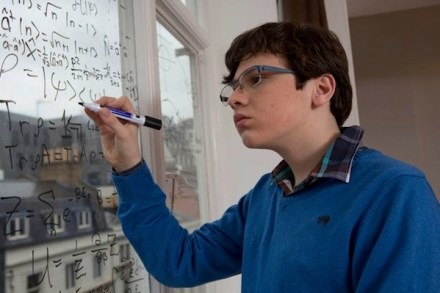
Jacob Barnett is a youthful prodigy. His IQ tested off the scale. At nine he began work on an original theory in astrophysics; aged 12 he became a paid academic researcher. He can play complicated musical pieces or learn foreign languages almost instantly and without tuition. As one researcher puts it, ‘Jake’s working memory is a piece of paper the size of a football field.’ Jacob’s mother, Kristine, comes from an Amish family — ‘not horse-and-buggy Amish, but city Amish’; her faith has directed her along the path she has taken with her extraordinary son. (It would be interesting to know the religious views of the young quantum physicist, but we’re not told.
Big Brother, by Lionel Shriver – review

From our UK edition

‘I am white rice’ states Pandora Half-danarson, narrator of Lionel Shriver’s obesity fable. ‘I have always existed to set off more exciting fare.’ The exciting fare on offer is the big brother of the title, the handsome, free-wheeling, jive-talking Edison, a jazz pianist. The siblings grew up in LA, their dysfunctional family life paralleled, almost parodied, in Joint Custody, a prime-time television drama scripted by Travis Appaloosa, their smarmy, self-aggrandising father. This prolonged and subtle betrayal drives Pandora to seek anonymity in quiet Iowa, while Edison, in bohemian New York, craves public attention, and trades on his father’s fame to attain it.

Servants: A Downstairs View of Twentieth-century Britain, by Lucy Lethbridge – review

From our UK edition

The first illustration in this absorbing survey of domestic service in 20th-century Britain is a group photograph of the household servants at Erdigg, the Yorke family home in Wales. Each holds an emblematic item; the housekeeper is defined by her bunch of keys, the butler holds a wine bottle and corkscrew, the footman, in full pantomimic rig down to his buckled shoes, bears a salver for the calling cards that formed an intricate and arcane method of communication amongst the upper orders. The picture was taken in 1912. It is expressive of a system governed by age-old rules and unshakable hierarchies. How unimaginable that only two years later the outbreak of war would initiate the great dismantling of this system.

‘Mimi’, by Lucy Ellmann – review

From our UK edition

Harrison Hanafan is a plastic surgeon in New York. Every day, he slices and stitches deluded women, reshaping healthy flesh to pander to 21st-century aesthetics. One Christmas Eve, absent-minded Harrison finds himself prostrate on the icy sidewalk of Madison Avenue. ‘Ya can’t sit there all day, buddy, looking up people’s skirts,’ says a plump, sweaty-faced middle-aged woman as she hauls him to his feet. This is Mimi, the antithesis of Harrison’s neurotic patients, and — it transpires, after a few more twists and turns — the love of his life. Harrison has recently parted from pretentious Gertrude, a woman who conceived a child by ‘parthenogenesis’ and ‘batiks without irony’.

Chills, but no thrills

From our UK edition

‘Mary and Geordie have lost a child ...Why should they feel they are entitled to grieve? It’s so commonplace.’ Paul Torday’s latest novel is full of such assertions. We are in the Border country, in 2010, and three children have disappeared. Neither the police nor social services can be persuaded to take much interest. ‘Tell you what,’ says the editor of the local paper to Mary, distraught mother of missing Theo, ‘I’ll diary it. If he hasn’t come back in a year’s time we’ll run an anniversary special on him. I can’t say fairer than that.’ The unlikeliness of this response, and the inauthenticity of the tone, undermine what is in some ways a well-crafted novel. There are clumsinesses.

Mother of sorrows

From our UK edition

This novella tells the story of the Crucifixion from the point of view of Mary. Contrary to art historical belief she was not, we are now told, kneeling at the foot of the Cross nor cradling her son’s broken body in her arms. Instead, she left the scene early, slipping away to save her own skin, stealing to meet her needs as she fled. It’s the sort of idea Carol Ann Duffy might make a poem about, except she’d do it with humour, and without Tóibín’s faintly sententious tone. ‘Memory fills my body as much as blood and bones’; there’s a lot of that kind of thing. Mary is now an old woman, living out her days under surveillance, somewhere far from her native land. It’s probably Greece.

My Dear Governess, edited by Irene Goldman Price

From our UK edition

‘I have finished Julius Caesar since I last wrote & I cannot say that it left a very glowing impression on me. It was too much like my own earliest attempts at tragedy to move me in the least.’ So wrote the 16-year-old Edith Wharton in 1878 to Anna Bahlmann, her governess and literary confidante. Wharton’s letters to Bahlmann only came to light in 2009. Edited and carefully annotated by Irene Goldman-Price, they chart Wharton’s progress from precocious adolescent, to brilliant New York socialite, to sophisticated queen of European literary society, to tireless charity worker, divorced, estranged from her family, struggling to ease the plight of refugees in a Paris torn apart by the first world war.

Welsh wizardry

From our UK edition

After Brock is a slightly eccentric rite-of-passage novel rooted firmly in the Marches. In September 2009, we are told, an 18-year-old boy called Nat Kempsey disappeared for five days into the Berwyn mountains, on the Welsh side of the border. Paul Binding is at all times specific about time, place and names; the story has an air of veracity which carries the reader with it even when the dialogue seems forced and the coincidences improbable. Nat, recovering from his mountain ordeal in the bedroom above his father’s kite shop in Leominster, tells his story to a more-than-averagely alert reporter from the local newspaper. It soon becomes evident that the story that really needs telling belongs to Nat’s father, Pete.

Cry freedom

From our UK edition

Scenes From Early Life is a rather dull title for a deeply interesting book. It is a novel; this is stated on the jacket, as if anticipating the possibility that readers may question that definition. Set in Dacca (now Dhaka), it is about the emergence of Bangladesh as a state independent of Pakistan after the savage civil war of 1971. Philip Hensher has drawn on memory and history — family history and ‘real’ history. Historical characters, notably Sheik Mujib, the courageous and civilised Bangladeshi leader, mingle with semi- and wholly fictional ones. The joins are seamless. Finishing the book, I was startled to realise that Hensher, an Englishman, had written a novel without a single English character in it, and that I, at least, had been wholly convinced.

Tragedy of Antigone

From our UK edition

Sofka Zinovieff’s absorbing first novel has two narrative voices. Maud is the English widow of Nikitas, whose death in a mysterious accident leads her to contact Antigone, the mother-in-law she has never met. A former Communist freedom fighter, Antigone was forced to leave Greece for the Soviet Union following the Greek civil war. She gave birth to Nikitas, her only child, in prison, and handed him over to her family when he was three years old, severing all further contact. Maud was the third wife of the dominant, swaggering Nikitas. She remained passive throughout their marriage; now, liberated by his death, she starts asking the questions to which she ought always to have known the answers — answers which can be supplied only by Antigone.

Intrigue and foreboding

From our UK edition

In 2009, Alone in Berlin, Hans Fallada’s masterpiece about civilian resistance to Nazism, appeared in English for the first time. Now A Small Circus, Fallada’s literary breakthrough, makes its English debut.  Both novels are admirably translated by Michael Hofmann. The earlier novel will be of deep interest to the many admirers of Alone in Berlin. Once again, Fallada shows an uncanny prescience in his ability to interpret contemporary political developments through the lives of ordinary Germans. A Small Circus is based on real events that took place in 1929 in Neumünster, Schleswig-Holstein, lightly fictionalised by Fallada as Altholm.

Charlotte Moore’s books of the year

From our UK edition

Jane Shilling’s The Stranger in the Mirror is an essay on what happens to the narrative arc of a woman’s life when she reaches middle age. It is as deeply felt as it is witty and elegant. Henry’s Demons, by father and son Patrick and Henry Cockburn, provides the most compelling insight into schizophrenia that I’ve come across. As Good as God, As Clever as the Devil would have appalled its subject, the intellectually gifted, sexually tormented wife of the Victorian Archbishop Benson, but Rodney Bolt mines a rich archival vein and transcends gossip. First published in 1946, We Are Besieged, Barbara Fitzgerald’s charming novel of an Anglo-Irish family in the Twenties, is a welcome reissue from Somerville Press.

The Sealed Letter by Emma Donoghue

From our UK edition

Emily ‘Fido’ Faithfull, a stout, plain, clever Victorian, founder-member of the feminist Langham Place group, manager of the ground-breaking Victoria Press which extends employment possibilities for women, has her story lightly fictionalised in The Sealed Letter. The action starts with the return from a posting to Malta of Fido’s erstwhile best friend, Helen Codrington, a naval wife with a yellow-whiskered colonel in tow. Helen needs an alibi and a trysting-place; the apparently guileless Fido and her drawing-room sofa will do nicely. Before Malta, Fido had lived with Helen and her older, straitlaced husband Harry. Fido’s asthma had been the pretext for Helen to leave the marital chamber and curl up in her friend’s bed each night.

All in a night’s work

From our UK edition

This inter-war story of an Anglo-Irish family in crisis opens with a bang. Caroline Adair, recovering from measles at Butler’s Hill, her aunt and uncle’s lovely house in the South-west, wakes in the night to find  Sinn Feiners surrounding the place. This inter-war story of an Anglo-Irish family in crisis opens with a bang. Caroline Adair, recovering from measles at Butler’s Hill, her aunt and uncle’s lovely house in the South-west, wakes in the night to find  Sinn Feiners surrounding the place. The family are given ten minutes to clear out. ‘Don’t be frightened, darling’, says kind Aunt Moira, ‘they won’t do us any harm, they only want to burn the house.’It’s a big ‘only’.

Fun-loving feminist

From our UK edition

How to be a Woman is a manifesto memoir. Feminism, says the Times journalist Caitlin Moran, ‘has ground to a halt ... shrunk down to a couple of increasingly small arguments, carried out among a couple of dozen feminist academics’. Moran wants to pull feminism out of its rut, dust it down and sex it up. She does this by laying bare her own transition from childhood to adulthood, when she hurtled through adolescence like ‘a monkey strapped inside a rocket ... There isn’t an exit plan.’ Feminism is ‘serious, momentous and urgent’, which is why Moran seeks to make it accessible through anecdote and chat.

All shook up

From our UK edition

Olivia Glazebrook’s first novel begins with a disaster. Olivia Glazebrook’s first novel begins with a disaster. Kit, painter of meretricious society portraits, has whisked Alice, his younger, pregnant girlfriend, off to Jordan for an indulgent weekend. Their car skids off a mountain road leaving Alice trapped inside. Kit behaves like an unheroic imperialist. ‘You bloody little man, Karim!’, he yells at the driver, but it is Karim who reminds him that they ought to be aiding Alice. They are rescued, but not all the artifice of a luxury hotel can prevent Alice’s miscarriage. Blood pours out of her ‘as if she were a vase, carelessly knocked over on a table.’ Glazebrook is good with similes.

The nature of evil

From our UK edition

Simon Baron-Cohen has spent 30 years researching the way our brains work. His study of autism led to The Essential Difference, which asked, ‘Are you an empathiser or a systemiser?’ The book was highly influential; its ‘male-brain’ and ‘female-brain’ definitions have entered common parlance. In Zero Degrees of Empathy he aims to move examination of the nature of evil ‘out of the realm of religion and into the realm of science.’ Will this project also prove persuasive? ‘Extremes of evil are typically relegated to the unanalysable,’ he says, but they shouldn’t be. Evil, he believes, is best understood as absence of empathy. We are all situated at some point on a bell-curve of empathy.

In Di’s guise

From our UK edition

What if Princess Diana hadn’t died, but, aided by her besotted press secretary, had faked her death and fled to America to live under an assumed identity? Is this an interesting question? Is a novelist justified in exploring such a supposition? I believe the answer to both questions is ‘no’. What if Princess Diana hadn’t died, but, aided by her besotted press secretary, had faked her death and fled to America to live under an assumed identity? Is this an interesting question? Is a novelist justified in exploring such a supposition? I believe the answer to both questions is ‘no’. In writing Untold Story, Monica Ali has made a serious mistake. Ali relocates Diana, ten years on, to a dull American town called Kensington (geddit?).

Desk-bound, needing to get out more

From our UK edition

Great House is an ambitious novel, if it’s a novel at all. Great House is an ambitious novel, if it’s a novel at all. It’s an exploration of regret, longing, loss, and of how Jews attempt to cope with the destruction that characterises their history. The title refers to the Book of Kings: ‘All the houses of Jerusalem, even every great house, he burned with fire’. If, as one of Krauss’ spokesmen puts it, ‘every Jewish memory were put together, every last holy fragment joined up again as one’, would the Great House be built again? The book divides into two sets of linked sections, the halves mirroring each other like parallel series of drawers in a desk.

The Romanovs afloat

From our UK edition

‘I have to do everything myself, I who have all my life been so spoilt.’ So lamented the Dowager Empress Marie Feodorovna, mother of Tsar Nicholas II, in the diary she kept aboard HMS Marlborough, the British warship carrying her and 16 other Romanovs, in April 1919, from Yalta into perpetual exile. ‘I have to do everything myself, I who have all my life been so spoilt.’ So lamented the Dowager Empress Marie Feodorovna, mother of Tsar Nicholas II, in the diary she kept aboard HMS Marlborough, the British warship carrying her and 16 other Romanovs, in April 1919, from Yalta into perpetual exile.