Charles Moore

Charles Moore

Charles Moore is The Spectator’s chairman.

He is a former editor of the magazine, as well as the Sunday Telegraph and the Daily Telegraph. He became a non-affiliated peer in July 2020.

Ed Miliband’s calculated energy price freeze

From our UK edition

It has been pointed out (possibly by me, among many) how hypocritical Ed Miliband is in complaining about energy prices since he was responsible, as Energy Secretary, for driving them up through green levies. We critics have been slow to realise that it is exactly because of his history that Mr Miliband is pushing his price freeze so hard. He knows — because he helped preside over it — that rises in the levies are inevitable, since they are written into the law of the land and of the EU — not just for now, but for many years ahead.

Charles Moore: I’m on Twitter! But what do I say?

From our UK edition

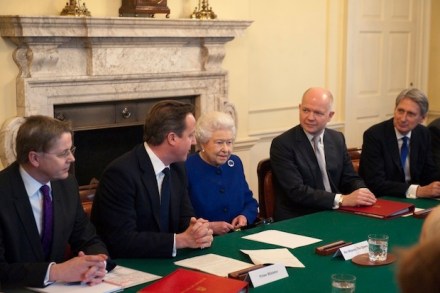
AS THE WHOLE Leveson wrangle approaches its climax (or anti-climax), one collateral, innocent victim of it all is the Queen. The government ruse to make its proposed system of statutory regulation seem less objectionable was to burble on about a Royal Charter and the Privy Council. By doing so, it hoped to put the matter beyond politics. But the implication that the enterprise is sanctioned by monarchical neutrality is a) untrue and b) embarrassing for the monarch. Untrue because in royal charters, as in legislation, the Sovereign acts solely on the advice of her ministers, making no personal contribution; embarrassing because, by seeking royal cover for its actions, the government drops the monarch into a very tricky issue, giving her no means to defend herself.

Help! I don’t know what to tweet!

From our UK edition

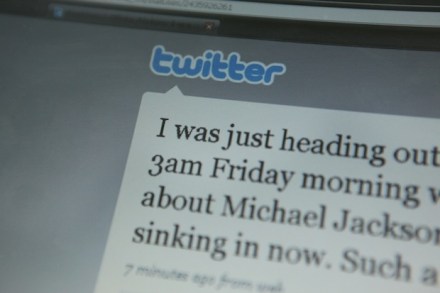
The Daily Telegraph now has a policy that all its journalists should be on Twitter. This is a good idea, since it is the most immediate form of public communication, and a way of advertising oneself. So last week, I went on. The problem is that I have not got the faintest idea what to say. After agonising for about half an hour, I decided this might be my May 1979 moment, so I wrote: ‘I’ve joined Twitter. Where there is discord, may I bring more of it.’ Immediately, I received emails and texts warning me that someone was pretending to be me (this has happened before). Since then, I have had nothing to say, and I feel like a Twitt. If I do have a thought, I want to keep it for my columns.

The ‘polite protests’ from Buckingham Palace over Leveson

From our UK edition

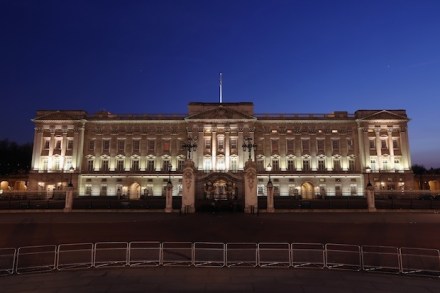
As the whole Leveson wrangle approaches its climax (or anti-climax), one collateral, innocent victim of it all is the Queen. The government ruse to make its proposed system of statutory regulation seem less objectionable was to burble on about a Royal Charter and the Privy Council. By doing so, it hoped to put the matter beyond politics. But the implication that the enterprise is sanctioned by monarchical neutrality is a) untrue and b) embarrassing for the monarch. Untrue because in royal charters, as in legislation, the Sovereign acts solely on the advice of her ministers, making no personal contribution; embarrassing because, by seeking royal cover for its actions, the government drops the monarch into a very tricky issue, giving her no means to defend herself.

People want revenge on energy companies

From our UK edition

Friends of mine called Georgiana and Mouse Campbell recently bought a new house. In the period between completion and moving in, Mouse arranged for British Gas, who supplied the electricity, to switch the account to his name. British Gas said that this involved changing it from a business account to a residential one. While this was supposedly in progress, BG’s business division sent Mouse a bill for £299.80, although the Campbells’ actual use of electricity was virtually nonexistent. Despite many calls to BG, and its promises to sort things out, the company pursued Mouse for the fictional bill with threats of a debt recovery company and damaging his credit rating.

Charles Moore’s notes: People want revenge on energy companies

From our UK edition

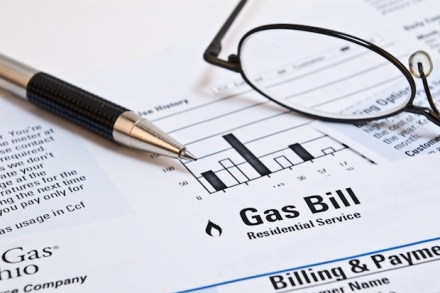
Friends of mine called Georgiana and Mouse Campbell recently bought a new house. In the period between completion and moving in, Mouse arranged for British Gas, who supplied the electricity, to switch the account to his name. British Gas said that this involved changing it from a business account to a residential one. While this was supposedly in progress, BG’s business division sent Mouse a bill for £299.80, although the Campbells’ actual use of electricity was virtually nonexistent. Despite many calls to BG, and its promises to sort things out, the company pursued Mouse for the fictional bill with threats of a debt recovery company and damaging his credit rating.

Charles Moore’s notes: At last! Reds under the beds again

From our UK edition

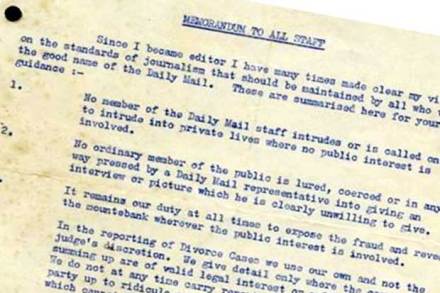
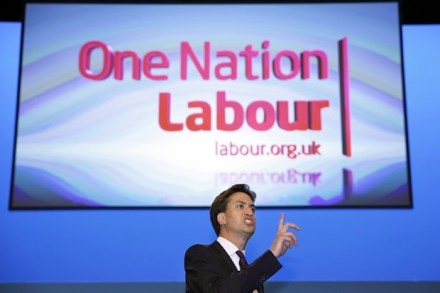
 Manchester For those of us of a certain age, Ed Miliband’s speech last week was exhilaratingly nostalgic. His promise to freeze energy prices reminded us of happy times when Labour policies were patently, shamelessly idiotic. At last, after a generation of loss, we began to hope to find reds under the bed again. In its understandable excitement, the Daily Mail made the mistake of finding only a dead red — Mr Miliband’s late father, Ralph. It then compounded its error by saying that Miliband senior ‘hated Britain’, on the basis of some angry remarks he made when aged 17.

Boris Johnson’s party conference performance showed how formidable the Mayor is

From our UK edition

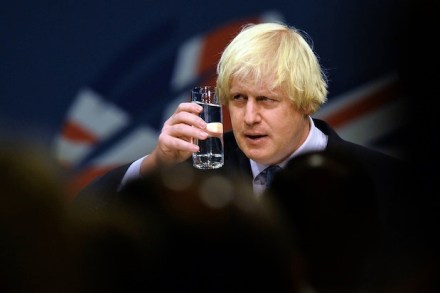
It has been left to Boris Johnson to identify the most significant future opportunity in this country — population increase. I was very impressed by his speech on Tuesday because he did a dangerous thing: he tried to reason his party audience out of its instinctive position. London has had more live births in 2012, he told us, than at any time since the 1966 World Cup. He attributed it to time spent on the sofa during the Olympics. Conservative supporters always favour economic growth but usually balk at any linkage with having more babies. Being predominantly old, they find large numbers of the young irritating.

Why didn’t the Daily Mail stick to the ‘red angle’ when it came to Ralph Miliband?

From our UK edition

For those of us of a certain age, Ed Miliband’s speech last week was exhilaratingly nostalgic. His promise to freeze energy prices reminded us of happy times when Labour policies were patently, shamelessly idiotic. At last, after a generation of loss, we began to hope to find reds under the bed again. In its understandable excitement, the Daily Mail made the mistake of finding only a dead red — Mr Miliband’s late father, Ralph. It then compounded its error by saying that Miliband senior ‘hated Britain’, on the basis of some angry remarks he made when aged 17.

Sixteen-year-olds don’t pay tax. Why should they vote?

From our UK edition

No doubt it will happen, because the Tories will not dare oppose it, but is there any conceivable good reason why 16-year-olds should have the vote, as first Alex Salmond, then the Liberals, and this week Ed Miliband have promised? The argument is that giving people the vote makes them feel empowered. But the sad fact about human nature is that once you have won a right, you quickly take it for granted. I am part of the first generation to have had the vote at 18 rather than 21. We were quite pleased by this, but less interested than our parents’ generation. Our children’s generation is astonishingly uninterested.

Why should 16 year olds get the vote? They don’t pay tax.

From our UK edition

No doubt it will happen, because the Tories will not dare oppose it, but is there any conceivable good reason why 16-year-olds should have the vote, as first Alex Salmond, then the Liberals, and this week Ed Miliband have promised? The argument is that giving people the vote makes them feel empowered. But the sad fact about human nature is that once you have won a right, you quickly take it for granted. I am part of the first generation to have had the vote at 18 rather than 21. We were quite pleased by this, but less interested than our parents’ generation. Our children’s generation is astonishingly uninterested.

Charles Moore’s notes: Liberal-leaning Muslims are the people most opposed to the niqab

From our UK edition

We are not allowed to know any details about the Muslim woman, charged with intimidating a witness, who has been ordered to take off her full-face veil to give evidence in court. But when it is all over, it will not be surprising if she turns out to be a convert. All mainstream religions have some sort of teaching about what to wear. Within living memory, for example, it was all but compulsory for women to have their heads covered in church. But general teachings in favour of modesty have different cultural applications, and it is usually false to claim that a religion absolutely insists upon a particular garment. What happens is that zealots, often manipulating ignorant converts, decide to make dress into a shibboleth.

Why the BBC couldn’t see any serious problem with its huge pay-offs

From our UK edition

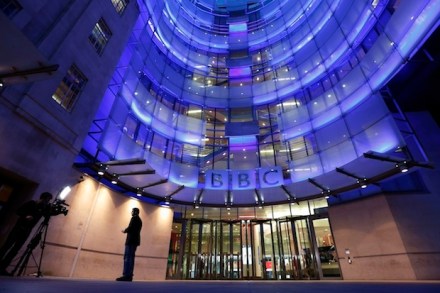
‘Corruption’ is a subtle word, because it describes a process rather than an event. It does not merely mean bad behaviour: it means behaviour that becomes rotten out of something which was once good. That is why it often afflicts high-minded organisations more than ordinary businesses. People who think they are collectively moral are more self-deceiving than the average market trader. Hence the current embarrassments of the BBC about huge pay-offs.

Charles Moore’s notes: The corruption of the BBC – and what was in my GQ goodie bag

From our UK edition

‘Corruption’ is a subtle word, because it describes a process rather than an event. It does not merely mean bad behaviour: it means behaviour that becomes rotten out of something which was once good. That is why it often afflicts high-minded organisations more than ordinary businesses. People who think they are collectively moral are more self-deceiving than the average market trader. Hence the current embarrassments of the BBC about huge pay-offs.

Andrew Mitchell is still waiting for justice

From our UK edition

A week ago next Thursday marks the first anniversary of the Curious Incident of the Chief Whip in the Night-time. The chief whip, Andrew Mitchell, did nothing — or very little — in the night-time. That was the curious incident. There is not the slightest evidence that he called the policemen on the gates of Downing Street ‘plebs’; and this has now been admitted. It is clear, with plenty of evidence on Channel 4 News, that some police, with some accomplices, spread a story against Mr Mitchell, possibly to protect themselves against an expected complaint from him after they refused to let him through the gates on his bicycle. As a result of what he did not say, Mr Mitchell was forced to resign.

The Spectator’s Notes | 5 September 2013

From our UK edition

David Cameron says that he will not come back to the House of Commons again about the question of Syria because Parliament has spoken. Obviously, having sought its opinion, he cannot now try to override it. But no one can know how the issue will now play out, and it may well be that new circumstances (major foreign interventions, for example) will change everything. Parliament cannot make foreign policy decisions in advance of facts, and therefore should not try. Foreign policy is not like legislation: it is protean. The House of Commons should support the government when it gets it right and arraign it when it gets it wrong. It should not pre-empt it. What actually happened last week was that no motion about Syria passed. There is therefore a policy vacuum.

Jeremy Hunt’s letter a day to keep NHS myths away

From our UK edition

Attending the funeral of Margaret Thatcher in April, the Health Secretary, Jeremy Hunt, was much impressed by the bit in the sermon by the Bishop of London about how Mrs Thatcher had replied personally to so many letters. He went back to his department, and asked it to give him each day one letter from a member of the public which recounted particularly shocking problems in the Health Service. He now uses these letters to dive into the problems that patients experience. It is a good idea, but how alarming that it is a novel one. The Department of Health receives more letters than any other part of government except 10 Downing Street. Is it really the case that up till now, officials have never troubled the Secretary of State with the woes of the public?

Charles Moore’s notes: While Justin Welby was finding God, I was eating baked beans

From our UK edition

Attending the funeral of Margaret Thatcher in April, the Health Secretary, Jeremy Hunt, was much impressed by the bit in the sermon by the Bishop of London about how Mrs Thatcher had replied personally to so many letters. He went back to his department, and asked it to give him each day one letter from a member of the public which recounted particularly shocking problems in the Health Service. He now uses these letters to dive into the problems that patients experience. It is a good idea, but how alarming that it is a novel one. The Department of Health receives more letters than any other part of government except 10 Downing Street. Is it really the case that up till now, officials have never troubled the Secretary of State with the woes of the public?

We know Andrew Mitchell was framed. Now, give him his old job back

From our UK edition

Andrew Mitchell was forced to resign as the Tory Chief Whip last autumn because he called policemen at the Downing Street gates ‘plebs’. Then it turned out, as I suggested at the time, that he had not done so. It emerged that there was a conspiracy — quite how deep has not yet been made public — by police and accomplices to attribute to Mr Mitchell words which he did not speak. People pretending to be by-standing members of the public said how shocked they were by Mr Mitchell’s remarks, and then it turned out that no bystanders had been within earshot of whatever it was that Mr Mitchell had said. Eventually, there was an investigation.

The Spectator’s notes | 11 July 2013

From our UK edition

Andrew Mitchell was forced to resign as the Tory Chief Whip last autumn because he called policemen at the Downing Street gates ‘plebs’. Then it turned out, as this column suggested at the time, that he had not done so. It emerged that there was a conspiracy — quite how deep has not yet been made public — by police and accomplices to attribute to Mr Mitchell words which he did not speak. People pretending to be by-standing members of the public said how shocked they were by Mr Mitchell’s remarks, and then it turned out that no bystanders had been within earshot of whatever it was that Mr Mitchell had said. Eventually, there was an investigation.