Charles Moore

Charles Moore

Charles Moore is The Spectator’s chairman.

He is a former editor of the magazine, as well as the Sunday Telegraph and the Daily Telegraph. He became a non-affiliated peer in July 2020.

Don’t rage at Cameron’s honours, but at the bureaucrats who blocked them

From our UK edition

The Daily Telegraph revealed on Tuesday that Michael Spencer, the chief executive of Icap, has been blocked for a peerage by the House of Lords Appointments Commission (Holac). All the indignation just now is against David Cameron’s resignation honours list, packed with his ‘cronies’, who allegedly include Mr Spencer. It is misdirected. The real anger should go against the pharisaical bureaucracy which has been imposed upon patronage. No one is allowed to know why Mr Spencer has been blocked, yet the world knows that he has been because, supposedly, he has ‘the wrong sniff’ about him.

The Spectator’s notes | 4 August 2016

From our UK edition

The Daily Telegraph revealed on Tuesday that Michael Spencer, the chief executive of Icap, has been blocked for a peerage by the House of Lords Appointments Commission (Holac). All the indignation just now is against David Cameron’s resignation honours list, packed with his ‘cronies’, who allegedly include Mr Spencer. It is misdirected. The real anger should go against the pharisaical bureaucracy which has been imposed upon patronage. No one is allowed to know why Mr Spencer has been blocked, yet the world knows that he has been because, supposedly, he has ‘the wrong sniff’ about him.

Scotland doesn’t deserve another referendum

From our UK edition

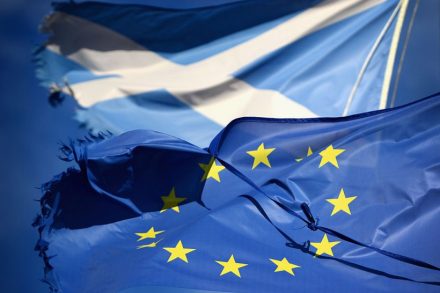
If the SNP ever succeeds, it will be because of the failure of the English to understand its game. English people with no goodwill towards Scottish nationalism keep saying that ‘Scotland voted to remain in the EU’. It is not true. The Scots, like all other voters, answered the question which was put to them, which was whether theUnited Kingdom should leave or remain in the EU. They were not asked about what Scotland should do, any more than London, Liverpool or Bristol — three cities which voted Remain — were asked whether they sought secessionist EU membership. To say that Scotland must have another referendum on anything because a majority there voted Remain is to say, in effect, that it has acquired independence already.

In praise of the European Central Bank

From our UK edition

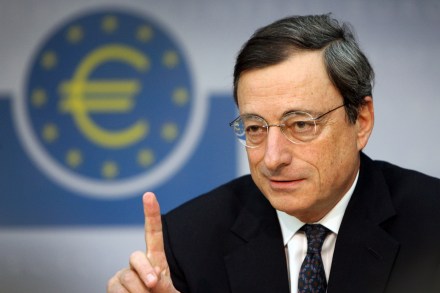
During the EU referendum campaign, there was much unfavourable comment (usually justified) about foreign entities or leaders who intervened to try to frighten us into voting Remain. Virtually all did so — Nato, the IMF, the World Bank, President Obama. But one important voice was silent — that of the European Central Bank. Its president, Mario Draghi, confined himself to saying that the ECB was ‘ready for all contingencies’. This was greatly to his credit. I gather that the ECB came under enormous official pressure to join the chorus of anti-Brexit warnings, but refused. It sensibly realised that it had no business instructing British voters, and needed only to be ready to deal fairly with whatever might happen.

The Spectator’s Notes | 28 July 2016

From our UK edition

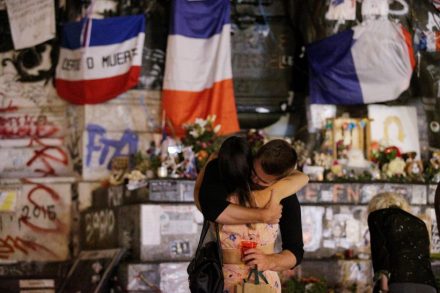
At the beginning of his war memoirs, Charles de Gaulle famously wrote, ‘All my life I have had a certain idea of France’ and its ‘eminent and exceptional destiny’. It was not only an abstract concept: the picture in his mind was of ‘the Madonna in mural frescoes’. What is President Hollande’s certain idea of France? Presumably it cannot be the Madonna, since Hollande is the child of French laïcité, which creates an unbridgeable gulf between religion and the republic. But what happens when, in the name of one religion, men in France enter the temple of another and slit the throat of a priest, as happened this week near Rouen?

To beat Islamist terror, France must close the gulf between church and state

From our UK edition

At the beginning of his war memoirs, Charles de Gaulle famously wrote, ‘All my life I have had a certain idea of France’ and its ‘eminent and exceptional destiny’. It was not only an abstract concept: the picture in his mind was of ‘the Madonna in mural frescoes’. Douglas Murray and Haras Rafiq discuss Europe's summer of terror: What is President Hollande’s certain idea of France? Presumably it cannot be the Madonna, since Hollande is the child of French laïcité, which creates an unbridgeable gulf between religion and the republic. But what happens when, in the name of one religion, men in France enter the temple of another and slit the throat of a priest, as happened this week near Rouen?

Is racism really on the rise in Britain?

From our UK edition

It keeps being said that racist ‘hate crime’ has increased as a result of the referendum. One must bear in mind how the public authorities define these things, as confirmed this week by Alison Saunders, the Director of Public Prosecutions. The Macpherson report on Stephen Lawrence set the current rule. It defined a racist incident as ‘any incident which is perceived to be racist by the victim or any other person’. The police are instructed to log all such incidents as racist incidents. So you only have to have more people reporting what they see as racist incidents for an exactly corresponding rise in the number of recorded racist incidents.

Is Jean-Claude Juncker the ‘Sepp Blatter of the EU’?

From our UK edition

A friend, himself a Remainer, describes Jean-Claude Juncker to me as ‘the Sepp Blatter of the EU’. It is a brilliant comparison — although I hasten to assure Mr Juncker’s lawyers (and indeed Mr Blatter’s) that I repudiate any suggestion of corruption against either man. It captures that unmerited sense of ownership, that confident unaccountability, those menacing, charmless jokes. It also captures the nature of the two organisations as currently run and reminds us that, precisely because their leaders do not recognise it, they must change. This is an extract from Charles Moore's Notes. The full article can be found here.

The Spectator’s Notes | 14 July 2016

From our UK edition

On Tuesday night in London, I spoke to Women2Win, a Conservative organisation dedicated to recruiting more women candidates. My title, suggested long ago, was ‘The Woman Who Won’. It referred to Margaret Thatcher. The day before my speech was delivered, another woman (and former chairman of Women2Win) won, so now there are two. Everyone seized the moment to compare and contrast them. There is a clear difference between Theresa May’s situation today and Mrs Thatcher’s in 1975. Mrs May, like Ted Heath in 1975, represents the side that just lost, Mrs Thatcher the side with a new idea about how to win. Mrs May is the establishment candidate: Mrs Thatcher was the insurgent.

Why Brexit better mean Brexit

From our UK edition

'Brexit means Brexit’, says our new Prime Minister, but that does not tell us what she thinks Brexit would involve. Given the immense resourcefulness of the EU in perpetuating itself, one must guard against solutions which appear to satisfy Brexit conditions, but leave reality little changed. They might resemble how France withdrew from the military command of Nato in 1966. This assertion of French sovereignty by De Gaulle involved, among other things, the withdrawal of non-French Nato troops from French soil. In reality, however, the secret Lemnitzer-Ailleret accords between the United States and France ensured that France remained bound into participation in Cold War hostilities. Over time, French self-exclusion became less and less significant.

Andrea Leadsom’s line about children? Thatcher did it first

From our UK edition

On Tuesday night in London, I spoke to Women2Win, a Conservative organisation dedicated to recruiting more women candidates. My title, suggested long ago, was ‘The Woman Who Won’. It referred to Margaret Thatcher. The day before my speech was delivered, another woman (and former chairman of Women2Win) won, so now there are two. Everyone seized the moment to compare and contrast them. There is a clear difference between Theresa May’s situation today and Mrs Thatcher’s in 1975. Mrs May, like Ted Heath in 1975, represents the side that just lost, Mrs Thatcher the side with a new idea about how to win. Mrs May is the establishment candidate: Mrs Thatcher was the insurgent.

Will Mark Carney Brexit by Christmas?

From our UK edition

Critics say the Bank of England put itself under suspicion by entering the referendum fray. Now Mark Carney says its warnings are being borne out by the post-referendum economic reaction. He misses the point. By having made those warnings himself, even if he sincerely believed them, he became like a politician trying to win, rather than a public servant trying honestly to manage either outcome. The more loudly he tries to vindicate himself and attack the motives of his accusers, the more clearly this is proved. It would damage confidence if Mr Carney were to leave his job suddenly, particularly if the government pushed him; but surely he should quietly be booking a flight home to Canada by Christmas. This is an extract from Charles Moore's Notes.

Is a new political party for Remainers really the way forward?

From our UK edition

Shocked Remainers want a new political party — pro-European, ‘pro-business’ and free of any viscerally right- or left-wing taint. They anxiously insist that it will not be like the SDP in the early 1980s, but it is hard to see why not. Both then and now, the appeal is to a particular idea of virtue in politics. Then as now, the new party defines itself by its distaste for people it sees as unvirtuous and lower-class. Then as now, it therefore lacks roots outside bits of London, university towns, and the well-off and well-educated. Above all — then as now — the new party underestimates the capacity of the Tory party to resist its appeal and of the Labour party, however useless its leader, somehow to survive.

Syria’s foreign policy lessons are just as important as Iraq’s

From our UK edition

Before she was murdered, Jo Cox MP had written most of a report. She worked on it jointly it with the Conservative MP Tom Tugendhat for the Britain in the World project at the think-tank Policy Exchange. Its publication had been intended to coincide with that of the Chilcot report this week. Because of her shocking death, it is now delayed. But the project wants to continue her work, and the report’s bipartisanship. The essential point on which Mrs Cox (who opposed the Iraq war) and Mr Tugendhat (who served in it) agreed is that total non-intervention is not a foreign policy strategy. If Iraq shows the horrors of ill-planned intervention, Syria shows how non-intervention can cause worse suffering and instability.

The Spectator’s notes | 7 July 2016

From our UK edition

Before she was murdered, Jo Cox MP had written most of a report. She worked on it jointly it with the Conservative MP Tom Tugendhat for the Britain in the World project at the think-tank Policy Exchange. Its publication had been intended to coincide with that of the Chilcot report this week. Because of her shocking death, it is now delayed. But the project wants to continue her work, and the report’s bipartisanship. The essential point on which Mrs Cox (who opposed the Iraq war) and Mr Tugendhat (who served in it) agreed is that total non-intervention is not a foreign policy strategy. If Iraq shows the horrors of ill-planned intervention, Syria shows how non-intervention can cause worse suffering and instability.

The Spectator’s Notes | 30 June 2016

From our UK edition

It sounds logical that Vote Leave should now disband, since the people have obligingly voted Leave, but is it wise? Who else can try to ensure that the Leave cause is not forgotten in internal Tory struggles, or in a war between Ukip and the rest? If it is right — which I think it is — that the Leave vote is the biggest shock ever administered to the main parties and the ruling elites since the collapse of the Munich agreement, then it follows that those parties and those elites will try to reverse or at least neuter the decision. There needs to be an organised resistance to them, run by people who know what they are talking about. I know that Dominic Cummings is longing to return to the wife and new-born baby whom he has hardly seen for eight weeks, but I fear that duty calls.

It’s time for George Osborne to go – and go now

From our UK edition

This is an extract from Charles Moore's Notes in the new issue of The Spectator, out tomorrow. George Osborne says he can stay in the government in some capacity (‘a decision for the next prime minister’). Monday’s Financial Times reported ‘Friends say a move to the Foreign Office would be the only other job that would appeal.’ No doubt they are right, but have Mr Osborne and his friends not noticed that what ‘appeals’ to him has nothing whatever to do with what the country needs? Unlike David Cameron, who said immediately and firmly that he will go, the Chancellor does not seem to understand that he has got it all wrong. His sense of entitlement is completely unfounded.

In praise of referendums – this one in particular

From our UK edition

Commentators have complained about this referendum — its ‘lies’, bad manners, bitterness. Without exactly disagreeing, I would nevertheless argue that it has performed at least one of the roles intended, which is to encourage people to consider the issue. If you are actively engaged in political debate, as candidate, activist, journalist etc, you believe (often erroneously) that you have thought through the big questions. If you are an unpolitical voter, you often haven’t. This is particularly true of the European question because, for 40 years, enormous efforts have been made by all the political parties to discourage you. David Cameron only finally conceded to us the right to have our say because, for internal party reasons, he was desperate.

The Spectator’s Notes | 22 June 2016

From our UK edition

Commentators have complained about this referendum — its ‘lies’, bad manners, bitterness. Without exactly disagreeing, I would nevertheless argue that it has performed at least one of the roles intended, which is to encourage people to consider the issue. If you are actively engaged in political debate, as candidate, activist, journalist etc, you believe (often erroneously) that you have thought through the big questions. If you are an unpolitical voter, you often haven’t. This is particularly true of the European question because, for 40 years, enormous efforts have been made by all the political parties to discourage you. David Cameron only finally conceded to us the right to have our say because, for internal party reasons, he was desperate.

The Spectator’s Notes | 16 June 2016

From our UK edition

The Remain campaign takes as its model the ‘No’ one in the 2014 Scottish referendum. First and last — hence the Osborne/Darling fantasy horror Budget on Wednesday — inspire fear. Second, late in the day, leave it all to Labour and get Gordon Brown to make a passionate speech (Mr Brown took this too literally and made almost exactly the same passionate speech). Finally, shortly before polling, get leaders of all stripes to make a solemn ‘vow’ to win over the doubters. I am trying to work out what that vow could be. All 27 other member states promising some guarantee of Britain’s independence within the EU?