Charles Moore

Charles Moore

Charles Moore is The Spectator’s chairman.

He is a former editor of the magazine, as well as the Sunday Telegraph and the Daily Telegraph. He became a non-affiliated peer in July 2020.

Is a new political party for Remainers really the way forward?

From our UK edition

Shocked Remainers want a new political party — pro-European, ‘pro-business’ and free of any viscerally right- or left-wing taint. They anxiously insist that it will not be like the SDP in the early 1980s, but it is hard to see why not. Both then and now, the appeal is to a particular idea of virtue in politics. Then as now, the new party defines itself by its distaste for people it sees as unvirtuous and lower-class. Then as now, it therefore lacks roots outside bits of London, university towns, and the well-off and well-educated. Above all — then as now — the new party underestimates the capacity of the Tory party to resist its appeal and of the Labour party, however useless its leader, somehow to survive.

Syria’s foreign policy lessons are just as important as Iraq’s

From our UK edition

Before she was murdered, Jo Cox MP had written most of a report. She worked on it jointly it with the Conservative MP Tom Tugendhat for the Britain in the World project at the think-tank Policy Exchange. Its publication had been intended to coincide with that of the Chilcot report this week. Because of her shocking death, it is now delayed. But the project wants to continue her work, and the report’s bipartisanship. The essential point on which Mrs Cox (who opposed the Iraq war) and Mr Tugendhat (who served in it) agreed is that total non-intervention is not a foreign policy strategy. If Iraq shows the horrors of ill-planned intervention, Syria shows how non-intervention can cause worse suffering and instability.

The Spectator’s notes | 7 July 2016

From our UK edition

Before she was murdered, Jo Cox MP had written most of a report. She worked on it jointly it with the Conservative MP Tom Tugendhat for the Britain in the World project at the think-tank Policy Exchange. Its publication had been intended to coincide with that of the Chilcot report this week. Because of her shocking death, it is now delayed. But the project wants to continue her work, and the report’s bipartisanship. The essential point on which Mrs Cox (who opposed the Iraq war) and Mr Tugendhat (who served in it) agreed is that total non-intervention is not a foreign policy strategy. If Iraq shows the horrors of ill-planned intervention, Syria shows how non-intervention can cause worse suffering and instability.

The Spectator’s Notes | 30 June 2016

From our UK edition

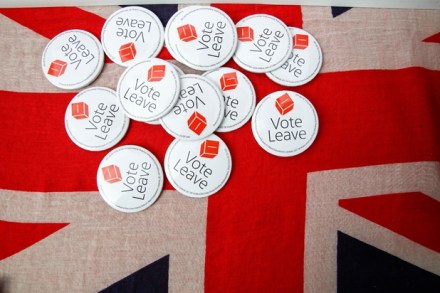
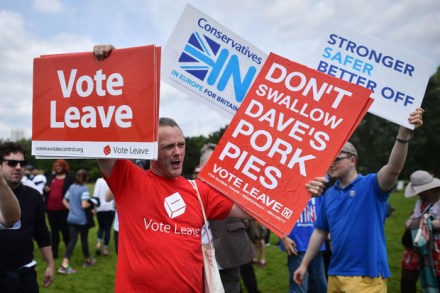
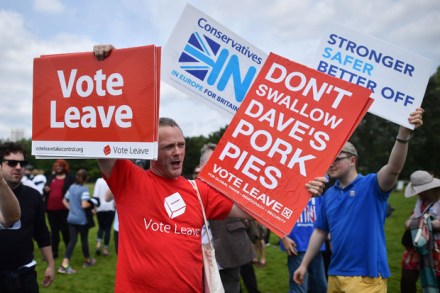
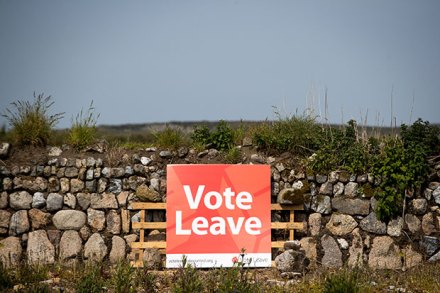
It sounds logical that Vote Leave should now disband, since the people have obligingly voted Leave, but is it wise? Who else can try to ensure that the Leave cause is not forgotten in internal Tory struggles, or in a war between Ukip and the rest? If it is right — which I think it is — that the Leave vote is the biggest shock ever administered to the main parties and the ruling elites since the collapse of the Munich agreement, then it follows that those parties and those elites will try to reverse or at least neuter the decision. There needs to be an organised resistance to them, run by people who know what they are talking about. I know that Dominic Cummings is longing to return to the wife and new-born baby whom he has hardly seen for eight weeks, but I fear that duty calls.

It’s time for George Osborne to go – and go now

From our UK edition

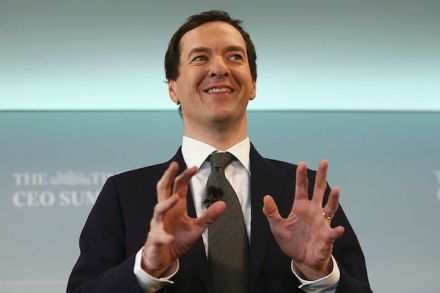
This is an extract from Charles Moore's Notes in the new issue of The Spectator, out tomorrow. George Osborne says he can stay in the government in some capacity (‘a decision for the next prime minister’). Monday’s Financial Times reported ‘Friends say a move to the Foreign Office would be the only other job that would appeal.’ No doubt they are right, but have Mr Osborne and his friends not noticed that what ‘appeals’ to him has nothing whatever to do with what the country needs? Unlike David Cameron, who said immediately and firmly that he will go, the Chancellor does not seem to understand that he has got it all wrong. His sense of entitlement is completely unfounded.

In praise of referendums – this one in particular

From our UK edition

Commentators have complained about this referendum — its ‘lies’, bad manners, bitterness. Without exactly disagreeing, I would nevertheless argue that it has performed at least one of the roles intended, which is to encourage people to consider the issue. If you are actively engaged in political debate, as candidate, activist, journalist etc, you believe (often erroneously) that you have thought through the big questions. If you are an unpolitical voter, you often haven’t. This is particularly true of the European question because, for 40 years, enormous efforts have been made by all the political parties to discourage you. David Cameron only finally conceded to us the right to have our say because, for internal party reasons, he was desperate.

The Spectator’s Notes | 22 June 2016

From our UK edition

Commentators have complained about this referendum — its ‘lies’, bad manners, bitterness. Without exactly disagreeing, I would nevertheless argue that it has performed at least one of the roles intended, which is to encourage people to consider the issue. If you are actively engaged in political debate, as candidate, activist, journalist etc, you believe (often erroneously) that you have thought through the big questions. If you are an unpolitical voter, you often haven’t. This is particularly true of the European question because, for 40 years, enormous efforts have been made by all the political parties to discourage you. David Cameron only finally conceded to us the right to have our say because, for internal party reasons, he was desperate.

The Spectator’s Notes | 16 June 2016

From our UK edition

The Remain campaign takes as its model the ‘No’ one in the 2014 Scottish referendum. First and last — hence the Osborne/Darling fantasy horror Budget on Wednesday — inspire fear. Second, late in the day, leave it all to Labour and get Gordon Brown to make a passionate speech (Mr Brown took this too literally and made almost exactly the same passionate speech). Finally, shortly before polling, get leaders of all stripes to make a solemn ‘vow’ to win over the doubters. I am trying to work out what that vow could be. All 27 other member states promising some guarantee of Britain’s independence within the EU?

Sir Mike Rake is Brexit’s best weapon

From our UK edition

I keep telling myself that the polls showing Leave ahead are too good to be true. But then I see Remain’s latest efforts and feel reassured. One of its earliest campaigners was the self-important businessman Sir Mike Rake who, I wrote at the time, is pure gold for Leave. This week he pops up again, ordering his Rolls-Royce workers to vote to preserve his seat at the top table. Keep talking, Sir Mike: until 23 June, we need to see much more of these hard-faced men who have done well out of Brussels. This is an extract from Charles Moore's Notes. The full article can be found here.

The Spectator’s Notes | 9 June 2016

From our UK edition

One of the most influential and learned figures in the British European debate is Rodney Leach. In the 1990s, he helped lead those of his fellow businessmen who became convinced that the abolition of the pound would be a disaster. He was a moving spirit in Business for Sterling and then in the ‘No’ campaign against the euro. This did much to persuade Gordon Brown, as Chancellor, to ditch euro entry plans in 2004. The following year, Lord Leach set up Open Europe, and continues as its chairman to this day. It is the most trusted think tank for research and debate on all EU questions, and is incredibly useful for the media because of its daily press digests, which enable us to follow the debate across the entire Continent.

Revealed: Rodney Leach’s verdict on Brexit

From our UK edition

One of the most influential and learned figures in the British European debate is Rodney Leach. In the 1990s, he helped lead those of his fellow businessmen who became convinced that the abolition of the pound would be a disaster. He was a moving spirit in Business for Sterling and then in the ‘No’ campaign against the euro. This did much to persuade Gordon Brown, as Chancellor, to ditch euro entry plans in 2004. The following year, Lord Leach set up Open Europe, and continues as its chairman to this day. It is the most trusted think tank for research and debate on all EU questions, and is incredibly useful for the media because of its daily press digests, which enable us to follow the debate across the entire Continent.

If it’s forbidden to call a baby Cyanide, should Chardonnay be allowed?

From our UK edition

According to a recent law report in the Times, the Court of Appeal has just forbidden a mother to name her daughter Cyanide. The child was born to a schizophrenic woman, as the result of a rape. The girl is in local authority care. The mother’s lawyers argued that it is a statutory duty to register a child with a name and that the law has no provision to refuse offensive names. But Lady Justice King (itself a striking, though not offensive name) found that the choice of name was an act of ‘parental responsibility’. Because of the care order, this responsibility had devolved upon the local authority, which did not like the name Cyanide. So far, so good.

The Spectator’s Notes | 2 June 2016

From our UK edition

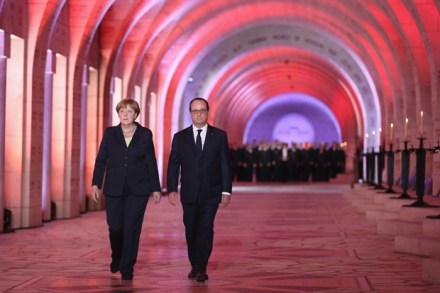
‘No one can seriously deny that European integration brought an end to Franco-German conflict and has settled the German question for good,’ wrote Niall Ferguson in the latest Sunday Times. I hesitate when confronted by such an assertion by such a learned professor. But I think I would seriously deny it, or at least seriously question it. Surely what brought an end to Franco-German conflict was the utter defeat of Nazi Germany. European integration was a symptom of that end, not its cause. As for settling the German question, isn’t it too early to say? The eurozone is the first large non-German area to have been dominated by Germany since 1945. It is a mess.

The Spectator’s notes | 26 May 2016

From our UK edition

Obviously there is no such thing as ‘Cameronism’, as there is ‘Thatcherism’; but once upon a time, David Cameron did have a project. It was called Tory modernisation, and his most imaginative adviser on the subject was Steve Hilton. At Policy Exchange, on Wednesday, Mr Hilton spoke, Mark Antony-like, over the dead body of Tory modernisation. On virtually every modernising count — localism, openness to the world, looking to the future, ignoring the interests of the rich — the EU is failing, he said. Yet Mr Cameron is staking his career on it. It is rather as if Mrs Thatcher, in her last years in office, were fighting flat out for nationalisation.

Jeremy Thorpe’s acquittal was a triumph for the jury system

From our UK edition

John Preston has just published a gripping account of the Jeremy Thorpe case, A Very English Scandal (Penguin). Sometimes the details make one laugh out loud or gasp with amazement at the tale of the shooting of Rinka, the Alsatian dog, and all that followed. But although I was completely carried along by the narrative, I found myself resisting the book’s implied conclusion that Thorpe’s acquittal of conspiracy to murder Norman Scott was a disgrace. Possibly I am biased, because my father worked for Thorpe over some of the period involved, writing his speeches and giving him political advice (luckily the personal and constituency sides of things never fell to him).

The Spectator’s notes | 12 May 2016

From our UK edition

One of the many problems with David Cameron’s threat that leaving the European Union could plunge us into war is that it sits so strangely with how he spoke about the EU before he called a referendum. In those days, he was studiedly cool about the union: he had no sentimental attachment to it, he told us, just a pragmatic weighing of the advantages for Britain, depending on what he could obtain. His ‘deal’ for a ‘reformed Europe’, supposedly essential to recommending a Remain vote, contained no Tolstoyan themes at all, just stuff about when migrant EU workers could claim benefits and suchlike. When he now says, ‘By the way, if we leave we’re all going to die,’ one feels he should have thought of that earlier.

The anti-corruption lobby want to revive colonialism

From our UK edition

I am no tax expert, but when 300 economists, particularly if led by Jeffrey Sachs and Thomas Piketty, all agree about something — as 364 did that Mrs Thatcher, in 1981, was messing things up — one can be confident they are mistaken. The 300 want this week’s global anti-corruption meeting to clamp down on tax havens. This is, among other things, an attack on Britain, because they call on us and the United States to deal with ‘all countries for which they are responsible’. This ignores the fact that some such places — Jersey and Guernsey, for example — are not governed by Britain, though they share the same Queen; and that others, such as Bermuda, the British Virgin Islands or the Caymans, though colonies, have systems of self-government.

We didn’t have a real choice in the 1975 referendum. We do now

From our UK edition

The comparison between the referendum questions — that asked in 1975 and the one which we shall be asked on 23 June — is interesting. In 1975, the question was ‘Do you think that the United Kingdom should remain part of the European Community (Common Market)?’ (Answer: Yes/No). Today, the question will be ‘Should the United Kingdom remain a member of European Union or leave the European Union?’ (Answer: Remain/Leave). The modern question is the fairer, and it also brings out how things have changed. In 1975, it seemed almost obvious that the answer was ‘yes’: even many who did not like EEC entry could see it was strange to leave only a couple of years after joining.

Why the FT’s Martin Wolf is wrong about the EU

From our UK edition

Last week, I wrote about the fevered state of mind of the Financial Times as British voters threaten to throw off their EU chains. Here is another example. Martin Wolf, usually the best columnist in the paper, wrote a column giving ten reasons to remain. He said: ‘Above all, those promoting departure ignore what the UK’s European partners think about the EU. Their political elites, particularly of Germany and France, regard the preservation of an integrated Europe as their highest national interests. They will want to make clear that departure carries a heavy price, which is likely to include attempts to drive euro-related financial markets out of London.’ Those who want to leave don’t ignore this at all!

The Spectator’s notes | 5 May 2016

From our UK edition

The comparison between the referendum questions — that asked in 1975 and the one which we shall be asked on 23 June — is interesting. In 1975, the question was ‘Do you think that the United Kingdom should remain part of the European Community (Common Market)?’ (Answer: Yes/No). Today, the question will be ‘Should the United Kingdom remain a member of European Union or leave the European Union?’ (Answer: Remain/Leave). The modern question is the fairer, and it also brings out how things have changed. In 1975, it seemed almost obvious that the answer was ‘yes’: even many who did not like EEC entry could see it was strange to leave only a couple of years after joining.