Charles Moore

Charles Moore

Charles Moore is The Spectator’s chairman.

He is a former editor of the magazine, as well as the Sunday Telegraph and the Daily Telegraph. He became a non-affiliated peer in July 2020.

The Spectator’s Notes | 23 February 2017

From our UK edition

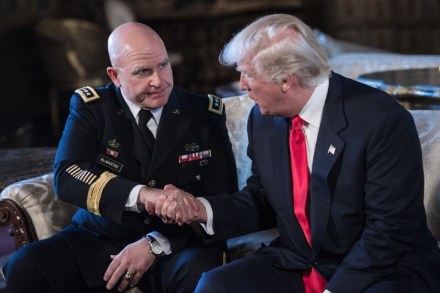
Last month, at Policy Exchange, I met a charming, quiet American general called H.R. McMaster. In conversation, I was struck by his zeal for Nato and his concern wherever the alliance is now weakest, as in Turkey. In his speech to the thinktank, he said clearly that Russia and China are attempting to ‘collapse’ the post-1945 and post-Cold War ‘political, economic and security order’, with unconventional forces hiding behind conventional ones, subversion, disinformation, propaganda, economic actions and ‘proxies’ such as organised crime networks. The situation had echoes of 1914, and the risk of a great-power war was the highest for 70 years.

George Osborne is to blame for the business rates fiasco

From our UK edition

It is almost always unwise to postpone the introduction of a big, scheduled tax change, but often tempting at the time. George Osborne, when Chancellor of the Exchequer in the coalition government, postponed the revaluation of business rates, when it was due two years ago, for obvious political reasons. So now it is happening, and it hurts worse than it would have then. The current rates are based on the rental value of business properties in 2010. Since then, the scene is transformed. The internet has called the whole concept of the ordinary, physical shop into question. Values have vastly altered and the political problem – as with the poll tax in the 1980s – is that losers are more vocal than gainers.

The obsession with diversity in theatre risks spoiling Shakespeare

From our UK edition

Twelfth Night launched at the National Theatre this week, with Malvolio turned into Malvolia. ‘We’ve definitely upped the gender-bendedness of the play,’ says Phoebe Fox, who is acting Olivia. Otiose, one might think, since the original is gender-bent to perfection. But Shakespeare did not have to wrestle with the strict controls now demanded in the subsidised theatre. In the same feature in which Phoebe Fox speaks, Ben Power, the deputy director of the National, tells the Sunday Times, ‘There are agendas we are aware of now, and we have targets in terms of gender and ethnicity, because we want to be as diverse as possible, speaking to our audiences, reflecting the nation to them.

What does Putin’s fascination with Eton tell us about him?

From our UK edition

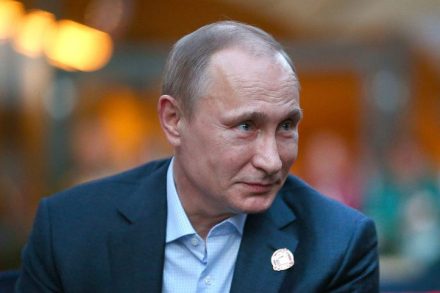
How does Vladimir Putin think about the world? It becomes dangerously important to know. I still have not seen a revealing speech by or discussion with him. I have found out a bit more, however, about the two-hour private interview conducted with him by several young Etonians last summer. One reason they got into the room, it seems, is that Mr Putin wanted to know about Eton and why it produced 19 prime ministers. The boys explained that one of the school’s great advantages was its societies — Political, Literary, Cheese etc. — largely organised by them, not by masters. They said these brought them into contact with a wide range of visiting speakers, broadening their minds.

The Spectator’s Notes | 16 February 2017

From our UK edition

How does Vladimir Putin think about the world? It becomes dangerously important to know. I still have not seen a revealing speech by or discussion with him. I have found out a bit more, however, about the two-hour private interview conducted with him by several young Etonians last summer. One reason they got into the room, it seems, is that Mr Putin wanted to know about Eton and why it produced 19 prime ministers. The boys explained that one of the school’s great advantages was its societies — Political, Literary, Cheese etc. — largely organised by them, not by masters. They said these brought them into contact with a wide range of visiting speakers, broadening their minds.

It’s no surprise that many Brexiteers are feeling anxious

From our UK edition

Although I started it, I apologise for prolonging an intercolumnar argument. Matthew Parris (4 February) is surely right that many Brexiteers in past months have been showing signs of anxiety. He attributes this to being ‘secretly, usually unconsciously, terrified that they’ve done the wrong thing’. This may be part of it — it would be a strange person, after making such a momentous decision, who felt no qualms — but I don’t think it is the chief explanation. Our real fear is that, having come so far, we might be cheated of what we thought we had achieved.

John Bercow’s Trump intervention was out of order

From our UK edition

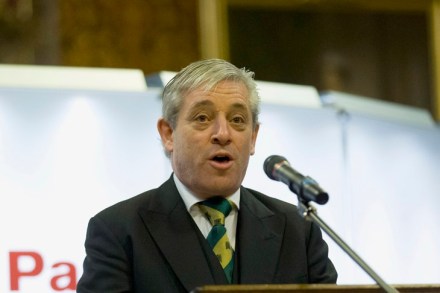
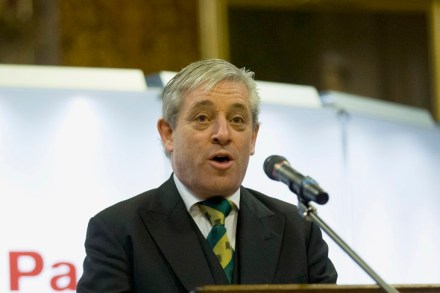
As we have been reminded this week, the most famous words (apart from ‘Order, order’) ever uttered by a Speaker of the House of Commons were those of William Lenthall. When King Charles I entered Parliament in search of the ‘five birds’ in 1642, Lenthall knelt to the King but told him, ‘I have neither eyes to see, nor tongue to speak in this place but as the House is pleased to direct me.’ It is only on that basis that the Speaker speaks. As soon as John Bercow said — of the speculative possibility that Donald Trump should address both Houses of Parliament — ‘I feel very strongly that our opposition to racism and sexism’ meant that the speech should not take place, he was out of order.

The Spectator’s Notes | 9 February 2017

From our UK edition

As we have been reminded this week, the most famous words (apart from ‘Order, order’) ever uttered by a Speaker of the House of Commons were those of William Lenthall. When King Charles I entered Parliament in search of the ‘five birds’ in 1642, Lenthall knelt to the King but told him, ‘I have neither eyes to see, nor tongue to speak in this place but as the House is pleased to direct me.’ It is only on that basis that the Speaker speaks. As soon as John Bercow said — of the speculative possibility that Donald Trump should address both Houses of Parliament — ‘I feel very strongly that our opposition to racism and sexism’ meant that the speech should not take place, he was out of order.

The Spectator’s Notes | 2 February 2017

From our UK edition

As he left the editorship of The Spectator in March 1984, Alexander Chancellor wrote in this space: ‘When I joined the paper as editor in 1975, people were in the habit of asking me what my “policy” was going to be… How desperately uneasy this question made me. If there was a lavatory in the vicinity, I would lock myself inside it. I was sure I ought to have a “policy”… but I most certainly hadn’t got one.’ As his assistant editor, I witnessed the dismay on the faces of proprietors, advertisers and various big shots at Alexander’s answers to this sort of question.

The green policies that kill what they’re supposed to protect

From our UK edition

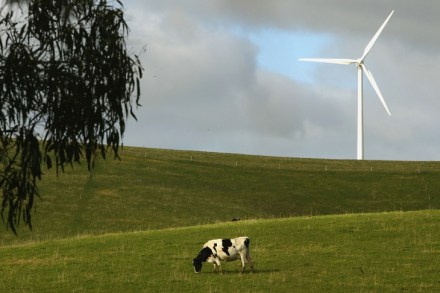
The politics of climate change will eventually turn, partly because the policies are often so un-Green in their effects. Wood-burning is not good for the environment. Nor is diesel. The government paid people to switch to diesel cars to help save the planet, thus damaging the breathing of thousands. At the Global Warming Policy Foundation last week, Fritz Varenholt, an environmentalist, scientist and SPD adviser in Germany, reported the increasing split between Greens and conservationists there. You can either have constantly functioning wind farms or healthy bird populations, but not both. The common buzzard and the red kite are now endangered in Germany.

Why Northern Ireland’s boiler scandal overheated

From our UK edition

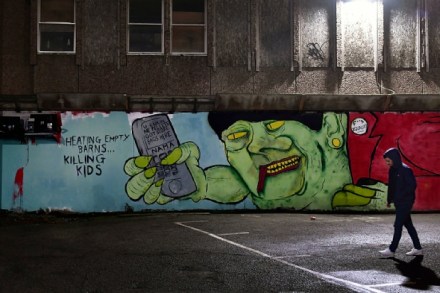
Visiting Northern Ireland last autumn, I met a very prosperous man who enthused to me about the Renewable Heat Incentive in the province. It paid him to install wood-pellet boilers and heat his rural business. After the political scandal broke, I understood why he was so happy. The RHI, as managed in Northern Ireland, had no upper limit, so there was no cheating involved in getting as many non-domestic boilers as you could manage. If you installed the boiler you got paid £1.60 for every £1 of pellets you burned, without limit. I gather there was particularly massive take-up by members of the Democratic Unionist Party, and their Free Presbyterian churches glow red day and night in consequence.

The Spectator’s Notes | 26 January 2017

From our UK edition

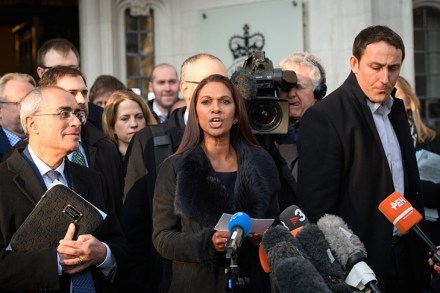
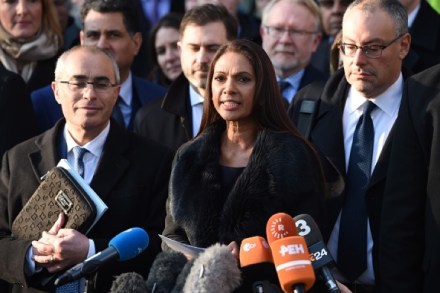
The English tradition of dissenting judgments in important civil cases is a good one. They are often better than the majority view, because they tend to be advanced by judges who resist the self-aggrandisement of their profession. In the Miller case on triggering Article 50, before the Supreme Court, Lords Reed, Carnwath and Hughes dissented from the other eight. This is what Lord Reed says: ‘…the argument that withdrawal from the EU would alter domestic law and destroy statutory rights, and therefore cannot be undertaken without a further Act of Parliament, has to be rejected even if one accepts that the 1972 Act creates statutory rights and that withdrawal will alter the law of the land.

In praise of the Supreme Court’s dissenting judges

From our UK edition

The English tradition of dissenting judgments in the important cases of the civil law is a good one. They are often better than the majority ones, because they tend to be advanced by judges who resist the self-aggrandisement of their profession. In the Miller case on triggering Article 50, before the Supreme Court, Lords Reed, Carnwath and Hughes dissented. This is what Lord Reed says about: ‘…the argument that withdrawal from the EU would alter domestic law and destroy statutory rights, and therefore cannot be undertaken without a further Act of Parliament, has to be rejected even if one accepts that the 1972 Act creates statutory rights and that withdrawal will alter the law of the land.

The Spectator’s Notes | 19 January 2017

From our UK edition

It is hard to be shocked by anything in these tumultuous times, but I was brought up short by the ‘attic’ headline of Tuesday’s Times, advertising the paper’s T2 section: ‘Up close and personal with Donald Trump — Michael Gove’ , it said, and continued, ‘Sex after 50: it’s fabulous’.. The earliest members of Alcoholics Anonymous offered their famous Twelve Steps, which the drunkard must take in order to recover, born of their own experience. The Twelve Steps are still the foundation of AA. They work because they are taken by people who have hit rock bottom and realise it. The first step says, ‘We admitted we were powerless over alcohol — that our lives had become unmanageable.

Theresa May’s Twelve Steps for EU recovery

From our UK edition

The earliest members of Alcoholics Anonymous offered their famous Twelve Steps, which the drunkard must take in order to recover, born of their own experience. The Twelve Steps are still the foundation of AA. They work because they are taken by people who have hit rock bottom and realise it. The first step says, ‘We admitted we were powerless over alcohol — that our lives had become unmanageable.’ Theresa May’s Twelve Objectives, announced in her outstanding speech at Lancaster House of Tuesday, play a similar role for national recovery, substituting the words ‘European Union’ for ‘alcohol’. Until the June referendum, Mrs May, like millions of others, barely even admitted there was a problem.

What happened after I ‘voted’ twice in the EU referendum?

From our UK edition

Kind readers sometimes ask what has happened to the case against me for electoral fraud. In these Notes on 20 August, I revealed that I had drawn attention in the EU referendum to the ease with which one could vote twice. Legitimately registered to vote in Sussex and in London, I had voted Leave in Sussex, and then gone to London, collected my ballot paper unchallenged, and spoilt it by writing on it that it was ‘my protest at how lax the voting rules are’. The Electoral Commission then publicly announced that it was referring my case to the police. Just before Christmas, I was dismayed to receive a letter from the Met’s Special Inquiry Team of Homicide and Major Crime Command. Last week, I met an officer in a London hotel.

The Spectator’s Notes | 12 January 2017

From our UK edition

At the Golden Globes ceremony, Meryl Streep attacked Donald Trump because he ‘imitated a disabled reporter’. ‘When the powerful use their position to bully others, we all lose,’ she added. It has not been explained over here that hers is a disputed version of what happened. The controversy began in November 2015, when Trump, campaigning, alleged that ‘thousands and thousands’ of Muslims in Jersey City had publicly celebrated the attack on the Twin Towers in September 2001. The allegation caused outrage, and it seems that Trump’s idea of numbers was wildly exaggerated. However Trump’s people did produce evidence that such a celebration had taken place. One piece was a contemporary report in the Washington Post by Serge Kovaleski.

Meryl Streep won an Oscar for imitating the afflicted

From our UK edition

At the Golden Globes ceremony, Meryl Streep attacked Donald Trump because he ‘imitated a disabled reporter’. ‘When the powerful use their position to bully others, we all lose,’ she added. It has not been explained over here that hers is a disputed version of what happened. The controversy began in November 2015, when Trump, campaigning, alleged that ‘thousands and thousands’ of Muslims in Jersey City had publicly celebrated the attack on the Twin Towers in September 2001. The allegation caused outrage, and it seems that Trump’s idea of numbers was wildly exaggerated. https://www.youtube.com/watch?v=NxyGmyEby40 However Trump’s people did produce evidence that such a celebration had taken place.

There’s life after Brexit for Cambridge University

From our UK edition

As a former student of English at Cambridge, I am sent the faculty magazine, 9 West Road. Its latest issue leads with a long article by Peter de Bolla, chair of the faculty, headlined — with intentionally bitter irony — ‘Now we are in control’. On and on he goes — the shocked perplexity of ‘French locals’ in ‘our holiday village’ that we could be Brexiting, the putative loss of the EU exchange students who ‘amaze and challenge’ him, how you cannot study for the tripos’ famous Tragedy paper ‘from the perspective of a monocultural and inwardly facing society or polis’. Prof. de Bolla himself is so monocultural and inward-facing that he cannot imagine any way of running international exchanges without the EU.

The Spectator’s Notes | 5 January 2017

From our UK edition

‘My deep concern is that because of changed ways that news is now gathered, collated, packaged, delivered and displayed, the country can often find itself in… the tyrannical grip of the massed media… which could seriously threaten the political health of the United Kingdom as a Parliamentary democracy.’ This is from a letter I have received from Field Marshal Lord Bramall. Lord Bramall has reason to complain, since he was recently, in his nineties, the victim of preposterous child abuse allegations, invented by the fantasist ‘Nick’, fanned by the media, and wild-goose-chased by the Metropolitan Police. His complaint, however, goes much wider, including how the British media misread the Arab Spring and thus Syria. He wonders what should be done.