Charles Moore

Charles Moore

Charles Moore is The Spectator’s chairman.

He is a former editor of the magazine, as well as the Sunday Telegraph and the Daily Telegraph. He became a non-affiliated peer in July 2020.

The EU’s leaders are flummoxed by democracy

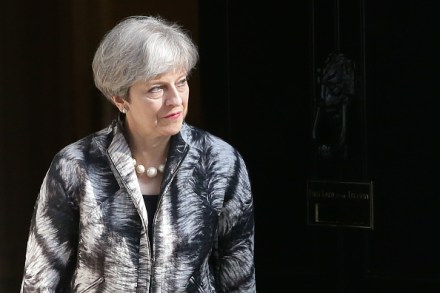
Guy Verhofstadt, the European Parliament’s main Brexit negotiator, tweeted on Monday: ‘Any #Brexit deal requires a strong & stable understanding of the complex issues involved. The clock is ticking — it’s time to get real.’ This was on the same day as media reports — allegedly leaked by associates of Jean-Claude Juncker, the European Commission president — criticised Theresa May for her naivety about Brexit talks at the dinner she gave Mr Juncker last week. These tactics are intended to affect our general election. By throwing Mrs May’s campaign slogan adjectives ‘strong and stable’ back in her face, Mr Verhofstadt was goading her at the decisive moment of her political career. So were the friends of Mr Juncker.

The Spectator’s Notes | 4 May 2017

Guy Verhofstadt, the European Parliament’s main Brexit negotiator, tweeted on Monday: ‘Any #Brexit deal requires a strong & stable understanding of the complex issues involved. The clock is ticking — it’s time to get real.’ This was on the same day as media reports — allegedly leaked by associates of Jean-Claude Juncker, the European Commission president — criticised Theresa May for her naivety about Brexit talks at the dinner she gave Mr Juncker last week. These tactics are intended to affect our general election. By throwing Mrs May’s campaign slogan adjectives ‘strong and stable’ back in her face, Mr Verhofstadt was goading her at the decisive moment of her political career. So were the friends of Mr Juncker.

Will Prince Charles’s ‘climate collapse’ prediction come true?

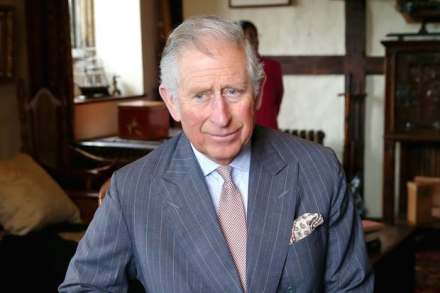
Each year, this column has the melancholy duty of reminding the public of the Prince of Wales’s prediction, made in Brazil in March 2009, that there were only 100 months left to prevent ‘irretrievable climate collapse’. Those 100 months will have elapsed at the end of next month, so it looks as if we are all doomed. The general election on 8 June will therefore be pretty pointless. It is noticeable, however, that the Prince has not, in recent years, repeated his exact dating of the catastrophe, muttering, in 2015, that it might be 35 years. Even more striking was his co-authorship, at the beginning of this year, of the Ladybird Book of Climate Change.

Does Emmanuel Macron represent the ‘Uber-isation’ of politics?

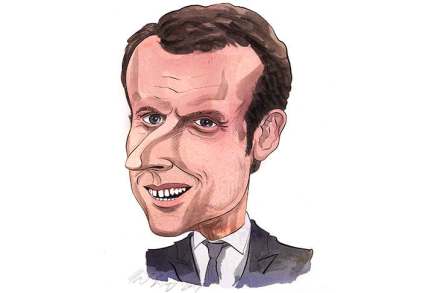
A French friend tells me that Emmanuel Macron represents the ‘Uber-isation’ of politics. I suppose that makes Le Pen the spokesman for the black cab interest. I want to live in a country which manages a modus vivendi between these two schools of thought. If life is all Uber, it will be freer and cheaper, but also more ignorant and grotty. If life is all black cabs, prices will be too high and cabbies will revert to the surlier service they used to give in the 20th century. Perhaps such peaceful coexistence is an impossible dream.

Would Le Pen or Macron be better for Brexit?

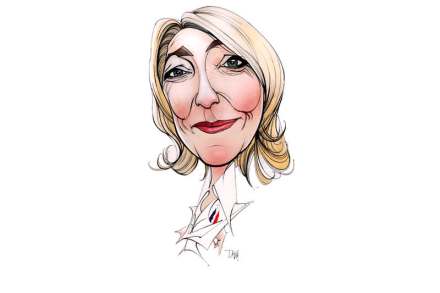
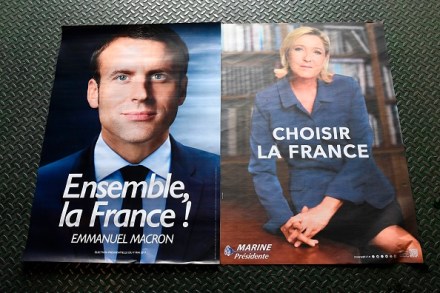
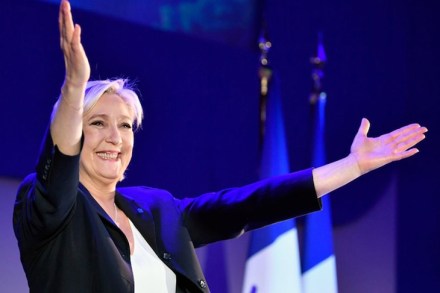
With Emmanuel Macron and Marine Le Pen through to the final in France, people of a conservative disposition might feel themselves spoilt for choice. You can have either the believer in free markets and open societies or the upholder of sovereignty and national identity. In both cases, the left doesn’t get a look-in. But what if it isn’t like that at all? What if Macron, far from opposing the big state, is just a more technocratic version of the usual dirigiste from ENA? What if Le Pen, far from wanting a nation’s genius expressed in its vigorous parliamentary democracy, is just a spokesman for joyless resentment, looking for handouts for angry white people?

The Spectator’s Notes | 27 April 2017

With Emmanuel Macron and Marine Le Pen through to the final in France, people of a conservative disposition might feel themselves spoilt for choice. You can have either the believer in free markets and open societies or the upholder of sovereignty and national identity. In both cases, the left doesn’t get a look-in. But what if it isn’t like that at all? What if Macron, far from opposing the big state, is just a more technocratic version of the usual dirigiste from ENA? What if Le Pen, far from wanting a nation’s genius expressed in its vigorous parliamentary democracy, is just a spokesman for joyless resentment, looking for handouts for angry white people?

Tim Farron is the victim of a witch hunt

Journalists have hunted down Tim Farron, the Liberal Democrat leader, about Christian views of homosexuality. Originally, they asked him the wrong question, doctrinally, by inquiring whether he thought ‘homosexuality’ was a sin. This was an easy one for him to repudiate, since an involuntary disposition is not a sin. I forbore to point this out, since I didn’t want to make their persecution of poor Mr Farron any easier, but by the beginning of this week, they had realised their mistake and began pressing him to state whether gay sex was a sin. (The Times covered this with the surprising headline: ‘Farron shrugs off gay sex row to target veteran’s seat’.

Those who want a clear Brexit will need to make sure it is in the manifesto

Mrs May’s decision to call a snap general election is not very welcome, and I had thought she would think it too risky, but it makes sense — obviously because of Jeremy Corbyn and, a bit less obviously, because of public attitudes to her. She has brilliantly convinced people that she is a straightforward, unpolitical person who doesn’t descend to political games. This is untrue. She is, however, a person without childish vanity, celebrity hunger or media obsession. She benefits from a big cultural change, which descends from Mrs Thatcher, via all sorts of others — Angela Merkel, Ruth Davidson, Nicola Sturgeon. Women are now seen as stronger, more real and less silly than men. This is an old folk wisdom, but it only recently became the orthodoxy in politics.

Theresa May doesn’t trust enough people for a power ‘circle’. A triangle, maybe

The fact that nothing leaked about Mrs May’s snap election tells you much of what you need to know about her. It shows how iron is her discipline and how close her inner circle (so close, in fact, that it is a triangle rather than a circle). It suggests that she takes neither her cabinet nor her party into her confidence. It shows that if she wins the general election, her control of her administration will be much tighter than that of Margaret Thatcher (which was surprisingly loose) and even than that of David Cameron (which was surprisingly tight). Finally, it shows that if she loses, or gets a result no better than the present parliamentary arithmetic, she will find herself friendless.

The Spectator’s notes | 20 April 2017

The fact that nothing leaked about Mrs May’s snap election tells you much of what you need to know about her. It shows how iron is her discipline and how close her inner circle (so close, in fact, that it is a triangle rather than a circle). It suggests that she takes neither her cabinet nor her party into her confidence. It shows that if she wins the general election, her control of her administration will be much tighter than that of Margaret Thatcher (which was surprisingly loose) and even than that of David Cameron (which was surprisingly tight). Finally, it shows that if she loses, or gets a result no better than the present parliamentary arithmetic, she will find herself friendless.

In defence of the stiff upper lip

At the time of the death of Diana, Princess of Wales, in 1997, Prince William and Prince Harry were in Balmoral. Somebody who claimed to know told me shortly afterwards that what the boys had most wanted to do, in reaction to the terrible news, was to go out and shoot a stag. They were not allowed to. I do not know if the story was true, but if it was, the boys’ desire seemed understandable. How could anyone — much less a teenager and a 12-year-old — ‘process’ such an event? The best immediate solace would be something strenuous, physical and wild. Twenty years later, Prince Harry has told us how it has taken him all this time — including ‘two years of total chaos’ — to deal with his shocking loss.

Every Easter, I think of the artist and poet David Jones

Each Easter, I think of David Jones (1895-1974). He was a distinguished painter and, I would (though unqualified) say, a great poet. There is a new, thorough biography of him by Thomas Dilworth (Cape). A sympathetic review in the Guardian wrestles with why he is not better known: ‘The centrality of religion to Jones’s work offers a clue to his obscurity.’ Jones recognised this possibility himself, writing about ‘The Break’ in culture, which began in the 19th century. He thought it had to do with the decline of religion, but more with a changed attitude to art, caused by mass production and affecting what he called ‘the entire world of sacrament and sign’.

The Spectator’s notes | 12 April 2017

Each Easter, I think of David Jones (1895-1974). He was a distinguished painter and, I would (though unqualified) say, a great poet. There is a new, thorough biography of him by Thomas Dilworth (Cape). A sympathetic review in the Guardian wrestles with why he is not better known: ‘The centrality of religion to Jones’s work offers a clue to his obscurity.’ Jones recognised this possibility himself, writing about ‘The Break’ in culture, which began in the 19th century. He thought it had to do with the decline of religion, but more with a changed attitude to art, caused by mass production and affecting what he called ‘the entire world of sacrament and sign’.

The Brexit battle is only just beginning

Nick Robinson, of the BBC, compares the Brexiteers and Remainers to ‘fighters who emerge after months of hiding in the bush, [and] seem not to accept that the war is over’. It is a false analogy because, unfortunately, the war is not over. Its most arduous phase has only just begun.

The Spectator’s Notes | 6 April 2017

Cadbury and the National Trust stand accused of taking the Easter out of Easter eggs. The Trust’s ‘Easter Egg Trail’ is now renamed the ‘Cadbury Egg Hunt’. My little theory about the National Trust is that all its current woes result from the tyranny of success: it has become so attached to ever-growing membership (now more than four million) that everything is skewed to this and the original purposes are neglected. No doubt the substitution of the word ‘Easter’ by the word ‘Cadbury’ seemed a small price to pay for big sponsorship. This decision is a symptom of the Trust’s problem. But for the fate of Easter itself, one need not worry.

The National Trust is compromised by its own success

Cadbury and the National Trust stand accused of taking the Easter out of Easter eggs. The Trust’s ‘Easter Egg Trail’ is now renamed the ‘Cadbury Egg Hunt’. My little theory about the National Trust is that all its current woes result from the tyranny of success: it has become so attached to ever-growing membership (now more than four million) that everything is skewed to this and the original purposes are neglected. No doubt the substitution of the word ‘Easter’ by the word ‘Cadbury’ seemed a small price to pay for big sponsorship. This decision is a symptom of the Trust’s problem. But for the fate of Easter itself, one need not worry.

Battersea Dogs’ Home’s political advocacy is a step too far

Battersea Dogs and Cats Home is running a poster campaign to increase sentences for cruelty to animals. The current maximum is six months. It is probably popular — almost all campaigns for higher prison sentences are. But I doubt if the public interest would be served by locking up offenders for five years, as Battersea demands. The prisons are already full to bursting, increasingly by elderly people accused (in some cases, falsely) of ‘historic’ child abuse. Each prisoner costs the taxpayer more than £30,000 a year. One should be prepared to listen to the arguments, however. My real point is different: why should a dogs’ home campaign on public policy?

When our armed police open fire have we got their backs?

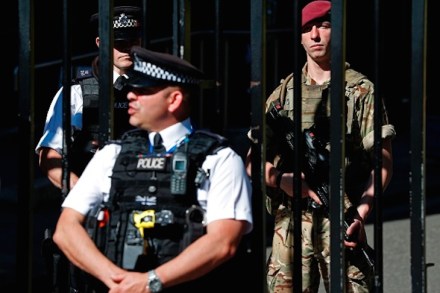
I walked past Parliament, five days after Khalid Masood’s fatal attack. I looked at all the armed policemen on all the gates visible to the public. All were talking to one another rather than surveying the scene in front of them. As I write, the only person, so far as we know, being actively investigated by the authorities for his part in the events of last week is Sir Michael Fallon’s close protection officer, who shot Masood dead. Under our rules, it is automatic that the Independent Police Complaints Commission investigates any officer who shoots anyone. It is hard to know whether to admire this as a mark of civilisation or gasp in exasperation.

Let’s compare Sturgeon and May’s sure-footedness – not their legs

One must not make odious comparisons between Mrs May’s legs and those of Ms Sturgeon, but it is not sexist to ask which is the more sure-footed. So far, Ms Sturgeon has run much the faster, and by doing so has gained attention far in excess of the numbers she can command. Mrs May might look the more plodding. But as Ms Sturgeon charges forward yet again with a call for another referendum, I wonder if she is becoming like Bonnie Prince Charlie, who reached Derby, and then slipped.

The Spectator’s Notes | 30 March 2017

An email from the high-minded Carnegie Endowment, marking the triggering of Article 50 and the 60th anniversary of the Treaty of Rome, speaks of ‘The Closing of the European Mind’. ‘The cult of the protective sovereign nation-state,’ it goes on, ‘will not provide convincing solutions to 21st-century challenges, which are inherently transnational.’ This is true, in a way. Lots of modern challenges cannot be solved by the nation-state alone. But is there anyone — even including the ‘Anywheres’ defined recently by David Goodhart — who would be happy to inhabit a space completely unprotected by a sovereign state?