Charles Moore

Charles Moore

Charles Moore is The Spectator’s chairman.

He is a former editor of the magazine, as well as the Sunday Telegraph and the Daily Telegraph. He became a non-affiliated peer in July 2020.

The Spectator’s Notes | 18 May 2017

From our UK edition

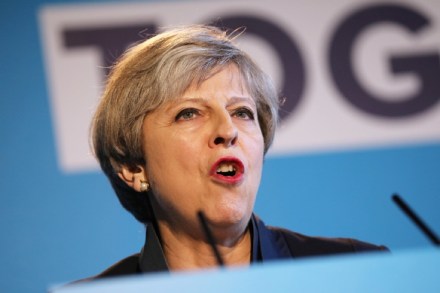
‘Exclusive invitation: I want to hear from you, Charles’, it said in my inbox. Theresa May wanted me to take part in her ‘telephone town hall’, she told me, offering ‘an opportunity to voice your opinions and ask questions directly to me in a simple and open way’. Unfortunately, the line was open only between 7 and 8 on Tuesday night, and I was engaged elsewhere. One thing I might have asked was ‘Who do you listen to before you say something in public?’ Although Mrs May has a reputation for caution, she is capable of throwing out ideas which sound as if they have not been tested on the people they might affect.

Jeremy Corbyn, the new Worzel Gummidge

From our UK edition

Lord Ashcroft’s reports from his election focus groups give a flavour of attitudes. All group members were asked to name a fictional character whom each party leader most resembles. One suggested Worzel Gummidge, the scarecrow, for Jeremy Corbyn. That was what everyone called Michael Foot in 1983. I wonder if the group member was old enough to remember this, or whether the comparison just swam naturally into her mind. This is an extract from Charles Moore's Notes. The full article is available tomorrow.

To tax the rich, introduce a tax cut

From our UK edition

Jeremy Corbyn wants to put up income tax only for people who earn more than £80,000 a year, he says. Anyone below that figure is safe. This reminds me of John Smith’s ‘shadow Budget’ in the 1992 general election. Smith said that the top rate of income tax would rise to 50 per cent for everyone earning more than £36,375 a year (which would be just under £72,000 today). Most people earned much less than the sum chosen, but voters decided they did not like such a clear intention to damage the higher earnings they hoped they might one day achieve. The shadow Budget was said to have lost Labour the election. Perhaps bearing this in mind, Mr Corbyn has so far avoided a specific percentage and pitched the taxable sum a little higher, but the signal is similar.

Kelvin MacKenzie isn’t the one to blame in the Ross Barkley row

From our UK edition

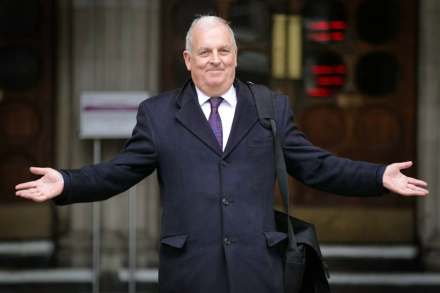
I must protest at the Sun’s sacking of Kelvin MacKenzie. As shop steward for the small trade union of columnists who were once editors, I can state categorically that the editor, not the writer, is ultimately responsible for what is printed. In no way, shape or form will my members be scapegoated by the boss class. It is irrelevant how offensive MacKenzie’s column was (unless, which no one has suggested, he was concealing material facts from his editor). The editor published it. If writers are to be made to swing for editorial decisions or inattentions, there soon won’t be any writers left.

The Spectator’s Notes | 11 May 2017

From our UK edition

Jeremy Corbyn wants to put up income tax only for people who earn more than £80,000 a year, he says. Anyone below that figure is safe. This reminds me of John Smith’s ‘shadow Budget’ in the 1992 general election. Smith said that the top rate of income tax would rise to 50 per cent for everyone earning more than £36,375 a year (which would be just under £72,000 today). Most people earned much less than the sum chosen, but voters decided they did not like such a clear intention to damage the higher earnings they hoped they might one day achieve. The shadow Budget was said to have lost Labour the election.

Le Pen – the female champion of the excluded – trumps Europe’s shouty men

From our UK edition

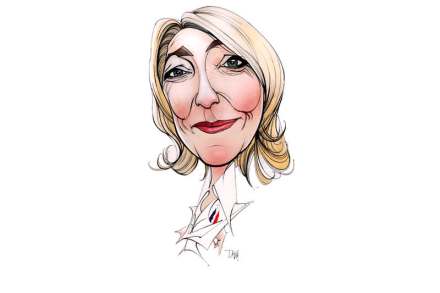
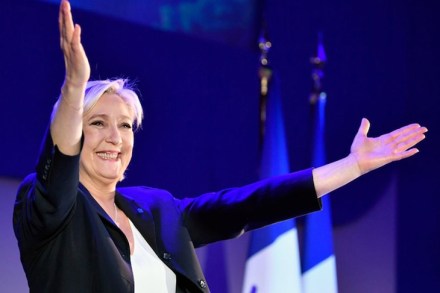
Pierre Poujade was a French shopkeeper who, in the mid-1950s, led quite a powerful right-wing revolt in favour of the little man against the elites. The leader of his party’s youth branch was Jean-Marie Le Pen. The word ‘Poujadiste’ is not usually intended as a compliment in France or here, and the late Christopher Soames did not intend it as such — though he served in her cabinet — when he privately described Mrs Thatcher as ‘Poujade with tits’. But if, as seems quite likely, Marine Le Pen wins 40 per cent of the votes in the French presidential election on Sunday (let alone if she wins a majority), something like Poujadism will have gained a strength way beyond that of its founder.

The EU’s leaders are flummoxed by democracy

From our UK edition

Guy Verhofstadt, the European Parliament’s main Brexit negotiator, tweeted on Monday: ‘Any #Brexit deal requires a strong & stable understanding of the complex issues involved. The clock is ticking — it’s time to get real.’ This was on the same day as media reports — allegedly leaked by associates of Jean-Claude Juncker, the European Commission president — criticised Theresa May for her naivety about Brexit talks at the dinner she gave Mr Juncker last week. These tactics are intended to affect our general election. By throwing Mrs May’s campaign slogan adjectives ‘strong and stable’ back in her face, Mr Verhofstadt was goading her at the decisive moment of her political career. So were the friends of Mr Juncker.

The Spectator’s Notes | 4 May 2017

From our UK edition

Guy Verhofstadt, the European Parliament’s main Brexit negotiator, tweeted on Monday: ‘Any #Brexit deal requires a strong & stable understanding of the complex issues involved. The clock is ticking — it’s time to get real.’ This was on the same day as media reports — allegedly leaked by associates of Jean-Claude Juncker, the European Commission president — criticised Theresa May for her naivety about Brexit talks at the dinner she gave Mr Juncker last week. These tactics are intended to affect our general election. By throwing Mrs May’s campaign slogan adjectives ‘strong and stable’ back in her face, Mr Verhofstadt was goading her at the decisive moment of her political career. So were the friends of Mr Juncker.

Will Prince Charles’s ‘climate collapse’ prediction come true?

From our UK edition

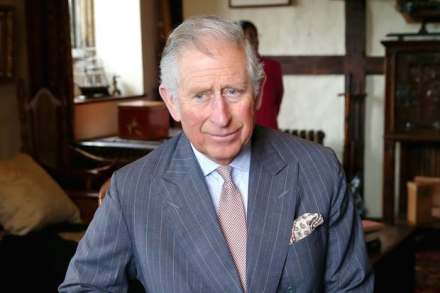
Each year, this column has the melancholy duty of reminding the public of the Prince of Wales’s prediction, made in Brazil in March 2009, that there were only 100 months left to prevent ‘irretrievable climate collapse’. Those 100 months will have elapsed at the end of next month, so it looks as if we are all doomed. The general election on 8 June will therefore be pretty pointless. It is noticeable, however, that the Prince has not, in recent years, repeated his exact dating of the catastrophe, muttering, in 2015, that it might be 35 years. Even more striking was his co-authorship, at the beginning of this year, of the Ladybird Book of Climate Change.

Does Emmanuel Macron represent the ‘Uber-isation’ of politics?

From our UK edition

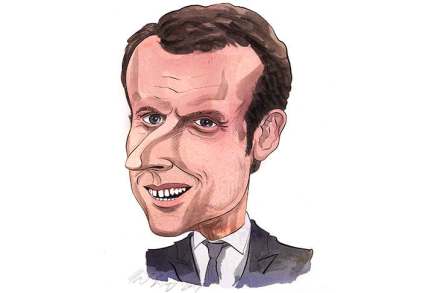
A French friend tells me that Emmanuel Macron represents the ‘Uber-isation’ of politics. I suppose that makes Le Pen the spokesman for the black cab interest. I want to live in a country which manages a modus vivendi between these two schools of thought. If life is all Uber, it will be freer and cheaper, but also more ignorant and grotty. If life is all black cabs, prices will be too high and cabbies will revert to the surlier service they used to give in the 20th century. Perhaps such peaceful coexistence is an impossible dream.

Would Le Pen or Macron be better for Brexit?

From our UK edition

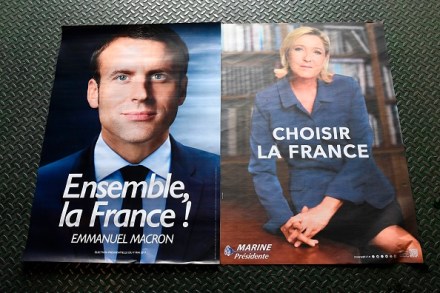
With Emmanuel Macron and Marine Le Pen through to the final in France, people of a conservative disposition might feel themselves spoilt for choice. You can have either the believer in free markets and open societies or the upholder of sovereignty and national identity. In both cases, the left doesn’t get a look-in. But what if it isn’t like that at all? What if Macron, far from opposing the big state, is just a more technocratic version of the usual dirigiste from ENA? What if Le Pen, far from wanting a nation’s genius expressed in its vigorous parliamentary democracy, is just a spokesman for joyless resentment, looking for handouts for angry white people?

The Spectator’s Notes | 27 April 2017

From our UK edition

With Emmanuel Macron and Marine Le Pen through to the final in France, people of a conservative disposition might feel themselves spoilt for choice. You can have either the believer in free markets and open societies or the upholder of sovereignty and national identity. In both cases, the left doesn’t get a look-in. But what if it isn’t like that at all? What if Macron, far from opposing the big state, is just a more technocratic version of the usual dirigiste from ENA? What if Le Pen, far from wanting a nation’s genius expressed in its vigorous parliamentary democracy, is just a spokesman for joyless resentment, looking for handouts for angry white people?

Tim Farron is the victim of a witch hunt

From our UK edition

Journalists have hunted down Tim Farron, the Liberal Democrat leader, about Christian views of homosexuality. Originally, they asked him the wrong question, doctrinally, by inquiring whether he thought ‘homosexuality’ was a sin. This was an easy one for him to repudiate, since an involuntary disposition is not a sin. I forbore to point this out, since I didn’t want to make their persecution of poor Mr Farron any easier, but by the beginning of this week, they had realised their mistake and began pressing him to state whether gay sex was a sin. (The Times covered this with the surprising headline: ‘Farron shrugs off gay sex row to target veteran’s seat’.

Those who want a clear Brexit will need to make sure it is in the manifesto

From our UK edition

Mrs May’s decision to call a snap general election is not very welcome, and I had thought she would think it too risky, but it makes sense — obviously because of Jeremy Corbyn and, a bit less obviously, because of public attitudes to her. She has brilliantly convinced people that she is a straightforward, unpolitical person who doesn’t descend to political games. This is untrue. She is, however, a person without childish vanity, celebrity hunger or media obsession. She benefits from a big cultural change, which descends from Mrs Thatcher, via all sorts of others — Angela Merkel, Ruth Davidson, Nicola Sturgeon. Women are now seen as stronger, more real and less silly than men. This is an old folk wisdom, but it only recently became the orthodoxy in politics.

Theresa May doesn’t trust enough people for a power ‘circle’. A triangle, maybe

From our UK edition

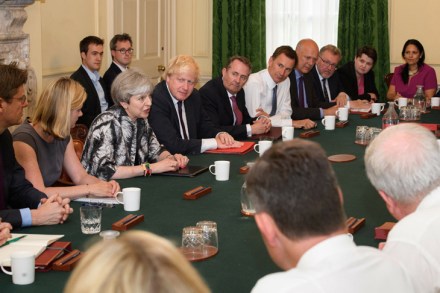
The fact that nothing leaked about Mrs May’s snap election tells you much of what you need to know about her. It shows how iron is her discipline and how close her inner circle (so close, in fact, that it is a triangle rather than a circle). It suggests that she takes neither her cabinet nor her party into her confidence. It shows that if she wins the general election, her control of her administration will be much tighter than that of Margaret Thatcher (which was surprisingly loose) and even than that of David Cameron (which was surprisingly tight). Finally, it shows that if she loses, or gets a result no better than the present parliamentary arithmetic, she will find herself friendless.

The Spectator’s notes | 20 April 2017

From our UK edition

The fact that nothing leaked about Mrs May’s snap election tells you much of what you need to know about her. It shows how iron is her discipline and how close her inner circle (so close, in fact, that it is a triangle rather than a circle). It suggests that she takes neither her cabinet nor her party into her confidence. It shows that if she wins the general election, her control of her administration will be much tighter than that of Margaret Thatcher (which was surprisingly loose) and even than that of David Cameron (which was surprisingly tight). Finally, it shows that if she loses, or gets a result no better than the present parliamentary arithmetic, she will find herself friendless.

In defence of the stiff upper lip

From our UK edition

At the time of the death of Diana, Princess of Wales, in 1997, Prince William and Prince Harry were in Balmoral. Somebody who claimed to know told me shortly afterwards that what the boys had most wanted to do, in reaction to the terrible news, was to go out and shoot a stag. They were not allowed to. I do not know if the story was true, but if it was, the boys’ desire seemed understandable. How could anyone — much less a teenager and a 12-year-old — ‘process’ such an event? The best immediate solace would be something strenuous, physical and wild. Twenty years later, Prince Harry has told us how it has taken him all this time — including ‘two years of total chaos’ — to deal with his shocking loss.

Every Easter, I think of the artist and poet David Jones

From our UK edition

Each Easter, I think of David Jones (1895-1974). He was a distinguished painter and, I would (though unqualified) say, a great poet. There is a new, thorough biography of him by Thomas Dilworth (Cape). A sympathetic review in the Guardian wrestles with why he is not better known: ‘The centrality of religion to Jones’s work offers a clue to his obscurity.’ Jones recognised this possibility himself, writing about ‘The Break’ in culture, which began in the 19th century. He thought it had to do with the decline of religion, but more with a changed attitude to art, caused by mass production and affecting what he called ‘the entire world of sacrament and sign’.

The Spectator’s notes | 12 April 2017

From our UK edition

Each Easter, I think of David Jones (1895-1974). He was a distinguished painter and, I would (though unqualified) say, a great poet. There is a new, thorough biography of him by Thomas Dilworth (Cape). A sympathetic review in the Guardian wrestles with why he is not better known: ‘The centrality of religion to Jones’s work offers a clue to his obscurity.’ Jones recognised this possibility himself, writing about ‘The Break’ in culture, which began in the 19th century. He thought it had to do with the decline of religion, but more with a changed attitude to art, caused by mass production and affecting what he called ‘the entire world of sacrament and sign’.

The Brexit battle is only just beginning

From our UK edition

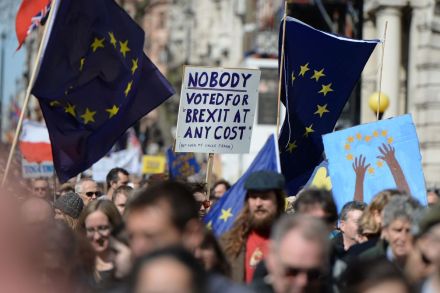
Nick Robinson, of the BBC, compares the Brexiteers and Remainers to ‘fighters who emerge after months of hiding in the bush, [and] seem not to accept that the war is over’. It is a false analogy because, unfortunately, the war is not over. Its most arduous phase has only just begun.