Charles Moore

Charles Moore

Charles Moore is The Spectator’s chairman.

He is a former editor of the magazine, as well as the Sunday Telegraph and the Daily Telegraph. He became a non-affiliated peer in July 2020.

Mufti Patel and the problem with the BBC’s leadership debate

From our UK edition

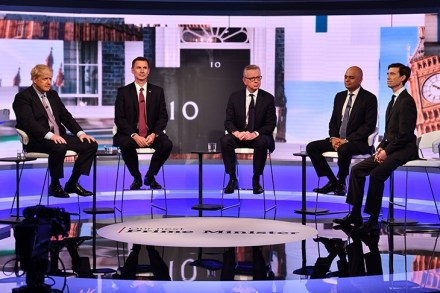
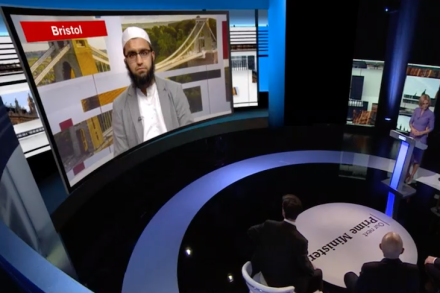
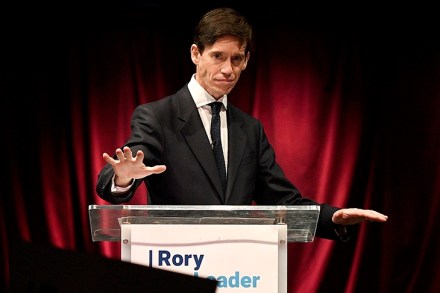
As Boris’s team should have predicted, the BBC, via Emily Maitlis, attacked Boris throughout the Tory leadership debate. So did its coverage the following morning. ‘Words are actions,’ said Nick Robinson on Today, sententiously editorialising. ‘Again and again Boris Johnson gets his words wrong.’ Up duly pop Nazanin Zaghari-Ratcliffe’s husband, Heathrow airport expansion and the precise wording of the promise to leave on 31 October — all licensed to do so by the weak decision to let Boris go on. Such debates are structured against Conservatives and conservatism.

Losing the TV licence will empower the over-75s

From our UK edition

Although people over 75 will naturally be annoyed to have to pay their television licence fee once more — unless they are poor enough to qualify for pension credit — the decision will, in fact, empower them. Gordon Brown should never have let them off payment in the first place since they are the greatest users of television and radio in the country and are mostly not the poorest either. So long as they were getting the services free, they had no power over their content. They have had to endure ever more abasement before the young, propaganda for women’s football, preaching about Greta Thunberg, and the removal of people of their age from the screen. Now that they will have to pay £154.

The Spectator’s Notes | 13 June 2019

From our UK edition

You would think it would be unarguable that ‘Serious times demand a serious leader’. This, with small verbal variations, is the slogan of both Michael Gove and Jeremy Hunt in the current Tory contest, so it is obvious against whom their phrase is directed. Yet there is a counter-argument. The times we live in are undoubtedly serious, and for the past three years we have had, in Mrs May, the most unrelentingly serious leader ever. It has been a disaster. The post-2008 revolts across the western world have all been against seriousness as defined by existing leaderships. Trump, Salvini, Farage, Boris etc. strike a chord because they can burlesque the pomposity and self-righteousness of the conventional politicians who have led us badly.

The Spectator’s Notes | 6 June 2019

From our UK edition

My father Richard, who died last month aged 88, was a profoundly impractical man. He could not drive a car, swim, whistle, use a mobile phone or computer, or play any ball game apart from croquet. One of his most common remarks was (he could not pronounce his ths), ‘Vis wretched fing [a door handle, a light switch, a well-wrapped parcel] doesn’t seem to work.’ When younger, he would sometimes go out with an unsafe 1840s shotgun in search of rabbits or pigeons, but the only thing he ever actually shot was his little toe, falling down a bank. Although he was extremely clean, he did not, until he married, know how to wash his hair, and would go to a barber for the purpose. Twenty years ago, he lived briefly in our house in Islington.

Jeremy Hunt’s odd leadership pitch

From our UK edition

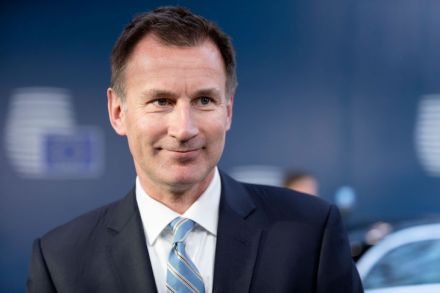
Jeremy Hunt’s approach is very odd. It is the first time I remember an aspirant for the top job saying: ‘Choose me: I’m frightened of a general election.’ He is obviously right that an election without Brexit accomplished would be very difficult for the Conservatives to win, but the way through that is not to narrow your possibilities in advance. If the newly chosen leader, with the mandate that being newly chosen brings, decided that no deal were his necessary negotiating backstop (which surely it is) or, more controversially, that he wanted it without negotiating at all, he would then be in a strong position to dare his parliamentary party to vote against him, bring down him and his government and thus nullify the choice the party members would just have made.

The Spectator’s Notes | 30 May 2019

From our UK edition

Jeremy Hunt’s approach is very odd. It is the first time I remember an aspirant for the top job saying: ‘Choose me: I’m frightened of a general election.’ He is obviously right that an election without Brexit accomplished would be very difficult for the Conservatives to win, but the way through that is not to narrow your possibilities in advance. If the newly chosen leader, with the mandate that being newly chosen brings, decided that no deal were his necessary negotiating backstop (which surely it is) or, more controversially, that he wanted it without negotiating at all, he would then be in a strong position to dare his parliamentary party to vote against him, bring down him and his government and thus nullify the choice the party members would just have made.

If you’re going to leave Notre Dame in ruins, why not set fire to Oxford University?

From our UK edition

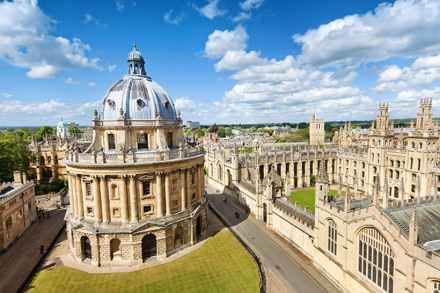
Almost everyone agrees it is a pity that so few pupils from ‘disadvantaged socioeconomic backgrounds’ get into Oxford. But no one has successfully proved that it is Oxford’s fault that they do not. (I went to Cambridge, by the way, so I do not have a dog in this fight, except that I imagine the same arguments apply.) One reason that some universities, including Oxford, are classified as ‘world-class’ is that they admit the best. The definition of ‘best’ cannot refer only to native ability, but must also take some account of how well prepared a pupil is.

The Spectator’s Notes | 23 May 2019

From our UK edition

Almost everyone agrees it is a pity that so few pupils from ‘disadvantaged socioeconomic backgrounds’ get into Oxford. But no one has successfully proved that it is Oxford’s fault that they do not. (I went to Cambridge, by the way, so I do not have a dog in this fight, except that I imagine the same arguments apply.) One reason that some universities, including Oxford, are classified as ‘world-class’ is that they admit the best. The definition of ‘best’ cannot refer only to native ability, but must also take some account of how well prepared a pupil is.

Why I’m voting for the Conservatives today

From our UK edition

It would not normally be an act of great courage to vote Conservative in true-blue Sussex, but I feel I have to screw myself up to do so in the European elections this week, so great is the ill feeling here against the Tories for not achieving Brexit. Yet do it I will. In extenuation, I would plead that I do sincerely wish the Tories ill in these unusual elections. My vote is not intended to help them in any way. It is just that Daniel Hannan is first on the Conservative candidates’ list, and so there is a chance, if opinion polls are right, that he will be the only one of his party elected. It would be most unjust if he were kicked out. I want him to be the righteous remnant.

Why I sympathise with David Lammy

From our UK edition

Having been at Cambridge with the then-delightful Diane Abbott about 40 years ago, I know how hard it is for charming, intelligent black people with middle-class aspirations to make it in the Labour party without great sacrifice. They have to pull grumpy faces, pretend to be angry and claim membership — despite overwhelming evidence to the contrary — of what Frantz Fanon called ‘the wretched of the earth’. So one must sympathise with David Lammy — choral scholar of The King’s School, Peterborough, graduate of SOAS and Harvard Law School, member of Lincoln’s Inn, former government minister — as he feels the need to wave his arms about on television and denounce Boris Johnson and Jacob Rees-Mogg at the top of his voice.

The Spectator’s Notes | 17 April 2019

From our UK edition

This week, the Wolfson History Prize announced its shortlist. It is always worth drawing attention to, precisely because it is not attention-seeking. Neither ‘woke’ nor stuffy, the prize is simply interested in serious history. This year’s list of six ranges in terms of subject from birds in the ancient world and building Anglo-Saxon England, through maritime London in the age of Cook and Nelson, to Queen Victoria and India (a love affair in which the two never met), Oscar Wilde, and the quest for justice after Nazi persecutions. It being Holy Week, I am wondering what would happen if all the four Gospels were on the Wolfson shortlist.

General de Gaulle was wrong about Britain joining the EEC

From our UK edition

In his famous speech to both Houses of Parliament in March 1960, General de Gaulle praised Britain: ‘Although, since 1940, you have gone through the hardest vicissitudes in your history, only four statesmen [Churchill, Attlee, Eden and Macmillan] have guided your affairs in these extraordinary years. Thus, lacking meticulously worked-out constitutional texts, but by virtue of an unchallengeable general consent, you find the means on each occasion to ensure the efficient functioning of democracy.’ De Gaulle admired us and disliked us, and concluded that we threatened France if we joined the EEC. So he blocked our entry. He was right about us, wrong about the effect of our joining.

The Tories shouldn’t worry about losing the youth vote

From our UK edition

There was publicity last weekend for a report (Generation Why?) by Onward, the think tank of semi-young ‘mainstream’ Tories. Its survey seemed to confirm the widespread belief that hardly anyone young supports the Tories, which may not matter quite as much as Onward thinks, since it also showed that the young have astonishing difficulty in working out how to get to a polling station and write a cross on a ballot paper. Although the results collected by Hanbury Strategy were obtained via ‘an online smartphone poll’ of 10,031 voters, I found myself losing confidence on page 46.

The Spectator’s Notes | 11 April 2019

From our UK edition

In his famous speech to both Houses of Parliament in March 1960, General De Gaulle praised Britain: ‘Although, since 1940, you have gone through the hardest vicissitudes in your history, only four statesmen [Churchill, Attlee, Eden and Macmillan] have guided your affairs in these extraordinary years. Thus, lacking meticulously worked-out constitutional texts, but by virtue of an unchallengeable general consent, you find the means on each occasion to ensure the efficient functioning of democracy.’ De Gaulle admired us and disliked us, and concluded that we threatened France if we joined the EEC. So he blocked our entry. He was right about us, wrong about the effect of our joining.

The reason Remainers are worried about European elections

From our UK edition

If the EU grants us a long extension (and let us pray that M. Macron’s malice towards Britain leads him to prevent this), Remainers are worried. They want the extension, but not the European elections, since there is a real chance that ‘the wrong people’ might win. Ken Clarke, I gather, is working out a plan to head off this unpleasant potential outbreak of democracy. He seeks to persuade the EU high-ups to concoct a new rule by which countries which have already triggered Article 50 but have not yet left would not be allowed to take part. They will surely oblige. This article is an extract from Charles Moore's Spectator Notes, available in this week's magazine.

The Spectator’s Notes | 4 April 2019

From our UK edition

There is a logic in Mrs May’s late move to Labour. It is the same logic by which both parties, at the last general election, put forward very similar policies about Brexit. They need to stay together (while feigning disagreement for party reasons) to frustrate what people voted for. Just as they both said in 2017 that they wanted to leave the customs union, now both are working to stay in it. It is the same logic by which Mr Speaker Bercow has arranged for Sir Oliver Letwin to become prime minister on roughly alternate days. None of the main players really wants Brexit, but none can really say so.

Theresa May and Jeremy Corbyn both want to frustrate Brexit

From our UK edition

There is a logic in Theresa May’s late move to Labour. It is the same logic by which both parties, at the last general election, put forward very similar policies about Brexit. They need to stay together (while feigning disagreement for party reasons) to frustrate what people voted for. Just as they both said in 2017 that they wanted to leave the customs union, now both are working to stay in it. It is the same logic by which Mr Speaker Bercow has arranged for Sir Oliver Letwin to become prime minister on roughly alternate days. None of the main players really wants Brexit, but none can really say so.

The unpopular populism of the National Portrait Gallery

From our UK edition

Nicholas Cullinan, the director of the National Portrait Gallery, says that the success of a gallery should not be judged by its number of visitors. He is defensive because the visitor figures at the NPG have fallen (by nearly 120,000 from 2016-17). Dr Cullinan is right. Anyone who likes going to galleries would always say, ‘The smaller the visitor numbers, the merrier for those who want to see the pictures.’ But what he says now would seem to go against his vision for the gallery’s future. It is currently trying to raise £35.5 million for its new ‘Inspiring People’ project. Launching the appeal in January, Dr Cullinan enthused about how the NPG wants to be ‘the nation’s family album’.

Why Mueller’s exoneration of Trump should be rejoiced

From our UK edition

It is worth rejoicing at Robert Mueller’s exoneration of the President, even if you do not like Donald Trump. Wherever possible, politics should not be pursued via legal processes and investigations. This sounds an odd thing to say, since democracies depend upon the rule of law. The trouble is that the rule of law quickly gets hijacked when one political grouping tries to arraign another. Motives become suspect. I learnt this myself at the time of the attempted impeachment of Bill Clinton. I was editing the Telegraph, and, thanks to the great Ambrose Evans-Pritchard, we had actually been ahead of the US media in revealing the murky stories of Clinton which had originated in the great state of Arkansas.

The Spectator’s Notes | 28 March 2019

From our UK edition

There is an obvious solution to the Brexit problem. It is based on a recognition that we want out and that the EU leaders want the moral high ground. Give it to them. Get them to expel us from the European Union. It cannot be too hard for them to persuade the ECJ, or some new body invented for the purpose, to declare the United Kingdom in breach of ‘European values’, and kick us out. Then we would leave with nothing at all, except our liberty. We might even bribe them for the privilege. As it is, we are committed by Mrs May to paying £39 billion, but that is over several years, and involves much ‘doubt, hesitation and pain’. Why not offer them, say, £10 billion on the nail, in return for them punishing us?