Charles Moore

Charles Moore

Charles Moore is The Spectator’s chairman.

He is a former editor of the magazine, as well as the Sunday Telegraph and the Daily Telegraph. He became a non-affiliated peer in July 2020.

We selfish gits must wear the name with pride

From our UK edition

I walked down Villiers Street to Embankment Tube station. In front of me were two Extinction Rebels, a mother and daughter. Strapped to the little girl’s back was a white teddy bear. Strapped to the bear’s back was the handwritten slogan: ‘You selfish gits. Stop burning down my house.’ I wonder how they knew I was a selfish git, since I wore no emblem to announce the fact. Luckily they did not know I was off to a large party of fellow selfish gits to launch volume III of my biography of Mrs Thatcher. It was taking place in the Banqueting House, Whitehall, yards from XR’s encampment, and was eloquently addressed by our git-friendly Prime Minister, who referred to them as ‘uncooperative crusties’.

What would Margaret Thatcher do about Brexit?

From our UK edition

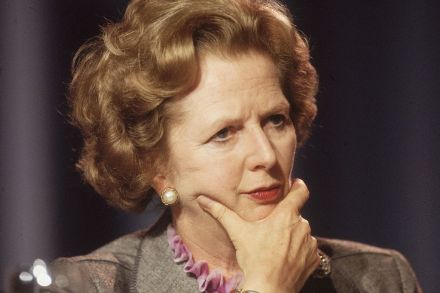
‘What would Margaret Thatcher do about Brexit?’ people keep asking me. Why do they think I would know? If I have a ‘USP’ with my book, it is that I tend to know what she did do. I have no more idea than anyone else what she would have done. The speculation is idle, except to the extent that it might make people reflect on the contemporary relevance of what she thought or did. In this respect, her approach to the electoral importance of the idea of a referendum is suggestive. At the end of October 1990, when she had just returned, in a rage, from the Rome Summit which pushed forwards towards Economic and Monetary Union, I attended a reception at 10 Downing Street.

If Boris snogged Nick Robinson, would he be forgiven?

From our UK edition

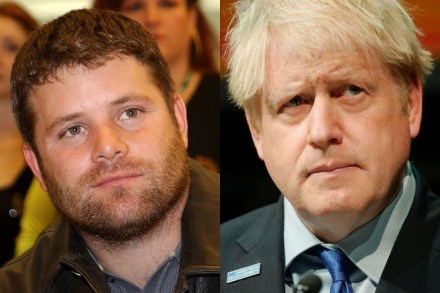
 Manchester It could be caused by desperation, but this Tory conference is very jolly. At last there is something to support, and someone. Some might witheringly point out that it was fun on the Titanic until the iceberg got in the way, but I notice two phenomena. The first is confirmation of this column’s long-standing theory that the only job Boris Johnson knows how to do is the top one. He seems simultaneously energised and at ease. The second is that his opponents’ scorn, hatred and disapproval help him. Take allegations of sexual misconduct.

Why Boris Johnson resembles Samwise Gamgee

From our UK edition

So what should Boris Johnson do now? Obviously the law officers are twitchy. They defer to judges and their later careers may depend on them. But as the Supreme Court judges make much of not impugning Boris’s motives before going on to savage him, he is perfectly entitled to employ the same technique. Boris can say that the Supreme Court and Mr Speaker between them have contrived, in the name of democracy, an arrangement by which democracy cannot operate. Parliament has no confidence in the government, but refuses to vote to say so because that would provoke the election which Labour and Remainers fear. I come back to that spider’s web. Boris resembles Sam Gamgee in Shelob’s lair, and only he, armed with Frodo’s dagger Sting, can cut their way out.

The rule of law has become the rule of lawyers

From our UK edition

Is that enormous silver spider that Lady Hale wore her badge of office? If so, it is appropriate. The Supreme Court has decided to tie up the government in a web of legal reasoning so tight that it can no longer govern. In his dissenting judgment in the earlier Miller case about Article 50, Lord Reed warned that ‘the legalisation of political issues is not always appropriate and may be fraught with risk, not least for the judiciary’. Unusually — as if to compensate for these words — his name was joined with that of Lady Hale in giving the judgment on Tuesday. He would have done better to heed his own earlier warning. They are in deep now. *** The very first paragraph of the judgment gives the Supreme Court’s game away.

For millennials, pre-Thatcher Britain must seem another — quite mystifying — country

From our UK edition

Lymeswold; Hi-de-Hi!; nuclear-free zones; Walkmans; the Metro; Red Robbo; the SDP; Michael Foot’s Cenotaph donkey-jacket; Protest and Survive; Steve Davis and Hurricane Higgins; Sebastian Coe and Steve Ovett; hunger strikes; Red Ken and Fare’s Fair; ‘On your bike’; Lady Diana; ‘hog-whimpering drunk’; Chariots of Fire; Beefy Botham; ‘The lady’s not for turning’; the Peterborough Effect; Spectrum computers; ‘Gotcha!’; ‘We are not Britain. We are the BBC.’ Councillor Jeremy Corbyn. Merely to repeat these names and phrases, all drawn from this, the fifth in Dominic Sandbrook’s great chronicle of Britain since the 1950s, is to re-enter the period.

Why didn’t Cameron realise the ‘strength of feeling’ about Brexit?

From our UK edition

In his memoirs, David Cameron admits that he ‘did not fully appreciate the strength of feeling’ in favour of Brexit, before and during the referendum. The fascinating question is, ‘Why?’ The issue of Europe had been dividing his party from at least 1988 (and had earlier roots). It was part of his modernisation not to ‘bang on’ about Europe, but this was an evasion, not a policy. If a leader does not address a vital question, others will, if he gives them the chance. You cross a windswept plaza, go down a steepish stair and then descend three floors below the ground.

There’s nothing wrong with Jacob Rees-Mogg lying down in the Commons

From our UK edition

If you are a journalist covering politics this year, every moment is a bad moment to take a holiday. I took a short one last week in search of grouse and arrived at Hunthill, the proud Scottish fastness of our host Henry Keswick, to find that Boris Johnson had promised to prorogue parliament. Since the party included a cabinet minister, another Member of Parliament etc, it all felt a bit like a John Buchan novel. As I watched the beaters approach us across the moor, I imagined it as the sort of scene Buchan describes so well in which the appearance of seemingly innocent sport on the hill is in fact the approach of something dangerous to the safety of the realm. The MP who, though of impeccable lineage, has unsound views on Brexit, had quietly slipped away. Was foul play afoot?

There’s nothing wrong with Rees-Mogg lying down in the Commons

From our UK edition

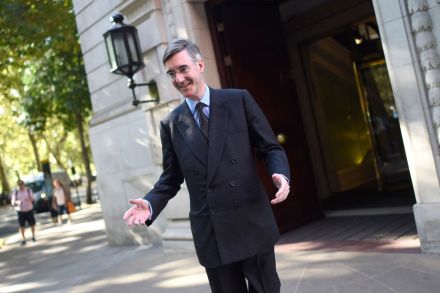
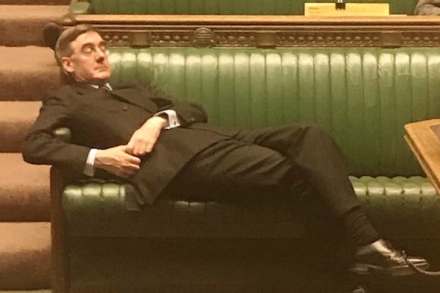
In the debate on Tuesday, the standard of speaking was high. As well as Jacob Rees-Mogg, Ken Clarke, Anna Soubry, Nick Boles, Liam Fox and David Cameron’s replacement in Witney, Robert Courts, were all excellent. On the whole, the rebels were the more eloquent, as rebels usually are. Their one false note, however, was that of self-pity. There was too much — from Boles, Soubry and (though humorous) Clarke — about how they had suffered for their faith. This exemplified one of the main reasons millions feel alienated from parliament: so many MPs are ‘up themselves’ about a decision made by the people. Poor Rees-Mogg was much abused for lying prone on the government benches, as if this were a mark of disrespect. Not so.

It makes sense for the over-75s to pay the licence fee

From our UK edition

Dorothy Byrne, Channel 4’s head of news, last week told the Edinburgh television festival: ‘Here is what we all need to decide: what do we do when a known liar becomes our prime minister?’ Yet she is surprised when Boris Johnson and Jeremy Corbyn — both of whom she calls ‘cowards’ — do not come on her programmes. She regards it as their democratic duty to be interrogated by her journalists. If you watch her deliver her lecture, you can see she is positively proud of her character assassination of both men. It does not seem to cross her mind that she is breaking her public service obligation of fairness, and therefore has no moral hold on them. Broadly speaking, it is the duty of elected politicians to explain themselves to the public.

The Amazon fires are as much a political story as an environmental one

From our UK edition

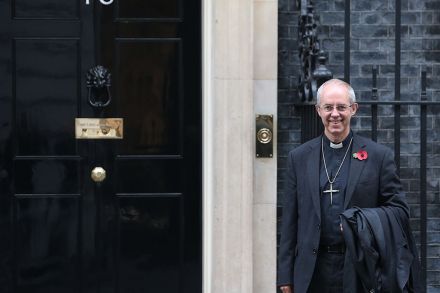
We do not yet know which 100 citizens will make it to the ‘Citizens’ Assembly’ to be chaired by the Archbishop of Canterbury, which will look at ways of preventing a no-deal Brexit. So we cannot yet judge whether the organisers have come up with a system of selection which improves on the representative powers of parliament. But really we do not need to, because we know already that they will not be able to bring the ‘reconciliation at a time of national emergency’ which the Archbishop seeks. This is because the idea that a no-deal Brexit must be prevented is not an irenic proposition around which people can unite, but an intensely political one over which they inevitably divide.

Justin Welby’s Citizens’ Assembly will not bring the reconciliation he seeks

From our UK edition

We do not yet know which 100 citizens will make it to the ‘Citizens’ Assembly’ to be chaired by the Archbishop of Canterbury, which will look at ways of preventing a no-deal Brexit. So we cannot yet judge whether the organisers have come up with a system of selection which improves on the representative powers of parliament. But really we do not need to, because we know already that they will not be able to bring the ‘reconciliation at a time of national emergency’ which the Archbishop seeks. This is because the idea that a no-deal Brexit must be prevented is not an irenic proposition around which people can unite, but an intensely political one over which they inevitably divide.

What would George Orwell make of Brexit?

From our UK edition

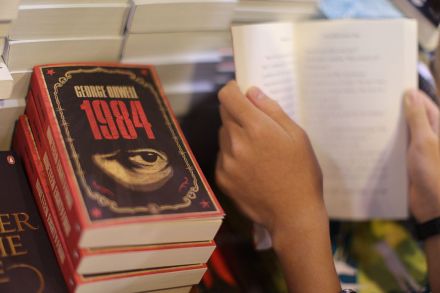
In the London Review of Books this month, James Meek wrote a long article about Jacob Rees-Mogg and his ‘curious duality’ in being both a high Catholic, fogey Brexiteer and a founder of Somerset Capital Management, which the author sees as globalist and ruthless. The piece is elegantly done, but entirely sneery. It makes not the slightest attempt to enter into the Mogg’s (or any Brexiteer’s) mind with any sympathy. I was thinking about this because the LRB’s publicity emphasised that Meek is an Orwell Prize winner. How we need an Orwell on the subject of Brexit.

The royals should embody virtue – not signal it

From our UK edition

ONE should not be censorious if the Duke and Duchess of Sussex fly in private jets to their holidays, though one cannot help laughing when they combine this with exhortations to save the planet. There is, sadly, no royal yacht nowadays (a new one would be a good make-work scheme post-Brexit), and we are not a civilised enough country to leave them and their baby alone if they were to travel on public transport. But they are making two mistakes. The first is to go somewhere hot, sunny and celebrity-filled for their break. One of the secrets of the Queen’s popularity is that she has almost never been seen sunbathing with the rich and famous. The worm of public envy never stirs when she spends her summers in Scotland. Her Balmorality is impregnable.

Give Hong Kongers real security: a British passport

From our UK edition

We seem to be building up to a second Tiananmen Square, 30 years after the first. This time the venue is Hong Kong. As then, the Chinese government longs to kill protestors, but it hesitates because it fears global reaction. It therefore matters greatly that the ‘rules-based international order’ strongly assert that breaking the 1984 Sino-British Agreement would put China beyond the pale. No international discussion of Brexit is complete without a reverent invocation of the Good Friday Agreement (which in fact has almost nothing to do with EU membership). The Hong Kong Agreement should command such reverence, and its pledge of ‘One country: two systems’ should be the test of whether China is a law-abiding international partner.

The Spectator’s Notes | 15 August 2019

From our UK edition

We seem to be building up to a second Tiananmen Square, 30 years after the first. This time the venue is Hong Kong. As then, the Chinese government longs to kill protestors, but it hesitates because it fears global reaction. It therefore matters greatly that the ‘rules-based international order’ strongly assert that breaking the 1984 Sino-British Agreement would put China beyond the pale. No international discussion of Brexit is complete without a reverent invocation of the Good Friday Agreement (which in fact has almost nothing to do with EU membership). The Hong Kong Agreement should command such reverence, and its pledge of ‘One country: two systems’ should be the test of whether China is a law-abiding international partner.

Dominic Grieve’s Cummings-induced delirium

From our UK edition

It is a good tactic of Dominic Cummings to make fearful but off-the-record noises about how a Johnson government might handle parliament in the next few weeks. He smokes out the ever more extreme notions of the other side without actually committing the government to any course other than leaving on 31 October. A tendency to drag the Queen into these conversations is a well-known sign of madness. Poor Dominic Grieve is clearly in a Cummings-induced state of delirium. This article is an extract from Charles Moore's Spectator Notes, available in this week's magazine.

The Spectator’s Notes | 8 August 2019

From our UK edition

Who wrote ‘Our lifestyle is destroying the environment of our country … creating a massive burden for future generations. Corporations are heading the destruction of our environment by shamelessly over-harvesting resources … the next logical step is to decrease the number of people in America using resources. If we can get rid of enough people, then our way of life can become more sustainable’? The answer, if media reports are accurate, is Patrick Crusius, the man accused of the El Paso massacre. The words appeared in his testament, entitled (in homage to Al Gore?) The Inconvenient Truth, which he seems to have put online before decreasing the number of people in America by 22.

The inconvenient truth about the El Paso shooter

From our UK edition

Who wrote ‘Our lifestyle is destroying the environment of our country… creating a massive burden for future generations. Corporations are heading the destruction of our environment by shamelessly over-harvesting resources… the next logical step is to decrease the number of people in America using resources. If we can get rid of enough people, then our way of life can become more sustainable’? The answer, if media reports are accurate, is Patrick Crusius, the man accused of the El Paso massacre. The words appeared in his testament, entitled (in homage to Al Gore?) The Inconvenient Truth, which he seems to have put online before decreasing the number of people in America by 22.

The ambiguity of the woke businessman

From our UK edition

The woke businessman, like the woke prince and princess, is an ambiguous figure. Being woke, after all, involves a contempt for profits and big business, as for social hierarchy. I first noticed this uneasy phenomenon many years ago when I attended a lunch in the City at which Paul Polman, the then chief executive of Unilever, read us a moralistic lecture about European integration, greenery and how ‘I agree with Mahatma Gandhi: you must be the change you want to see in the world’. I found it intensely annoying to be told how to be good by someone much richer than myself. Last year, the change Mr Polman wanted to see of moving Unilever’s HQ from London to Rotterdam failed, and he was out. Now his successor, Alan Jope, is using a similar patter.