Charles Moore

Charles Moore

Charles Moore is The Spectator’s chairman.

He is a former editor of the magazine, as well as the Sunday Telegraph and the Daily Telegraph. He became a non-affiliated peer in July 2020.

What a relief Jeremy Corbyn never became PM

From our UK edition

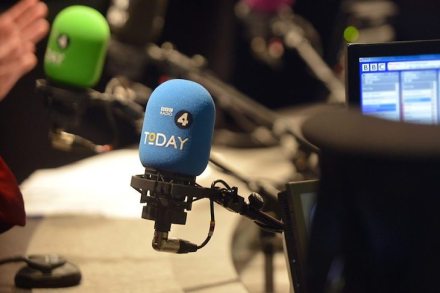
It is worth fixing for posterity the feelings which, on polling day, swirled in the breasts of many who wanted a Boris victory. Being a journalist, I normally enjoy the electoral scene with some detachment. I cannot claim to be neutral, since I have never, even in Tony Blair’s pinkish dawn of 1997, wanted a Labour government; but I can take it in my stride. This time, however, millions, including myself, were knotted with fear that anything other than a clear Tory victory would destroy Brexit and make Jeremy Corbyn prime minister. The risks were actually frightening. We sought distractions. Listening to the Radio 4 Today programme that morning, I heard the sports presenter admitting he did not know how to pronounce his tipster’s selection for the 2.30 at Newcastle, Calliope.

The mysteries of the Corbyn world-view

From our UK edition

It is worth fixing for posterity the feelings which, on polling day, swirled in the breasts of many who wanted a Boris victory. Being a journalist, I normally enjoy the electoral scene with some detachment. I cannot claim to be neutral, since I have never, even in Tony Blair’s pinkish dawn of 1997, wanted a Labour government; but I can take it in my stride. This time, however, millions, including myself, were knotted with fear that anything other than a clear Tory victory would destroy Brexit and make Jeremy Corbyn prime minister. The risks were actually frightening. We sought distractions. Listening to the Radio 4 Today programme that morning, I heard the sports presenter admitting he did not know how to pronounce his tipster’s selection for the 2.30 at Newcastle, Calliope.

My run-in with Westminster’s TV news circus

From our UK edition

Leaving an evening meeting in Westminster on Monday night, I walked to Charing Cross. Approaching the public path which runs across College Green by Parliament, I found, as so often nowadays, that it was fenced off to allow those pop-up studios which the big television channels erect to create their instant news circus. Fed up that the normal way was yet again blocked by what Psalm 84 calls ‘the tents of wickedness’, I lifted the barrier open and walked through. Two security guards leapt out of the nearest hut and tried to block me. I pressed on, however, and they could only scamper after me calling out ‘Health and safety! Health and safety!

Never mind Big Pharma and Big Oil – watch out for Big Uni

From our UK edition

Climate alarmists and Corbynistas (the former increasingly a front organisation for the latter) often put the word ‘Big’ in front of industries which they dislike — Big Pharma, Big Oil. Those of us who do not share their views should copyright a comparable concept — Big Uni. Universities now compose an absolutely vast interest group, determined to increase their fee-paying student numbers almost regardless of qualifications or their own capacity to look after them properly. They are constantly on to the government for money. The salaries of vice-chancellors are huge and the wages of lumpen-academics are low. These impoverished workers feel little responsibility for their students and so go on strike during term time.

The diversity myth of British politics

From our UK edition

The number of parties represented in national election debate multiplies. There are now seven crowding on to television podiums and local hustings. Yet this impression of diversity is, like the current public policy use of that word, misleading. Five of the parties — Labour, Liberal Democrats, Greens, SNP and Plaid Cymru — are essentially the same. They see achieving Remain, growing the state and destroying the Tories as the most important causes. The Brexit party is merely an epiphenomenon of Tory Brexit weakness and is therefore passing into history. So it is the Conservatives vs the rest, and ‘the rest’ includes all the broadcast media.

Six weeks is too long for an election campaign

From our UK edition

The number of parties represented in national election debate multiplies. There are now seven crowding on to television podiums and local hustings. Yet this impression of diversity is, like the current public policy use of that word, misleading. Five of the parties — Labour, Liberal Democrats, Greens, SNP and Plaid Cymru — are essentially the same. They see achieving Remain, growing the state and destroying the Tories as the most important causes. The Brexit party is merely an epiphenomenon of Tory Brexit weakness and is therefore passing into history. So it is the Conservatives vs the rest, and ‘the rest’ includes all the broadcast media.

All belief systems must accept the danger of ridicule

From our UK edition

In the ‘whataboutery’ which now dominates British politics, no mention of Labour anti-Semitism is complete without a counter-accusation of Tory Islamophobia. It swiftly followed the Chief Rabbi’s condemnation of Labour anti-Semitism on Tuesday. There may well be people in the Conservative party who have an irrational hatred of Muslims, but the term ‘Islamophobia’ should be absolutely resisted. Unlike anti-Semitism, this is a concocted concept. A strand of Muslim thought sees all criticism of the prophet Mohammed and his faith as blasphemy and labours worldwide to ban it. Such Muslims are driven mad by the way Jews can cry ‘racism’ when they are attacked, whereas they cannot.

All belief systems must accept the danger of ridicule and contempt

From our UK edition

In the ‘whataboutery’ which now dominates British politics, no mention of Labour anti-Semitism is complete without a counter-accusation of Tory Islamophobia. It swiftly followed the Chief Rabbi’s condemnation of Labour anti-Semitism on Tuesday. There may well be people in the Conservative party who have an irrational hatred of Muslims, but the term ‘Islamophobia’ should be absolutely resisted. Unlike anti-Semitism, this is a concocted concept. A strand of Muslim thought sees all criticism of the prophet Mohammed and his faith as blasphemy and labours worldwide to ban it. Such Muslims are driven mad by the way Jews can cry ‘racism’ when they are attacked, whereas they cannot.

The silence of the Scottish unionists

From our UK edition

We citizens of the small Sussex village of Etchingham are proud of our clan chief, Julie, who chaired Tuesday night’s encounter between Boris Johnson and Jeremy Corbyn. So ancient is her surname that it is a chicken-and-egg question about which came first, the family or the village. The headless 14th-century effigy of her forebear, Sir William, lies in the parish church. But local patriotism must not blind us to the fact that even our Julie could not rescue the debate from its dreary game-show format, sometimes witless questions and the lack of actual discussion. It cannot be repeated too often that these shows are symptoms of TV triumphalism and not of a healthy democracy.

Labour thinks that its trump card is Trump

From our UK edition

On Wednesday morning, I was hoisted into the air of Whitehall on a cherry-picker. A century ago the proto-Cenotaph appeared in time for the London Peace Parade in July 1919, which followed the signing of the Treaty of Versailles. In that first year, the Cenotaph was only a timber and canvas structure, built to last a week; but Edwin Lutyens’s design seemed so right that the present structure, more precisely designed, was built in Portland stone for Remembrance Day 1920. English Heritage, now a charity rather than a government body, cares for the monument — as it does for 400 monuments in England, including 46 in London. The chairman, Vice-Admiral Sir Tim Laurence, husband of the Princess Royal, wanted me to see its annual clean before this Sunday’s Remembrance Day parade.

Is Philip Hammond a Conservative?

From our UK edition

Philip Hammond told the Today programme on Tuesday that he was ‘agonising’ over whether he should advocate a Conservative vote at the coming election. ‘It really doesn’t matter how many times my party kicks me, abuses me, reviles me,’ he went on, sounding like Jesus, ‘they’re not going to stop me feeling like a Conservative.’ Obviously Mr Hammond has a right to ‘feel like a Conservative’, but is that the relevant point? He reached the pinnacle of his career by becoming Chancellor of the Exchequer just after the 2016 referendum vote for Leave. From his first day in office, he saw it as his task to frustrate that vote, trying, chiefly by covert means, to keep Britain in the Customs Union.

The Tories are Boris Johnson’s Conservatives now

From our UK edition

How much does Boris Johnson’s move to an early election resemble Mrs May’s disastrous one in 2017? In two important respects, not at all. He had to call an election because of the numbers in parliament: she did not. Voters understand this. He is also a born campaigner, while she — well, no more need be said. But there is a possible similarity between the two situations. In 2017, the manifesto described the Tories as ‘Theresa May’s Conservatives’. All the eggs were in her basket. It feels as if the Tories will be ‘Boris Johnson’s Conservatives’ this time, though no doubt that phrase won’t be in the manifesto. Whenever Boris is seen to falter or err, voters will then ask ‘Who are the Conservatives? Do I like them?

Why I’m fed up with David Attenborough

From our UK edition

The other day, I went to be interviewed in the Savoy hotel. Sitting in what the Savoy now calls the Thames Foyer was Alice Thomson of the Times, a terrifying interviewer because she is so charming. She made me play the game, which she claims I invented, of offering her interviewee a series of choices which one must make (e.g. tea or coffee, town or country). Alice offered me ‘Greta Thunberg or David Attenborough’. I felt I had to break the rules and say ‘Neither’. There is now a small but growing number of people, myself included, who are fed up with the latter. His early days were wonderful — he was an adventurous zoological and ethnographic broadcaster and then a great controller (the first) of BBC2.

Nigel Farage had better hurry up and settle for a peerage

From our UK edition

Last week, an angry Telegraph reader asked me why I had got through a whole column on Brexit without mentioning Nigel Farage. My exact answer is that the column was about MPs in relation to Brexit and Mr Farage and his Brexit party have no MPs. But there is a more general answer too. It is that the Brexit party’s irreducible core is now clearly shown to be small. The rest of its vote is entirely dependent on the behaviour of whoever is the Conservative leader. Mrs May’s behaviour swelled its ranks; Boris Johnson’s has reduced them. It really is as simple as that.

Will John Bercow break his promise to resign?

From our UK edition

I recently heard the alarming rumour that Mr Speaker Bercow still has it in his power (a power he used on an earlier occasion) to duck out of his promise to retire. He said on 9 September that he would step down on 31 October, but apparently he may decide at the last minute that his country still needs him. I have no idea whether this speculation is correct. We do all know, however, that Mr Bercow long ago decided that the Speaker can break any convention according to whim and describe his whim as an assertion of the rights of parliament. This article is an extract from Charles Moore's Spectator Notes, available in this week's magazine.

Donald Trump is key to Boris Johnson’s survival | 19 October 2019

From our UK edition

There are so many problems confronting our polity this week that it is almost impossible to write about any of them. Between the time of writing and the time you read this, we could have agreed Brexit, destroyed Brexit, called an election, called a referendum, or achieved nothing at all. Here, perhaps, is one thing which can safely be pointed out. In almost any scenario, Boris Johnson has to worry about the Brexit party. In practice, this means worrying about Nigel Farage. Who, if so minded, could persuade Mr Farage to be amenable? Surely the answer is his friend Donald Trump. If President Trump is serious in his desire for Brexit, his most useful contribution at this moment would be to induce Mr Farage to help Boris, not hinder him.

Donald Trump is key to Boris Johnson’s survival

From our UK edition

There are so many problems confronting our polity this week that it is almost impossible to write about any of them. Between the time of writing and the time you read this, we could have agreed Brexit, destroyed Brexit, called an election, called a referendum, or achieved nothing at all. Here, perhaps, is one thing which can safely be pointed out. In almost any scenario, Boris Johnson has to worry about the Brexit party. In practice, this means worrying about Nigel Farage. Who, if so minded, could persuade Mr Farage to be amenable? Surely the answer is his friend Donald Trump. If President Trump is serious in his desire for Brexit, his most useful contribution at this moment would be to induce Mr Farage to help Boris, not hinder him.

When Jacob Rees-Mogg met Extinction Rebellion

From our UK edition

I walked down Villiers Street to Embankment Tube station. In front of me were two Extinction Rebels, a mother and daughter. Strapped to the little girl’s back was a white teddy bear. Strapped to the bear’s back was the handwritten slogan: ‘You selfish gits. Stop burning down my house.’ I wonder how they knew I was a selfish git, since I wore no emblem to announce the fact. Luckily they did not know I was off to a large party of fellow selfish gits to launch volume III of my biography of Mrs Thatcher. It was taking place in the Banqueting House, Whitehall, yards from XR’s encampment, and was eloquently addressed by our git-friendly Prime Minister, who referred to them as ‘uncooperative crusties’.

We selfish gits must wear the name with pride

From our UK edition

I walked down Villiers Street to Embankment Tube station. In front of me were two Extinction Rebels, a mother and daughter. Strapped to the little girl’s back was a white teddy bear. Strapped to the bear’s back was the handwritten slogan: ‘You selfish gits. Stop burning down my house.’ I wonder how they knew I was a selfish git, since I wore no emblem to announce the fact. Luckily they did not know I was off to a large party of fellow selfish gits to launch volume III of my biography of Mrs Thatcher. It was taking place in the Banqueting House, Whitehall, yards from XR’s encampment, and was eloquently addressed by our git-friendly Prime Minister, who referred to them as ‘uncooperative crusties’.

What would Margaret Thatcher do about Brexit?

From our UK edition

‘What would Margaret Thatcher do about Brexit?’ people keep asking me. Why do they think I would know? If I have a ‘USP’ with my book, it is that I tend to know what she did do. I have no more idea than anyone else what she would have done. The speculation is idle, except to the extent that it might make people reflect on the contemporary relevance of what she thought or did. In this respect, her approach to the electoral importance of the idea of a referendum is suggestive. At the end of October 1990, when she had just returned, in a rage, from the Rome Summit which pushed forwards towards Economic and Monetary Union, I attended a reception at 10 Downing Street.