Charles Moore

Charles Moore

Charles Moore is The Spectator’s chairman.

He is a former editor of the magazine, as well as the Sunday Telegraph and the Daily Telegraph. He became a non-affiliated peer in July 2020.

Sinn Fein’s success doesn’t make a united Ireland more likely

From our UK edition

It is obviously true that Sinn Fein’s success in the Irish Republic will increase nationalist pressure for a united Ireland. It does not automatically follow, however, that such pressure will make a united Ireland more likely. A powerful Sinn Fein in the South is a strong recruiter for Unionism in the North. The possibility of nationalists in the North winning a border poll has just receded.

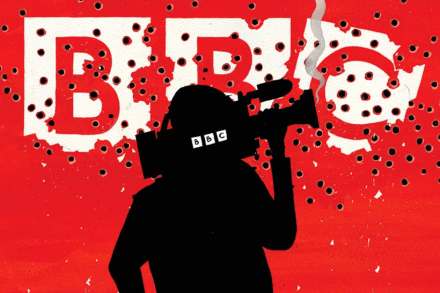
The BBC’s big problem is its obsession with itself

From our UK edition

One reason people are disillusioned with the BBC is its obsession with itself. Here is the text of a question asked by the corporation’s deputy political editor, Norman Smith, at a speech last week by the minister responsible for broadcasting, the Culture Secretary, Lady Morgan: ‘You say the BBC needs to adapt to the new streaming era…What I’m not clear about is why you think decriminalising or moving to a civil enforcement scheme in any way assists the BBC in meeting that challenge. Because the view within the corporation is that it weakens the BBC to the tune of £200 million a year, quite possibly more.

Sinn Fein’s success doesn’t make a united Ireland more likely

From our UK edition

It is obviously true that Sinn Fein’s success in the Irish Republic will increase nationalist pressure for a united Ireland. It does not automatically follow, however, that such pressure will make a united Ireland more likely. A powerful Sinn Fein in the South is a strong recruiter for Unionism in the North. The possibility of nationalists in the North winning a border poll has just receded.

The real reason Glasgow’s UN climate summit will be a nightmare

From our UK edition

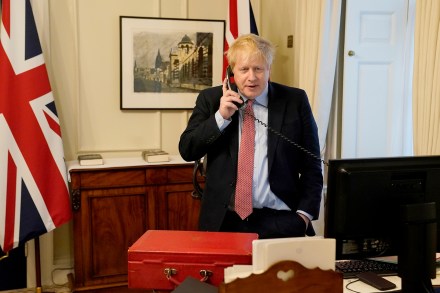
Regardless of one’s views on climate change, one should welcome the fact that Boris Johnson removed Claire Perry O’Neill from her post as president of this year’s Conference of the Parties (COP 26), which will be held in Glasgow. He is at last trying to exercise the power of patronage. Ms Perry O’Neill is a George Osborne protegée, anti-Boris and anti-Brexit. She stood down at the end of the last parliament. She is also a keen self-publicist. Given that international climate conferences are chiefly forums in which governments strike attitudes, it was highly unwise to let her strike the Glasgow ones. She was almost bound to be disobliging to the government. With the election out of the way, the government recognised its mistake and acted just in time.

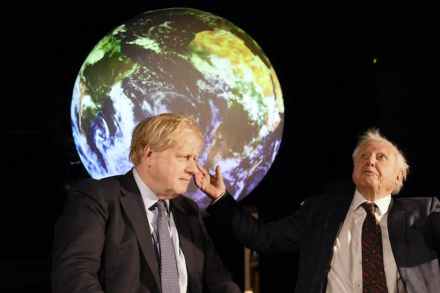
Boris has fallen into a trap by sucking up to David Attenborough

From our UK edition

Regardless of one’s views on climate change, one should welcome the fact that Boris Johnson removed Claire Perry O’Neill from her post as president of this year’s Conference of the Parties (COP 26), which will be held in Glasgow. He is at last trying to exercise the power of patronage. Ms Perry O’Neill is a George Osborne protegée, anti-Boris and anti-Brexit. She stood down at the end of the last parliament. She is also a keen self-publicist. Given that international climate conferences are chiefly forums in which governments strike attitudes, it was highly unwise to let her strike the Glasgow ones. She was almost bound to be disobliging to the government. With the election out of the way, the government recognised its mistake and acted just in time.

Philip Pullman is right about the Oxford comma

From our UK edition

It was with regret that I read that Albert, retired King of the Belgians, has finally had to admit, following litigation and then a DNA test, that an artist called Delphine Boël is his natural daughter. It is not that I wish to take sides in the dispute; it is simply that there is a soft spot in my heart for Albert, King of the Belgians. I am always interested in the drafting of constitutions, including their very first words. The US Constitution famously begins with the words ‘We, the people’. When the draft constitution of the European Union — later transmuted into the Lisbon treaty — was first published in 2004, I noticed that its first words were ‘Albert, King of the Belgians’.

The reason our civil service is soft on China

From our UK edition

The creation of the National Security Council under David Cameron was supposed to join up parts of British government which had not previously had the right forum. We would now be able to survey all functions of security right across government. How odd it is that this coordination was not applied to the issue of Huawei years ago. Whatever may be said against great powers, they do have in their political bloodstream a constant sense of security threat, both external and internal, which helps them develop strategy. The United States and China both devote huge amounts of money and brainpower to the subject.

I won’t be applying to be director-general of the BBC

From our UK edition

Despite huge public pressure, I shall not be applying to be director-general of the BBC. It was kind of Tony Hall to stand down early, forgoing next year’s centenary plaudits, so that I could rise on the wave of post-Brexit fervour. But no: I am not a woman and have no plans to become one and, under the BBC’s diversity rules, uniformity of gender is required. If I did, per impossibile, get the job, I would ensure that Nick Robinson, who has such a feel for excluded northerners, would relocate to Manchester, thus counteracting the London bias of the political coverage, but even that would not be enough. The truth is that no director-general, not even the ticks-all-boxes Sharon White, can lead the BBC’s monopoly through to its second century.

Do alarmists know the difference between weather and climate?

From our UK edition

Until recently, those expressing scepticism about climate-change catastrophe have been hauled over the coals (or the renewables equivalent) for not understanding the difference between ‘climate’ and ‘weather’. The lack of global warming at the beginning of the 21st century was not to be taken, chided the warmists, as evidence that climate change was not happening. Weather was the passing phenomenon of each day: climate was the real, deep thing. Now, however, the alarmists themselves have elided the two concepts, using the Australian bush fires as their cue. As Sir David Attenborough puts it: ‘The moment of crisis has come.’ They could be right, of course, but how could they really know?

Anyone for a Sussex Royal potato?

From our UK edition

Earlier this week, we accompanied our daughter-in-law, Hannah, to her British citizenship ceremony, she having passed the necessary tests. (Hannah is American, from the great state of Montana. She retains her American citizenship.) She had been offered the opportunity of attending a free ceremony with about 20 others, but this fell on the due date for her second baby. She was not allowed another date unless she paid £100 for a private one. This means, in theory at least, that the authorities could earn £600 an hour if they moved fast. So there were only four of us — Hannah, my wife and I, and our granddaughter Elizabeth, who is nearly 18 months old.

In defence of the Today programme

From our UK edition

There is anxiety at the BBC, where the Cummings effect is thought to threaten the Today programme. If ministers are told not to appear on it, people ask how it can survive. Although a supporter of the Cummings frost towards the BBC, I feel it would be perverse if Today were the victim. It is well-edited, with a much wider range of subjects and attitudes than are displayed on PM, Woman’s Hour, Newsnight, virtually all comedy shows and arts programmes, and many more. Woke BBC persons regard it as scarcely better than the Daily Mail. Today is in the eye of the storm because it is the BBC’s main political programme, not because it is the worst. The problem with the BBC goes wider and deeper.

Why bother joining the Labour party?

From our UK edition

Now that there is yet another chance to vote for a leader of the Labour party, if you are prepared to pay £25 next week, lots of my friends, none of them Labour supporters, are joining up. Their idea is to vote for the Corbyn ‘continuity candidate’, who seems to be Rebecca Long Bailey, thus ensuring, they think, continuous Conservative rule. As someone who is not a member of any political party, and is therefore eligible to join Labour, I am thinking of following suit; but something gives me pause. There is a real question whether the extremists in Labour are any worse than the moderates. The Corbynistas are, for sure, nasty, stupid, narrow and wrong. But that is visible to anyone aged over 25. They have not behaved worse over Brexit than they have over anything else.

Am I in the mainstream now?

From our UK edition

The moment of Boris's victory makes me stop and look back. In the referendum of 1975 — my first vote — I voted ‘Yes’ (i.e. Remain), but I remember feeling a twinge of admiration for Orkney and Shetland, the only area to vote ‘No’. At Cambridge afterwards, I learnt and liked sovereignty arguments from people like John Casey and (when he paid a private visit to avoid the riots which attended him in those days) Enoch Powell. In the early 1980s, I cheered on Mrs Thatcher’s European budget battle. In 1984, attending my first European Council as a reporter, I was shocked by the way of doing business — running a continent as a diplomatic game.

What a relief Jeremy Corbyn never became PM

From our UK edition

It is worth fixing for posterity the feelings which, on polling day, swirled in the breasts of many who wanted a Boris victory. Being a journalist, I normally enjoy the electoral scene with some detachment. I cannot claim to be neutral, since I have never, even in Tony Blair’s pinkish dawn of 1997, wanted a Labour government; but I can take it in my stride. This time, however, millions, including myself, were knotted with fear that anything other than a clear Tory victory would destroy Brexit and make Jeremy Corbyn prime minister. The risks were actually frightening. We sought distractions. Listening to the Radio 4 Today programme that morning, I heard the sports presenter admitting he did not know how to pronounce his tipster’s selection for the 2.30 at Newcastle, Calliope.

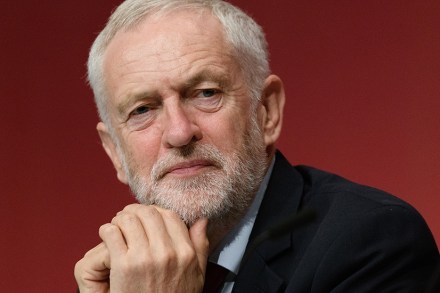
The mysteries of the Corbyn world-view

From our UK edition

It is worth fixing for posterity the feelings which, on polling day, swirled in the breasts of many who wanted a Boris victory. Being a journalist, I normally enjoy the electoral scene with some detachment. I cannot claim to be neutral, since I have never, even in Tony Blair’s pinkish dawn of 1997, wanted a Labour government; but I can take it in my stride. This time, however, millions, including myself, were knotted with fear that anything other than a clear Tory victory would destroy Brexit and make Jeremy Corbyn prime minister. The risks were actually frightening. We sought distractions. Listening to the Radio 4 Today programme that morning, I heard the sports presenter admitting he did not know how to pronounce his tipster’s selection for the 2.30 at Newcastle, Calliope.

My run-in with Westminster’s TV news circus

From our UK edition

Leaving an evening meeting in Westminster on Monday night, I walked to Charing Cross. Approaching the public path which runs across College Green by Parliament, I found, as so often nowadays, that it was fenced off to allow those pop-up studios which the big television channels erect to create their instant news circus. Fed up that the normal way was yet again blocked by what Psalm 84 calls ‘the tents of wickedness’, I lifted the barrier open and walked through. Two security guards leapt out of the nearest hut and tried to block me. I pressed on, however, and they could only scamper after me calling out ‘Health and safety! Health and safety!

Never mind Big Pharma and Big Oil – watch out for Big Uni

From our UK edition

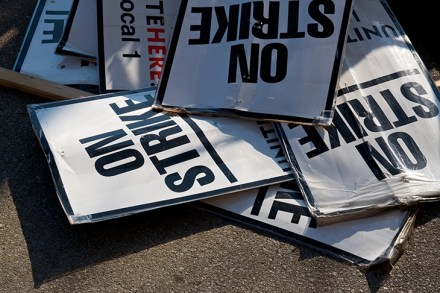
Climate alarmists and Corbynistas (the former increasingly a front organisation for the latter) often put the word ‘Big’ in front of industries which they dislike — Big Pharma, Big Oil. Those of us who do not share their views should copyright a comparable concept — Big Uni. Universities now compose an absolutely vast interest group, determined to increase their fee-paying student numbers almost regardless of qualifications or their own capacity to look after them properly. They are constantly on to the government for money. The salaries of vice-chancellors are huge and the wages of lumpen-academics are low. These impoverished workers feel little responsibility for their students and so go on strike during term time.

The diversity myth of British politics

From our UK edition

The number of parties represented in national election debate multiplies. There are now seven crowding on to television podiums and local hustings. Yet this impression of diversity is, like the current public policy use of that word, misleading. Five of the parties — Labour, Liberal Democrats, Greens, SNP and Plaid Cymru — are essentially the same. They see achieving Remain, growing the state and destroying the Tories as the most important causes. The Brexit party is merely an epiphenomenon of Tory Brexit weakness and is therefore passing into history. So it is the Conservatives vs the rest, and ‘the rest’ includes all the broadcast media.

Six weeks is too long for an election campaign

From our UK edition

The number of parties represented in national election debate multiplies. There are now seven crowding on to television podiums and local hustings. Yet this impression of diversity is, like the current public policy use of that word, misleading. Five of the parties — Labour, Liberal Democrats, Greens, SNP and Plaid Cymru — are essentially the same. They see achieving Remain, growing the state and destroying the Tories as the most important causes. The Brexit party is merely an epiphenomenon of Tory Brexit weakness and is therefore passing into history. So it is the Conservatives vs the rest, and ‘the rest’ includes all the broadcast media.

All belief systems must accept the danger of ridicule

From our UK edition

In the ‘whataboutery’ which now dominates British politics, no mention of Labour anti-Semitism is complete without a counter-accusation of Tory Islamophobia. It swiftly followed the Chief Rabbi’s condemnation of Labour anti-Semitism on Tuesday. There may well be people in the Conservative party who have an irrational hatred of Muslims, but the term ‘Islamophobia’ should be absolutely resisted. Unlike anti-Semitism, this is a concocted concept. A strand of Muslim thought sees all criticism of the prophet Mohammed and his faith as blasphemy and labours worldwide to ban it. Such Muslims are driven mad by the way Jews can cry ‘racism’ when they are attacked, whereas they cannot.