Catriona Olding

My first ever blind date

Four of us go for lunch once a month. My hippy ceramist neighbour, Geoffrey, is a foodie and one of the best cooks I know. He was born a few years after the second world war and, along with his brother, who went on to become a Michelin-starred chef, developed an interest in food from his English, Belgian and Italian grandparents and Swiss mother. I couldn’t afford to heat the little painting studio downstairs this winter and have only sold one work since November, so our choice of restaurants has been necessarily modest.

James Heale, Angus Colwell, Alice Loxton, Lloyd Evans, Richard Bratby, Christopher Howse and Catriona Olding

38 min listen

On this week’s Spectator Out Loud: James Heale analyses the splits in Labour over direction and policy (1:27); Angus Colwell asks if the ‘lanyard class’ are the new enemy (6:21); Alice Loxton explains why bite-sized histories have big appeal (9:58); Lloyd Evans reports on how Butlin’s is cashing in on nostalgia (15:00); Richard Bratby on Retrospect Opera, the non-profit record label that resurrects the forgotten works of British opera (20:40); Christopher Howse provides his notes of typos (27:27); and, Catriona Olding reflects on the death of her partner, the Spectator’s Jeremy Clarke, two years ago this week (32:15).  Produced and presented by Patrick Gibbons.

Is chemically castrating sex offenders really a good idea?

Convicted paedophiles could face mandatory chemical castration to suppress their libidos under plans being considered by the justice secretary. Shabana Mahmood is said to be weighing up giving the drugs to sex offenders to reduce reoffending and free up prison space. But while the idea – announced on the Sun’s front page yesterday under the headline ‘paedos to be castrated’ – is sure to be popular, chemical castration isn’t as effective as its supporters might hope. Its use could lull courts, and society in general, into a false sense of security about the danger that sex offenders pose.

Two years without Jeremy Clarke

Two years ago, at five to eight in the evening of Monday 22 May 2023, I ran into the department store Galeries Lafayette at CAP 3000 next to Nice airport, grabbed two black blazers and rushed to the nearest checkout. ‘Je suis vraiment désolé, Madame, mais nous fermons.’ ‘Please, it’s not eight o’clock yet. My husband died yesterday morning – I need a smart jacket for the funeral on Friday. There are no shops where I live.’ Shaking and fighting back tears, I tried on both in front of the two assistants at the till. ‘Quelle?’ They agreed on the first, and with no mirror close by I took their word for it and paid. I was on the way to pick up my youngest daughter.

The sad decline of painting

From our US edition

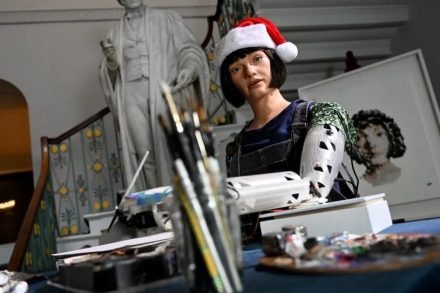
What hope is there for artists following the sale last year of the robot Ai-Da’s portrait of Alan Turing, entitled “A.I. God,” for $1 million? Someone has perhaps paid over the odds for a 3D print with a few marks added by a robotic arm and a few more by studio assistants to areas of the canvas Ai-Da couldn’t reach. Innovation wins. In the 1970s, the walls of art-school degree shows were studded with plaster casts of students’ genitals. By the 1980s, students were discouraged from attempting realist painting, but messy gray abstract works were still acceptable. Then it was found objects and piles of stuff. One young studio assistant I knew in the 2000s had a tutor at art school who’d gained top marks in his degree by filming himself pouring a glass of milk over his head.

painting

Ian Williams, Philip Patrick, Guy Stagg, Ysenda Maxtone Graham, Mark Mason and Catriona Olding

37 min listen

On this week’s Spectator Out Loud: Ian Williams looks at Chinese influence in the UK (1:39); Philip Patrick interviews Japan’s last ninja (9:35); Guy Stagg reviews Damian Le Bas and explores the myths behind the city of Atlantis (18:23); Ysenda Maxtone Graham reviews an exhibition on school dinners at the Food Museum in Stowmarket (23:38); Mark Mason provides his notes on quizzes, ahead of the Spectator’s garden quiz (28:00); and, swapping Provence to visit family in America, Catriona Olding takes us on a trip up the east coast (31:27).  Produced and presented by Patrick Gibbons.

My high-speed bus chase

My youngest daughter and her husband moved to New York last October. Three days after they arrived, she tripped on a step and broke her ankle. ‘So annoying, I was wearing such a good outfit, Mumma.’ They didn’t know anyone. In a boot and on crutches she tackled umpteen flights of stairs in search of permanent accommodation, avoided crazy people in the street and faced up to taciturn bank and phone-shop employees. The unfriendliness of the city upset her more than the pain and inconvenience of the break. I couldn’t afford to visit then – so when a friend, American Cathy, who’s got a second home near me in Provence, offered to buy flights and organise a trip for me and my daughter to visit her in D.C. last month, I accepted.

Colin Freeman, Harry Ritchie, Max Jeffery, Michael Gove and Catriona Olding

35 min listen

On this week’s Spectator Out Loud: Colin Freeman explains how Islamic State tightened its grip on the Congo (1:23); Harry Ritchie draws attention to the thousands of languages facing extinction this century, as he reviews Rare Tongues: The Secret Stories of Hidden Languages by Lorna Gibb (8:00); Max Jeffery highlights the boxing academy changing young lives (13:20); Michael Gove reflects on lessons learned during his time as education secretary (20:30); and, Catriona Olding introduces the characters from her new Provence-based memoir club (29:27).  Produced and presented by Patrick Gibbons.

I’ve started a memoir club – in memory of Jeremy

Provence Molly MacCarthy launched the Bloomsbury Memoir Club in the spring of 1920 with two aims. The first was to bring together the old Bloomsbury set who’d been dissipated by the first world war and the second was to encourage her dilatory husband, Desmond, to write his memoir. She was successful in the first but not the second. The original club was composed of old friends and family members: the MacCarthys, Virginia and Leonard Woolf, Vanessa and Clive Bell, Duncan Grant, Roger Fry and John Maynard Keynes. The aim was ‘serious but also to amuse’. There were few rules, ‘one of which was that no one should be affronted by anything read or said in the Club’. For years I tried to get a small memoir club going down here in Provence; winters can be cold, dark and lonely.

Good portraiture can reveal uncomfortable truths

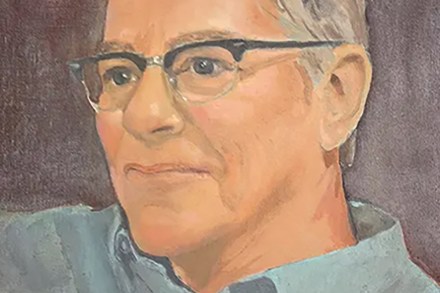
My eldest daughter and her family are moving from a three-bedroom Art Deco semi with a garden and garage on the edge of a housing scheme to a top-floor tenement flat in a trendy family orientated area of Glasgow. They’re having to increase their mortgage to do so but think that the benefits to their overall quality of life will be worth it, and if they move to my son-in-law’s native Como for a while, the flat will be easy to rent out. Surveying the contents of the garage, she messaged: ‘What shall I do with your big portrait, Mum?’ When I was young I was painted quite often, mostly by my artist ex, because I was there and didn’t mind modelling for him.

What will become of artists who paint?

What hope is there for artists following the sale recently of the robot Ai-Da’s portrait of Alan Turing, entitled ‘A.I. God’, for a cool $1 million? Someone has perhaps paid over the odds for a 3D print with a few marks added by a robotic arm and a few more by studio assistants to areas of the canvas Ai-Da couldn’t reach. Innovation wins. Rather like the art schools which demanded portfolio evidence of artistic ability, AI will stifle talent In the 1970s, the walls of art school degree shows were studded with plaster casts of students’ genitals. By the 1980s, students were discouraged from attempting realist painting, but messy grey abstract works were still acceptable. Then it was found objects and piles of stuff.

My brief encounter with online dating

Provence One of my daughters and a few pals, thinking I need company, have been urging me to get Bumble, the online dating app where women make the first move. I’ve thought in the past month or so that I might like some sort of relationship, but contemplating the reality is scary. When someone you love passionately dies, love lives on but sometimes too much; both sweet and painful memories can be paralysing. ‘You can’t be on your own in the cave for ever,’ someone said recently.  Why not? Friends Dave and Kate met on Bumble. He said: ‘You must remember, Catriona, there are lots of decent men out there who haven’t read The Waste Land. Don’t let it put you off.

Martin has worn down my defences

Provence My older, adopted sister came to stay. She suffers from peripheral neuropathy secondary to diabetes and is registered disabled. It’s a worry watching her negotiate the cliff path and the 12 stone steps to the front door with her stick, but she adores it here. Since reversing her insulin-dependent diabetes with an extreme fasting keto diet, her mobility has improved and she no longer uses a mobility scooter. My sister got cross when I doubted the veracity of both his ID and love for her Obesity and diabetes killed her twin brother five years ago this week. He was 62. First he partially lost his eyesight, then sensation in his feet and fingers, and finally his legs. Anthony was a kind soul: a hardworking mechanical engineer who loved his family.

Wes Streeting is right – palliative care isn’t good enough

Wes Streeting informed backbenchers this week that he is voting against the assisted dying Bill on 29 November, saying that ‘end-of-life care is not good enough for patients to make an informed choice.’  Experience of an issue, and I have too much on this one, can both cloud and inform opinion. I’m glad I don’t have to vote on the Bill but I do know that if palliative care was reliably good many people, myself included, wouldn’t fear the end as they do now. The current Bill, if passed, would allow terminally ill adults with less than six months to live to end their lives with medical help. Six months is a long time. Many terminally ill cancer patients are still going to the shops and out for dinner at this stage.

Move over, Mrs Bennet – I’ve seen two daughters married in less than a month

Provence A few days before my middle daughter’s Oxfordshire wedding this summer, my youngest announced that she and her fiancé, who’ve been together for years, were getting married within weeks. They’re moving abroad and bringing their wedding forward would help, she said. Two daughters married in less than a month. Mrs Bennet would be proud or envious. On hearing the news I panic-booked an easyJet flight to Edinburgh for the day before the youngest’s wedding, only to realise it got in at midnight, just 12 hours before the ceremony, and had to abandon that and rebook for the previous day.

Ian Thomson, Andrew Watts, Sam Leith, Helen Barrett and Catriona Olding

32 min listen

On this week’s Spectator Out Loud: Ian Thomson reflects on his childhood home following the death of his sister (1:20); Andrew Watts argues that the public see MPs as accountable for everything though they’re responsible for little (7:40); Sam Leith reveals the surprising problem of poetical copyright (13:47); Helen Barrett reviews Will Noble’s book Croydonopolis and explores the reputation of a place with unfulfilled potential (19:48); and, Catriona Olding ponders moving on from loss to love (26:09).  Produced and presented by Patrick Gibbons.

Miliband’s net zero madness & meet Reform UK’s new poster boy

39 min listen

This week: Miliband’s empty energy promises. Ed Miliband has written a public letter confirming that Labour plans to decarbonise the electricity system by 2030. The problem with this, though, is that he doesn’t have the first idea about how to do it. The grid doesn’t have the capacity to transmit the required energy, Ross Clark writes, and Miliband’s claim that wind is ‘nine times cheaper’ than fossil fuels is based upon false assumptions. What is more, disclosed plans about ‘GB Energy’ reveal that Miliband’s pet project isn’t really a company at all – but an investment scheme. This empty vessel will funnel taxpayer money into the hands of private companies rather than produce any energy itself.

My dinner date with the detective

Provence ‘What do you mean?’ I wanted to ask the man who told me last autumn it was time to move on. I hoped he didn’t mean find a new boyfriend. I like him and his wife a lot and it was meant kindly – so I kept quiet as we stood in their kitchen and they gave me instructions for my weekly visits to check the house after they left for winter. But it stung. Jeremy was still with me night and day in everything I did. I tried not to let my face fall a second time when the man told me he was paying someone else to drive his Aston Martin back to England. I wanted to ask the same question of another man, a widower friend of a friend, who said, in an otherwise ordinary message: ‘This isn’t an offer or a request, but how do you feel about sex?

The ‘Clooney effect’ hasn’t touched my corner of Provence

Provence My eldest daughter’s husband is from Como. In the early 2000s George Clooney caused a stir in the town when he bought a villa on the lakeside nearby, triggering what’s become known as the Clooney effect – a rise in house prices and the number of ‘bougie’ shops and restaurants catering for an increasing number of visitors. Rather than take a boat trip and gawp at the Villa Oleandra, visitors would be better heading to Gardone on Lake Garda and visiting Gabriele D’Annunzio’s insane Il Vittoriale. Unlike Clooney, D’Annunzio (1863-1938), whose motto was ‘Me ne frego’ (I don’t give a damn), was a short, ugly, almost blind, toothless early 20th-century proto-communist/fascist war hero.

My nights with the eagle owls

Provence Summer has arrived. The evenings are warm enough to sit out on the balcony terrace and watch the lights come on in the village below. Each night at ten, the great limestone cliff, into which my little house was built, is floodlit for a couple of hours. On cue two huge baby eagle owls (fully grown wingspan 170cm) begin rehearsing for adulthood and flap clumsily, then majestically, around the rock, calling for their parents and terrorising the smaller nesting birds hidden deep within the crags and crevices. English women wearing broderie anglaise dresses, straw hats and anxious smiles drift about The annual migration of tourists has begun too. On market day the car parks are full by 9.30 a.m. and the queue for Patricia’s cheese stall is 12 deep.