C.J. Farrington

C.J. Farrington is the author of Death on the Trans-Siberian Express.

Why has the work of Franz Liszt fallen into such neglect?

From our UK edition

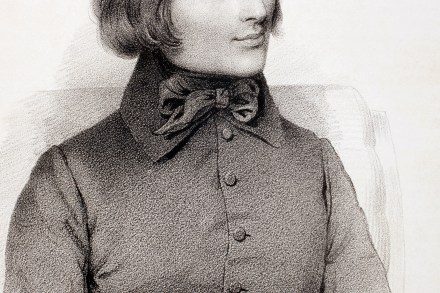
In 1875, Franz Liszt told a pupil of the kiss of consecration – the Weihekuss – that Beethoven bestowed upon him more than fifty years earlier. After watching the young Hungarian prodigy play works by Ries, Bach and Beethoven himself, he kissed Liszt on the forehead and said: ‘Go! You are one of the fortunate ones! For you will give joy and happiness to many other people.’ Liszt isn’t giving joy to many people these days. Take this year’s BBC Proms, which feature only one piece by Liszt, compared to two by Aaron Copland, four by Dora Pejacevic, and six by Samuel Taylor-Coleridge. Over the past decade, Liszt has appeared in eight Proms, while Rachmaninov has featured in 40.
Who might replace Putin once he’s gone?

From our UK edition

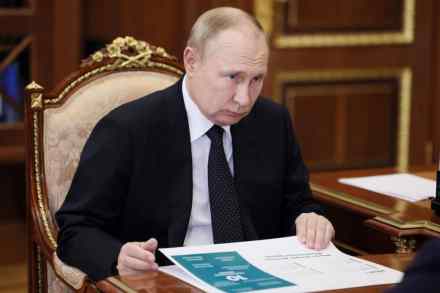
How long does Putin have left? Combined with rumours of ill-health, Putin’s disastrous military campaign in Ukraine has led many to question how long he will cling to power. According to the Russian-Latvian independent news platform Meduza, ministers and oligarchs alike are unhappy at the scale of sanctions and the slow and uncertain progress of Putin’s ‘special military operation’. Alongside rumours of secret plans for a post-Putin Russia, elite discontent has already fuelled several high-profile resignations, including Boris Bondarev, Russia’s Ambassador to the United Nations, and Valentin Yumashev, Boris Yeltsin’s son-in-law. The ship is beginning to sink, and the rats are beginning to swim.

Michael Simmons, C.J. Farrington and Aidan Hartley

From our UK edition

16 min listen

On this week's episode, we’ll hear from Michael Simmons on some of the most ridiculous Covid fines. (00:52) After, C.J. Farrington on the light and darkness of Russian culture. (04:10) And, to finish, Aidan Hartley on the return of the buffalo. (11:07)Produced and Presented by Sam HolmesEntries for this year's Innovator Awards, sponsored by Investec, are now open. To apply, go to: spectator.

Why Russian literature shouldn’t be cancelled

From our UK edition

Vladimir Putin makes no secret of his love for Russian culture, and Russian literature in particular – a body of work whose achievements, Dostoyevsky once claimed, justifies the existence of the entire Russian people. But if that same oeuvre now inspires a man instigating unprovoked war, doesn’t that raise urgent questions about its contemporary validity? For some, these concerns are best expressed via cancellation. In Wales, the Cardiff Philharmonic recently pulled the plug on performances of Tchaikovsky’s 1812 Overture, Marche Slave and Second Symphony, the ‘Little Russian’ (an old and patronising name for Ukraine).