Brian Martin

Eros and Agape

From our UK edition

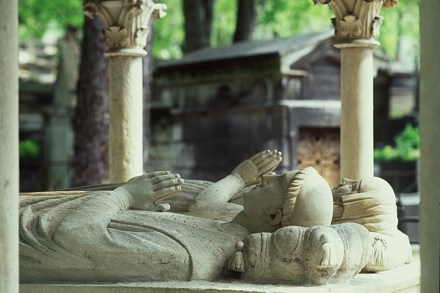
‘I still think he was a bastard.’ This is the opinion that Julia, daughter of the novelist Arthur, has about Peter Abelard. In Melvyn Bragg’s narrative, Arthur is finishing his novel about Abelard and Heloise, living in Paris, separated from his wife, and visited by Julia. She gives a modern woman’s view of the behaviour of Abelard towards his beloved Heloise. ‘She didn’t ask to be a Bride of Christ,’ Julia protests; and Arthur’s telling of the great love story makes that clear. Heloise’s taking of the veil is forced upon her by her lover’s seemingly selfish logic. Arthur’s answer, and undoubtedly Bragg’s too, is that the infatuated pair must be judged in the context of the medieval church.

Flights of fancy | 6 December 2018

From our UK edition

In the opening pages of Turbulence, a woman in her seventies, who is visiting her sick son in Notting Hill, thinks how easy ‘it was, these days, to acquire a plane ticket’. Instead of a ticket to take us around the world, we have David Szalay’s novel, which takes us across continents in a series of 12 connected stories. The chapter headings are the acronyms of international airports; thus the first chapter is LGW-MAD and the last BUD-LGW. Each episode arises from a personal connection to a character in the previous one. Szalay might have been conscious of Forster’s dictum: ‘Only connect the prose and the passion.’ He is a clever craftsman.

All shook up

From our UK edition

The polymath writer A.N.Wilson returns to the novel in Aftershocks, working on the template of the 2011 earthquake which devastated Christchurch, New Zealand. He protests that the setting is not New Zealand but, as he admits, there are many recognisable similarities. This is a novel about true love, its agonies, ecstasies, and eventual fulfillment, told in the voice of a young woman, Ingrid Ashe. She is the daughter of the female local radio broadcaster, Cavan Cliffe; and the mother/daughter relationship is almost unhealthily close. Ingrid’s is a lesbian love story in which her passion cannot develop until the earthquake upsets the structure of the city, destroys the cathedral and causes an all-round upheaval in personal relationships.

Eat your heart out, Holden Caulfield

From our UK edition

Tim Winton’s novel about a journey of teenage male self-discovery is raw, brutal and merciless. You need to be familiar with Australian vernacular to appreciate the first-person narration by the young protagonist who says he is 17 but is thought to be ‘more like 15’ by an old renegade Irish priest he meets in the wastelands of Western Australia. Jackson Clackton is on the run in the scrub and salt-lands away from the coast. His voice is full of Oz-isms — roo bars, johnnycakes, mulga and gimlets. Jaxie flees small-town Monkton. His mother is dead, and his father kills himself in an accident for which Jaxie thinks he will be blamed. He embarks on a desperate quest to reach his girlfriend, who lives to the north, and takes us into the inhospitable hinterland.

An act of piety

From our UK edition

Census is a curious, clever novel. It depicts a dystopia with a father and his Down’s syndrome son journeying from town A to town Z taking a census. The father, the narrator, knows he is dying. As a retired doctor he can interpret the fatal signs of his disease. His is a bizarre family; his wife, who has pre-deceased him, trained as a clown. Condemned to death and left with his disadvantaged son — ‘Our lives, my wife’s and mine, bent round him like a shield’ — he decides to register as a census-taker in an Orwell-ian state office. He asks questions of those interviewed, to which he sometimes but not always gets an answer The novel becomes a parable, or rather a series of parables, complete with riddles.

Not for the fainthearted

From our UK edition

In 2014 Michael Alig, impresario, party promoter and drug provider, was released on parole after 17 years in prison for the manslaughter of Angel Melendez. Alig, leader of New York’s Club Kids during the 1980s and early 1990s, features as a minor character in Jarett Kobek’s breakneck, crazed ride through NYC’s nightlife from 1986 to 1996. Although the novel is set in the club and drug scene, filled with addicts, gays, trans, queens and freaked-out weirdos, its main themes are serious and compassionate. Repeated constantly is the mantra that history repeats itself; but most important is the theme of enduring friendship. Despite the decadence, Kobek is optimistic.

A clash of creeds

From our UK edition

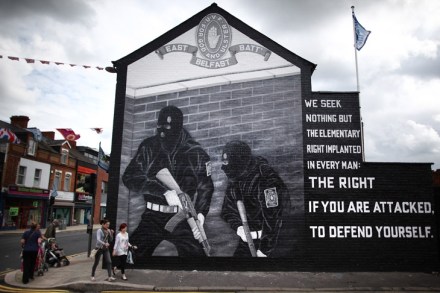
This is a very modern novel. Terrorist atrocity sits side by side with the familiar and the mundane. Where better for this to happen than in Northern Ireland? At the Day’s End pub ‘two eejits in Halloween masks’ enter the bar; ‘Trick or treat,’ they shout. ‘Fut-fut-fut-fut went the gun.’ A woman screams, ‘then a very fast piece of metal entered the side of her head and she stopped’. Throughout the first half of the book, the horror of the pub massacre alternates with the narration of an ordinary family’s home life.

Prophesying doom

From our UK edition

Boualem Sansal’s prophetic novel very clearly derives its lineage from George Orwell’s Nineteen Eighty-Four. A totalitarian surveillance state, a fundamentalist religious autocracy, is portrayed as being totally intolerant of free-thinkers. This is a powerful satire on an Islamist dictatorship. It is unsurprising that Sansal’s writings are censored in his native Algeria. The religious structure of the political state is familiar. The one true god is Yolah and his prophet or ‘Delegate’ is Abi. Abi’s book, the Gkabul, is the foundation of the religion; it is sacrosanct and immutable. Places of worship are mockbas and the nation is named Abistan after the true disciple. There are nine calls to prayer each day.

Double trouble | 8 December 2016

From our UK edition

Cousins is a curious novel. If I’d been a publisher’s reader, I’d have consigned it to the rejection pile after reading the first quarter. It seems to be a dreary saga about three generations of the Tye family. The background is of an intellectual, comfortably off, left-wing family from a milieu in which Polly Toynbee would be happy. Grandpa was a Cambridge-educated conscientious objector during the second world war. The characters fail to interest. It all seems to have been said before. Then suddenly the plot develops and the narrative pace accelerates. Perseverance is rewarded. Mysteries unfold, complex moral issues are explored, some left hanging for the reader to decide on later, and many aperçus about the way we live now are there for us to ponder.

Hostage to misfortune

From our UK edition

Nordic noir is passé. Now we have Israeli noir. Waking Lions is a mordant thriller written by a clinical psychologist who knows how the mind is tortured by deception, infidelity, obfuscation, suspicion and sex. Eitan Green is a neurosurgeon who, exhilaratedly driving his SUV at speed on the desert tracks outside Beersheba, runs down an Eritrean refugee. As he looks at the body with its cracked skull, he thinks that since ‘he can’t save this man, at least he’d try to save himself’. From that point, Ayelet Gundar-Goshen’s omniscient narrator involves us in a web of lies, guilt, evasion, seduction and moral equivocation. The incident is registered officially as a hit-and-run case. Eitan’s wife, Liat, happens to be a senior police officer.