Boyd Tonkin

Impish secrets

From our UK edition

Long ago, I interviewed Edmund White and found that the photographer assigned to the job was the incomparable Jane Bown — a bit like having Matisse turn up to decorate your kitchen. After we talked, Jane shot. She managed to convert a tiny hotel courtyard into a sort of antique Grecian glade. In her pictures, White peeped through the foliage with the smile of some demonic faun come to spread ribald chaos in the service of the great god Pan. I remembered that look when, in this patchwork of pieces about his life as a reader, he discloses that a heart attack followed by surgery in 2014 had one weird outcome. Temporarily, he felt ‘no desire to read’.

The heart of Colombia’s darkness

From our UK edition

What makes Colombia remind me of Ireland? It’s not only the soft rain that falls from grey skies on the emerald uplands around Bogotá. In both countries, ingrained habits of courtesy and charm can smooth over the jagged rifts left by a history of strife. Raised in Bogotá, and living there again after a decade in Barcelona, Juan Gabriel Vásquez writes novels in which elegant mazes of legend and rumour lead, step by graceful step, into the guilty secrets of ‘this country sick with hatred’. Perhaps only an accident of genius enthroned Gabriel García Márquez, with his hyperbolic Caribbean imagination, as the carnival king of his nation’s fiction.

A thing of shreds and patches

From our UK edition

On the wall of her tumbledown house in central Baghdad, an elderly Christian widow named Elishva has a beloved icon of St George with his lance raised. She chats with the saint like an old friend, but wonders why, in the picture, he stays frozen mid-thrust and why ‘he hadn’t killed the dragon years ago’. As her ravaged city suffers an interminable ‘binge of death and devastation’, Elishva frets that ‘everything remained half-completed’, three years after the Anglo-American invasion of Iraq in 2003. During the blood-soaked interregnum, which continues to this day, monsters breed.

Sunlit days and starry nights

From our UK edition

In 1990, the BBC’s adaptation of David Lodge’s culture-clash novel Nice Work won an award at a glitzy soirée in London. At the same time, his debut stage play The Writing Game opened at the Birmingham Rep. Malcolm Bradbury, his old friend and partner on the twin tracks of literary academia and serio-comic fiction, had come to Birmingham to stay and see the show. After a starry night in the West End, and ‘a brief whirl around the dance floor’, Lodge sped back home. He arrived at 3.30 a.m., but found that his wife Mary ‘had accidentally locked me out, and I had to throw gravel up at our bedroom window from the back garden to wake her without disturbing the Bradburys’.

Navigating a new world

From our UK edition

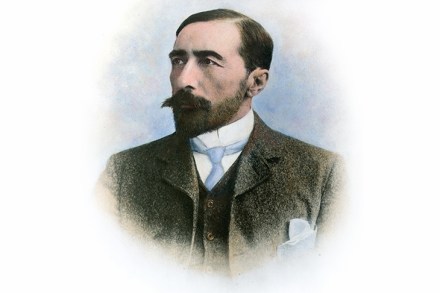
In the 1890s, when British-owned ships carried 70 per cent of all seaborne trade, legislators worried about the proportion of foreigners who served in their crews; which could top 40 per cent. Their worry is not surprising, given the verdicts gathered from British consulates in port cities on the native seaman: ‘drunk, illiterate, weak, syphilitic, drunk, dishonest, drunk…’ In 1894, a parliamentary committee interrogated officers about manning and skills in the merchant marine. One informant was a British-naturalised master ‘with 16 years’ experience’. The MPs, who didn’t presume to ask this expert witness specifically about foreign crews, recorded his name as ‘Mr J. Conrad Korzeniowski’.

Return to the lost city

From our UK edition

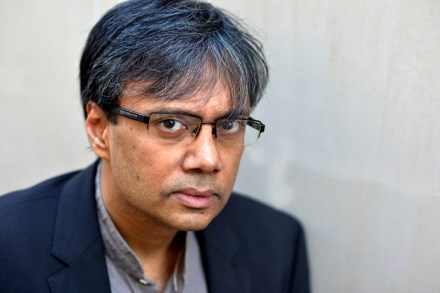
During a press interview in Bombay about his latest book, the author-narrator of Friend of My Youth feels ‘a surge of bile’ against the novel. That imperialist bully of a genre has ‘squatted on the writer’s life’ and defines his ‘sense of worth or lack of it’. Our narrator, as it happens, is named ‘Amit Chaudhuri’. The circumstances of his return to the Indian city of his youth (but not his birth) match in many respects the author’s biographical data. He’s talking, for a start, about The Immortals, the Bombay-set novel about musicians that Chaudhuri published in 2009.

Hot Spring

From our UK edition

Imagine if Kathy Lette — or possibly Julie Burchill — had written a feminist, magic-realist saga that sent four women on a road-trip around the broiling hotspots of the Arab Spring. No, not easy to do — yet the intrepid Turkish journalist and writer Ece Temelkuran has, in this novel, come up with just that sort of pantomime chimera. Temelkuran, an outspoken truth-teller whose fearless reportage has jeopardised both her livelihood and security in Turkey, flings together a quartet of ill-assorted travellers — one of whom resembles the author. She whisks them around the crisis zones of the eastern Mediterranean just as revolutions flare and tyrants tumble.

On the trail of a lost masterpiece

From our UK edition

On 27 May 1939, the German liner St Louis docked in Havana with 937 passengers on board: all but a handful of them were Jews in flight from the Third Reich. After a dismal farrago of diplomatic obstruction, bare-faced corruption among local officials and the incitement by Nazi propaganda of anti-Semitic prejudice ‘even’ (as Leonardo Padura sorrowfully puts it) ‘among the open and happy Cubans’, only a score of refugees could disembark. The US refused entry to the rest. Their ship of despair sailed back to Europe.

Why Milton still matters

From our UK edition

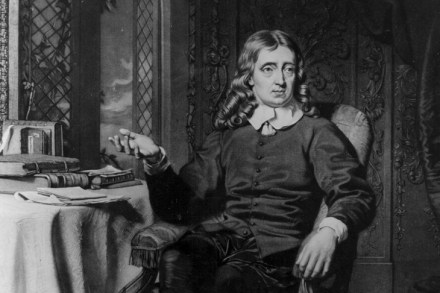
Just 350 years ago, in April 1667, John Milton sold all rights to Paradise Lost to the printer Samuel Simmons — for £5, with another £5 due once Simmons had the first run of 1,300 copies off his hands. That sounds like a bargain for the 12-book epic poem of Satan’s war with Heaven, Eve’s ‘fatal trespass’ and the expulsion from Eden that soon became a monumental pillar of the literary canon. Samuel Johnson — who as a Tory deplored Milton’s revolutionary politics — placed it first (for design) and second (for execution) ‘among the productions of the human mind’. Some readers, though, have always found it dear at any price.

Dangerous liaisons | 26 January 2017

From our UK edition

In a Kashmiri apple orchard, a young fugitive from the Indian army’s cruel oppressions spots a snake that has ‘mistaken its tail for a separate creature’ and started to devour itself. Imran, a.k.a. ‘Moscow’, will later break away from the equally barbaric Islamist insurgents who prey on his rage and grief, flee to Pakistan, and there meet the other protagonists of this fifth novel by Nadeem Aslam. Although The Golden Legend has plenty of passages of exposition and argument, Aslam shines above all as the fabricator of radiant images that tell a story in themselves.

Fine silks and fiery curries

From our UK edition

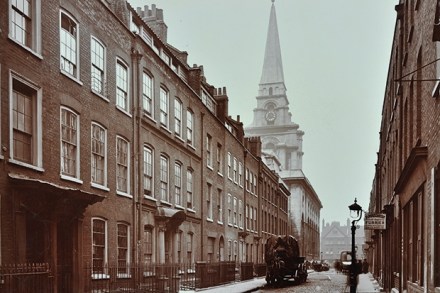
Genial, erudite and companionable over most of its 760 pages, this stout Georgian brick of a neighbourhood history at length flings itself in fury through a toff’s window. Much of Dan Cruickshank’s book has shown with learned charm how, in its tangle of ancient streets just east of the City of London, Spitalfields has always hosted the rough with the smooth, tumult beside elegance. The East End patch where he has lived for four decades — his own 1720s home, a finely embellished history of inner London in itself, gets 15 loving pages — has ‘constantly embodied paradox: great wealth alongside appalling poverty, beauty juxtaposed with squalor’. As he nears his finale, the twin streams of this urban microcosm join.

Gale-force lyricism

From our UK edition

Centuries before their footballers learned giant-slaying ways, Icelanders knew how to startle the world with tall stories. In the moonscape that birthed Sagas and Eddas, little grew but epic tales. When this novel’s protagonist, the troubled poet-turned-publisher Ari, announces in an interview that he has given up authorship, his aunt Elin sends him a heartbroken letter. To see ‘one of our own’ write books, she writes, ‘made us feel almost as if everything had meaning’. Especially for a restless kid from the black lava fields of Keflavik, ‘this peculiar town situated behind the world’, where nothing happens and ‘it’s just work, just fish, the Yanks and the wind’.

Something new out of Africa

From our UK edition

In a Johannesburg mall, a listless and lonely IT worker chats with his dad about the bitter fruits of upward mobility in South Africa. ‘Do you remember when you scored 139 for that IQ test?’ Pa asks, in Masande Ntshanga’s story ‘Space II’. ‘I thought it meant my life would be different, I tell him, but I don’t really like computers.’ As the dream of a ‘rainbow nation’ fades, all the Ubers, espressos and craft beers in the city can’t dispel the mood of yuppie melancholia. Modern Africa, as several pieces in the latest edition of this annual anthology attest, may cast away old burdens only to take on the anxious freight of globalised life.

Where should this music be?

From our UK edition

This must rank as the most heartbreaking example of premature chicken-counting in musical history. ‘Gotter has made a marvellous free adaptation of Shakespeare’s The Tempest,’ wrote poet Gottfried Bürger to the translator A.W. Schlegel on 31 October 1791. ‘Mozart is composing the piece.’ Three days later, brimming with misplaced confidence, the dramatist Friedrich Wilhelm Gotter confirmed that ‘the edifice is all ready to receive Mozart’s heavenly choruses’. By 5 December 1791, Mozart was dead. Most probably, he never saw Gotter’s Tempest adaptation, although the musicologist Alfred Einstein stirred the pot of Mozartian myth by presuming that the master had set to work on it during his dying days.

Nostalgia and nihilism

From our UK edition

‘Gilded doorknobs,’ spits a Party diehard as she contemplates the blessings of the Soviet Union’s collapse. ‘Is this freedom?’ Dozens of witnesses from the ‘lost generation’ in Russia who had ‘a communist upbringing and a capitalist life’ share Elena S’s disgust and bewilderment as they contribute to this epic fresco of an empire’s bitter aftermath. Some adjust smartly to the post-Soviet disorder, although a 35-year-old advertising manager reflects that ‘I never dreamed of being fucked in stairwells or saunas in exchange for expensive dinners.’ The few winners and many losers agree: ‘You can’t buy democracy with oil and gas… You need free people, and we didn’t have them.