Boyd Tonkin

Ambition and delusion: The Director, by Daniel Kehlmann, reviewed

From our UK edition

As bombs rain down on Nazi-occupied Prague, Georg Wilhelm Pabst shoots a film – a romantic courtroom drama adapted from a pulp novel by a creepy Third Reich hack, Alfred Karrasch. Although the leading man finds it strange to make any movie ‘in the middle of the apocalypse’, his director insists that ‘art is always

News from a small island: Theft, by Abdulrazak Gurnah, reviewed

From our UK edition

In 2021, the award of the Nobel Prize in Literature made Abdulrazak Gurnah the world’s second-best-known Zanzibari – after a certain Farrokh Bulsara, aka Freddie Mercury. Forgive the flippant comparison, but the pop world’s perplexity over Queen’s vocalist’s origins feels germane to the quest for a coherent self and story undertaken by the Nobel laureate’s

Murder she imagined: The Dream Hotel by Laila Lalami reviewed

From our UK edition

‘In dreams begins responsibility,’ wrote W.B. Yeats. In the near-future America imagined by Laila Lalami, culpability starts there, too. Charged with the prevention of potential crimes, the Risk Assessment Administration monitors not just every aspect of citizens’ behaviour but, via tiny ‘neuroprosthetics’, the hidden drives revealed in sleep. As an RAA agent insists: ‘Every murder

Rebellion and repression: Oromay, by Baalu Girma, reviewed

From our UK edition

‘We don’t want a James Bond adventure here,’ warns a jumpy spymaster as he grapples with an anti-state conspiracy in Oromay. Among other strands, that’s precisely what this fabled Ethiopian novel of 1983 delivers. Which is remarkable, given that Baalu Girma’s semi-autobiographical thriller of rebellion and repression, love and war, has been translated from Amharic.

An outcast among outcasts: Katerina, by Aharon Appelfeld, reviewed

From our UK edition

‘Nothing escape’s the wolf’s fangs,’ thinks the narrator of Katerina. Through an outlandish sequence of chances and choices, somehow its author did just that. Aharon Appelfeld, a child of assimilated parents, lived in the old Jewish heartland of Bukovina. In 1940, short-lived Soviet occupation gave way to Nazi control. His mother was murdered and his

Nordic dream or nightmare?: The Mark, by Frida Isberg, reviewed

From our UK edition

Imagine a society, a high-minded psychologist tells his curmudgeonly father, ‘in which people are like cars. They have to go in for inspection once a year’ in order to assess their emotional fitness for the shared highway of life. As for the ‘psychopathic percentage’ whose ‘moral disorders’ lead them to fail this spiritual MoT, never

C.J. Sansom’s Tudor England is a mirror of our divided world

From our UK edition

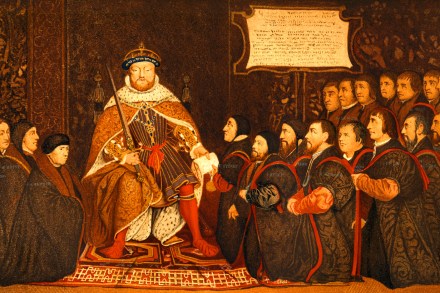
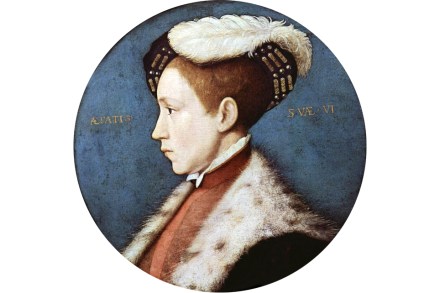
Among the many appreciations of C.J. Sansom, the author of bestselling historical mysteries who died last week aged 71, one of the most eloquent came from Rear Admiral John Lippiett. A friend since Sansom first researched the sinking of Henry VIII’s flagship the Mary Rose (Lippiett headed the Mary Rose Trust in Portsmouth after he

Mediterranean Gothic: The Sleepwalkers, by Scarlett Thomas, reviewed

From our UK edition

Scarlett Thomas likes islands: either literal sea-girt territories or closed enclaves where this wickedly inventive novelist practises her richly enjoyable experiments in plot and form. If her recent Oligarchy found its sour-sweet spot in a grisly girls’ boarding school, The Sleepwalkers creates another insular possession: the Greek island of ‘Kathos’, which almost resembles Samos. Here,

Must we live in perpetual fear of being named and shamed?

From our UK edition

You should feel thoroughly ashamed of reading this infamous rag. Or else you might decide to revel, shamelessly, in its critics’ prim disapproval. From political squalls to global wars, David Keen argues that a ‘spiral of shame’ and shamelessness now traps individuals and societies in arid cycles of pain, rage and revenge. Manipulative actors –

A tale of cruelty and imposture: The Fraud, by Zadie Smith, reviewed

From our UK edition

‘Is this all that these modern ladies’ novels are to be about? People?’ So asks the bewildered author of Old St Paul’s, The Lancashire Witches, The Tower of London and three dozen other forgotten blockbusters stacked with costumed folderol. In Zadie Smith’s sixth novel, William Harrison Ainsworth disapproves, in 1871, of hiscousin-housekeeper, Eliza Touchet, reading

A visit from the devil: Russian Gothic, by Aleksandr Skorobogatov, reviewed

From our UK edition

Like light from faraway stars, fiction from outside the Anglosphere may take decades to reach English-language readers. This sinister, indeed sulphurous, novella by a Belarus-born author was first published in Russian in 1991, and won major awards. Ilona Yazhbin Chavasse’s English translation, as creepily compelling as the book deserves, appears long after the contemporary hook

Find the lady: Tomás Nevinson, by Javier Marías, reviewed

From our UK edition

The plot sounds like an airport thriller – or a Netflix mini-series pitch. In a proud and staid riverside town in north-west Spain, where ‘each individual played the role assigned to him’, live three women. One is a merciless terrorist killer: Magdalena Orúe, or Maddy O’Dea, half-Spanish, half-Northern Irish, a warrior on long-term loan from

Luminous fables: Night Train to the Stars, by Kenji Miyazawa, reviewed

From our UK edition

Talking animals – as anyone who has watched a Studio Ghibli animated film will know – are big in Japan. But not always cute. The snooty hawk, for instance, looks down on the ugly but peaceable nighthawk (‘quite harmless to other birds’), who half-shares his macho name despite a deplorable lack of raptor credentials. Just

An empire crumbles: Nights of Plague, by Orhan Pamuk, reviewed

From our UK edition

Welcome to Mingheria, ‘pearl of the Levant’. On a spring day, as the 20th century dawns, you disembark at this ‘calm and charming island’ south of Rhodes from a comfortable steamer after sailing from Smyrna, Piraeus or Alexandria. A crew of Greek or Muslim boatmen will row you to the picturesque harbour of Arkaz, flanked

When did cheerfulness get so miserable?

From our UK edition

We’ve all met the sort of facetious oaf who orders any non-giggling woman to ‘Cheer up, love, it might never happen’. As Timothy Hampton grasps, enforced cheeriness feels about as much fun as compulsory games. His invigorating book about the quest for true cheerfulness in literature and philosophy dismantles the various ‘prosthetic or counterfeit’ versions

Snafu at Slough House: Bad Actors, by Mick Herron, reviewed

From our UK edition

Reviewers who make fancy claims for genre novels tend to sound like needy show-offs or hard-of-thinking dolts. So be it: here’s mine. Anyone who tries to understand modern Britain through its fiction but overlooks Mick Herron’s satirical thrillers merits a punishment posting to the critics’ version of Slough House. That noxious midden of a building