Bill Jamieson

King’s gambit

From our UK edition

No one who knows Sir Mervyn King would describe him as a radical. The Bank of England governor looks every inch the owlish academic, yet he is midway through what is possibly the greatest gamble in Britain’s economic history. Under the frosted-glass term of ‘quantitative easing’, he may soon have the Bank artificially create £600 billion of credit to its own account, the bulk of which would be used to buy government debt. Other countries have attempted quantitative easing, but never on this scale. Sir Mervyn is boldly going where no central banker has gone before — yet with the minimum of debate over the policy’s costs, its consequences and its victims. The problem is clear enough.
No longer proud to wear the tartan?

From our UK edition

Bill Jamieson wonders how badly ‘Brand Scotland’, with its associations of canniness and caution, has been damaged by the financial crisis and a dismal Scottish Prime Minister Scotland’s fortitude has certainly been tested these past 12 months. Its proud claim to have a special excellence in finance — an innate canniness and caution — has been shattered by the demise of its two banks headquartered in Edinburgh, Royal Bank of Scotland and HBOS. It didn’t matter that New York, London, Dublin and Frankfurt also suffered blows to their banking systems. These were blows that Scots took personally, a wound to our very definition. Scotland was whisky, lochs, glens, tartan — and banks.

Scotland counts the cost of its financial Culloden

From our UK edition

Number 35, St Andrew Square in the heart of Edinburgh’s New Town has no name plate or corporate signage. It is an anonymous executive office used by Sir Fred Goodwin, Royal Bank of Scotland’s now-departing chief executive, for discreet meetings away from the bank’s out-of-town campus headquarters at Gogarburn. From its elegant Georgian first- floor windows you can look out along the timeless thoroughfare that is George Street, past the scrubbed sandstone of Standard Life — Edinburgh’s archetypal investment institution — to some of the city’s most expensive boutiques and auction houses. Last week Number 35 was closed, and along George Street few were lingering at the shop windows.

New Deal economics: lessons from Herbert Hoover

From our UK edition

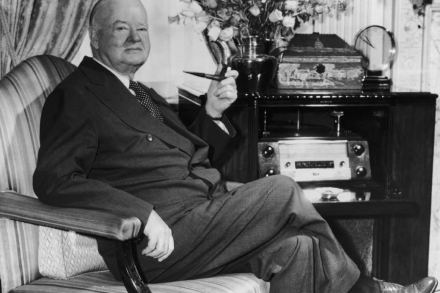
Bill Jamieson says calls for a Rooseveltian New Deal to stave off US recession are misinformed; it was FDR’s much-maligned predecessor who set the course for recovery A year into the credit crunch and the world’s leading economies seem locked in a macabre race to be first over the recession line. America, a few months ago firm favourite, has lost the lead to Germany. Or is it France? Or Spain? Is Japan already over the line? In truth, who ‘wins’ is secondary to the direction in which the global economy is heading and the sense of apprehension over further shocks to come in the banking system.