Bennett Tucker

How the Venice Biennale imploded over Israel

From our UK edition

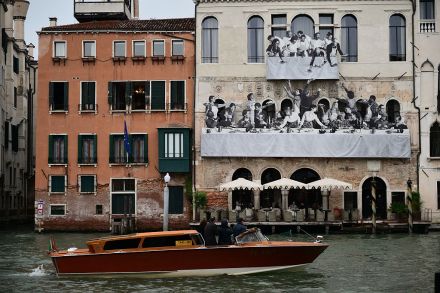
The who’s who of the international art world meet every two years at the Venice Biennale to hobnob, clink champagne glasses and gawk at contemporary art showcased in national pavilions along the Giardini della Biennale. The exhibition should be a celebration of artistic merit, with the international jury awarding the coveted Golden Lion to the best national pavilion and artist. This year, however, the 61st Venice Biennale, scheduled to open on May 9, has already decided that the art will take a back seat to identity politics. Israel is represented by sculptor Belu-Simion Fainaru, and his early exclusion from the chance of winning a prize has caused an uproar The exhibition’s theme, ‘In Minor Keys,’ was selected by chief curator Koyo Kouoh.
The remarkable resilience of Israeli art

From our UK edition

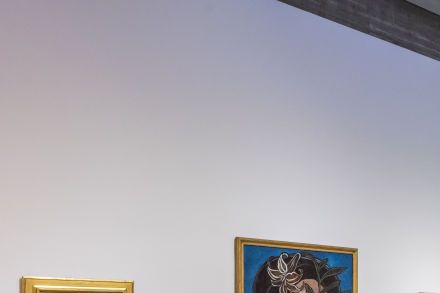
The Israel Museum in Jerusalem (IMJ) – home to impressive collections of ancient and modern art and some of the world’s rarest antiquities, such as the Dead Sea Scrolls – celebrated its 60th anniversary last year by launching eight new exhibitions. All focused exclusively on showing Israeli artists or works within the museum’s collection. The centrepiece exhibition, Israeli Art: Swing of the Pendulum, featured Reuven Rubin’s triptych from 1923, ‘First Fruits’, a work that embodies the harmony of Jewish immigrants and local Arabs in the early days of the British Mandate of Palestine. On the opposite wall hung Zoya Cherkassky’s diptych ‘Friday in the Projects / 1991 in Ukraine’, painted in 2015, depicting scenes of brutal street violence and war.

How AI is reshaping the Iran war

From our UK edition

The magnitude and speed of the US and Israeli airstrikes eliminating Iranian regime officials can be explained in part by their unprecedented use of advanced technology and AI systems. The US military embraced AI earlier this year when Secretary of War Pete Hegseth ordered the Department of War to ‘accelerate America's Military AI Dominance by becoming an “AI-first” warfighting force across all components, from front to back.’ Despite US President Donald Trump’s order for federal and military agencies to cease using AI tools developed by Anthropic, it was Anthropic’s Claude AI that was pivotal in making intelligence assessments and identifying targets in the opening salvos of the Iranian attack.