Arabella Byrne

Arabella Byrne

Arabella Byrne is the co-author of In The Blood: On Mothers, Daughters and Addiction.

In praise of Prince George’s suit

From our UK edition

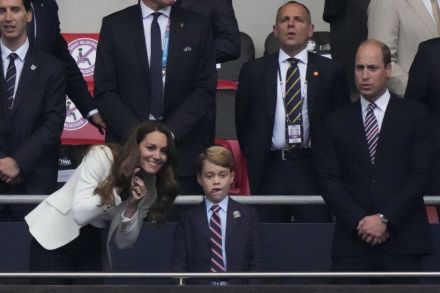
To some, the sight of Prince George wearing a suit and tie at Wembley on Sunday night was simply too much. The Mum mob on Twitter roared 'Who dresses a child like that?' presumably hoping that the future King would be wearing a football shirt and shorts like the rest of the child population lined up way past their bedtime on Sunday to watch England lose. For the little Prince to wear the apparel of power and privilege was seen as an act of cruelty, a scheme designed by his parents to set him apart from other children. Let kids be kids, the reasoning goes. Let them wear whatever they like. Far be it from parents to impose any kind of sartorial authority over their offspring.

How Macron was outfoxed by a dead Napoleonic general

From our UK edition

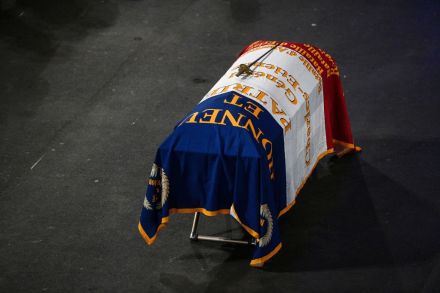
Skeletons don’t always lurk in cupboards, some of them hide under dance floors waiting for a particularly rousing party to dislodge them. Such is the story of one of Napoleon’s favourite generals, César Charles Étienne Gudin de La Sablonnière, whose missing remains were discovered under a dance floor in Smolensk in 2019, over 200 years after his death from a cannonball during the French invasion of Russia in 1812. Yesterday, his one-legged skeleton was repatriated to France via a private jet chartered by the Russian oligarch, Andrei Kozitsyn. Not a bad way to travel for a Napoleonic soldier. The discovery of Gudin’s remains and their passage home unearths some complicated truths for President Macron.

Why a dog is a politician’s best friend

From our UK edition

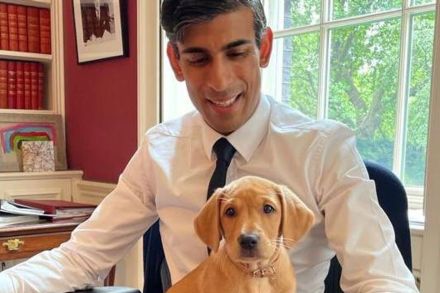
Is there a better way to boost a politician's fortunes than a puppy? Everyone knows that dogs buy a certain degree of political capital. Boris knew this when he acquired not simply a puppy, but a rescue cross from across the Union in Wales. Joe Biden was well aware of their political potency when he brought dogs back to the White House after Trump’s four paw-less years. And Chancellor Rishi Sunak must also have bargained on their public appeal when he posted a picture of his new Fox Red Labrador puppy Nova sitting on his lap in his No.11 office last Wednesday. Twitter barked back but not necessarily in approval, with many commenting that the Chancellor should concentrate on the aftermath of the pandemic rather than massaging his image with dog pictures. Woof.

The sport of the Royal Box

From our UK edition

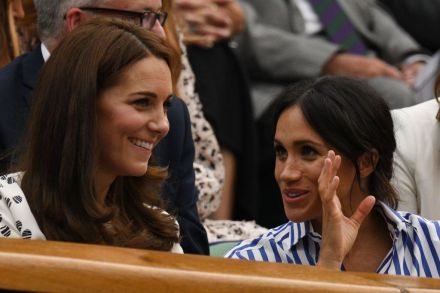
Yes, we tune in for the tennis on Wimbledon fortnight. But lovers of SW19 also tune in for another kind of spectating on any given day: the sport of the Royal Box. A championship of notoriety and celebrity in its own right. Raised feudally above the Centre Court, the Royal Box has seventy-four Lloyd Loom dark green chairs for its chosen occupants on all thirteen days of play. For nearly a century, since 1922, the Royal Box has welcomed an illustrious rollcall of guests, described by the All England Club as ‘British and overseas Royal Families, heads of government, people from the world of tennis, commercial partners, British armed forces, prominent media organisations, supporters of British tennis and other walks of life.’ And me. Yes, that’s right.

The rise of the retronym

From our UK edition

'Should I pay in actual money, in-person, in the shop itself?' I asked my husband incredulously the other day. Yes, he replied, sounding rather bored. Prior to the pandemic such an exchange would not have taken place. I would have simply gone to the shop with no thought of government restrictions to my personal liberties, unmasked and care-free, and paid in good old-fashioned sovereigns. But this is 2021 and the pandemic has had such a profound effect on our linguistic habits that we are now forced to speak in a tangle of retronyms to get our point across. But what exactly are retronyms? Those expecting the linguistic form of a Hoxton hipster, dressed ironically in 90s clothes may be disappointed because retronyms just aren’t that edgy.

How do politicians switch off?

From our UK edition

'Like a sea beast fished up from the depths, or a diver too suddenly hoisted, my veins threatened to burst from the fall in pressure. I had great anxiety and no means of relieving it […] And then it was that the Muse of Painting came to my rescue – out of charity and out of chivalry.'  So said Churchill in 1915 after the disaster that was Gallipoli. Salvaged by the Muse, Churchill found solace from the pressures of political life in art. Last week, another sea beast emerged from the depths, consoled this time not by a Muse (he does, however, like to paint) but by the Sirens of the sea.

Tennis has always been a game of psychological warfare

From our UK edition

There was a time when having a nervous breakdown on a tennis court was called a hissy fit. Watch John McEnroe shouting at the umpire during the 1981 Wimbledon Men’s Singles first round match against Tom Gullikson for the masterclass. Strutting over to the umpire like an angry bird, his trademark headband doing anything but containing his mop, McEnroe splutters the immortal 'you cannot be serious' riposte accompanied by fabulously energetic arm movements before returning to the baseline and serving out a double fault. In the gladiatorial arena that is the tennis court, McEnroe knew that repression wouldn’t win him the match. Did he look bonkers? Yes, but he didn’t care. Instead, he channeled his mental anguish to win him the match, and later, the tournament.

Marine Le Pen wages war on a French rap star

From our UK edition

'Dans ce rêve où ma semence de nègre fout en cloque cette chienne de Marine Le Pen.’ You don’t have to speak fluent French to get the feeling that the French-Congolese rapper Youssoupha didn’t entirely rate Marine Le Pen in his song, ‘Éternel recommencement’. In fact, he doesn’t rate quite a few journalists and politicians in France. But what is rap for, if not to critique the establishment? That must have been the reasoning of the Federation Francaise de Football (FFF) when it chose Youssoupha’s recent tune, ‘Ecris mon nom en bleu’ (Write my name in blue) as the anthem for the French football team ahead of this month’s European Football Championship.

The strange appeal of pandemic emoji

From our UK edition

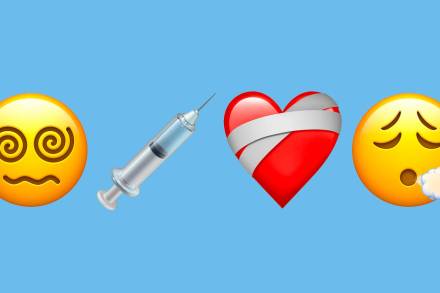
News that Apple has updated its emoji range to include pictograms specific to the pandemic may either disgust you or inspire you to send a volley of missives out immediately. As an emojiste, I am in the latter camp. I am delighted that I now have a bandaged heart, a dizzy face with spiral eyes, a face exhaling with exhaustion and, of course, a bloodless syringe in my emoji lexicon. My nearest and dearest WhatsApp interlocutors may groan but I simply don’t care. Far from an erosion of linguistic standards, I see emojis as an exciting semiotic advance. I only wish that Roland Barthes, the grand French semiotician of the last century, were around to decode it all. Emoji, which originated in Japan in the 90s, can be used in different ways.

The rapid rise of Pascal Blanchard, Macron’s favourite diversity tsar

From our UK edition

In October last year Emmanuel Macron had a long list of around 300 to 500 names drawn up. These were no ordinary figures but rather a number of renowned French immigrants who were being lined up as candidates for new street names and statues. Among their number was Martinican philosopher and activist Frantz Fanon, Moroccan war veteran Hammou Moussik, and the Egyptian French singer Dalida. And yet the man behind the scheme, Pascal Blanchard, is arguably more interesting than any of the names on the list.

Was Francois Mitterrand a hero or villain?

From our UK edition

François Mitterrand remains something of an enigma in French politics. Mitterrand was the original champagne socialist and he remains a poster-boy of the French left. But France's former president – an adulterer, member of the French Resistance with a Vichy secret, secularist and sometime Catholic – doesn't easily fit into any one box.  This week marks forty years since Mitterrand became president. As with commemorating the 200th anniversary of Napoleon's death, the occasion marks something of a challenge for France's current president, Emmanuel Macron.

The perils of public grief

There is no greater tabula rasa in the public imagination than grief.  Prince Philip’s four children - no strangers to the glare of public interest - now find themselves the target not of global ire, but rather unusually, of collective sympathy. For public figures, the warm light of communal compassion imbues recognition and significance on the lives of lost loved ones; their grief is one that is shared, which must be a consolation. But in today's 24/7 news cycle public grief of this kind comes with its own pressures and expectations. In the annals of Royal public relations, this should be a relatively straightforward chapter. Approval for the Royal family soars amid a public outpouring of hagiography, and all is well.

How to solve Joe Biden’s dog problem

From our UK edition

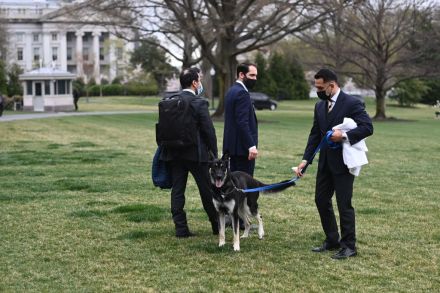
Pity poor Major Biden, First Dog of the United States, FDOTUS for short. Thrust first from the lowly surroundings of a shelter in Delaware then on to the porticoes of the Biden HQ and finally the White House, he appears to be experiencing teething problems as he adapts to his new life. And teeth are, quite literally, the problem. Prone to biting, the German Shepherd has now been found guilty of two biting incidents having first injured a member of the Secret Service and now a White House staffer whilst out on one of his walks. But this is not all. Major is also suspected of pooing outside the Palm Room doors of the Diplomatic Room in the carpeted sanctuary of the West Wing.

The puppy pandemic is getting out of hand

From our UK edition

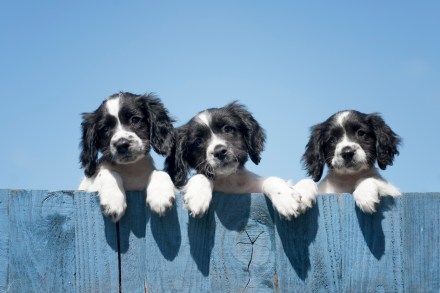
They came in their droves. Labradors, Alsatians, French bulldogs, Spaniels, Cavapoos, Cockapoos, Labradoodles, Corgis, like a roll of dog poo bags, the list goes on. No sooner had Boris locked us up in the March sunshine last year than the nation rushed to acquire a dog. After years of standing firm, parents finally gave in to their children’s pleas and took the plunge. Those living alone, confronted with the prospect of indefinite confinement, threw caution the wind (and their furniture) and gave in to the idea of a dog. Those who had not owned a dog for years, decided they would once more fling themselves unto the canine breach. I know all of this because when I walk my Pointer, Percy, in the fields and parks around my house I am assailed by people with boisterous puppies.

What the British can learn from French attitudes to culture

From our UK edition

Asked to defend France’s reputation on the global stage, a French diplomat once told the International Herald Tribune, 'If Germany has Siemens, we have Voltaire.' In this vision lies something very obviously French: a single-minded belief in superiority grounded not in the future but in the glorious intellectual past. Schooled in the tradition of exception culturelle or cultural superiority, the French truly believe that their cultural capital is the finest in the world. Think Diderot, Condorcet, Sartre and Camus and you can see why.

A very royal rift: what Prince Harry can learn from Queen Victoria

From our UK edition

For all the long looks and transatlantic sniping via their courtiers, the Battle of the Dukes – Cambridge vs. Sussex - has been relatively tame thus far. No princely duel has taken place, no swords have been drawn at dawn in the grounds of Windsor Castle and, regrettably, neither Duchess has fainted at the scene. All we can hope for at this point is a proxy battle waged in the arid landscape of digital media, barbed insults poking out among the podcasts and twitter feeds.  Gone are the days of gladiatorial contest offered up to the public in search of absolutism. Those in search of Ducal blood sports must instead content themselves with four seasons of The Crown, an interview with James Corden, or the pronouncements of historian and Netflix advisor Robert Lacey.

The perils of the royal interview

From our UK edition

Imagine, if you will, that there existed a television interview with Henry VIII. Sprawled in one of his Royal palaces with the interviewer nervously perched amongst the discarded chicken bones and giant dogs, what would he say? Would he be repentant about the beheadings, the adultery, the abject violence? Would he make us believe that his quest for an heir lay rooted in a deep and fervent respect for his bloodline? Definitely not. For the Tudors were monarchy proper; mysterious and shadowy, sheathed in transcendence. Monarchy before the mystery was replaced by the dull sheen of celebrity and its Instagram accounts, television interviews, zoom appearances and podcasts.

Isolation is stoking our addictions

From our UK edition

Rarely has the public imagination been so injected with the notion of a drug as the way out. AstraZeneca, Pfizer, BioNtech; these names have seeped into our discourse with such ease that it seems hard to imagine the shadowy time before them when vaccines were something routinely administered to children and the elderly. A time before we were bombarded with images of syringes and phials of medicine on conveyor belts, a time before a drug meant liberation.  For addicts living through the pandemic, the idea of a drug as liberation is a well-worn pathway. But there is no vaccine to return them to any sort of freedom or to offset the damage caused by nearly a year of isolation. Because for addicts, to be alone is to suffer.

Jared, Ivanka and the art of the social pariah

From our UK edition

In New York society, you’re nobody until somebody hates you. By which maxim Jared and Ivanka Kushner will be extremely high-profile indeed. Expelled from the White House after four years, President Trump’s shoe-designer turned special advisor daughter and her real-estate mogul husband find themselves in need of a job and, perhaps more pressingly, somewhere to live.  Will they return to New York’s playground of the filthy rich where they used to pose on the Met Gala carpet and hobnob with the likes of Murdoch’s ex-wife Wendi Deng and oil tycoon Mikey Hess? Given not only the past four years but more recent indiscretions in DC, it seems unlikely.

The dos and don’ts of the inauguration outfit

From our UK edition

Given recent events on the inauguration scaffolding, Jill Biden may do well to wear a bullet-proof vest to watch her husband become the 46th President of the United States and be done with it. But Inauguration Day calls for some serious sartorial politicking and it seems unlikely Dr B will want to miss out. Long before Michelle sashayed her way to the 2013 ceremony in that Thom Browne coat, Thomas Carlyle spoke of the power of clothes in his 1834 Sartor Resartus: “Society is founded upon cloth” he said simply, and most women in the world would agree with him.