Anthony Sattin

The citizens of nowhere adrift in the West

From our UK edition

We all know that an Englishman’s home is his castle, or at least it was. Looking back, it is easy to see how the castle walls were breached – first by mobile phones and wifi, then by the smart speakers and other gadgets that help and also harvest us. The idea that our homes are inviolate seems quaint nowadays. We know there are many other ways in which we are being uncastled, not least by government agents acting with impunity. And if you think that’s a problem, wait till you read the other home truths delivered by Ece Temelkuran in a book you’ll ignore at your peril. Temelkuran is a writer of rare gifts with an urgent message. Her first books, including the award-winning Women who Blow on Knots, appeared in her native Turkish.
A dreamy, if overly ambitious show: Silk Roads, at the British Museum, reviewed

From our UK edition

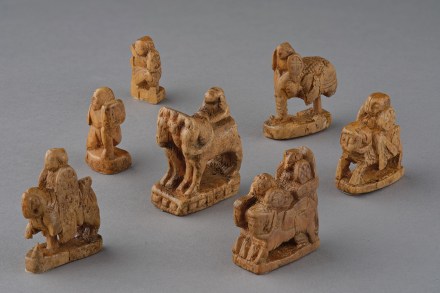
Towards the end of the British Museum’s Silk Roads show, there is a selection of treasures found in England. Among them is a copper flagon made in Syria and buried in Essex in the late 500s. It is believed that the flagon belonged to an English mercenary who went to fight for the Byzantines against the Sassanians in the 570s. The flagon’s looping handle would have held it tight to a saddle, so perhaps it came to England attached to the warrior’s horse as he rode home from his adventures in the East. There are many spectacular objects in this exhibition. Very many If objects are to inspire more than awe in us, we also need a handle.

Fraser Nelson, Cindy Yu, Mary Wakefield, Anthony Sattin, and Toby Young

From our UK edition

31 min listen

On this week’s Spectator Out Loud: Fraser Nelson signs off for the last time (1:30); Cindy Yu explores growing hostility in China to the Japanese (7:44); Mary Wakefield examines the dark truth behind the Pelicot case in France (13:32); Anthony Sattin reviews Daybreak in Gaza: Stories of Palestinian Lives and Cultures (19:54); and Toby Young reveals the truth behind a coincidental dinner with Fraser Nelson and new Spectator editor Michael Gove (25:40).  Produced and presented by Patrick Gibbons.

Voices from Gaza, historic city in ruins

From our UK edition

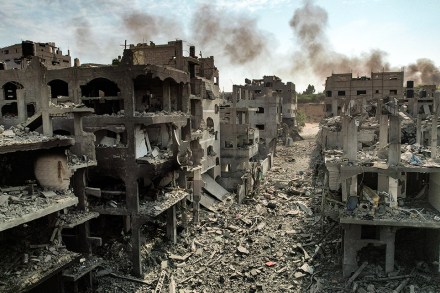
I have been reviewing for decades and this is by far the most difficult book I have taken on: difficult to read because it relates to what Israel has done in Gaza over the last year, and difficult to write about because the subject is so divisive. But whether you think Palestinians deserve what is happening to them or that Israel is a rogue state, please read to the end. First there is the title. Not Catastrophe, or Genocide, or Reckoning in Gaza, but Daybreak. This is a book that carries the promise of a new day, or a dawning – a book that looks forward, but does so also by looking back over 4,000 years of history.

The remarkable Princess Gulbadan, flower of the Mughal court

From our UK edition

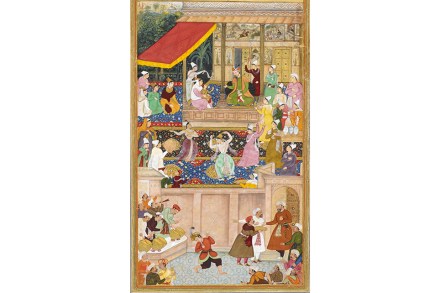
In 1587, the Mughal Emperor Akbar, himself illiterate but with grand vision and even greater ambition, commanded his courtier Abu’l-Fazl to write an official history of his reign and dynasty. An order went around Akbar’s court that anyone who was ‘gifted with the talent for writing history’ should put pen to paper and record the events that had shaped their times. Unusually for a male-dominated society, this included the emperor’s aunt. The 64-year-old Princess Gulbadan was well placed to provide a first-hand description of the creation and consolidation of the Mughal empire, for she was the beloved daughter of the Emperor Babur, who founded the dynasty, and the half-sister of Akbar’s father, Humayun.

How the barbarians of the steppes shaped civilisation

From our UK edition

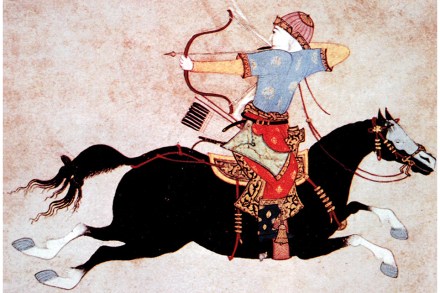
It’s boom time for nomad history. It started some eight years ago, when Bloomsbury published a study of central Asia from an Oxford academic. This might have been a fringe book, but the author’s breadth of knowledge and analysis was exceptional, the narrative was gripping, the cover was beautiful and the publisher had high hopes, in spite of my quibbling review. Their punt paid off. Peter Frankopan’s The Silk Roads has sold more than two million copies and counting. It has also helped renew interest in central Asia, which had mostly been the preserve of travel writers and niche historians, including the great René Grousset.

A source of bitter rivalry: Burton and Speke fall out over the Nile

From our UK edition

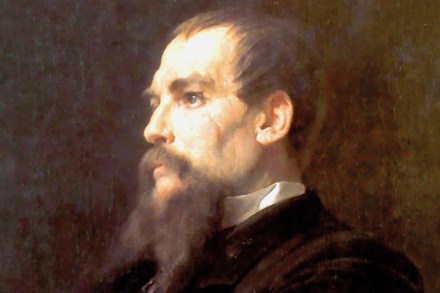
For the 19th-century English adventurer, author, ethnographer, pornographer and all-round maverick Richard Burton, one of life’s happiest moments was ‘the departure upon a distant journey into unknown lands’. There would of course be difficulties; but happiness derives from the prospect of overcoming great challenges and in the process achieving fame and perhaps even fortune. By contrast, what delights the reader most is when a traveller, somewhere deep in those unknown lands, faces overwhelming obstacles. What possible interest is there in hearing that they went, they saw and they returned? Few journeys involved more hardship than the one Burton contemplated in the spring of 1855.

Were the Ottoman Turks as European as they thought themselves?

From our UK edition

This is the best of times to be writing history, since so much of what has been taken for granted, especially in the West, is being revised. Assumptions about the past that we accepted as fact, and events we once looked upon with pride, are now being questioned. A dark cloud hovers over the Benin Bronzes, Elgin Marbles and Rosetta Stone in the British Museum and looks likely to burst. The same applies to figures who were considered heroes and placed on pedestals. If the statue of Winston Churchill in Parliament Square had not been covered recently, it might have followed the fate of Edward Colston’s.

The empire that sprang from nowhere under the banner of Islam

From our UK edition

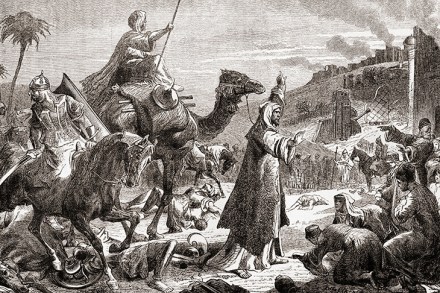
When the British formed the basis of their empire in the 1600s by acquiring territories in India and North America, they already had many centuries’ experience of foreign involvement. One of the most remarkable aspects of the force that reshaped Eurasia 1,000 years earlier is that there was no prelude: the Arab conquests, and the Islamic empire that they created, came out of nowhere. By the time of the death of the Prophet Mohammed in 632 most of the tribes of the Arabian peninsula had united under the banner of Islam, some out of faith, others from expediency. But few people outside Arabia knew who Muslims were or worried about the threat they might pose.

Marina Warner becomes her mother’s ‘shabti’

From our UK edition

There comes a time after the death of parents when grief subsides, the sense of loss eases, and you, the child, are left wondering who those people were. What were they like? Not as you knew them as parents, but as people? For most of us, as the cliché goes, time is a healer, and these questions, thoughts, urges and memories lose their urgency. For others, and Marina Warner is clearly one, there is a more active, urgent, passionate and, yes, Proustian process at work — a need to bear witness — and it does not leave you alone until the questions are answered. For Warner, the questions relate in particular to her mother, but a decade passed before she approached the objects, images and written words her mother left behind.

The luxurious lives of Sparta’s women

From our UK edition

History is full of ‘ifs’ and the Spartan story fuller than most. If the 300 had not made their famous stand against a vast Persian army at Thermopylae in 480 BC, or if Helen of Troy, originally from Sparta, had not been abducted, we might not remember them today. If their young men had not been brought up so strictly the word ‘spartan’ might not have entered our vocabulary; nor, had they not valued brevity in an age that revered oratory, the word ‘laconic’ — from Laconia, a Spartan province. And if the Spartans had not remained such an enigma, there would be no need for this book. It is Thermopylae that speaks loudest to us.

Dreaming of the desert: my life in the Sahara, by Sanmao

From our UK edition

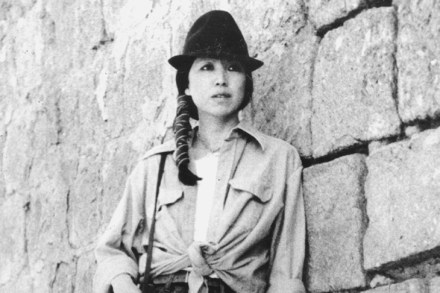
Travel writing is ‘the red light district of literature’, as Colin Thubron aptly put it, a space where anything goes. Like punters to the other red light districts, we tend to stick to what we know we like, to our own kind. We travel vicariously with voices that are familiar, or at least intelligible, whose behaviour we can understand, whose narrators we believe we can know. That belief allows them to take us to places we have never seen. How, then, can we follow a foreign author’s account of travelling to, or living in, a place we don’t know? I thought this would be an interesting problem while reading Sanmao’s Stories of the Sahara. Sanmao is not the author’s real name.

William Dalrymple has nailed the East India Company for what it was: ‘a supreme act of corporate violence’

From our UK edition

A boardful of company directors are summoned to explain themselves to a Whitehall select committee. The Bank of England has already had to bail out the company, the British economy has taken a hit in the fallout and parliament has now been recalled to discuss the company’s massive debts. In the committee room, the corporate directors face allegations of embezzlement, bribe-taking and corruption. This includes the handing out of £210 million of ‘presents’ over an eight-year period. The scene is depressingly familiar, so is this Lehman’s? Facebook? Some of the stars of subprime? BAE? None of the above.

Before the angel came

From our UK edition

In his first book, published in 1977, Tim Mackintosh-Smith described mentioning the idea of travelling to Yemen while studying Arabic at Oxford because he had heard that Yemenis spoke the purest form of Arabic. ‘They all say that, you stupid boy,’ his tutor replied, suggesting he go ‘somewhere respectable’ instead. The student went to Yemen all the same, and has been there ever since, living through sweet and also turbulent times, including civil war and the ongoing Saudi-stirred nightmare that has taken at least 60,000 lives through combat and some 85,000 from famine. But not so very long ago, the word Arab in this country conjured up images of a sleepy, hospitable and ineffective people. How the wheel has turned.

In the realms of gold

From our UK edition

A thought kept recurring as I read Toby Green’s fascinating and occasionally frustrating book on the development of West Africa from the 15th to 19th centuries: that the money in my pocket was just a piece of polypropylene. And what is that worth in the greater scheme of things? The thought occured because money and its predecessor, barter goods, play a central role in the story Green has to tell in this monumental volume. The shells of the title are cowries, which for centuries were accepted as currency across the region. Cowries are not native to West Africa and had to be shipped from the Indian Ocean. But they worked as currency in the way polypropylene does: they had no absolute value but were accepted as currency because they were impossible to fake.

Before the bling

From our UK edition

If you read the first volume of John Romer’s A History of Egypt, which traces events along the Nile from prehistory to the pyramid age, you will understand why he thinks Egyptology is not a science. It is hard, perhaps impossible, to be exact about anything when most of your knowledge is based on deduction and when new discoveries can overturn accepted theories. In the 1,000 years covered in this second volume, starting around 2600 BC, would it be easier for Romer to present facts and express certainty — to be scientific? One of the surprises of the pyramid age, as Romer explains very clearly here, is the lack of information concerning what people believed in and even how they lived.

Striking Middle Sea

From our UK edition

With summer on its way, thoughts turn south to olive groves and manicured vineyards, to the warm water and hot beaches of the Mediterranean. But this sea that is a place of rest and beauty for some of us is the scene of drama and often despair for many others, among them people trying to cross from North Africa. So which is it, a place of calm and beauty, of refinement and culture, or one of drama and much tragedy, buffeted by the consequences of geo-political shifts? The Mediterranean has long been used to reconciling opposites, as two new books make abundantly clear. To ancient Greeks and Romans, the Mediterranean and its neighbouring seas was literally the ‘middle earth’, the centre from which everything radiated.

A treasure-trove of grisly Arab tales may appeal more to an Isis fighter than your average British reader

From our UK edition

The marvellous tales of the title are not just confined to the contents of this book, for the travels and travails of the lone manuscript in which they were inscribed are also something of a wonder, and deserve to be told. The original collection appears to have been composed in the 10th century, and it is easy to imagine some of these stories doing the rounds of Cairo, Baghdad and Damascus while the crusaders were making trouble in the neighbourhood. This particular version of the stories was written down in the 14th century, probably in Cairo, for that is where the manuscript can be traced.

American Smoke, by Iain Sinclair – review

From our UK edition

If you have read Iain Sinclair’s books you will know that he is a stylist with a love of language. You will also know that he has opinions to express and projects to promote or destroy: London’s Olympic park was one of his targets. He has lived in Hackney for much of the past 40 years and his previous book of that name was so provocative that Hackney council tried to ban him from giving a reading at a local library. He can be digressive to an extent that becomes challenging, as you would expect from a writer who long ago rejected the need for anything as banal as a narrative. And of the 41 earlier works of ‘documentary’, fiction and poetry listed on the flyleaf of this volume, many have been set in the UK, specifically London.

The Last Train to Zona Verde, by Paul Theroux – review

From our UK edition

Paul Theroux has produced some of the best travel books of the past 50 years, and some of the lamest. His latest work shrieks swansong, from its title — The Last Train — to the acknowledgement that he has reached ‘the end of this sort of travel, marinated in politics and urban wreckage’, to the closing words with which he ‘felt beckoned home’. So, if this is the last of Theroux as epic traveller, has he gone out with a bang, or another whimper? In his 2002 book, Dark Star Safari (not his best), Theroux travelled along the eastern side of the African continent from Cairo to Cape Town. This time he decided to even things out by travelling in the west, from South Africa to Namibia and Angola.