Anthony Sattin

‘O My America!’, by Sara Wheeler – review

From our UK edition

You might not expect Sara Wheeler, the intrepid literary traveller, to be anxious about passing the half-century point. Surely a person who can survive the mental and physical rigours of Antarctica, as she brilliantly documented in Terra Incognita, can cope with ageing and menopause? Wheeler herself was not so certain. In her restless, creative way, she met the advent of what she calls ‘the Frumpy Years’ by taking to the road, following the trails of six indomitable Victorian women across the United States. The combination of that nation of eternal makeover and of Wheeler’s travelling companions makes O My America! a curious and teasing book.
A duty to protest

From our UK edition

A few years ago, in West Africa, a woman came up to me and said, ‘You know what’s wrong with our men? They go crazy once they get power. Crazy and bad.’ Chinua Achebe’s saving has been the fact that he never sought power, at least not of the kind that leads to conflict and the cutting off of heads. His curse has been to observe things that most of us should be happy never to have seen. Now 82, Achebe has done what many elderly people do when they have seen remarkable things: he has borne witness and set down his version of the rise and fall of the short-lived state of Biafra.

Twists and turns through history

From our UK edition

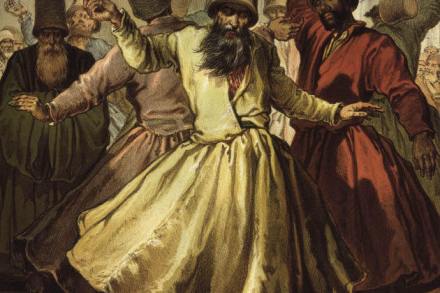
Jeremy Seal is a Turkophile, but don’t look to him for a grand history of the republic or lives of the Ottoman sultans. That is not his way. He prefers to approach things obliquely and, in particular, to come at them from an angle dictated by chance and beginning with a discovery. His first book, A Fez of the Heart, looked at Turkey and Turks through the prism of their most iconic piece of clothing: the fez. His previous book, Santa: A Life, was decided upon when he discovered that St Nicholas was a Turk. And now another discovery: the Meander. We all know the idea of meandering. The word, with its sense of twisting and turning, and also of being convoluted, of going slowly, taking time, was used by ancient Greeks and Romans.

Spirit of place | 21 January 2012

From our UK edition

There are two ways of viewing the changes sweeping through the Arab world in general and Cairo in particular. There is the significance of individual events, such as the moment that the Tunisian street trader Mohamed Bouazizi set himself alight and lit the fuse on protests that brought down the government of President Ben Ali. And there is the bigger picture, one that looks back at the years of economic decline, decades of abuse, mismanagement and corruption. In this long awaited book, the London-based Egyptian novelist Ahdaf Soueif gives us two very different views of individual events, a tale of two halves.

Malice in the Middle East

From our UK edition

What does it take to shock a writer? At the beginning of his study on the shaping of the modern Middle East, the academic James Barr describes his eyes bulging at the sight of new evidence relating to the depths to which the French stooped when trying to outdo their British rivals. The document revealed how, during World War II, with British forces fighting to liberate France, the French government was funding and helping to arm Jewish terrorist attacks on British troops in Palestine. The move was both supremely cynical and, as this book shows so clearly, entirely in keeping with the behaviour of these two allies: the British and French had been undermining each other in the region for more than half a century.

Sixties mystic

From our UK edition

The misery memoir is the fad of the moment. We seem to have a limitless desire to delve into other people’s hardships. Robert Irwin has gladly shown the way to a more enlightening type of memoir, that of the spiritual quest. But surely, I hear you say, the spiritual quest is nothing new? Think of Dante, half way along life’s path, looking for the right turning. For Dante, read the young Irwin, still a teenager, up at Merton College to read History and very much in need of direction. The year was 1965. But while others were tuning in and turning on, Irwin, as he confides in his first sentence, ‘wanted to become a Muslim saint’. It isn’t every writer who can get away with such an opening, but then Irwin is no ordinary memorialist.

The dominoes rally

From our UK edition

First Tunisia, then Egypt. Whatever next? The laws of the Arab world are supposed to prohibit any domino effect: the military is supposed to be too strong, the governments too unresponsive. But these laws no longer hold now that two of North Africa’s most deeply entrenched leaders have been unsettled by popular protests. The ‘Arab street’ has suddenly become aware of the power it can wield. When President Ben Ali fled Tunisia with his wife (and perhaps some of the country’s gold reserves) alarm bells rang in palaces across the region. All over the Arab world reform is being nervously pledged. Even in Yemen, the president has promised to stand down — albeit in two years’ time.

The last five hundred years

From our UK edition

In the aftermath of the destruction of New York’s World Trade Center, an elderly Arab from the Gulf told me that he thought it was the work of American agents. In the aftermath of the destruction of New York’s World Trade Center, an elderly Arab from the Gulf told me that he thought it was the work of American agents. The claim, however fantastic, seemed perfectly logical to him, for it gave the US an excuse to intervene in the Middle East and Asia’s oil-rich regions. Eugene Rogan’s book explains why that Arab, and Arabs generally, feel so suspicious of the West.

Two sides of the dark continent

From our UK edition

How would you like your Africa? Sweet and smiling or bold and bloody? A reassurance of a fundamental human goodness or a suspicion that we are all rotten to the core? Whichever you want, you can find it in one of these two very different books. The Swedish author Henning Mankell is best known for his immensely popular Inspector Wallander series, which the BBC is currently filming with Kenneth Branagh. But as an author he is as wide-ranging as he is prolific and The Eye of the Leopard moves away from the detective genre to focus on the vexed post-colonial relationship between black and white. The story revolves around a young Swede, Hans Olofson, who flies to Zambia in the 1970s in search of himself and to fulfil the quest of a dead friend.

Earning an easy chair

From our UK edition

If you were left a legacy by a friend would you tuck it away, blow it on art, or buy something for your home or the person you share it with? Notting Hill-based writer Duncan Fallowell decided to do what it says on the cover and go as far as he could. Why? ‘So that I need never travel again. Because I’ll have cracked the planet, finally solved the terrible mystery of distance, and can relax.’ It is a tall order, but one that he tries valiantly, humourously, persistently to fulfil. New Zealand doesn’t appear to have been a country Fallowell knew any more about than the rest of us. It is on the other side of the world, split in two, endowed with great beauty and home to more sheep than people. Oh, and The Lord of the Rings was filmed there.

In the steps of Stanley

From our UK edition

Of all the world’s under- developed and misruled countries few can compete with the Democratic Republic of Congo (DRC). The former Belgian Congo, more recently known as Zaire, has lived for so long with lawlessness, brute violence and neglect, with Belgian colonial and Mobutu’s post-colonial exploitation, that it seems to have justified Joseph Conrad’s selection of this particular slice of land to serve as the continent’s heart of darkness. Recently it has seemed as if someone had switched the lights off altogether: it comes as a surprise, in our Google-mapped age, to discover that somewhere has disappeared from sight. The DRC has managed this.

The future is black

From our UK edition

The title of Peter Godwin’s beautifully written and magnificently poignant memoir is taken from Zulu lore, which states that solar eclipses are caused by a celestial crocodile eating the sun. Within the covers we are offered twin eclipses, one caused by life ebbing away from Godwin’s father, the other by the darkness of Robert Mugabe’s increasingly repressive regime in Zimbabwe. Godwin was born and brought up in Zimbabwe by white immigrants. His parents were among the last of the pre-independence white arrivals, escaping the horrors of a Europe made ugly by the second world war and arriving in what was, at the time, an oasis of calm, wealth and beauty. They became good, solid citizens.

A place of wonders and horrors

From our UK edition

For his fifth travel book, Philip Marsden has returned to his roots; not to his native Cornwall, but to the country that gave birth to his travel writing. Marsden first visited Ethiopia in the early 1980s when he was 21, when Emperor Haile Selassie was long in his grave and when the country was ruled by the Derg, a military junta led by the future dictator Mengistu. Civil war and repressive government had cast a pall of misery over the country and Marsden’s journey suffered for it — he was refused permission to travel to Tigray, the historical heartland in the north of the country and a province that had long been at odds with the administration in Addis Ababa.

East and West — when the twain meet

From our UK edition

As far as love affairs go, the relationship between British travel writers and Islam has been both intense and long-lasting. From Orientalists such as Richard Burton and Edward Lane installed à la turque in 19th-century Cairo and Damascus to Wilfred Thesiger in the Empty Quarter, Bruce Chatwin in Sudan, Colin Thubron in Syria, Jan Morris in Oman and Egypt, Muslim ways and means have inspired some of our best travellers to produce some of their finest writing. But the nature of the exchange between these writers and their Muslim subject-matter was transformed by the destruction of the World Trade Center and the ensuing war in Iraq. One of the most significant changes has been in the rhetoric of politicians and the press.

Payment on delivery

From our UK edition

Picture this scene: in the delivery room of a Botswana hospital, a woman howls with the pain of childbirth and her midwife becomes increasingly bothered that she is disturbing the other patients. Whatever tension there is in this exchange — a woman suffering labour without drugs, an underpaid, overstretched health worker having a bad day — it is transformed by the fact that the nurse is African, the mother-to-be British. ‘White women,’ the midwife huffs in annoyance and, in the process, identifies the dilemma at the heart of this book. There is a strong tradition of European women writing about their experiences in Africa. What attracts them? The call of the primordial, the seductive tugging of some half-perceived genetic memory?

A fantasist of the first order

From our UK edition

Many years ago, in one of those precious moments of seren- dipity, I came across a novel called Ali and Nino, set in the Azerbaijani city of Baku. This seductive, life-enhancing story tells of a love affair between a Muslim and a Christian at the city’s pivotal moment, just as the oil begins to flow at the beginning of the 20th century. In foreground and background, it deals with what today would be called the clash of civilisations, with Muslim/Christian, East/West, rich/poor tensions. I found it so compelling that I have since reread it several times, given copies to friends and lived with its characters and their dilemma. But what of its author?