Anne Margaret Daniel

Running on empty, and on and on

From our UK edition

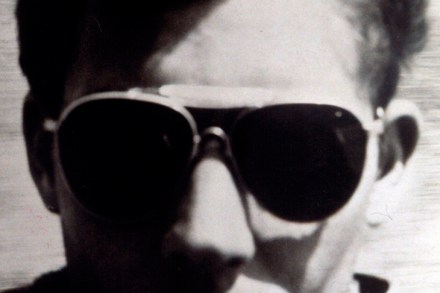
Hunter Stockton Thompson blazed across the republic of American arts and letters for too short a time. When in February 2005 Thompson, 67, killed himself with a .45 at home in Woody Creek, Colorado, freethinkers and lovers of his savage, beautiful words grieved the world over — and we still do. Thompson was a Southern boy from Louisville, Kentucky, whence comes F. Scott Fitzgerald’s Daisy Fay, later Buchanan. After a sally into higher education and military service, both marked by varying degrees of brilliance and insubordination, Thompson moved to New York City and worked as a reporter. His specialty was, initially, sport, and his forte was observation.
Jay for Japan

From our UK edition

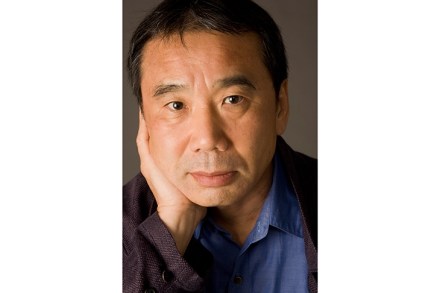
Haruki Murakami’s Killing Commendatore was published in Japan in February last year. Early press releases for this English version hailed the book as ‘a tour de force of love and loneliness, war and art — as well as a loving homage to The Great Gatsby’. Anyone familiar with Murakami’s 17 preceding novels can vouch for love and loneliness as his great themes; and war, art and F. Scott Fitzgerald are not new to him, but in Commendatore all enrapture. The narrator, a man with no name struggling with his own art — and, concurrently and inseparably, the women he sleeps with — recalls Murakami’s earlier nameless narrators, all the way back to Hear the Wind Sing (1979).

No end in sight | 20 September 2018

From our UK edition

Novels today do not want to be done. Thank Anthony Burgess and John Fowles for this, most immediately, but alternate endings, or the purposeful failure to finish, run long and deep in fiction in English, all the way back to Laurence Sterne and ‘I caught hold of the fille de chambre’s —.’ Modern novels shear off into bleakness or point to awful repeating cycles; Victorian ones twist that prettily tied bow of a marriage plot into question and challenge (none more so than Henry Esmond). Be glad of an autumn of fine first novels that downright relish resisting closure. Pretend I’m Dead by Jen Beagin (Oneworld Publications, £12.

A complicated man

From our UK edition

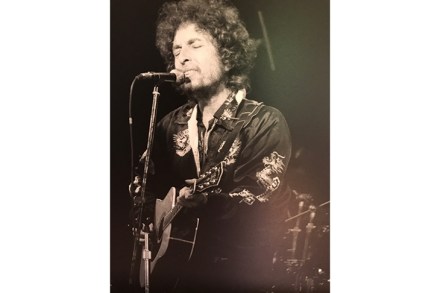
‘There is only one thing in the world worse than being talked about, and that is not being talked about.’ Lord Henry Wotton said that. It is always better to read Bob Dylan than to read about him. I said that. Two new books by Dylan, and two about him, prove my point. Just out in a lovely slim hardback is Dylan’s Nobel lecture (Simon & Schuster, £14.99). Its 32 pages have already been well picked over and much written about, but Dylan’s own account of the way he took ‘folk lingo’ and ‘fundamental’ literary themes — by way of Moby-Dick, All Quiet on the Western Front and the Odyssey — to write ‘songs unlike anything anybody ever heard’ should be both read and heard.

Borne back ceaselessly into the past

From our UK edition

‘I do not like the idea of the biographical book,’ F. Scott Fitzgerald told his editor Max Perkins in 1936. Fitzgerald may not have liked it, but he certainly let himself in for it. As he wrote, with a grin, in 1937: ‘Most of what has happened to me is in my novels and short stories, that is, all the parts that could go into print.’ Of all the male American modernist writers with tragic lives, including Ernest Hemingway, Hart Crane and Eugene O’Neill, F. Scott Fitzgerald still serves to many people as the defining figure.