Angus Colwell

Angus Colwell

Angus Colwell is The Spectator’s daily newsletters editor, and lead author of Morning Press. Sign up here.

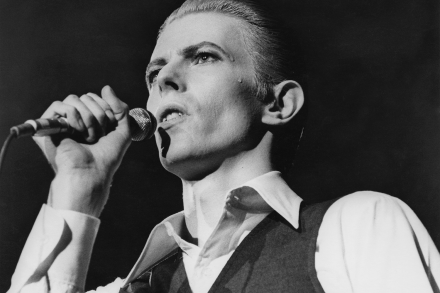
Kate Moss’s new Bowie podcast is far too safe 

In January, it will be ten years since David Bowie died. I remember Bowie songs playing out of every London orifice that day. People who only knew ‘Life on Mars’ went down to the Brixton mural and cried. And then, for a whole year afterwards, the BBC’s arts coverage consisted entirely of salt-and-pepper fatties sitting in studios, in the mandatory uniform of T-shirt and blazer, all of them finding different ways to wheeze: ‘Day-vid Bow-ie chay-nged everyfing.’ As we approach the anniversary, the BBC is having another go – except this time with Kate Moss. ‘This is David Bowie Changeling’, Moss purrs, inaugurating a nine-parter on BBC Sounds and Radio 6 Music. Moss and Bowie were friends: he sent her to collect a Brit Award for him in 2014.

Lime bikes are dangerous. That’s why I love them

London on Monday night was mad and hilarious. At the Hyde Park Corner crossing, the number of people on Lime bikes must have been approaching 100. Invariably described as menaces, murderers and leg-breakers, these Lime bikes and their riders waited for the traffic light to turn green. When it did, battalions of these 35-kilo machines toppled and wobbled around each other, as the same number came in the other direction, green and white overwhelming the eyes. Yet no knees were crunched, no one fell off and those brave enough managed to render the tube strikes a minor inconvenience. If you believe in the state as protector, nanny and moraliser, and the world as a perfectible place where hazard can be eliminated, they should be banned It was good to see.

Why In Our Time must go on

‘Hello’. It’s strange to think that Melvyn Bragg has said that for the last time on In Our Time. That was how every show started – more than 1,000 of them. Each episode began with the minimal courtesy, and then we’re off: ‘Hello. In 61 AD, an east Anglian queen took on the might of the Roman empire and lost’. All In Our Time listeners have wondered when this day would come. Bragg is 85, and with age, the episodes slowed slightly, and his voice had become slightly breathier. Bragg’s powerful mind did not wane, but his age always meant there was a time limit. The brilliance of In Our Time has been said before, in many places. But it has to be said again, because the BBC needs to hear it.

Tom Slater, Justin Marozzi, Iben Thranholm, Angus Colwell & Philip Womack

28 min listen

On this week’s Spectator Out Loud: Tom Slater says that Britain is having its own gilet jaunes moment; Justin Marozzi reads his historian’s notebook; Iben Thranholm explains how Denmark’s ‘spiritual rearmament’ is a lesson for the West; Angus Colwell praises BBC Alba; and, Philip Womack provides his notes on flatmates. Produced and presented by Patrick Gibbons.
The brilliance of BBC Alba

During lockdown, a friend and I moved into a flat that had a difficult relationship with the TV aerial. Ineptitude and laziness combined to ensure that the only channels we were able to watch were BBC ones via the iPlayer app. So most nights – if there was no live sport – we found that our entertainment was at the behest of the state broadcaster. And what a drag it was. Every time, we’d reject the populist crap on BBC1, the parochial crap on BBC2, the braindead crap on BBC3, the boring crap on BBC4, the insane crap on BBC News, the wrist-slashing crap on BBC Parliament. And then we’d get to the end of the nav bar, to see one option left, and my flatmate would put on a Scottish accent and say: ‘Alreet, what’s on Alba?

Lunch with Thomas Straker, the chef the restaurant world loves to hate

‘It was a heavy week,’ sighs Thomas Straker, explaining why he recently ended up on a drip in New York. He’s been nicknamed Britain’s ‘bad boy chef’, and his fans love him. He owns two restaurants in Notting Hill and has 2.6 million Instagram followers: not far off Nigella. Another restaurant is coming in Manhattan, so he has been spending a lot of time there. ‘Post-service, out late, every night,’ he says. ‘So I was in Soho at 3 a.m. the day before I ran the London marathon… I got carried away’ Straker Industries has many divisions: he runs a YouTube channel, has a butter range and is about to launch his own olive oil. On the day we meet, I spot him sauntering down Golborne Road towards his restaurant Acre for our interview.

Can Trump get Netanyahu to end the war in Gaza?

From our US edition

Benjamin Netanyahu has landed in Washington for talks with Donald Trump about the war in Gaza. These, combined with Israel-Hamas meetings taking place in Qatar, represent the best chance yet for an end to the conflict.The Israeli Prime Minister told reporters last night he was "determined" to bring back the remaining hostages in Gaza and that his discussions with the US President would "help advance the outcome we are all hoping for." President Trump said: "I think there’s a good chance we have a deal with Hamas… during the coming week."Netanyahu was waved off to Washington with a rare intervention from Israel’s President, Isaac Herzog, who said Bibi should be prepared to make "painful" concessions.

benjamin netanyahu

War and peace, why restaurants are going halal & the great brown furniture transfer

45 min listen

This week: war and peace Despite initial concerns, the ‘Complete and Total CEASEFIRE’ – according to Donald Trump – appears to be holding. Tom Gross writes this week’s cover piece and argues that a weakened Iran offers hope for the whole Middle East. But how? He joined the podcast to discuss further, alongside Gregg Carlstrom, the Economist’s Middle East correspondent based in Dubai. (01:51) Next: why are so many restaurants offering halal meat? Angus Colwell writes about the growing popularity of halal meat in British restaurants. This isn’t confined to certain food groups or particular areas – halal is now being offered across restaurants serving all sorts of cuisine, from Chinese to Mexican. But why is it so popular?

Is your restaurant halal?

Dos Mas Tacos opened recently next to Spitalfields Market, one of London’s trendiest and busiest areas. Two beef birria tacos cost £11.50; two mushroom vegano are £10.50; a ‘can-o-water’ is £2.50. But look a little closer at their menu, and something jumps out: no pork and no alcohol. You’d expect a carnitas option at a taqueria, and you’d want a Corona with it. You can’t get either at Dos Mas Tacos. Huh, and hmm. I came across the place on TikTok, via a video of the two founders, Rupert and Charlie Avery, outside their shop. They’re well-heeled lads, twins with posh accents. They used to work in the superyacht industry. ‘Hey everyone!’ one brother says.

James Heale, Angus Colwell, Alice Loxton, Lloyd Evans, Richard Bratby, Christopher Howse and Catriona Olding

38 min listen

On this week’s Spectator Out Loud: James Heale analyses the splits in Labour over direction and policy (1:27); Angus Colwell asks if the ‘lanyard class’ are the new enemy (6:21); Alice Loxton explains why bite-sized histories have big appeal (9:58); Lloyd Evans reports on how Butlin’s is cashing in on nostalgia (15:00); Richard Bratby on Retrospect Opera, the non-profit record label that resurrects the forgotten works of British opera (20:40); Christopher Howse provides his notes of typos (27:27); and, Catriona Olding reflects on the death of her partner, the Spectator’s Jeremy Clarke, two years ago this week (32:15).  Produced and presented by Patrick Gibbons.
The real Brexit betrayal, bite-sized history & is being a bridesmaid brutal?

44 min listen

The real Brexit betrayal: Starmer vs the workers‘This week Starmer fell… into the embrace of Ursula von der Leyen’ writes Michael Gove in our cover article this week. He writes that this week’s agreement with the EU perpetuates the failure to understand Brexit’s opportunities, and that Labour ‘doesn’t, or at least shouldn’t exist to make the lives of the fortunate more favourable’. Michael makes the argument that ‘the real Brexit betrayal’ is Labour’s failure to understand how Brexit can protect British jobs and industries and save our manufacturing sector. Historian of the Labour Party Dr Richard Johnson, a politics lecturer at Queen Mary University writes an accompanying piece arguing that Labour ‘needs to learn to love Brexit’.

Are the ‘lanyard class’ the new enemy?

Globalisation, liberalism, neoliberalism, managerialism, internationalism, multiculturalism, human resources, wokeness, identity politics, progressivism, EDI, DEI, corporatism, proceduralism, elitism, environmentalism, transnationalism: there are a lot of things that voters are said to be protesting against. But now there’s a new buzzword going round. What voters are really annoyed about is the ‘lanyard class’. Lord (Maurice) Glasman came up with the phrase. I visit him in the House of Lords (wearing my parliamentary lanyard, of course) to ask him what he means. ‘The lanyard came into my head about 18 months ago as the symbol of the progressives,’ he says. ‘It was more of a poetic idea: “The Lanyard”.

Chambers of horrors, the ‘Dubai-ification’ of London & the enduring obsession with Diana

37 min listen

This week: the left-wing radicalism of Garden CourtGarden Court Chambers has a ‘reassuringly traditional’ facade befitting the historic Lincoln’s Inn Fields in the heart of London’s legal district. Yet, writes Ross Clark in the cover article this week, ‘the facade is just that. For behind the pedimented Georgian windows there operates the most radically effective cell of left-wing activists in Britain’. Ross argues that cases taken on by Garden Court lawyers raise questions of impartiality. Is this just another example of ‘law’s expanding empire’ over the domain of elected politicians, as former Supreme Court judge Jonathan Sumption has warned? The Spectator’s editor, and former Justice Secretary, Michael Gove joined the podcast to discuss.

The creeping Dubai-ification of London

In December 2023, a TikTok influencer called Maria Vehera opened a packet of ‘Dubai chocolate’ in her car and filmed herself eating it. Since then, 124.6 million people have watched her swallowing this pistachio-based gloop. Oh Maria, what have you done? A butterfly flaps its wings – or an influencer eats some chocolate – and soon people are setting their alarms for 5 a.m. to queue outside Lidl for the ‘drop’ of LIDL’S OWN DUBAI CHOCOLATE. Guess what? M&S made one too (£8.50). Morrisons then had the bright idea of creating a pistachio cream Easter egg. Waitrose’s Dubai chocolate was so popular it had to ration it to two bars per person. Knock-off brands now feature at the counter of almost every news-agent in London.

Owen Matthews, Matthew Parris, Marcus Nevitt, Angus Colwell and Sean Thomas

31 min listen

On this week’s Spectator Out Loud: Owen Matthews reads his letter from Rome (1:21); Matthew Parris travels the Channel Islands (7:53); Reviewing Minoo Dinshaw, Marcus Nevitt looks at Bulstrode Whitelocke and Edward Hyde, once close colleagues who fell out during the English civil war (15:19); Angus Colwell discusses his Marco Pierre White obsession, aided by the chef himself (21:26); and, Sean Thomas provides his notes on boredom (26:28).  Produced and presented by Patrick Gibbons.

My Marco Pierre White obsession

Pierre White, Marco. Chef. Michelin stars: five (all handed back). Wives: three (all handed back). Restaurants owned: number unclear. Hours in a cell: 14. Party: Reform. Brands promoted: Knorr stockpots, Lidl, P&O Cruises. Protégé: Gordon Ramsay. YouTube views: hundreds of millions. Current residence: the countryside, somewhere near Bath, far far away from anyone who tries to talk to him. The obituaries will all call Marco Pierre White a ‘rock star’, and they will be correct. In the 1980s, he was all shaggy verve and sweat and ash. He ‘changed the game’ – as they all say – not so much through his cooking, but through his good looks.

Henry Jeffreys, Marcus Walker, Angus Colwell, Nicolas Farrell and Rory Sutherland

29 min listen

On this week’s Spectator Out Loud: Henry Jeffreys looks at the potential impact of Trump’s tariffs on British drinkers (1:31); on the 400th anniversary of Charles I’s accession to the throne, Marcus Walker explains what modern Britain could learn from the cavalier monarch (7:10); Angus Colwell provides his notes on beef dripping (13:55); Nicolas Farrell reveals he refused to accept the local equivalent of an Oscar (16:40); and, Rory Sutherland makes the case for linking VAT to happiness… with 0% going to pubs, Indian restaurants and cheddar cheese (24:08).  Produced and presented by Patrick Gibbons.

Labour’s growing pains, survival of the hottest & murder most fascinating

43 min listen

This week: why is economic growth eluding Labour?‘Growing pains’ declares The Spectator’s cover image this week, as our political editor Katy Balls, our new economics editor Michael Simmons, and George Osborne’s former chief of staff Rupert Harrison analyse the fiscal problems facing the Chancellor. ‘Dominic Cummings may have left Whitehall,’ write Katy and Michael, ‘but his spirit lives on.’ ‘We are all Dom now,’ according to one government figure. Keir Starmer’s chief aide Morgan McSweeney has never met Cummings, but the pair share a diagnosis of Britain’s failing economy. Identifying a problem is not, however, the same as solving it.

Bring back beef dripping!

For several years, a debate has raged (mainly on Twitter, now X) over whether animal fats are actually better for you than industrially processed ‘seed oils’. The debate has become more mainstream thanks to the efforts of the new US Health Secretary, Robert F. Kennedy Jnr, who wants to Make America Healthy Again. His strategy involves a back-to-the-land style embrace of animal fats, particularly beef dripping. The anti-seed oil community use technical-sounding terms like ‘linoleic acids’ to firm up their side of the debate but fundamentally their point is that our bodies have evolved to process animal fats rather than overly processed stuff. J.D.

Curtis Yarvin on Britain’s demise, Putin’s red line & Churchill-bashing

50 min listen

Curtis Yarvin, is a political theorist and writer known for his critiques of liberal democracy. Under the pseudonym 'Mencius Moldbug' he developed ideas that have influenced the New Right and post liberal political movements. Curtis Yarvin spoke to The Spectator's Angus Colwell about why Britain is in decline, how far Europe should go to protect itself against Putin, whether Churchill-bashing is fair, and what would be his top three book recommendations.