Andrew Willshire

Andrew Willshire is founder of the strategic analytics consultancy Diametrical Ltd

Who is brave enough to tell the truth about the 2050 ‘net zero’ target?

From our UK edition

Back in 2009, proposals were published to switch off FM and AM radio completely by 2015. The assumption was that most people in Britain could be persuaded to upgrade to DAB radio within six years. However, in 2018 the BBC announced that it was shelving plans to move away from FM. The upgrade cost proved to be too high. And as the BBC's then-director of radio Bob Shennan pointed out, 'audiences want choice'. Perhaps this should provide a cautionary tale for the Government as it seeks to meet its commitment to becoming 'carbon-neutral' by 2050 (a date which is conveniently beyond even the wildest estimates of the current Government’s term), let alone the demands of groups like Extinction Rebellion to bring that date forward.
Why someone on £80k might not feel rich

From our UK edition

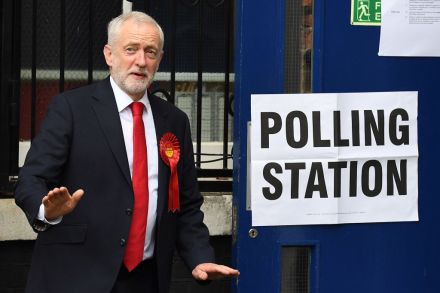
As in every election in recent memory, a debate has broken out over the point at which a person becomes ‘rich’ and is, therefore, able to cough up a bit more to fund public services. The magic number this time is £80k – the salary around which a person enters the top five per cent of all income tax payers and who, according to Labour, will be required to pay ‘a little bit extra’ to fund their massive splurge on public spending. There are roughly 1.5 million people in Britain who fall into the top five per cent, who already contribute 50.1 per cent of all income tax collected. When Andrew Neil pointed this out to Jeremy Corbyn  last night, he replied: ‘We think they could and should… pay a little bit more.

Should the Scottish Tories join forces with the Lib Dems?

From our UK edition

Scottish politics is stuck. As with Brexit across the wider United Kingdom, the 2014 independence referendum has permanently shifted attitudes of the majority of the population into Yes/No camps, with little room for compromise. The SNP government stumbles from one crisis of service delivery to another yet continues to consistently poll around 40 per cent. In first-past-the-post Westminster elections, this is sufficient to return a clear majority of MPs, and probably to still be returned as the largest party in the Scottish Parliament in the scheduled 2021 election. The problem for Scotland is that the SNP believe this to be a mandate to speak “for Scotland” in broader constitutional matters, like Brexit. Fair enough, you might say.

Ruth Davidson’s departure doesn’t mean the end of the Union

From our UK edition

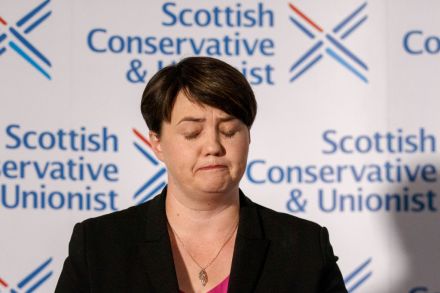
The departure yesterday of Ruth Davidson as leader of the Scottish Conservatives has prompted much discomfort among some pro-Union commentators. There is no doubt that she was a stunningly effective campaigner but it is an exaggeration to claim that the revival in the fortunes of the Scottish Conservative and Unionist Party was solely down to her. Davidson received a substantial boost from the fact that the Scottish independence referendum in 2014 redrew the Scottish political map, creating a binary division between pro-independence and pro-union forces. In the aftermath of the vote, Davidson was by far the canniest operator, ensuring the Tories were the most staunchly pro-union party.

Europe’s politicians should be terrified of a no-deal Brexit

From our UK edition

Jeremy Corbyn has vowed to use 'all tactics available' to block a no-deal Brexit. The Labour leader is meeting MPs today to try work out how to do just that. But with no deal back in the headlines, are we having the wrong discussion about what it would mean for Britain to leave the EU without an agreement? Most of the focus around a no-deal Brexit has been on the economic pain that will be suffered by various parties, but particularly the UK. Little thought has been given, however, to the political pain. To politicians seeking re-election (for either themselves or their party), small issues can become greatly magnified. Whenever a steel plant or a car factory faces closure, the government comes under pressure to meet with the owners to find a rescue plan.

In defence of citizens’ assemblies for Brexit

From our UK edition

Anthropologists have speculated that one of the roles of the shaman in hunter-gatherer societies was to preserve group unity. When members of the tribe were about to set out on a hunt, they would consult the shaman who would tell them where to go by 'consulting the ancestors' or reading runes or whatever. The crucial element was that it didn’t matter whether the shaman was right or wrong – the group trusted the decision and were able to set off with a unity of purpose, unencumbered by rifts within the group. From a survival point of view, this makes sense because regardless of the quality of advice, the most important element of a successful hunt was that the group was capable of working together effectively.

Why ‘indicative votes’ would be a terrible idea

From our UK edition

Whether or not Theresa May manages to bring forward another Meaningful Vote on her Brexit deal before 12 April, it now seems likely that -- in an attempt to clear the Brexit log-jam -- parliament will be offered a series of 'indicative votes', so that MPs have a chance to say what their preferred Brexit option would be. There will probably be seven options: Theresa May’s deal No deal A second referendum (doubtless to be followed by months of wrangling on what the question would be) Revoke Article 50 (either to stay permanently in the EU or, as some have suggested, to begin the process of leaving again from scratch at a later date. However, a large number of petitioners would be delighted.

Jess Phillips says she would make a good prime minister. I’m not convinced

From our UK edition

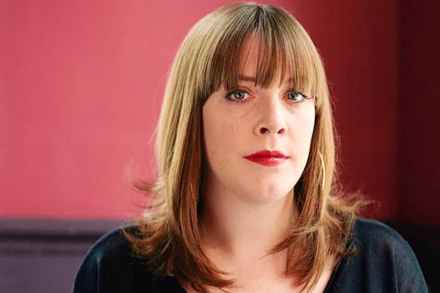
On Saturday, the Times published a much-lauded interview with Jess Phillips. As with all her public outings, she comes across as decent, kind, funny, hard-working, honest, and down-to-earth. These are certainly fine qualities to have in an MP. But the interview concluded with Phillips stating that she thought she would be a good prime minister. Many people concurred. This should make us stop and consider whether we’re looking for the right qualities in a potential PM, especially given that we might be seeking a new one sooner rather than later as a result of Theresa May's failure to get her Brexit deal through Parliament at the second attempt.

The plan that could give rebel Labour MPs the space to break away

From our UK edition

Reports that Theresa May’s team are considering a June election haven’t exactly been met with universal acclaim. Tory MPs in marginal seats are horrified by the prospect, demanding assurances from the party's chairman Brandon Lewis that this isn’t the case. But it's not only Tories concerned about losing their seats who should be worried. A snap election would also be bad news for the band of Labour MPs considering breaking away to form a new party. The arguments against forming a new party due to the crushing forces of our first past the post electoral system are familiar and have acted as a brake on the formation of significant new parties since 1983.

How Germany helped shape the conditions for Brexit

From our UK edition

German political leaders, industrialists, artists and sportspeople wrote to the Times last week urging Brits to reconsider and stay in the EU. The letter was a mixture of gratitude that Britain had been willing to let Germany rejoin the ranks of civilised nations after the horrors of war, and a rather patronising list of the oh-so-adorable British quirks and foibles: our black humour, our curious habit of drinking tea with milk, drinking ale, driving on the left and pantomimes. But what really struck me was that, for all the warm words, there was no recognition that modern German politics might have played a role in Brexit, let alone a hint of contrition.

Rory Stewart is right: the shock of a no-deal Brexit would be fatal for the Tories

From our UK edition

As a white, straight male, it’s not often that I get to feel in a minority but at the Spectator Brexit debate - as a Leave voter in favour of Theresa May’s deal - it was apparent that I’m an endangered species on a par with the white rhino. But I also found that I have an eloquent champion: Rory Stewart, the prisons minister, who gave the best case that I have heard for the deal He was on stage with Dominic Raab, on the opposite end of the pragmatism spectrum. Raab, in effect, argued for a no-deal Brexit, while Stewart mounted a most robust defence of the May deal, vigorously taking on all-comers to modest effect.

Supporters of a second referendum should be careful what they wish for

From our UK edition

The campaign for a second referendum continues to grow. On the Conservative side, nearly a dozen Tory MPs now support a 'People's Vote’ and if Theresa May's deal gets voted down, this number is likely to rise further. Among Labour MPs, support is even greater; if it wasn't for Jeremy Corbyn and John McDonnell, it seems safe to say that a second vote would almost certainly be Labour party policy by now, with the SNP and the Lib Dems also on board with the idea. But a question remains: have those calling for a second vote really thought about the possible consequences? It is clear that many of those campaigning for another referendum have a simple objective: to block Brexit. But this could easily end up backfiring. Take the 2014 Scottish independence referendum.

The price of the SNP’s Brexit strategy

From our UK edition

Nicola Sturgeon's indication that SNP MPs will back a second vote on Brexit might be clever politics but it is likely to stir up further animosity among English voters towards the Scots. Consider the Future of England survey, which shows that 88 per cent of English Leave voters (and 52 per cent of all English voters) would accept the break-up of the UK so long as England leaves the EU. Some might suggest that the poll is further evidence of the Little Englander mentality that will ineluctably drive the Scots to secede from the Union. But does it instead reveal something else? Perhaps, it would seem, English voters are getting as tired as most Scots are of the SNP's constitutional wrangling.

A civil answer to the marriage question

From our UK edition

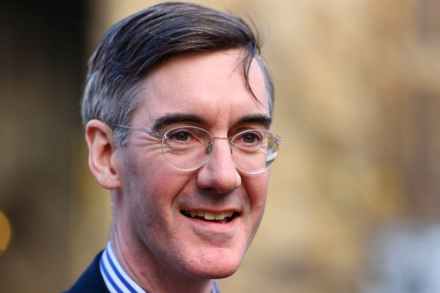
There was a bit of a kerfuffle last week regarding Jacob Rees-Mogg’s view on same-sex marriage. He is opposed but effectively said that it wasn’t up to him to decide: 'I take the teachings of the Catholic Church seriously. Marriage is a sacrament and the decision of what is a sacrament lies with the Church not with Parliament.' And yet, marriage is, self-evidently, defined by Parliament. It has a precise definition in law and that definition has been extended to include people in homosexual relationships. It has been extended to permit people who have been previously married and divorced to re-marry, despite religious objections. It is also restricted to people over the age of 16 and it is prohibited for relatives closer than first cousins.

Reflections on writing about welfare

From our UK edition

Earlier this week I made my first foray into writing for Coffee House about the interactions between the tax and welfare systems in the UK. Engaging with some of the respondents on Twitter and in the comments section gave me cause to reflect. First, language matters. At one point, I highlighted that 'increasing gross earnings from £20k to £60k only increases net income by £7k – only £130 extra per week despite trebling your gross salary.' A quite common response was to criticise the use of 'only' in that sentence. Many people (rightly) pointed out that £130pw is a lot of money to some and that 'only a Tory would think that it wasn’t'.

The tax trap: why a £70k family isn’t much wealthier than a minimum wage family

From our UK edition

Among the many points of contention that arose during the election was Labour’s declaration that people earning more than £70k would be expected to contribute more in taxes should Jeremy Corbyn become Prime Minister. Fair enough, you might say – £70k is more than double the average wage. However, it’s not gross income that determines how wealthy you feel – it’s net income, i.e., after tax and benefits have been deducted and added respectively. Consider two similar families; both have two children and both rent a three-bedroom house in Hackney, North London. In each case, one of the adults works while their partner stays at home.