Andrew Roberts

Andrew Roberts sits in the House of Lords as Lord Roberts of Belgravia

The Queen’s achievement

From our UK edition

There will be much reason to celebrate Her Majesty the Queen becoming the longest-reigning monarch in British history. Although it has been well over a century since monarchs have had regular, direct, significant influence on political decision-making in Britain, the influence the Queen has on the tone, values and sense of identity of the nation is still profound. And even politically she can make subterranean waves if she wants; her enjoining of the Scots to ‘think very carefully’ before casting their ballots in the independence referendum was taken as implying that she was opposed to it. (Rightly, it seemed, when David Cameron’s remark about her ‘purring’ with satisfaction at the result was picked up by a stray microphone.

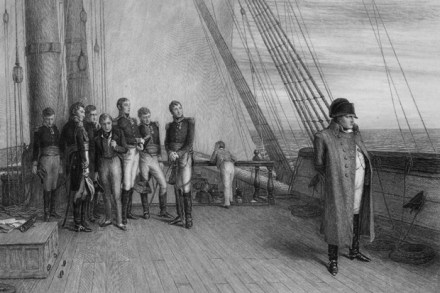
Andrew Roberts’s diary: Just who’s the despot here – Napoleon or Paxman?

From our UK edition

To the British embassy in Paris for a colloquium on ‘Napoleon and Wellington in War and Peace’ organised by our ambassador, Sir Peter Ricketts, to mark the bicentenary of the purchase of the embassy from Pauline Borghese, Napoleon’s sister. (According to the historian of the house, Tim Knox, Pauline would warm her feet on the naked backs of her ladies-in-waiting, and be carried to her bath by a huge Egyptian slave.) William Hague opened our proceedings, boldly pointing out the other anniversarial elephant in the room: it was Trafalgar Day.

Henry Kissinger interview: ‘I don’t see the wisdom there once was’

From our UK edition

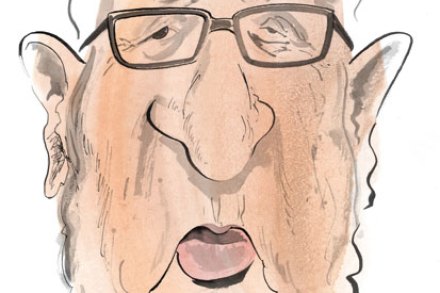
Henry Kissinger doesn’t believe in retirement. At 91, having had a heart-valve operation three months ago, he is nonetheless publishing a book entitled World Order. As I happened to be interviewing him about it on 11 September, I asked him about his memories of 13 years ago. ‘I was in Frankfurt addressing a business group,’ he recalled in that voice of his that sounds like gravel has found its way into your car’s exhaust pipe. ‘A member of the audience had just asked a question when someone came on to the stage to say that he had an important announcement to make. I said that that may be, but I wanted to answer the question first, which I did, before the man said that New York had been attacked. It was about 2 p.m.

From jailbird to social butterfly – the return of Conrad Black

From our UK edition

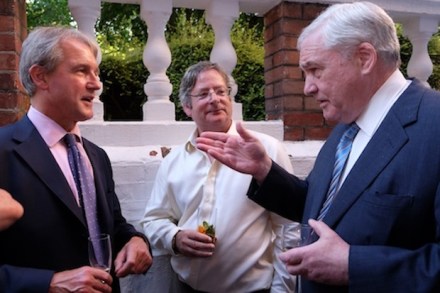
The former proprietor of this magazine, Conrad Black, is in London at the moment with his gorgeous wife Barbara, and I’ve got very bad news for those of his enemies who predicted that he’d be a social pariah when he got out of jail. At lunches, parties and dinners I’ve attended this week in his honour, he and Barbara have been feted by the leader of one of Britain’s largest political parties, a household-name supermodel, a former foreign policy adviser to a revered prime minister, members of the royal family, a senior industrialist, a former Commonwealth prime minister, a former British foreign secretary, several House of Lords colleagues of his and Britain’s most respected publisher, and that’s even before he arrives at the Speccie party this week.

Save our Van Dyck!

From our UK edition

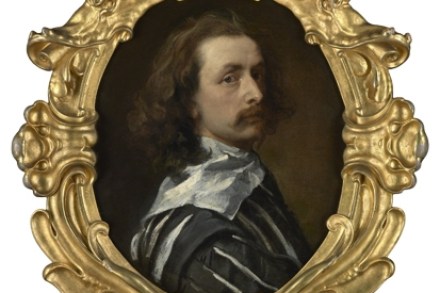
Why should a portrait of a Flemish painter by a Flemish painter be considered so important to Britain that the culture minister Ed Vaizey has slapped a three-month export delay on it, and the National Portrait Gallery has announced a £12.5 million campaign to keep it in the country? Moreover, why is it so important that after reading this article you should immediately go to www.savevandyck.org and make a generous contribution to save it from going abroad? The answer lies in four words: Sir Anthony Van Dyck. No other single artist has had such an impact on British art as Sir Anthony Van Dyck (1599–1641) not only in his own lifetime but also — as the 2009 Tate Britain’s exhibition demonstrated — right up to the 20th century.

My last chance to follow in Napoleon’s footsteps

From our UK edition

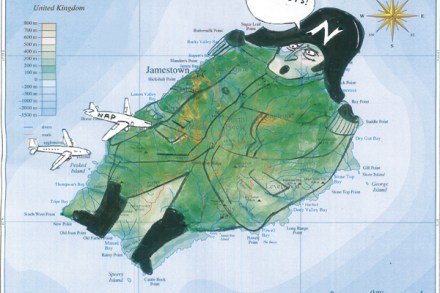
St Helena, the island in the middle of the Atlantic Ocean on which Napoleon Bonaparte was exiled and died, is so far away from anywhere else that even pirates never discovered it. The only way to get there is by the last Royal Mail ship in existence, RMS St Helena, after a six-day journey from Cape Town, as I discovered this month when I visited in the course of researching my forthcoming biography of Napoleon. Although the Emperor was violently seasick on his journey there in 1815, the seas were very calm for mine. Indeed, the calmness was almost eerie; for nearly a week we saw no planes in the sky, no other ships, nothing in the sea except some dolphins and flying fish on the last day, and no birds except two white-throated petrels.

#JustStopIt

From our UK edition

‘You know, if becoming an MP has taught me one thing it’s respect, admiration for political opponents,’ tweeted Louise Mensch, the Tory MP for Corby, last week. ‘My Labour colleagues best people ever.’ It’s ironic that she should have vouchsafed these thoughts in a tweet, because it is Twitter that is fast destroying whatever respect or admiration one might once have felt for politicians, by revealing the sheer bathos of so many of their lives. There is a place for tweeting in politics, to make short, rapid-response — albeit usually populist — points; William Hague tweeted with some effect during the Libyan crisis, for example.

Obama’s fatal delay

From our UK edition

The final collapse of the Gaddafi regime is being hailed by Democrats as a triumph for the slowly-but-surely approach of the Obama administration, whereas it is anything but. In fact, it is further indication that we are moving towards, as the title of Fareed Zakaria’s latest book puts it, The Post-American World. The final collapse of the Gaddafi regime is being hailed by Democrats as a triumph for the slowly-but-surely approach of the Obama administration, whereas it is anything but. In fact, it is further indication that we are moving towards, as the title of Fareed Zakaria’s latest book puts it, The Post-American World. It was on Friday 18 February – i.e.

The meaning of a marriage

From our UK edition

‘A princely marriage is the brilliant edition of a universal fact, and, as such, it rivets mankind,’ wrote the great constitutional theorist Walter Bagehot. ‘A royal family sweetens politics by the seasonable addition of nice and pretty events. It introduces irrelevant facts into the business of government, but they are facts which speak to men’s bosoms and employ their thoughts.’ Bagehot was writing about the marriage of the future King Edward VII to Princess Alexandra of Denmark in 1863, but his sentiments equally apply to the coming royal wedding, for he concluded that one half of the human race at least ‘care 50 times more for a marriage than a ministry’.

A vote against folly

From our UK edition

Follow Churchill’s advice in the 5 May referendum On 5 May, in the name of a spurious pursuit of fairness, the nation will be asked to abolish the ancient system of first past the post by which we have for centuries chosen our parliamentarians. ‘It’s unfair!’ is the whine of the aggrieved infant down the ages, to which adults rightly reply that life is often unfair, and success goes to those who can adapt themselves to that fact. I hope the British people will tell Ed Miliband and Nick Clegg precisely that next month. First past the post selects the candidate constituents want the most, rather than the one they don’t want the least.

Short and sweet | 19 July 2008

From our UK edition

What do you make of this texting business? It took me on a surprisingly complex journey. First I felt revulsion, then doubt set in, then I sensed a developing acceptance and finally I embraced it with utilitarian enthusiasm. At one point I was even touched by a Shavian zeal that texting might usher in a new universal shorthand which would simplify and accelerate communication. Not that I wanted conventional spellings eradicated. A word’s spelling is an encryption of its history. But I was tempted by the prospect of an alternative orthography so we cd typ thgs lke ths 2 ch othr. It’s doubtful this will ever happen as David Crystal’s entertaining book argues. The emergence of texting was greeted by hysteria in the press. ‘Bleak bald bad shorthand.

The Pope was wrong

From our UK edition

In his Christmas broadcast for 1942, Pope Pius XII spoke of the ‘hundreds of thousands of innocent people who have been killed or condemned to a slow extinction only because of their race’. As part of a wider denunciation of the Holocaust this would have been brave and useful, but in fact it was to be his only public wartime mention of it, and he did not even identify Hitler, the Nazis or the Jews by name. This failure publicly to denounce the greatest single crime in the history of mankind has unsurprisingly led to a major debate on the wartime role of the Pontiff, of which this well-researched, very well written, sane and thoughtful book is the latest and one of the most distinguished contributions.

Diary – 8 December 2007

From our UK edition

Well, I’ve learnt my lesson. After my last Speccie diary was satirised by the Guardian, Emily Maitlis, Michael White, Taki, a newspaper called the Asian Age, and — honour of genuine honours! — Craig Brown in Private Eye for being too name-droppy, this one is just going to be a sober chronicle of what I did last week, no frills attached. After that comprehensive going-over, I’m not going to run the same risk twice. Monday: Dinner at Brown’s with Paul Wolfowitz and his girlfriend Shaha Ali Riza, the lady over whose job there was all that fuss at the World Bank and State Department.

Talking it over

From our UK edition

‘It is not easy to see how things could be worsened by a parley at the summit,’ said Winston Churchill in a speech on foreign policy in Edinburgh in February 1950, thus coining a phrase for meetings of international leaders that has stuck, and indeed spawned further ones, such as ‘summitry’ and ‘summiteer’. Churchill’s hope for a parley with Truman and Stalin failed in 1950, but his general concept is still with us.

Diary – 24 March 2007

From our UK edition

Off to the States for a fortnight’s book tour, trying to plug my A History of the English-Speaking Peoples Since 1900. Prepare yourself for a veritable carpet-bombing of name-dropping, on the basis that if you can’t boast shamelessly in the Speccie Diary, where on earth can you? The Chaos Club in New York radiates reactionary chic. Flanked by Tom Wolfe — complete in the high collar and three-piece white suit — and Norman Podhoretz, I set out my argument. Next stop a speech and dinner given by the wonderfully counter-counter-cultural magazine The New Criterion at the Cosmopolitan Club.

Diary – 23 September 2006

Talk about from the ridiculously sublime to the sublimely ridiculous. My fiancée and I have just been staying at the incomparable 13th-century Château de Bagnols near Lyons. Spectacular panoramic views of the Beaujolais countryside; a Michelin-starred restaurant; Olga Polizzi’s taste (our room had a Louis XIII bed); pure perfection in hospitality. Then straight on to Center Parcs in Wiltshire with my children. Of course, I was warned how nargy it was going to be, and several people assumed I was only going there to write a spectacularly snobbish article. I was also pretty suspicious about a place that couldn’t spell its own name properly, in either the adjective or the noun.

Underneath the arches

From our UK edition

Andrew Roberts on Feliks Topolski’s dramatic work of art, which is in desperate need of repair Adjacent to the Royal Festival Hall on the South Bank under Hungerford Bridge are some Victorian railway arches which house one of the strangest, largest, most dramatic and most moving works of art in London, a painting that is moreover in immediate danger of disintegration and possible loss. Feliks Topolski’s ‘Memoir of the Twentieth Century’ is 600 feet long and between 12 and 20 feet high. Part autobiography, part historical narrative, part tribute, part satirical reproach, it is as enormous a statement on the last century as it is a vast physical entity itself.

A continuation of empire by other means

From our UK edition

Melvyn Bragg’s superb new history of the English language is told as an adventure story, and rightly so. Brought to the British Isles in the 5th century AD by Germanic warriors, ‘this hungry creature, English, demanded more and more subjects’, until today, with 1.5 billion speakers, it is poised for global domination. Nearly strangled first by the Danes and then by the Normans, its special genius is for morphing its enemies into itself, like some monstrous sci-fi extra-terrestrial growing ever stronger by gobbling up its opponents’ tongues.

Diary – 21 June 2003

From our UK edition

To Gateshead to appear on Question Time last Thursday with Nick Brown, Tom Strathclyde, David Steel and Janet Street-Porter. Until the show is filmed at 8.30 p.m., Nick Brown, the Minister for Work, hasn't been told that he is being sacked in the reshuffle. He certainly doesn't seem to betray any nervousness as we wander over the rather splendid Millennium bridge there, discussing Rupert Everett's excellent portrayal of Charles I in the otherwise dire new movie To Kill a King. Did No. 10 wait until Question Time was safely over before they broke the news? And, if so, why did they specifically ask for him to go on the show after the chief whip Hilary Armstrong had pulled out because of the reshuffle? One for the Questing Vole, I think.

The secret of Churchill’s gold

From our UK edition

Never in the course of parliamentary history has the personal honour of MPs been more widely doubted and discounted than it is today. Last week the Speaker of the House of Commons announced that, from 2004, not just the Register of Members' Interests but even their expenses claims will be made available to public scrutiny. Will it ultimately work in the public's favour to subject our politicians to ever more rigorous audits of their financial affairs? It is not just MPs who are being investigated - always with the automatic assumption of guilt until innocence is proven - by ever-nosier public bodies. Our very parish councillors, whose work is largely unremunerated, have been asked to declare any 'interests', and to register gifts of more than £25 in value.