Andrew Neil

The post-conference landscape

From our UK edition

The party conference season is over and we're back to business as usual -- except that in the current financial and economic turmoil, political business is anything but normal.   Last night the US Senate voted for the Bush bailout plan by a large majority, which should keep the markets happy until the House of Representatives considers the matter again. The word from Capitol Hill is that it is likely to go through on a second vote; but nothing is certain in Washington in an election year and if it fails again the global economy will be on the brink of collapse once more.   The French are now proposing a €300 billion rescue fund for Europe's banks and want it considered at a special summit this weekend.


Exclusive: Martha Stewart banned from Britain! Her loss — or ours?

From our UK edition

I was scheduled to have dinner with Martha Stewart, America's very own domestic goddess, in London next week -- but not any more. She was due to arrive for an extended visit to the UK this weekend. But the Home Office has refused her application for a visa, presumably because of the time she spent in the slammer in America for a cover up over insider dealing.   The Home Office tells me that the government "opposes the entry of individuals to the UK where their presence is not conducive to the public good or where they have been found guilty of serious criminal offences abroad.”   Obviously, this American celebrity cook and home-maker is more of a danger to national security than Abu-Qatada or the many other jihad-loving, democracy-hating mullahs still in our midst.

Will Gordon shed a tear for his old grammar school?

From our UK edition

When Gordon Brown entered Downing Street for the first time as Prime Minister he talked about the excellence of the education he received at Kirkcaldy High School in Fife. He even invoked the school motto – "I will try my utmost" – and claimed: "I wouldn't be standing here without the opportunities I got there." Some in Scotland detected a massive hypocrisy in these words. His grammar school might have given him - and many like him - the opportunity to get on in life but that had not stopped Brown being in the vanguard of Scottish socialists who wanted to abolish every grammar school in the country. They succeeded: state education today in Scotland is a comprehensive monopoly.

Our transport system is not even ‘Third World’

From our UK edition

To Liverpool to chair the annual conference of the British Chambers of Commerce, stout yeomen of the country’s small- to medium-sized businesses. I’ll let the train take the strain, I thought, and burnish my green credentials, even though I planned to travel on a Sunday, which meant the normal two-and-a-half-hour trip would take an extra hour. In fact, it was my wallet which felt the strain first: Richard Branson’s Virgin charged me £320 for the privilege of a first-class return from London, an obscene amount of money for a modest train ride. (I can fly business class to Nice and back for less!) Undaunted, I arrived at Euston in plenty of time for a 4 p.m. departure. That’s when it all went pear-shaped.

Raising taxes on those who work hard for little money could be the end of Labour

From our UK edition

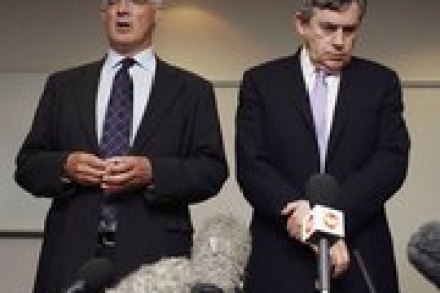
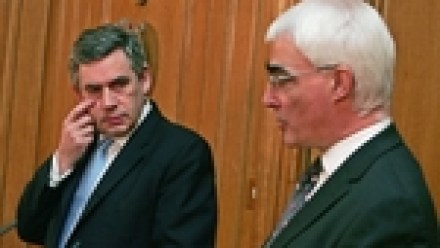
Coffee Housers will soon be piling in with their own take on Alistair Darling's performance on BBC1's Andrew Marr Show this morning -- he seemed to accept the abolition of the 10% income tax band had created serious problems by promising to return to the matter in future budgets (maybe even this year's pre-Budget Report) -- but I have seen the impact of the scrapping of the 10% band at first hand.   My part-time cleaner -- who works for me several hours a day -- is now £8 a month worse off after tax as a result of Gordon Brown's decision to double the starting rate of tax in his last Budget as Chancellor.

But what would the Tories do?

From our UK edition

Cameron is making an effective attack on Darling and his non-Budget. He is rightly concentrating on the government's consistent and substantial underestimating of budget deficits. But if the deficits are really that bad, then why do Cameron's Tories promise to match Labour's tax and spend for the next three years?

Not much to say, Darling

From our UK edition

He's sat down already! So much for the spin that he would speak for an hour. He barely had enough for half an hour and eked that out to 50 minutes. A raft of minor predictable and predicted measures ... the only real story is borrowing, with the government now wading in an endless sea of red ink. We need to get stuck into the budget red book to find out how really bad it is. The TV pundits don't seem to have grasped this yet.

Borrow, borrow and borrow again

From our UK edition

The bottom line of this budget so far: lower growth and higher borrowing … indeed higher borrowing for as far as the eye can see. There is not a surplus in sight ... even though the Chancellor is predicting continued growth ... indeed on his projections, after over 20 years of consistent economic growth (1992 - 2012) ... we will still be borrowing! Quite amazing.

A do nothing Budget

From our UK edition

We're already into padding ... a penny here, a penny there on various pet spending projects (schools, apprentices) which have already underperformed despite the billions thrown at them ... and new targets suggested (80% carbon cuts by 2050 instead of 60%) so far in the future that Darling and the rest of the cabinet will be pushing up the daisies long before future generations get to find out if they were met. When you hear a Chancellor droning on about cavity wall insulation ... you know this is a do-nothing Budget. Since that's what most pundits seemed to want, he's delivered!

European inaction

From our UK edition

Consider the response of America and Europe to the current financial turmoil. In Washington, the US Federal Reserve slashes interest rates by 75 basis points and the Bush administration proposes a $150bn stimulus package of tax cuts, which will probably win bipartisan support in Congress.   Back on this side of the Atlantic, Gordon Brown summons the leaders of France, Germany and Italy (plus the boss of the European Commission) to a meeting in 10 Downing Street. After an afternoon of deliberations, the British Prime Minister emerges to mouth all his usual cliches about stability, transparency and co-operation. Not a single measure that will make a blind bit of difference to the current economic slowdown that will blight Britain and continental Europe this year.

What London should learn from New York

From our UK edition

New York's famed zero-tolerance approach to crime continues to work its magic. This year murders are on track to fall below 500 for the first time since reliable records began 44 years ago.   As of Boxing Day, 484 murders had been recorded in the city during 2007, by far the lowest number since 1963, when there were 548. Before zero tolerance was implemented, New York City murders peaked at an incredible 2,245 in 1990. In other words tough and targeted policing has cut the murder rate by almost 80%.   I appreciate you are still more likely to be murdered in New York than London; but New York's trend is moving distinctly in the right direction.

Party Non-Etiquette

From our UK edition

I gave two big Christmas bashes this year, one in London, one in New York. Both included friends who are celebrities, such as Joan Collins, Michael Winner, Tina Brown, Harry Evans, Candace Bushnell, Michael Heseltine and Emily Maitlis, as well as many more friends and colleagues who are not celebrities but who are always a joy to see at the holiday season.   Both parties were a great success, at least judging by the attendance and the jovial atmosphere: no doubt the plentiful booze and canapés contributed. I certainly enjoyed them. But a couple of things have struck on the post-party haze.   First, the paltry number of folks who wrote thank you letters afterwards: it's not essential but it is polite.

London needs a dedicated traffic police

From our UK edition

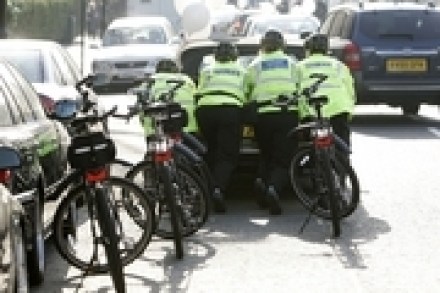
On the way to a birthday party in Bucks on Sunday night we were delayed by a long tailback on the elevated section of the A4 out of London by what turned out to be a broken down van. On his way back to London over an hour later my driver reported that the van was still there, the police had eventually arrived but were doing nothing to move it and the tailback to get past it was now all the way back to the Hogarth roundabout.   Our inconvenience was small in the grand scheme of things: we were 45 minutes late for a party. But think of all the planes missed at Heathrow, the subsequent lost business appointments or family reunions, the delay in getting home for those who've been working all day -- or with a car full of tired kids who need to get to bed.

It’s the Broken Society, stupid

From our UK edition

British politics used to be dominated by the country’s relentless economic decline. Long before James Carville’s mantra for Bill Clinton’s 1992 presidential election bid — ‘It’s the economy, stupid’ — it was the economy which determined British general elections and alternative economic policies which most divided the parties. I spent most of my early career as a journalist chronicling this economic decline and commenting on it. I travelled to Germany, Scandinavia, even Italy to bring back stories of how Continental companies were more efficient, their bosses more impressive, their unions more reasonable, their products, from cars to fridges, far superior.

Britain can learn from China

From our UK edition

Of all the insights that Friedrich August von Hayek bequeathed to us, one in particular shines out today. It is that running through the ideological and political divisions of human history are two distinct and different ways of looking at the world. One Hayek called constructivist rationalism; the other evolutionary rationalism. Hayek spent a lifetime arguing that constructivist rationalism is economically and philosophically flawed because it assumes that ‘all social institutions are, or ought to be, the product of deliberate design’. He later called this The Fatal Conceit. Those who follow this route believe they have it within their power to build, organise and mould society so that it conforms to their concept of what is just and efficient.

The last days of the Tartan Raj

From our UK edition

Andrew Neil says the English should stop worrying about the invading Jocks: the northern grip on the nation’s politics, media and business is being irrevocably weakened by the dumbing down of the Scottish education system They gathered to praise Robin Cook in the forbidding Presbyterian aisles of Edinburgh’s St Giles’ Cathedral last Friday but the mourners — dominated by the good and the great of Scotland — should also have had heavy hearts for another reason: the setting of the sun on the Scottish Raj, which over the past three decades produced such a substantial tartan tinge into the upper echelons of British life.