Andrew Montford

Andrew Montford is deputy director of Net Zero Watch.

Why the Met Office has hung its chief scientist out to dry

From our UK edition

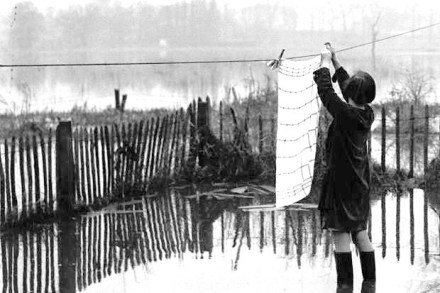
Last week the Met Office and the Centre for Ecology and Hydrology issued an admirable joint report on the floods and their possible connection to climate change, concluding that it is not possible to make such a link. ‘As yet’, it said, ‘there is no definitive answer on the possible contribution of climate change to the recent storminess, rainfall amounts and the consequent flooding’. In many ways this was not much of a surprise, since only the wild activist fringe among the climate science community have tended to try to make the link in the past. Taking such a level-headed view, the Met Office report represented a valuable opportunity to bring some calm to an increasingly frenzied debate over the flooding.
David Cameron is dangerously complacent on shale gas regulation

From our UK edition

Late on Tuesday afternoon, and within minutes of each other, two separate hearings in the Palace of Westminster examined the prospects for shale gas in the UK. In the upper house, the Economic Affairs Committee was taking evidence from Chris Wright, the straight-talking boss of an American shale gas company. Wright, a boyish forty-something, gave their lordships a crash course in shale gas development, explaining the approach companies like his took in order to get gas out of the ground. Because every shale well is different, he said, shale companies have to experiment a bit, trying out different fracking recipes and techniques until they find one that works for them. There is no straightforward way of doing this – it is simply trial and error until they chance on a way forward.

Climatology’s great dilemma

From our UK edition

Climate science is, once again, on the horns of a very uncomfortable dilemma. Whatever the Intergovernmental Panel on Climate Change (IPCC) chooses to do in the next few weeks its decision looks set to explode in its face. Crises are something of a feature of the IPCC. Since its First Assessment appeared back in 1990, each of the panel’s periodic pronouncements on the global climate has plunged it into controversy. In the Second Assessment of 1995, the report’s headline claim – that a ‘fingerprint’ of manmade global warming had been detected – caused uproar when it was discovered that it had been inserted into the text at the last moment. Loud allegations that the report had been doctored for political ends followed.

At long last the mainstream media are paying attention to global warming sceptics

From our UK edition

The failure of the Earth to warm since the start of the century has been a talking point for global warming sceptics for many years, but it is only in the past few months that the mainstream media have started to pay attention too. In recent weeks the Economist, Channel Four News, and even ultra-green writers like the Telegraph’s Geoffrey Lean have sat up and taken notice. And on top of the pause, a series of recent studies of how fast temperature will rise in response to carbon dioxide emissions has produced estimates that are decidedly un-scary.

Nursing prejudice: how climate change activists are prisoners of their own politics

From our UK edition

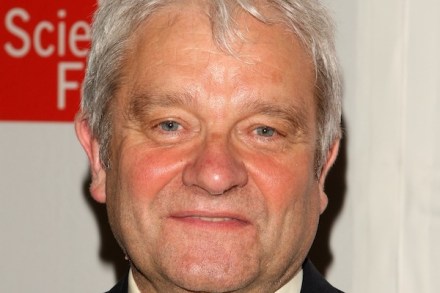
Sir Paul Nurse, the Nobel laureate and President of the Royal Society, has been hitting out at global warming sceptics. In a speech to the University of Melbourne recently, he attacked dissenters from the climate change orthodoxy, declaring that their objections were in reality political rather than scientific: 'A feature of [the global warming] controversy is that those that deny there is a problem often seem to have political or ideological views that lead them to be unhappy with the actions that would be necessary should global warming be due to human activity. I think that's a crucial point.