Andrew Doyle

Andrew Doyle is a comedian, author of ‘Free Speech and Why It Matters’ and a presenter on GBNews.
.

Andrew Doyle: I may have to kill off Titania McGrath

From our UK edition

I start the week by going through my iPhone to delete the numbers of former friends. It sounds depressing, but it’s actually quite cathartic. I suppose it all started with Brexit. I’m not a confrontational person, so it was surprising to find so many friends turning against me over their newfound devotion to a neoliberal trading bloc. Since then, I’ve watched the ongoing curdling of rational minds with a growing sense of incomprehension. So many on the left appear to have surrendered to a collective fantasy in which the slightest point of political disagreement is interpreted as evidence of fascism.

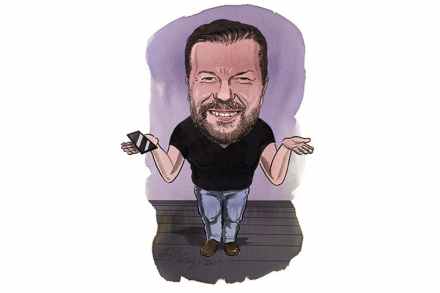
Ricky Gervais: why I’ll never apologise for my jokes

From our UK edition

There’s a moment in Ricky Gervais’s 2018 Netflix stand-up show Humanity when he talks about buying a first-class air ticket, only to be informed that nuts would not be served on board due to a fellow passenger’s serious allergy. ‘I was fuming,’ he says. ‘If being near a nut kills you, do we really want that in the gene pool? I’ve never wanted nuts more. I felt that she was infringing on my human right to eat nuts.’ A member of the public tweeted him directly to complain after hearing him tell this story on The Tonight Show, but instead of apologising Ricky wrote a routine about it. As he points out, when someone is needlessly offended, ‘it makes it funnier’.

The problem with calling Sam Smith ‘they’

From our UK edition

Singer Sam Smith has announced that from now on his pronouns are ‘they/them’, sparking an overdue conversation about the social justice movement’s ongoing efforts to influence the way we speak. Of course Smith is free to make his request – just as we are free to decide whether or not to accede – but with such attempts to skip over the natural process of language evolution, where does that leave the teachers whose job it is to uphold basic grammatical standards? The expectation that ‘they’ and ‘them’ should be adopted as singular pronouns in formal speech and writing presents its own set of challenges. We are all aware of the common colloquial usage of ‘they’ as singular in the case of one whose gender is unknown.