Ameer Kotecha

Ameer Kotecha is CEO of the Centre for Government Reform. He was formerly a senior diplomat, serving as the head of the British consulate in Russia 2023-25. He is the author of Queen Elizabeth II’s official Platinum Jubilee Cookbook (Bloomsbury).

Why Olly Robbins testimony is ‘quietly devastating’ for Starmer

From our UK edition

15 min listen

'The most gripping testimony' since Dominic Cummings which could prove 'extraordinary and quietly devastating' for Keir Starmer. That's the verdict of the Spectator's political editor Tim Shipman following sacked Foreign Office chief Sir Olly Robbins's testimony today before the Foreign Affairs Committee. Tim and former FCDO mandarin Ameer Kotecha join James Heale to explain why the hearing over the Mandelson appointment was so important, the questions the session has raised – and the holes in the story that still remain. Produced by Megan McElroy and Patrick Gibbons.

Why Olly Robbins testimony is 'quietly devastating' for Starmer

Starmer can’t blame the civil service for the Mandelson fiasco

From our UK edition

Of all the politicians to take up arms against Sir Humphrey, Keir Starmer is the most unlikely. After all, this dream-free embodiment of bland managerialism and stultifying bureaucracy is – as a former director of public prosecutions – the first prime minister to have served as a Whitehall permanent secretary. He is the mandarins’ mandarin. Even giving the Prime Minister the benefit of the doubt that this was an honest mistake, what it reveals about his judgment is utterly damning Yet it is by rallying the country against the abominable blob that Starmer has spied a possible route out of the Mandelson scandal.

Antonia Romeo takes on the civil service

From our UK edition

12 min listen

The new cabinet secretary, Antonia Romeo, has published a list of objectives setting out her vision for what the civil service will look like under her. Many have interpreted it as her tightening control over government ... especially since Darren Jones stepped back from his Downing Street role. The path is clear for her to become the Prime Minister’s ‘principal policy adviser’, and to reform the civil service ‘so that it is recognisable for excellence in delivery, innovation and improved productivity’. Is this all just word salad, or is she onto something? James Heale speaks to Isabel Hardman and former Foreign Office diplomat Ameer Kotecha. Produced by Oscar Edmondson.

Antonia Romeo takes on the civil service

This is why shoplifting is rife in Britain

From our UK edition

Walker Smith, 54, who has worked as a store assistant at Waitrose for the past 17 years, has been fired for trying to stop a shoplifter.  This is the damning series of events that took place at Waitrose’s Clapham Junction branch: a customer alerted Smith to a thief filling a bag with Lindt chocolate eggs (£13 a pop). Recognising a repeat offender, Walker grabbed the bag. In the brief ensuing tussle, the bag split, spilling chocolate onto the floor. The thief fled and Smith picked up a fragment of a chocolate bunny and hurled it at some trolleys in frustration (he emphasised he had not been aiming at the shoplifter). That was enough to earn him a reprimand, and he offered an apology. Nonetheless, days later, he was informed he had been fired and was led out via the back door.

The return of the Young Fogey

From our UK edition

At a recent lunch where I was sitting next to A.N. Wilson I couldn’t help but take a good look at his suit. After all, this was the man often described as the original Young Fogey. He was dressed perfectly well in an austere two-piece, though while I (ever the try-hard) was sporting a pocket square, he was without one. On another occasion, chatting to Charles Moore in the colonial surrounds of the Foreign Office’s Durbar Court, the Lord was indistinguishable in dress from the other mandarins and journalistic bigwigs there. In bygone days, a Young Fogey such as he would have donned a seersucker suit and shantung silk tie for the occasion. The Young Fogeys’ flamboyance of dress evident in their heyday is gone.

Why we left the Foreign Office | Ben Judah & Ameer Kotecha

From our UK edition

35 min listen

Does Britain still have a coherent foreign policy? James Heale and Tim Shipman are joined by Ben Judah, former special adviser to David Lammy, and Ameer Kotecha, who recently resigned from the Foreign Office. Together they discuss why Britain’s diplomatic establishment is under growing criticism – from accusations that the department has become bloated and distracted by DEI, to Chagos and deeper concerns that Whitehall no longer has the expertise or strategic clarity needed in an increasingly unstable world. With wars raging from Ukraine to the Middle East and tensions rising with China, they ask whether Britain has adapted to a more chaotic global order – or whether the country is still operating with the assumptions of a different era.

Grape Britain: English wine is having its moment in the sun

From our UK edition

Our homegrown wine was, until fairly recently, regarded internationally as a bit of a joke. Peter Ustinov could quip that he imagined hell to be ‘Italian punctuality, German humour and English wine’. Likewise, Lord Jay, serving as a diplomat in Paris, recalled the British ambassador rubbing up against resistance from the home side – let alone foreigners – as he sought to be an early advocate. The ambassador was hosting Edward Heath, President Giscard d’Estaing and the governor of the Bank of France for lunch: ‘I remember [ambassador] Ewen Fergusson saying, ‘Sir Edward, wonderful that you’re here. I am tempted to serve you a delicious English white wine”. “I hope, ambassador, that you’ll resist that temptation,” was his reply.

Is the Lake District still as Wainwright described it?

From our UK edition

The Lake District isn’t really meant to be about eating. It’s about walking and climbing and gawping. The guide one carries is not that by Michelin but Alfred Wainwright, whose seven-volume Pictorial Guide to the Lakeland Fells turns 70 this year. Food is mainly to be consumed from a Thermos rather than a bowl, and eaten atop a precariously balanced upturned log rather than a restaurant table. The culinary highlight should be Kendal mint cake, gratefully retrieved from the pocket of your cagoule. And so I was as surprised as anyone to find real gastronomic delights on a recent trip. Not from Little Chef, though that was where Wainwright religiously went for his favourite meal: fish and chips, a gooseberry pancake and cup of tea.

Flying has lost its charm

From our UK edition

As someone who flies a lot for work, many of my moments of high blood pressure or ‘Is this really what I want in life?’ introspection take place in airports or on aeroplanes. I cannot – to put it gently – relate to the moronic practitioners of the ‘airport theory’, which involves turning up deliberately late for flights to get an adrenaline rush, and/or to make a sorry living off social media views. No, I’m there in good time, so it shouldn’t be a particularly stressful experience. And yet I’ve come to rather despise flying. It wasn’t always this way. Admittedly my relationship with flying got off to a slightly tricky start.

The Lord of the Rings gave me my moral compass

From our UK edition

In a recent diary for The Spectator, the editor noted that many of the world’s leading tech companies have names inspired by The Lord of the Rings: Peter Thiel’s Palantir and Mithril; Palmer Luckey’s Anduril. ‘J.R.R. Tolkien has a curious hold on the minds of Silicon Valley’s Trump supporters,’ he wrote. Well, they’re not the only ones. If I had founded a company I probably would have called it Anduril too. While less odd teenagers spent their money on CDs or football boots, I used to have a life-sized replica of the Elvish sword hanging above my bed. I, like the tech bros, was a LOTR obsessive. A super fan. I still am. Tolkien was a genius and I have read his books many times over.

The reinvention of limoncello

From our UK edition

My first memories of limoncello, I expect like most people, are from an Italian holiday, the slender bottles as yellow and radiant as the Amalfi sunshine. And at a local, family-run Italian restaurant, cheerfully slammed down on the table at meal’s end. The lemon liqueur is now having a new lease of life, born again as an aperitif. The limoncello market grew 31 per cent from 2019 to 2023 and it is popping up everywhere from Australia to Germany. Above all this is down to the advent of the ‘limoncello spritz’, which was even added to the menu at J.D. Wetherspoon last year. Having enjoyed two decades as top dog, the Aperol spritz finally has some meaningful competition.

Lindt has cheapened itself

From our UK edition

Lindt has opened a ‘first of its kind’ flagship store at Piccadilly Circus. Roger Federer was wheeled out to cut the ribbon. It features the UK’s largest Lindt truffle pick ’n’ mix counter (a snip at £6.50/100g), a ‘barista-style’ hot chocolate bar and an ice cream station. There’s even jars of chocolate spread for those who consider Nutella lowbrow. Lindt’s CEO for UK and Ireland, in that PR corporatese that sounds like guff to everyone except his marketing department, said: ‘With 2025 marking Lindt & Sprungli’s 180th anniversary, what better way to celebrate this journey and enduring passion for captivating chocolate lovers worldwide.’ It’s enough to make me crave Quality Street. It’s fairly obvious what’s inspired them.

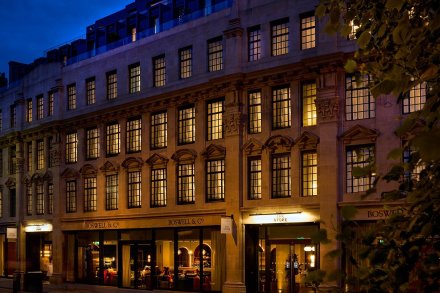
Beyond Boswells: Oxford’s new safe space

From our UK edition

One can see a city so differently over time. Visiting Oxford recently I noticed fine whisky shops and fashion stores which have always been there but which I barely registered as a student 15 years ago. There are new arrivals: some good, such as the handsome Jericho Cheese Company; others less so, such as the proliferating bubble tea shops catering to the now numerous Chinese, both students and tourists. Covered Market is still there, where we used to indulge at the original Ben’s Cookies. Though I do not remember back then the Thames Valley Police signs now warning of ‘bag dippers’ operating in the area. Oxford is both swisher and scruffier than I remember it. Swish embodied in the new Ivy, in a palatial neo-Gothic pile on the High Street that used to be a NatWest.

Something to relish: in praise of Patum Peperium

From our UK edition

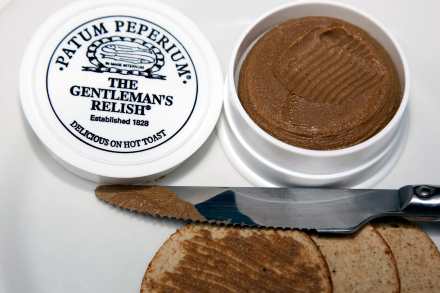
In a social media age, certain ingredients – long esteemed by those in the know – suddenly burst on to the scene. One morning we woke up to all the supermarkets stocking Mutti tinned tomatoes. Ortiz sardines and Perello Gordal olives are now in the limelight. I wonder – given the current zeitgeist for all things umami – whether Patum Peperium (Latin: ‘peppered paste’) could be next. Then again, the ‘Gentleman’s Relish’ – an anchovy paste made with butter and spices – isn’t for everyone. Much like Marmite, it has embraced this contentious reputation: ‘Dividing opinions since 1828’ it declares in its branding. After almost 200 years on the scene, it has started popping up in trendy spots, like a debonair rake sauntering into a party fashionably late.

In defence of lard

From our UK edition

It’s somewhat risky to make the case for lard for a publication whose cookery columnist is the author of a book on butter. But so be it. Because lard has generally been at best overlooked and at worst openly maligned, and that is madness. The cost of cooking oils has rocketed in the past couple of years – sunflower oil has trebled in price, olive oil doubled. Butter is much dearer too. Yet inexplicably no one has suggested lard might step in to save the day. The cheapest pack of butter at Tesco will currently cost you £1.99. A block of lard is 50p. It has long been a slight object of ridicule. A ‘tub of lard’ is somehow crueller an insult than the Shakespearean ‘fat as butter’.

In defence of British food

From our UK edition

Recently in Spectator Life Rob Crossan laid bare ‘the unpalatable truth about British food’ – namely that it is, er, in some establishments he’s been to, done badly. Leaving aside the fact he’s looking for his fish and chips in the wrong place (outside the M25 it wouldn’t be such a struggle), encountering a few dodgy versions of British fare is not a good reason to sit idly by and allow our culinary heritage to disappear. British food can compete with the world's best – if we allow it to. In many ways we have had to develop a thick skin when it comes to the loss of treasured bastions of food and drink.

Confessions of a Costco Guy

From our UK edition

Those who use TikTok, or are familiar with Ed Davey’s dance routines on social media, may have heard of the ‘Costco Guys’. For those with an aversion to TikTok (or to Ed Davey), Andrew ‘A.J.’ Befumo Jr. and Eric ‘Big Justice’ Befumo are a father-and-son duo who became internet celebrities by gorging on food items in their local Costco in Florida and rating them on a ‘boom or doom’ scale. Cue 2.5 million followers and debut single ‘We Bring the Boom’ – which Davey chose as the soundtrack to his latest bid for online attention. Patrick Maguire was probably right in the Times last week to say that this sort of soul-crushingly knuckleheaded viral fame justifies Oxford University Press’s decision to make ‘brain rot’ its word of the year. And yet I’m with A.J.

Piece de resistance: how jigsaws became a fashion accessory

From our UK edition

The jigsaw is having a moment. Ditto other puzzles, games and brain teasers. Couples engage in post-coital sudoku (apparently). Wordle was played 4.8 billion times in 2023 (the lockdown invention of a young Welsh lad, Josh Wardle). Board game cafes have sprung up in cities. This recent resurgence in the popularity of puzzles is partly a hangover from the Covid pandemic. Sales of jigsaws and board games soared 240 per cent during the first week of lockdown, with more puzzles being bought for adults than children. There are also wider reasons: the so-called ‘homebody economy’ and Scandi-inspired hygge lifestyle craze (think being wrapped up in blankets with a log-burning stove while your mates are on a night out).

The art of the bar cart

From our UK edition

Whether we’ve got Mad Men or lockdown-inspired home boozing to thank, one thing is clear: the drinks trolley, or bar cart, is back. Interior design websites and social media are awash with them. And that means suddenly the bottle is becoming as important as the drink. Design agency Stranger and Stranger (motto: ‘Don’t fit in. Stand out’) has legions of clients, celebrities first in line, all vying to make their bottle the most beautiful. Brad Pitt (‘A dreamer, a visionary’, according to his drink’s packaging) had them encase his Gardener gin in pastel hues evocative of the French Riviera. (Not to be outdone, Brooklyn Beckham came knocking, deciding he needed a fitting phial for his elixir. Only his creation wasn’t booze but hot sauce.

Save our Stilton!

From our UK edition

On 2 October 1814, a grand feast was held at the Hofburg imperial palace during the Congress of Vienna. Famed French chef Marie-Antoine Carême was charged with cooking and didn’t disappoint. But when it came to the cheese course, a lively argument broke out among the assembled statesmen, each advocating for the superiority of their national cheese: the Italian for Stracchino, the Swiss for Gruyère, the Dutchman for Limburger, and so on and so forth. The UK foreign secretary, Lord Castlereagh, championed Stilton. French foreign minister Talleyrand snapped an order (‘Send the despatches to the chancellerie’) and a large piece of Brie de Meaux was duly brought out: ‘The Brie rendered its cream to the knife. It was a feast and no one further argued the point.