Allan Massie

The country of criticism

From our UK edition

Karl Miller wrote a book called Doubles, exploring the duality of human nature, Jekyll and Hyde, and such like. Duality fascinates him. Another book was Cockburn’s Millennium, a study of the Scottish judge and autobiographer, an Edinburgh Reviewer, a figure so prominent in Edinburgh’s Golden Age that the society which sets out, not always successfully, to defend the urban heritage, takes its name from him. Cockburn, intensely sociable, was however never happier than when able to retire to his rural retreat on the slopes of the Pentland Hills. Miller himself, academic and journalist, founder of the London Review of Books, is a hard man to pin down.
Life & Letters | 30 July 2011

From our UK edition

There was a photograph the other day of a Hemingway lookalike competition in Key West, Florida. Bizarre? Perhaps not. It’s 50 years since he put the barrel of a shotgun in his mouth and blew his head off, but he remains the most famous and widely recognised American writer of the 20th century, indeed of all time. Sadly, however, the lookalikes all take after the bearded bust-up Papa of his last miserable years, not the handsome young author of the great short stories where every word does its work and there are never too many of them. That Hemingway created an American type — lean, rangy, debonair — last example, Gregory Peck as the journalist in Roman Holiday. There was a photograph the other day of a Hemingway lookalike competition in Key West, Florida.

Coolness under fire

From our UK edition

The early 19th century was the age of the dandy, and the essence of dandyism was cool self-control. The dandy shunned displays of feeling. There is feeling a-plenty in both these books; yet they may fairly be described as novels which bear the characteristics of dandyism. Though not short of action — something the dandies deprecated — they are cool, elegant and laconic. Stella Tillyard is known as a historian of 18th- and early 19th-century aristocratic and royal life. Tides of War is her first novel, and a very accomplished one. It moves easily between domestic and political scenes in London and Norfolk, and the Peninsula, where Wellington’s army, with the help of Spanish guerrillas, whom Wellington valued little, is gradually winning the war against the French.

Life & Letters | 26 March 2011

From our UK edition

When cares attack, and life seems black, How sweet it is to pot a yak, Or puncture hares or grizzly bears, And others I could mention; But in my animal Who’s Who No name stands higher than the gnu, And each new gnu that comes in view Receives my prompt attention. Wodehouse, of course, as I am sure all Spectator readers won’t need to be told, from one of the Mulliner stories as I remember, and a perfect snatch of light verse, witty and dancing. Just what constitutes light verse is no more easy to define than to decide what separates verse from poetry. Auden included Kipling’s ‘Danny Deever’ in an anthology of light verse, though a poem about a military execution might seem rather to belong to a book of grim verse.

Life & Letters: If you can’t make a table…

From our UK edition

Why do you write? The question is sometimes posed by interviewers or by members of the audience at book festivals. My answer is usually rather feeble. ‘Well,’ I say, ‘I can’t sing or play a musical instrument or dance, and I can’t draw. So what else is left to me but writing?’ This is true enough. Why do you write? The question is sometimes posed by interviewers or by members of the audience at book festivals. My answer is usually rather feeble. ‘Well,’ I say, ‘I can’t sing or play a musical instrument or dance, and I can’t draw. So what else is left to me but writing?’ This is true enough.

Life & Letters: Memoirs as literature

From our UK edition

Laurence Sterne remarked rather a long time ago that they order these matters better in France, and happily this is still the case. Fifteen hundred teachers of literature recently protested about the choice of a set book for Terminale L du bac — the exam taken by 17-year-olds. Their concern is perhaps more political than literary. Nevertheless they denounced the choice of book as ‘a negation of our discipline’. ‘We are teachers of literature,’ they said; ‘is it our business to discuss a work of history?’ Laurence Sterne remarked rather a long time ago that they order these matters better in France, and happily this is still the case.

Less is more | 16 October 2010

From our UK edition

'A good rule for writers: do not explain over-much’ 'A good rule for writers: do not explain over-much’ (Somerset Maugham: A Writer’s Notebook). Like most of what he had to say about the craft of writing, this was good advice, although he didn’t always follow it himself. Even in his best stories he was inclined to tell you quite a lot about his characters before showing them in action or letting us hear them speak. Breaking his own rule worked well for him, because one of the charms of his writing rests in the knowledgeable man-of-the-world tone. You always feel that he is giving you the low-down on human nature. Still, leaving things out is usually a good idea.

The laird and his legend

From our UK edition

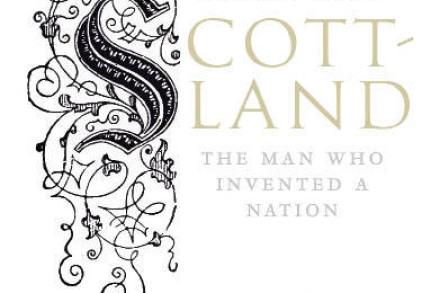
‘Stuart Kelly’ the author’s note declares, ‘was born and brought up in the Scottish Borders.’ Not so, as he tells us; he was born in Falkirk, which is in central Scotland, and came to the Borders as a child. ‘Stuart Kelly’ the author’s note declares, ‘was born and brought up in the Scottish Borders.’ Not so, as he tells us; he was born in Falkirk, which is in central Scotland, and came to the Borders as a child. The publisher’s mistake is appropriate. Kelly’s Walter Scott himself is a man who was never just what he seemed to be, and who invented an idea of a country and nation we can’t escape from. He wore a mask, several masks indeed, throughout his life, and put another mask on the face of Scotland.

The hell of working

From our UK edition

Joseph Conrad was 38, more than halfway through his life, when his first novel, Almayer’s Folly, was published in 1895. He died in 1924 with more than 30 books to his name. A good enough rate of production, you might think. An astonishing one actually, if you are to believe him. ‘Full 3 weeks’, he wrote to his friend Galsworthy in 1911, ‘— no consecutive ideas, no six consecutive words to be found anywhere in the world. I would prefer a red hot gridiron to that cold blankness.’ The gloom wasn’t new: ‘The sight of a pen and an inkwell fills me with anger and horror.’ Or again: I sit down for eight hours every day and sitting down is all.

In the house of Hanover

From our UK edition

Either Lucy Worsley or, more probably, her publisher has given her book the subtitle ‘The Secret History of Kensington Palace.’ This is enticing, or intended to be so; it is also misleading. Either Lucy Worsley or, more probably, her publisher has given her book the subtitle ‘The Secret History of Kensington Palace.’ This is enticing, or intended to be so; it is also misleading. There is no secret history, and the subject of this well researched and entertaining book is life at the court of the first two Georges, life which went on also at St James’s Palace and indeed Leicester House, where George II lived as Prince of Wales, as did his son Frederick later.

The Lives of Others

From our UK edition

‘My wife doesn’t understand me,’ the man said to his Jewish psychoanalyst. ‘I should be so lucky!’ was the reply. It’s a common complaint, not being understood. Yet surely only the most shameless would like others to know us exactly as we are or as we know ourselves. This is one reason some writers shrink from the prospect of having their Life written. Kipling called biography ‘the higher cannibalism’, and tried to pre-empt one by writing his own decidedly reticent memoir, Something of Myself. Something indeed, but not a lot.

E. M. Forster and Frank Kermode

From our UK edition

Any follower of literary blood sports should take a look at a review in the Weekly Standard, a conservative American magazine. You can find it on a site called Arts & Letters, which my son obligingly bookmarked for me. The present edition — at least I suppose it is the present one, not that it matters, since I understand that you can use the internet to summon articles from the vasty deep of time past — features the review, by Joseph Epstein of Sir Frank Kermode’s 2007 Clark Lectures devoted to E. M. Forster. Forster’s own book, Aspects of the Novel, had its origins in the same Cambridge lectures. Epstein has armed himself with a two- barrelled shotgun, one barrel for Kermode, the other for Forster, whom he admits to having admired in his youth.

A race well run

From our UK edition

More than 20 years ago I wrote an admiring article about Dick Francis. I made, if I recall, only one mild criticism: that he sometimes piled a bit too much misfortune on his damaged heroes. There was, for instance, the novel in which the narrator’s wife was in an iron lung and the villains put pressure on him to abandon his investigation by invading her bedroom and threatening to switch off the electric current that kept her alive. This was going a bit far, I suggested. A couple of weeks later I got a charming letter from Francis thanking me for all the nice things I had written, and then saying that as a matter-of-fact his wife Mary had spent some time in an iron lung, and he had found himself wondering ‘what if…?’ ‘What if?

Writing of, or from, yourself

From our UK edition

'All literature is, finally, autobiographical’, said Borges. ‘Every autobiography becomes an absorbing work of fiction’, responded H. L. Mencken, though not, you understand, directly. Certainly the fictional element in autobiography is evident; Trollope thought that nobody could ever tell the full truth about himself, and A. S. Byatt has said that ‘autobiographies tell more lies than all but the most self-indulgent fiction’. An exaggeration, perhaps, but one with a kernel of truth. Borges’s remark must, however, set any novelist pondering. In the most immediate sense it appears to be untrue. ‘What about invention?’ we may cry, ‘what about the imagination?

A reader’s writer

From our UK edition

Some people say that nothing happens to them, but everything happens to the writer who sees the world around him as material for fiction. Francis King is such a writer, which explains why he has been able to go on writing novels and stories for longer than many of his readers and indeed publishers have been alive. When someone who brought out his first book in 1946 while an Oxford undergraduate publishes a novel as good, fresh, intelligent and moving as Cold Snap more than 60 years later, it is almost inevitable that reviewers should remark on his extraordinary literary longevity and his seemingly inexhaustible vitality. And yet this is, in all ways but one, beside the point. To dwell on his age is invidious and misleading.

Life & Letters | 7 November 2009

From our UK edition

Way back in 1984 when I was editing, rather incompetently, the New Edinburgh Review, I published a story by Raymond Carver. It was entitled ‘Vitamins’. I can’t remember how much I knew about Carver then, or even how the manuscript arrived on my desk. Probably it was sent by his agent, and was taken from a new collection, Cathedral which was to be published by Collins. It is a good story — I’ve just read it again — and less minimalist than some of the work by which he made his name. Which is very much to the point, for it seems that these stories owed a great deal to his editor, Gordon Lish, and that Carver himself was not entirely happy, to put it mildly, with Lish’s surgery which cut some stories by half, or even more than that.

The Father of Scottish Tourism

From our UK edition

‘How do we make Scott more popular?’ The question ran round the table and none of us had an answer. ‘How do we make Scott more popular?’ The question ran round the table and none of us had an answer. It was a meeting of the Abbotsford Trust. I am not myself a trustee, but was there as a member of an advisory committee. The Trust itself was set up after the death of Dame Jean Maxwell-Scott, Sir Walter’s great-great-great-granddaughter who, with her late sister, Patricia, had owned Abbotsford for many years and had made it the happiest and most welcoming of houses. Scott bought it in 1812.

Life & Letters | 8 August 2009

From our UK edition

Between 1945 and his death in 1961 Ernest Hemingway published only two books, apart from collections of stories mostly written before the war. The two were Across the River and Into the Trees and The Old Man and the Sea. The first was generally considered a failure, the second a success; and it’s doubtless perversity that makes me much prefer Across the River. The meagre tally might suggest he was burned out, but for most of the time he was working hard on various projects, and the difficulty was to finish books.

Life & Letters | 4 July 2009

From our UK edition

‘I think there would be something wrong with a middle-aged man who could take pleasure in Firbank’. That, more or less, was Evelyn Waugh’s judgement in the interview he accorded the Paris Review in the mid-Fifties. (I say ‘more or less’ because I can’t lay my hands on that volume of the interviews, but if the words are not exact, the sense is). Yet Firbank had, as he admitted , influenced him when young, along with Hemingway, who had also, as Waugh observed, developed ‘the technical discoveries upon which Ronald Firbank so negligently stumbled’. That quotation, unlike perhaps my first one, is accurate, for it is taken from an  admiring essay on Firbank’s work which Waugh wrote in 1929.