Allan Mallinson

Their dark materials

From our UK edition

Laws and sausages, we know, are better not seen in the making; and neither are ‘black ops’. Waterloo may have been won on the playing fields of Eton, and Trafalgar on the dunes near Burnham Thorpe, but Britain’s secret war against Napoleon was won in less wholesome places. ‘This is a book about propaganda, spying and covert operations… a very modern story of secret committees, slush funds, assassination,’ writes Tim Clayton, whose Waterloo: Four Days that Changed Europe’s Destiny was by far the most scholarly of the many volumes produced for the bicentenary. And what an astonishing story it all is, alternately inspiring and disturbing, a challenging addition to the Napoleonic canon.

Fighting other people’s battles

From our UK edition

What’s the point of a cover if not to judge a book by? One look at the image on the dustjacket of From Byron to Bin Laden, one of my favourite statues in Rome — Anita Garibaldi, pistol in one hand, babe in the other, galloping side-saddle to escape an ambush — and I said ‘yes please’. This was clearly going to be an invigorating read. But the index proved to have just a single reference to Anita. And the text is not light on PhD-speak: ‘The shared characteristics and commonalities across the generations discussed here clearly illustrate that foreign war volunteering constitutes a distinct diachronic phenomenon.

Wise old war horse

From our UK edition

It is always a delight to drive the country roads of Hampshire to see the man known throughout the army simply as ‘Dwin’ — Field Marshal Lord Bramall. Until quite recently, I was always greeted at the door in person by the last of the Chiefs of the Defence Staff (CDS) who had really seen war — in France and Germany — but today I am met by Paula, his dedicated carer. ‘Can’t get up so easily these days,’ he says as I ‘salute’ on entering his little study. ‘Have a chair — the Eton one or the Rifles,’ he adds, nodding to the cushions bearing the arms of the two great institutions of his early life. The first time I met Dwin Bramall was in 1984, when he was CDS and I was a young major just out of the Staff College.

The German Lion of Africa

From our UK edition

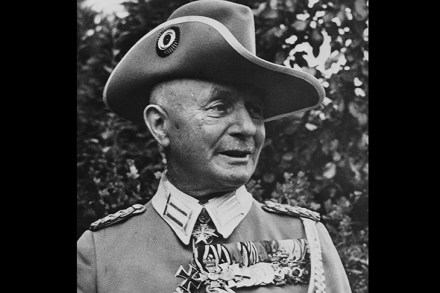
What’s going on with book reviews? Here is the Pulitizer prizewinning (for ‘criticism’) Michael Dirda in the Washington Post, on this book’s cover: Let me say straight out that if all military histories were as thrilling and well written as Robert Gaudi’s African Kaiser, I might give up reading fiction and literary bio-graphy… Gaudi writes with the flair of a latter-day Macaulay. He sets his scenes carefully and describes naval and military action like a novelist. Leaving aside the extraordinary comparison with Macaulay for the moment, most naval and military novels that I’ve read get the historical detail right. Robert Gaudi’s book is so error-strewn that it would fail to qualify even as historical fiction.

A fighting chance

From our UK edition

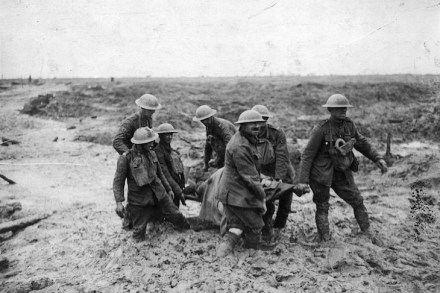
‘We remember it not only for the rain that fell, the mud that weighed down the living and swallowed the dead, but also for the courage and bravery of the men who fought here.’ The Prince of Wales was in good voice on Monday at the centenary commemorations of the battle of Passchendaele — more properly, ‘Third Ypres’. It was a pity he couldn’t say that we should remember it not only for the incompetence of the high command, but because the majority of the British troops were at best only half-trained. One of the enduring myths about war is that armies can be raised quickly. They can’t, because armed conflict is the most complex human interaction known. A soldier’s skill is nine parts judgment.

Northern exposure | 6 July 2017

From our UK edition

Amid the shambles that was the Anglo-French campaign in Norway in April and May 1940, a French officer observed that ‘the British have planned this campaign on the lines of a punitive expedition against the Zulus, but unhappily we and the British are in the position of the Zulus’. A month later, many British officers would be pronouncing on French generalship equally tartly during the shambles that was the Fall of France. On the whole it doesn’t do to criticise allies, but soldiers have got to be able to grumble about somebody, and it’s best (at the time, at least) to lay the blame elsewhere than one’s own high command.

Who will guard the guards?

From our UK edition

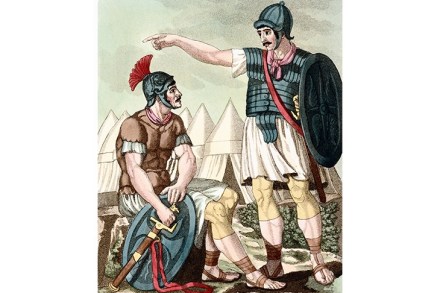
The history of an army is essentially the history of its deeds. The history of an army within an army is more intriguing. The Praetorian Guard, a modern term, was founded, or rather formalised, around 27 BC by Augustus for the protection of the emperor and his family. Hitherto, cohors praetoria had been a generic description of the body of troops detailed, ad hoc, for the protection of a general on campaign. This derived from praetorium, the general’s tent next to which they were quartered in camp, which itself derived from praetor, ‘the man who goes before others’.

Day of infamy

From our UK edition

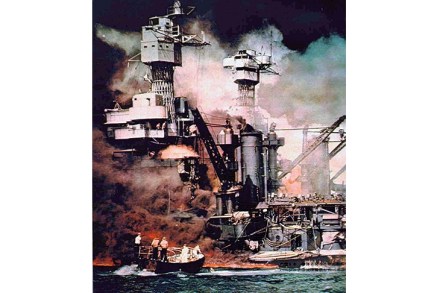
On 7 December 1941, without declaration of war, 350 Japanese carrier-borne aircraft struck at the US Pacific Fleet at anchor in Pearl Harbor, Hawaii — in President Franklin D. Roosevelt’s ringing words, ‘a date that will live in infamy’. For the 75th anniversary, Craig Nelson, a New York Times journalist, has, says his publisher, produced ‘a definitive account’. I disagree. Indeed, if this book were a motor car (or ‘automobile’, for it is a re-print of the US edition, with American usage and spelling), it would have to be recalled for extensive safety modifications and replacement parts.

Soldiers of the Queen

From our UK edition

It’s not immediately obvious, but the silhouette on the dust jacket — soldiers advancing in single file, on foot (‘boots on the ground’) isn’t one squad, but five soldiers from different campaigns. From left to right, first comes the British infantryman of the second world war; next is a ‘jock’ from (I think) the Korean war; then a jungle fighter from the Malayan Emergency or the Borneo ‘Confrontation’; then, unmistakably, the long-suffering foot soldier of Operation Banner, the 38-year counter-insurgency (or police action, no one ever quite knew which) in Northern Ireland; and finally, the technology-festooned warrior of Iraq and Afghanistan.

Ce n’est pas la guerre

From our UK edition

On 1 July 1916, along a frontage of 18 miles, 100,000 British infantrymen — considerably more than the entire strength of the British army today — climbed out of the trenches to begin the great offensive that would become known as the Battle of the Somme. By nightfall there were 60,000 casualties, 20,000 dead or dying. No appreciable gains had been made, and there was no prospect of the breakthrough for which the commander-in-chief, General Sir Douglas Haig, had assembled three cavalry divisions, some 30,000 horses. No one very senior would be sacked; the scapegoats were regimental officers not judged to have pressed their attacks with sufficient determination in the face of machine guns and uncut barbed wire. It was inconceivable that the offensive be called off.

Wars on drugs

From our UK edition

‘Of all civilisation’s occupational categories, that of soldier may be the most conducive to regular drug use.’ The problem with this statement — the first words of this book — is the problem with the book as a whole: it may be correct, and there again it may not be. Even the captionless cover photograph is ambiguous: of an American soldier, in Vietnam perhaps, with a corncob pipe which may or may not contain a banned substance, though we are obviously meant to infer that it does. Then there is the inconclusiveness: ‘One may say that to a lesser or greater degree drugs shaped warfare.’ Yes, one may; but to a lesser or greater degree one may say that about almost everything.

Muskets v. the Highland charge

From our UK edition

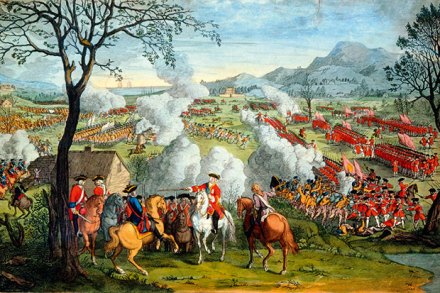
What a wretched lot the Stuarts were, the later ones especially, the males at least. James II fled England without a fight in 1688, and the battlefield of the Boyne in 1690 earning him the unaffectionate nickname Séamus an Chaca, ‘James the Shit’. During the Jacobite rising of 1715 on the death of Anne and the accession of George I, his son Prince James Edward, coming late to the fight from France, fled Scone palace, telling his hapless supporters to ‘shift for themselves’ after the defeat at Sheriffmuir. In turn his son, Charles Edward, the Bonnie Prince, brought up in Rome, hurried from the field at Culloden in 1746, the culminating battle of the second major rising, the ‘Forty-five’, having mismanaged the whole affair.

Hubris made the 20th century the bloodiest in history

From our UK edition

Sir Alistair Horne, like that other great knight of military history, Sir Michael Howard, served in the Coldstream Guards during the second world war. According to Clausewitz (in Vom Kriege), his judgment will therefore be invested with insight denied to those who have never been shot over: As long as we have no personal knowledge of war, we cannot conceive where those difficulties lie of which so much is said, and what that genius and those extraordinary mental powers required in a general have really to do. . . But if we have seen war, all becomes intelligible. So it is disappointing to read the late Sir Martin Gilbert, quoted with apparent approval in the preliminaries: ‘I’m not a theoretical historian, seeking to guide the reader to a general conclusion.

Corbyn has said he would never use our nukes. What kind of deterrent is that?

From our UK edition

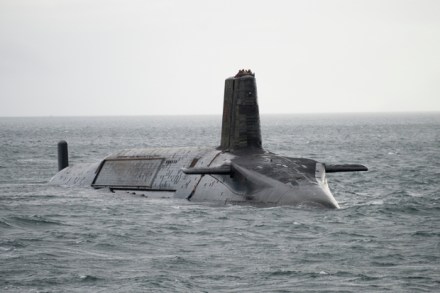
When pushed this morning by Today presenter Sarah Montague on whether there would be any circumstances that he would use the nuclear option, Jeremy Corbyn said: 'No.' In other words, Britain under his premiership would no longer have a nuclear deterrent. Deterrence requires not just the capability to strike – a capability that cannot be pre-emptively neutralised or destroyed (hence the need for submarine-launched weapons) - but also the will to use it. Or at least the question-mark in the mind of a would-be aggressor. We’ve been here before. The Rt Hon Jim Hacker (Yes, Prime Minister) wasn’t as certain as Jeremy Corbyn that he wouldn’t use Trident, but he thought he probably wouldn’t and therefore that it was pointless.

When the boys come home

From our UK edition

Matthew Green, former Financial Times and Reuters correspondent, remains unimpressed by officialdom’s response to casualties who aren’t actually bleeding: Ever since October 1914, when ‘Case One’ arrived in Myers’s care, the system for tending to the mental wellbeing of soldiers has grown up in a piecemeal and ad-hoc fashion, overshadowed by the Army’s stubborn ambivalence towards psychological injury (Dr Charles Myers was the Cambridge psychologist seconded to the Royal Army Medical Corps who first used the term ‘shell shock’.) Green acknowledges that ‘experience teaches that the psychological wounds of war have proved stubbornly difficult to treat’.

The bravest of the brave

From our UK edition

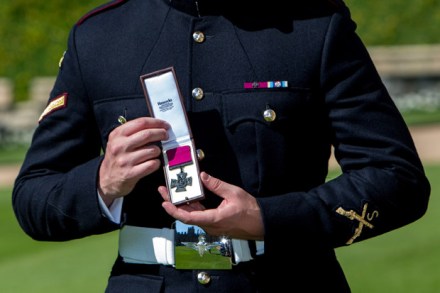
‘It is the task of a Patton or a Napoleon to persuade soldiers that bits of ribbon are intrinsically valuable. The historian’s job, in part, is to spot contradictions and unravel obfuscations, and the history of the VC is steeped in both.’ To this job of de-obfuscating, Gary Mead, former journalist and military historian, might well add ‘though the heavens fall’.

The madness of Nazism laid bare

From our UK edition

‘If the war is lost, then it is of no concern to me if the people perish in it.’ Bruno Ganz, who not so much portrays Hitler as becomes him in Bernd Eichinger’s 2004 film Der Untergang (Downfall), spits the Führer’s nihilist venom so convincingly that the fundamental insanity of Nazism is at once laid bare, even to his closest collaborators. The madness of Nazism is now merely Hitler himself, and when on 30 April Ganz/Hitler, entombed in the Führerbunker, shoots himself, the film’s tension is at once gone. What follows is just rats fleeing the hole; and the rest, as it were, is silence. But it was not. VE (Victory in Europe) Day was not celebrated in London until 8 May, and in Moscow on 9 May.

A major-general names the guilty men

From our UK edition

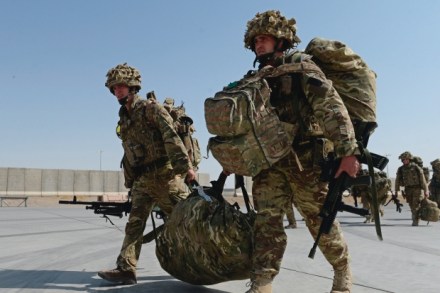
The author of this primer to the long-overdue Chilcot report, a retired sapper (Royal Engineers) major-general, nails his colours to the mast in the opening paragraph. The British High Command made a number of judgments with poor outcomes in the decade from 2000 to 2010 when fighting in Iraq and Afghanistan... The outcome in some eyes has been humiliation, accusation of defeat in Basra, an unexpected high level of conflict in Helmand and significant loss of life for our servicemen and women as well as local civilians — so far, without the compensation of it all being worthwhile. As a result: The UK’s military leadership has lost much of the inherent trust and goodwill that it once enjoyed and people, with some justification, question its competence.

Four ways to win Waterloo

From our UK edition

The Kaiser’s war deprived Britain of her centenary celebrations of the victory at Waterloo. It also set the propagandists something of a challenge, for the Kaiser himself had sent an aide-de-camp to the British embassy the day after the declaration of war deploring ‘the action of Great Britain in joining with other nations against her old allies at Waterloo’. A hundred years and all that had passed therein evidently counted for nothing to the imperial mind, though the emperor appeared to have forgotten that Belgian troops had also stood with the allies at Waterloo.

A spectacular faller in the Benghazi stakes

From our UK edition

What an unedifying affair the war in the North African desert was, at least until November 1942 and the victory at El Alamein. As the author of this brisk study of one of its more admired practitioners writes: In no particular order, the following were casualties [i.e. sacked]: Wavell, Cunningham, Auchinleck, Norrie, Ritchie, Lumsden, Gatehouse, Rees, Godwin-Austen, Beresford-Pierse, Dorman-Smith, Corbett, Hobart, O’Creagh, Ramsden and Messervy. There might well have been a separate desk in the military secretary’s department in London dealing with officers who had taken a fall in what was laconically referred to as the Benghazi Stakes. And it had all begun so well.