Alexander Larman

Alexander Larman is an author and the US books editor of The Spectator.

Warning: this book may make you like Bono

There is a famous (and, I fear, apocryphal) story about Bono at his most messianic at a U2 gig in the early part of this century. Pausing between songs, he clicked his fingers meaningfully. After doing this a few times, he said, with utmost gravity, “Every time I do this, a child in Africa dies of starvation.” Most of the audience nodded in sympathy, but one man in the front row had a better response. “Well stop fucking doing it then!” Bono’s response was not recorded, but the finger-clicking soon disappeared from his repertoire of stadium show gimmicks. It is reasonably easy to see why Bono — and, by extension, U2 — are so reviled.

bono

The afterlife of a painting: Molly & the Captain, by Anthony Quinn, reviewed

From our UK edition

Novels about art are often strange, vain affairs. After all, writing about artists, especially fictional ones, can seem like a strained exercise in trying to yoke together two irreconcilable mediums. It is to Anthony Quinn’s credit that his ninth novel, Molly & the Captain, not only succeeds admirably as a centuries-spanning account of the influence and afterlife of the eponymous painting, but manages to say illuminating things about creativity, love and family dynamics in the process. The book is divided into three sections. The first, ‘Merrymounts’, is the shortest, and is written in an 18th-century literary pastiche style that initially jars but soon enthrals.

A subtly mournful Crown lands in the post-Elizabeth era

Nobody ever expects Peter Morgan’s royal soap opera The Crown to deliver unfettered accuracy, but even by its own standards, the fifth series has taken a battering in the British press. Former prime ministers John Major and Tony Blair — both of whom are depicted this time round — have come forward to denounce the scenes in which they appear as "injurious and untrue" (Major) and "complete and utter rubbish" (Blair). There has even been pressure on Netflix, as yet unbowed to, for each episode to feature a disclaimer stating that it is a work of fiction. The cynical might argue that politicians and actors — step forward, Dame Judi Dench — savaging a streaming service’s flagship show is the best imaginable publicity for it.

Elections are always better in the movies

As the midterm elections loom, there is the usual excitable commentary about what it all means. Every voter will have their own heroes and villains, the dashing white knight and the looming bogeyman. The complexities of the wider sociopolitical issues at hand will be subsumed to simple questions: will the results encourage Trump to run in 2024? Is this curtains for Kamala’s presidential ambitions? These are, of course, over-simplifications of difficult and nuanced issues. This is why the movies have inevitably dealt better with the drama (and farce) of fictitious — or at least fictionally disguised — election campaigns.

Paul Newman was and wasn’t the nicest of men

My favorite Paul Newman performance is his final on-screen one, as mob boss John Rooney in Sam Mendes’s Road to Perdition. It’s a good, not great, film, which is a disappointment given its phenomenal cast and to-die-for Conrad Hall cinematography. But there’s something unique in Newman’s contained performance as a man of infinite complexity, someone as comfortable playing a piano duet with his surrogate son as breathing portentously of his profession, "This is the life we chose, the life we lead. And there is only one guarantee: none of us will see heaven.

Bram Stoker’s Dracula was a grand and glorious folly

Thirty years after it was first released in America, Francis Ford Coppola’s Bram Stoker’s Dracula is returning to theaters, appropriately enough for a Halloween re-release. (It also serves as a soft preview for Coppola’s newly announced passion project, Megalopolis, an epic drama starring Adam Driver and Aubrey Plaza.) It is hard to overstate what a difference the past three decades have made in Dracula's popular reception. Although it was a significant commercial hit upon release, thanks in part to Annie Lennox’s enormously popular theme tune "Love Song For a Vampire," it was critically derided as poorly acted, overblown, excessively bloody without being frightening and a travesty of the original novel.

Prince Harry’s ‘Spare’ is making the Royals nervous

From our UK edition

The title of Prince Harry’s long-awaited memoir will be enough to make the royal family nervous. Spare, which was originally due out this year, will be released in January. ‘His Words. His Story,’ the tag-line of the book promises. The Queen’s death this year – and the coming together of the Royals in their shared grief – led to suggestions the book would be toned down. That looks like a faint hope. Spare suggests we will see a presentation of the same old Harry: cast out from a family that had no need for him as he fell down the line of succession.

Just Stop Oil is wrong to target King Charles

From our UK edition

After Just Stop Oil’s recent attack on Van Gogh’s Sunflowers at the National Gallery, the group has become emboldened by the international publicity their actions have earned. This is clearly the explanation for today’s field trip to Madame Tussauds where, after buying tickets like good little anti-capitalists, two of its activists covered a waxwork model of King Charles III with chocolate cake. In a statement released by Just Stop Oil, the vandalism was justified by the protestors, who said: ‘We are here because we seek to protect our freedoms and rights, because we seek to protect this green and pleasant land which is the inheritance of us all.

The Crown doesn’t need a disclaimer

From our UK edition

The fifth series of Netflix’s The Crown will soon be upon us. Scripted, as ever, by Peter Morgan, the show will cover the travails of the royal family throughout the 1990s, spanning everything from the then Prince Charles and Princess Diana’s marital difficulties and eventual divorce to the rumours of Prince Philip conducting an affair with a much younger woman (his partner in carriage driving, we are told). Jonny Lee Miller, erstwhile Sick Boy from Trainspotting and Sherlock Holmes from Elementary, dons thick glasses and a grey wig to play former prime minister John Major, a decent man who never stood a chance. Later in the series, we are promised the first appearance of Bertie Carvel as Tony Blair, who will come into his own in the sixth and final instalment.

The Crown doesn’t need a disclaimer

From our UK edition

The fifth series of Netflix’s The Crown will soon be upon us. Scripted, as ever, by Peter Morgan, the show will cover the travails of the royal family throughout the 1990s, spanning everything from the then Prince Charles and Princess Diana’s marital difficulties and eventual divorce to the rumours of Prince Philip conducting an affair with a much younger woman (his partner in carriage driving, we are told).Jonny Lee Miller, erstwhile Sick Boy from Trainspotting and Sherlock Holmes from Elementary, dons thick glasses and a grey wig to play former prime minister John Major, a decent man who never stood a chance. Later in the series, we are promised the first appearance of Bertie Carvel as Tony Blair, who will come into his own in the sixth and final instalment.

Taylor Swift’s Midnights is a bright spot in a bland music industry

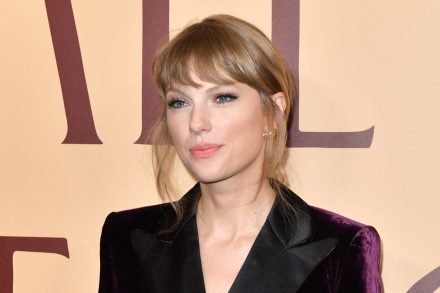
The recent downfall and shaming of Kanye West was likely to have been greeted with schadenfreude by at least one 32-year-old pop star. In 2009, West interrupted Taylor Swift's winning best female video at the MTV Video Music Awards to inform her that the gong should have gone to Beyoncé instead. Their relationship ever since has been a gossip-friendly roundabout of fallout, reconciliation, sniping and bitching. West’s current defenestration from public life, owing to antisemitic comments he made, has not been publicly alluded to by Swift yet. But the lyrics from the song "Karma" on her new album Midnights might make tacit reference to their ongoing feud, as Swift castigates an anonymous man for "talking shit/For the hell of it/Addicted to betrayal but you're relevant.

cave

Nick Cave’s musings on life, death and creativity

The musician, novelist and occasional ceramicist Nick Cave is the most literate of that often-decried breed, the rock star. Over the course of a forty-year career that began with the raucous punk act the Birthday Party and continues to this day with the Bad Seeds, in addition to eclectic solo and film-scoring work, he is restlessly innovative. Not only has he written countless lyrics that approach Dylan or Cohen-esque levels of profundity, but he has written film screenplays, novels and even a loose collection of musings about life on tour, The Sick Bag Song. Yet he shows no interest in writing the autobiography that many might have expected from him.

Angela Lansbury was so much more than Murder, She Wrote

The only time I ever saw Angela Lansbury on stage was in 2014 in London, when she played the half-baked medium Madame Arcati in a revival of Noel Coward’s supernatural comedy Blithe Spirit. Although it was rumored that the then-88-year-old Lansbury was having her lines fed to her via earpieces, it did not affect her comic timing one iota. It is no exaggeration to say that Lansbury took a character who has passed into over-familiarity via decades of revivals and made her fresh and hilarious once again. For anyone to achieve this is remarkable, but to do so at an age when most actors would have long since retired is little short of phenomenal. Lansbury’s death at the age of 96 — a few days shy of her 97th birthday — has some uncanny parallels with the recent passing of the Queen.

Alan Rickman and the misery of being famous

Perhaps the defining moment of the posthumous collection of diary excerpts from the late actor and director Alan Rickman comes around two thirds of the way in. Rickman has recently played the villainous role of Judge Turpin in Tim Burton’s Sweeney Todd, an undertaking he describes with what readers will have come to recognize as his signature combination of angst and actorly obsession ("I can only sense the crumbs, dandruff, dirt under the nails.") At last, the film is finished, and is premiering in London. Rickman’s general mien of detachment ("there is a deep introspection during these days…a feeling of being marginalized by shallow minds") is temporarily interrupted by an impertinent journalist, who asks him at the premiere, "If you were a pie, which flavor would you be?

Free expression after the Rushdie attack

In an interview with Stern magazine at the end of July, Sir Salman Rushdie was asked about the current circumstances of his life. Given that this is a question that he has faced since 1989, Rushdie might have been expected to respond with boredom, even irritation — as, understandably, he has done in other public conversations, when the subject of the fatwa that he has been under for nearly three and a half decades has been raised by an inquisitive or prurient journalist — but he responded with reasonably good cheer. Describing his everyday existence as “very normal,” he even ventured a light-hearted remark, saying, “A fatwa is a serious thing. Luckily we didn’t have the internet back then. The Iranians had to send the fatwa to the mosques by fax.

Rushdie
queen elizabeth ii

Queen Elizabeth II made a difference — to Britain and the world

“The Queen is dead, boys, and it’s so lonely on a limb.” So the ever-provocative Morrissey sang on the title track of the Smiths’ 1986 album. At the time, his wishes were regarded as little more than republican throat-clearing, shot through with satirical wit. In the same song, he imagined an unlikely encounter with the Queen, who remarks caustically, “Eh, I know you, and you cannot sing.” Some of his detractors might agree. But now, thirty-six years on, the Queen really is dead. Queen Elizabeth II, the longest-reigning monarch in British history, died on September 8, 2022 at the age of ninety-six. The second Elizabethan age — one that surpassed the first for both achievement and longevity — has come to an end.

Is Will Smith too toxic to be taken seriously?

From our UK edition

After 9/11, American comedians found themselves in a tricky situation. Make fun of any of the usual standbys of their trade – politicians, authority figures, Rudy Giuliani, anyone who wore a badge for a living – and they were liable to be shouted down in an angry chorus of: 'Too soon!' Yet if all the jokes they could tell were sanitised and tame, their reputations would decline in an instant. It was a bold comic who tried to argue that telling jokes was a natural human response to disaster; many audiences simply refused to find things funny. Will Smith now finds himself in a similar position. The one-time Fresh Prince of Bel-Air has been a Hollywood pariah since he assaulted Chris Rock on stage at the Oscars in March.

Meghan makes it all about herself, again

From our UK edition

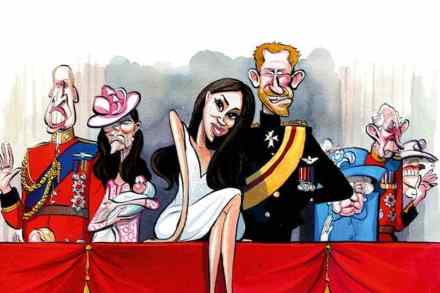
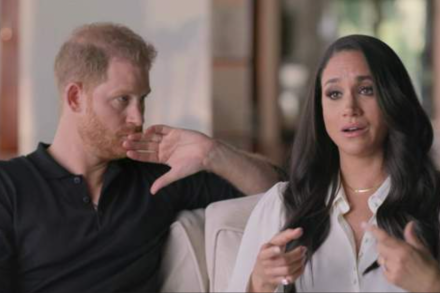
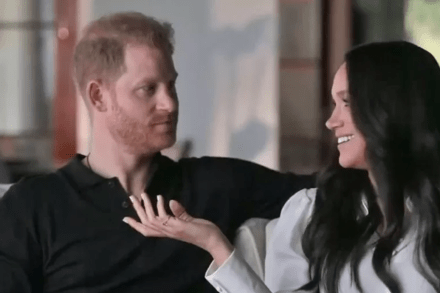
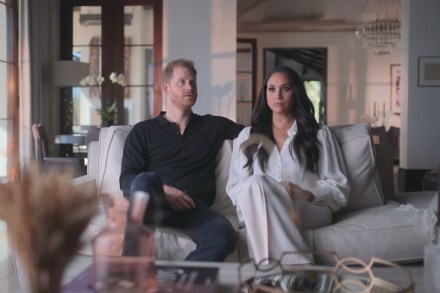
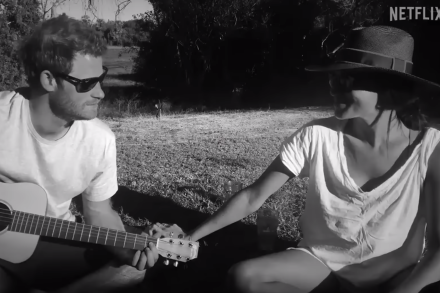
Since the Queen’s death last month, the Duchess of Sussex has found it hard to maintain her usual vice-like grip on the world media’s attention. Rumours have swirled that relations between her and Prince Harry and the now-Prince and Princess of Wales are yet to improve — despite the surface show of amiability that was demonstrated over the mourning period. There has been the sense that Meghan has been relegated to second fiddle: a state of affairs that this particular prima donna is reluctant to accept. This week has spelt a comeback of sorts. Photographs have been released of the Duke and Duchess, taken by Misan Harriman, when the Duke made his indifferently received speech at the One Young World conference in Manchester.

Hilary Mantel — a death before her time

When the Queen died a fortnight ago, it was widely speculated that the perfect writer to describe both her death and its aftermath was Hilary Mantel, but now that will never be. Mantel died from a stroke yesterday at the age of 70, leaving behind a unique legacy in transatlantic literature not merely as someone whose weighty novels about royalty in the Tudor era have sold millions, but as an acute chronicler of our own time, too. Not for nothing is her most controversial short story, The Assassination of Margaret Thatcher, a subversive account of what might have happened if a woman she felt "boiling detestation" for had been killed in 1983.

Ken Burns’s angry new film

There is probably no American documentary filmmaker more respected than Ken Burns. From his landmark 1990 series about the Civil War to his most recent work that has explored everyone and everything from Ernest Hemingway to country music, Burns has established himself as a fearless chronicler of stories that illuminate the nation’s history, sometimes in ways that viewers might find uncomfortable. His 2005 documentary about the African-American boxing champion Jack Johnson, Unforgiveable Blackness, was a fine example of the filmmaker turning his gaze on a subject that many might have preferred be left obscure, and it won him an Emmy for Outstanding Directing as a result — one of fifteen that he and his films have won to date.