Alexander Larman

Alexander Larman is an author and the US books editor of The Spectator.

Is the Musk-Zuckerberg cage match off?

It may not come as a great surprise to readers that Elon Musk and Mark Zuckerberg will not, in fact, be having a cage fight with one another. Ever since Musk had posted on Twitter (now known as X) in June that he was interested in battling the Meta tycoon, only for Zuckerberg to reply “send me locations,” the saga has turned from a typically absurd piece of Muskian humor to a story that has oscillated between what has seemed like a serious piece of corporate warfare and utter silliness. There was never any serious doubt that Musk would have come off a poor second to Zuckerberg had the fight taken place.

musk zuckerberg

Why didn’t William Friedkin get much credit when he was alive?

Ask your average man on the street — or at least your average clued-up man with a decent knowledge of modern Hollywood — about the films of William Friedkin, who has died aged eighty-seven, and he will confidently sing the praises of Friedkin’s legendary pictures, The French Connection and The Exorcist. Then if he is pressed on the other eighteen films Friedkin directed, ranging from the excellent and underrated to the dismal, and a look of panic is likely to come over his face before he excuses himself and rushes into a nearby subway (or, if he is in New York, flees to an overground railway in homage to the legendary car chase scene in The French Connection). It is your choice whether you do a Popeye Doyle and head off in frantic pursuit, or leave him be.

william friedkin

Paul Reubens lived life on his own terms

The death of actor Paul Reubens of cancer at the age of seventy was an oddly low-key departure for a man who created one of the twentieth century’s iconic comic characters, and also found himself mired in scandal that threatened to destroy his career, and to a large extent took him away from the A-list fame that he would have expected to attain. Yet throughout his more than four-decade career, Reubens was nothing if not a survivor, even a fighter. The fact that incidents that would have ruined most other men were treated by him as obstacles to be overcome indicated both his resilience and — to some — a refusal to kowtow to the expected demands of the industry that both made and ruined him.

paul reubens

Oppenheimer and the triumph of Christopher Nolan

The Barbenheimer phenomenon — thought of by many as just idle chatter on the internet — has enduring power. Last weekend, Barbie and Oppenheimer earned a combined $511 million in global box office receipts; an unprecedented number where neither film is a superhero picture or a sequel. Barbie made more money, on the grounds that it’s an hour shorter and is PG-13 rated, but the vast box office success of the R-rated Oppenheimer, which made over $170 million in its opening weekend, is testament both to Barbenheimer excitement, and to the film’s very own brand: its powerful writer-director-producer, Christopher Nolan.  James Cameron aside, it is hard to think of any filmmaker who wields such power and influence in contemporary Hollywood.

Christopher Nolan

Can Oppenheimer take on Barbie?

From our UK edition

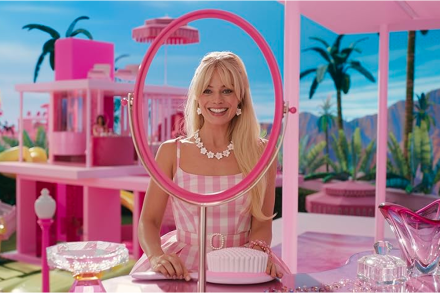
This week, two films are released simultaneously that could not be more different. In the pink corner is Greta Gerwig’s Barbie, a 114-minute long exercise in postmodern irony and camp revolving around the exploits of the much-beloved Mattel doll, given life and dragged into the real world. From the first trailer onwards, its mission has been clear: this is contemporary Hollywood at its most glitzy, mixing well-known intellectual property with a starry cast (led by Margot Robbie, who is overdue a hit) and a healthy dose of humour. https://www.youtube.com/watch?

what we do in the shadows

Why What We Do in the Shadows works

Before Taika Waititi achieved his current state of half-ironic, half-irritating ubiquity, he made small, often brilliant films. One of the most notable ones was the 2014 New Zealand comedy horror picture What We Do in the Shadows, which he co-created and co-directed with Flight of the Conchords star Jemaine Clement. Horror comedies are notoriously tricky to get right tonally, but the film — which admittedly leant far more heavily on the comedic aspects — was a modest box-office hit and became yet another step on Waititi’s stroll to Hollywood dominance.

Arnold Schwarzenegger is back

It would be presumptuous to call 2023 the comeback of Arnold Schwarzenegger: he never went away. From his first starring role in 1982’s Conan the Barbarian to an illustriously memorable life and career that have included everything from the Terminator films to his term as governor of California, he has judiciously created an existence for himself as an all-American success story; a sort of Scott Fitzgerald character for the Reaganite age. Not bad, really, for a man born seventy-six years ago in a small town in Austria, the son of an unrepentant Nazi. Should you turn on Netflix, you will now be greeted by two incarnations of Der Arnold.

Arnold

What’s happening with the SAG-WGA strike?

Christopher Nolan’s latest film, Oppenheimer, is about the second biggest bang in history. Yet at its London premiere on Thursday, there was another explosion that, in its own way, was no less seismic than anything put on screen. Its star-studded cast, including Cillian Murphy, Emily Blunt, Matt Damon and Robert Downey Jr., assembled dutifully on the red carpet for interviews and selfies, but by the time that the film itself was about to screen, none of the actors were anywhere to be seen.  As Nolan said of his “incredible cast” in his introductory talk, “You’ve seen them here earlier on the red carpet.

strike

Mission: Impossible – Dead Reckoning Part One is the action film of the year

From our UK edition

It is an unusual compliment to say of what will undoubtedly be the year’s best action film that the experience of watching it is rather like being punched in the face for the better part of three hours. But Mission: Impossible – Dead Reckoning Part One, which arrived in UK cinemas on Monday, is a bruising, visceral and wholly exciting ride that’s about as close as you can imagine to being put in a boxing ring with its star Tom Cruise. If the viewer is pummelled and bludgeoned into an ecstatic state of submission, then that’s the price you pay for this exceptional slice of filmmaking: a thriller that doesn’t just thrill, but exhilarates and wholly dominates its audience in the process.

Napoleon heralds the return of the man’s movie

The trailer for Ridley Scott’s eagerly awaited magnum opus Napoleon has finally arrived — and it does not disappoint. Boasting what looks like another Oscar-worthy performance from Joaquin Phoenix, the trailer teases an intoxicating mixture of full-throttle battle scenes, executed and shot on a scale unparalleled in modern cinema, as well as insight into the complex psyche of the French emperor, to say nothing of his often-tortuous relationship with his wife Josephine (played here by Vanessa Kirby.)  https://www.youtube.com/watch?

napoleon

The death of the sex comedy

From our UK edition

After a few years in which she has been largely absent from cinemas – her appearance in Netflix’s climate-change black comedy Don’t Look Up aside – Jennifer Lawrence is returning with, of all things, a raunchy sex comedy, with the punning title No Hard Feelings. It has earned an R-rating in the US and 15 in the UK, and judging by its marketing materials, it is a 21st-century spin on Tom Cruise’s star-making role in Risky Business, focusing on an older woman (yes, Lawrence, at 32, is now classed as such by Hollywood) who is hired by a family via Craigslist to 'date' their socially awkward 19-year-old son Percy, 'date him hard', and thus introduce him to the adult world.

Sound of Freedom goes where mainstream Hollywood doesn’t dare

At first glance, Sound of Freedom sounds as if it’s a Donald Trump re-election slogan for next year’s presidential battle. Yet, despite the presence of Jesus himself — The Passion of the Christ’s Jim Caviezel — in the lead role, Alejandro Monteverde’s new film has nothing to do with US politics. Instead, it revolves around that most hot button of controversial topics: child sex trafficking and the evils thereof. Caviezel stars as a real-life figure, Tim Ballard, who founded something called Operation Underground Railroad to rescue children from Latin American cartels and traffickers.

jim caviezel sound of freedom

With Flamin’ Hot, Hollywood again makes a hero of the businessman

It always used to be that, in Hollywood movies, big business was seen as a force for ill rather than good. Leaving aside that the films themselves were financed by giant studios hellbent on making a profit, such classics as Frank Capra’s It’s a Wonderful Life and Charlie Chaplin’s Modern Times firmly took the side of the individual against the system and presented the corporate world as a faceless and uncaring one — if, that is, it wasn’t simply a criminal one altogether, as best expressed by Lionel Barrymore’s sneering robber baron Potter in Capra’s film. Today, things have changed immeasurably.

flamin’ hot

Where did it all go wrong for Harry and Meghan?

From our UK edition

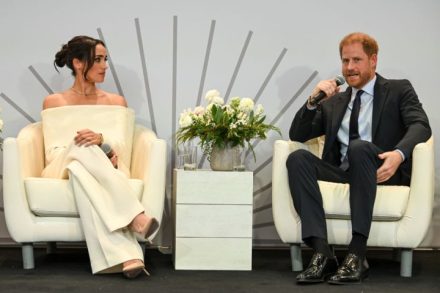
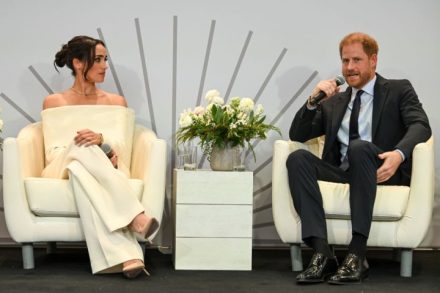
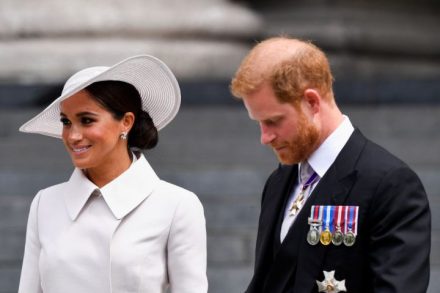
Even for those of us who are not well disposed towards the Duke and Duchess of Sussex, it is hard not to wish – occasionally – that they might catch a break. Yet apart from Harry’s well-judged and unostentatious appearance at the coronation, things have gone from bad to worse over the past six months for the couple. Tetchy High Court appearances; continuing estrangement with the Royal Family; and now the apparently total collapse of their wider media ambitions. Few falls from grace have been quite so swift. Anyone who listened to Meghan’s podcast – which has been canned by Spotify – will hardly be mourning its demise, any more than the news that Netflix is seemingly no longer prepared to finance their navel-gazing to the tune of tens of millions of dollars.

Why is George Orwell so difficult to pin down?

Outside Broadcasting House, the BBC’s main center in London, is an imposing, eight-foot-high statue of a man. He leans over slightly, as if to accost passersby, and holds a cigarette. A sign behind him declares, “If liberty means anything at all, it means the right to tell people what they do not want to hear.” The man is the author and critic George Orwell and the statue was intended as a permanent commemoration of his writings and values, as well as his short-lived stint at the BBC during World War Two.

orwell

Even Spotify has tired of Meghan and Harry’s schtick

From our UK edition

As Oscar Wilde said of the death of Little Nell, you would have to have a heart of stone not to laugh. During Prince Harry’s recent travails in court he was given the in-depth public interrogation about ‘his truth’ that he has never faced before. As if this were not enough to disturb the equilibrium of the Sussexes, it has been announced by Spotify that their Archetypes podcast, launched to disproportionate fanfare in 2020, is to come to an end. In that brief, halcyon period for Harry and Meghan shortly after their quasi-abdication, when everything they did seemed to turn to gold, they signed a $20 million (£15.6 million) deal with the streaming company. And for what?

The Flash and the downside of hype

When The Flash opens at cinemas this week, its production company DC Studios and distributor Warner Brothers will no doubt be hoping that attention is diverted away from its troubled, pronoun-wielding star Ezra Miller and towards its multiverse qualities. To the uninitiated, this sounds simply as if the studio has rounded up every actor who ever played Batman (save Christian Bale, who has wisely moved onto other things), chucked a Supergirl into the mix and even produced a truly bizarre Nicolas Cage cameo as Superman. Even Christopher Reeve appears, from beyond the grave. But to its now-desperate makers, mindful of the massive financial success of Spider-Man: No Way Home, the film has to succeed.

the flash hype

The expendable Expendables: how has Hollywood’s least essential franchise persisted?

For anyone of a certain age who grew up in the Eighties and Nineties, there was always a wistful feeling that persisted whenever a big-budget blockbuster came out. The likes of Arnold Schwarzenegger, Sylvester Stallone and Bruce Willis were often seen slaughtering (usually foreign) villains and dispensing manly quips. But why did they never team up to do so together? Was there not the possibility that, one day, a veritable Dirty Dozen of Hollywood hard men could be assembled to kick ass, take names and (perhaps) compare notes on agents’ fees, too? Well, Stallone himself was not deaf to the pleas of action-loving cineastes, and so his 2010 film The Expendables was an honorable attempt to make exactly this sort of film.

sylvester stallone expendables

Will the royal silence over Prince Harry’s trial hold?

From our UK edition

It’s fair to say that, after an unimpressive first day on the witness stand in his case against the Mirror Group Newspapers (MGN), Prince Harry rallied somewhat yesterday. This may well have been because he now had the measure of his interrogator, Andrew Green KC, and was able to respond with greater detail and fluency. It may also have helped that he was subsequently cross-examined by his own barrister, David Sherborne. Nonetheless, the Duke’s state of mind can most clearly be discerned by one of his final statements in the witness box. Sherborne asked him how the experience of being so publicly interrogated had been. With commendable understatement, Harry replied 'It’s a lot.

The hubris of Prince Harry

From our UK edition

As Prince Harry walked into the High Court for his second day of cross-examination, he might have been forgiven for approaching the stand with trepidation. The Duke of Sussex’s first day being grilled by Andrew Green KC did not cover him in glory. It is unlikely that the Prince has ever found himself under such close public scrutiny before in his life. Soft interviews, with the likes of old pal Tom Bradby and new chum Oprah Winfrey, did not prepare him for Green’s polite but probing questioning. Although Harry never gave into the petulance and anger he has displayed on other occasions, his shrugging utterances of 'I don’t remember' and 'I can’t be sure. You would have to ask the journalists themselves' made him seem a less than impressive witness.