Alexander Larman

Alexander Larman is an author and the US books editor of The Spectator.

The activists’ war on book festivals spells disaster for authors

From our UK edition

Touring the country’s literary festivals as an author isn't glamorous. Like travelling salesmen, we get into our cars or board trains to head to destinations that are often hundreds of miles away to talk about our books for an hour or so. The audience – if the talk has gone well – will then hopefully buy some copies. It is not an existence to be envious of, but it is an essential part of writing: without such festivals, authors like me would lack any kind of name or face recognition amongst our readership. It is likely that any subsequent books we write would sell in smaller and smaller numbers. Yet this essential part of the publishing infrastructure is now under attack from activists. There's a danger the whole edifice could come crashing down.

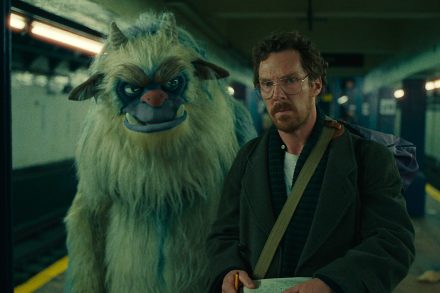
With Eric and Baby Reindeer, is Netflix embracing the dark side?

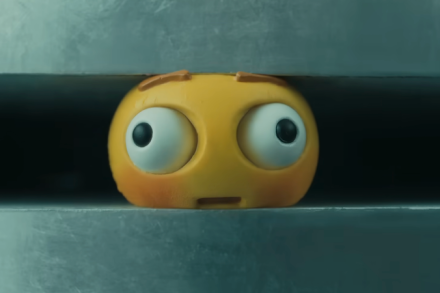
The much-anticipated new Benedict Cumberbatch series on Netflix, Eric, initially sounds as if it could have been made at any point in the past four decades. Bankable leading man whose character is battling substance abuse issues and mental instability; check. Diverse supporting cast including at least one character who is not only struggling against racial prejudice but homophobia too, check. Gritty-yet-faintly exotic setting, in this case the pre-Giuliani New York of the Eighties, check. But there is another element in Abi Morgan’s psychological thriller that throws a spanner in the works, in the form of the eponymous Eric.

netflix eric

Why Ted Sarandos — and his son — should be disciplined

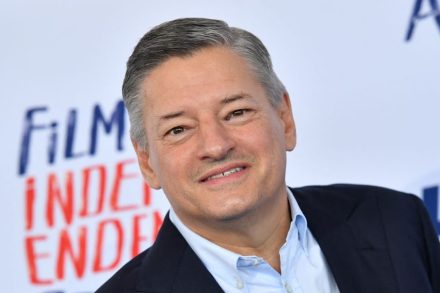
It must be nice to be Netflix CEO Ted Sarandos. Not only is he paid a truly eye-watering amount of money to be in his job (roughly $50 million a year, according to reports), but because of his company’s pre-eminent position in the streaming market, he is interviewed, largely uncritically, by major news titles, even when he says things that are obviously either wrong or deeply stupid. Thus it has proved in a recent conversation with the New York Times, in which he announced, of last year’s hits Barbie and Oppenheimer, “Both of those movies would be great for Netflix. They definitely would have enjoyed just as big an audience on Netflix.” To add insult to injury, he declared that the size of a screen was all but irrelevant, saying, “My son’s an editor.

ted sarandos netflix

The sad decline of Oxford

From our UK edition

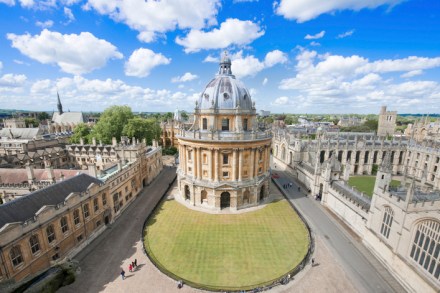
The cliché about Oxford – and as a resident of the city, I have skin in the game here – is that it’s the most beautiful city in Britain. Think of all the writers and poets who have rhapsodised about its glories, from Evelyn Waugh immortalising (some would say fossilising) it in Brideshead Revisited to Matthew Arnold’s famous description of it in his poem 'Thyrsis’ as 'that sweet city with her dreaming spires/She needs not June for beauty's heightening'. It has more Grade I listed buildings in its centre than anywhere of a similar size and has innumerable architectural wonders. The incomparable Radcliffe Camera stands at its heart – often described as the most striking public building in England. So why is so much of Oxford being not merely neglected, but positively ruined?

Cannes 2024: the highs and lows (so far)

Although this year’s Cannes Film Festival hasn’t concluded yet (it runs until this Saturday), there is a general sense that the true talking-point pictures have been frontloaded into the opening week, both in competition and out of it. Without doubt, the one that has attracted the most attention is Francis Ford Coppola’s sci-fi epic Megalopolis, which premiered last Thursday to a mixture of outright scorn and bemused but respectful appreciation, all of which suggests that, although it still lacks a US distributor, it will keep making waves upon its release later this year — although the chances of Coppola regaining anything like his $120 million investment are slim, to say the least.

demi moore cannes

The individualistic talents of the Pet Shop Boys

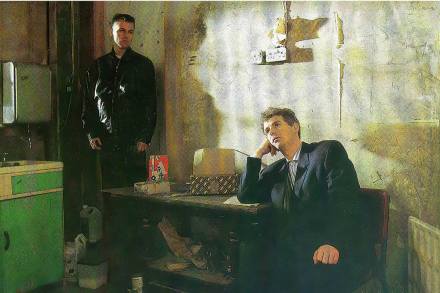
In April, the Pet Shop Boys, pop music’s most influential and beloved synth-pop duo, returned with a new album, Nonetheless. The British pair could hardly be described as wildly prolific, having released a comparatively meager fifteen albums since their debut Please in 1986. (Their one-word titles usually contain some oblique joke or other; the act’s singer Neil Tennant once remarked that the idea for the first LP was that it amused him that a record buyer would ask for the “Pet Shop Boys, please.”) Yet one reason for this relatively sparse output is that they take a painstaking amount of time to ensure not only that each of their albums is polished to perfection, but that it is existentially different from their previous release.

Pet Shop Boys

King Charles’s first official portrait is a triumph

From our UK edition

The first official portrait of King Charles III since his coronation has been unveiled. Both the artist Jonathan Yeo and the King should be delighted: the vast oil on canvas, which was seen for the first time at Buckingham Palace today, captures a remarkable likeness of the King. One particular work of his might give his admirers pause The painting is as respectful a piece of representative royal portraiture as might be imagined. Unlike some of the more experimental (if artistically interesting) pictures of his late mother, such as Lucian Freud’s 2001 effort – where Elizabeth II was compared to a prop forward or a corgi – this is a conventional, sympathetic presentation of the King.

Harry and Meghan’s Archewell Foundation labelled ‘delinquent’

From our UK edition

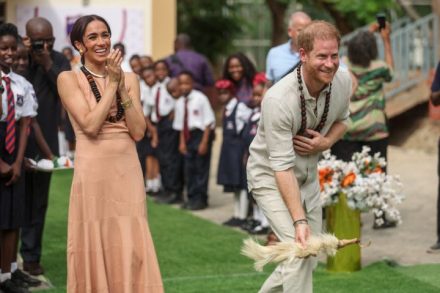
If there is one thing that Harry and Meghan excel at, it is snatching defeat from the jaws of victory. Their much-hyped trip to Nigeria – a royal visit in all but name – had, from their perspective, gone exceptionally well. Not only did Harry manage to deliver a well-received speech about mental health to a group of students, but the pair were besieged by admirers and well-wishers everywhere they went, all desperate for a selfie, a handshake or a hug.

Francis Ford Coppola and Megalopolis: genius or flop?

This Friday sees the Cannes premiere of a film that, by rights, really ought not to exist. As the likes of its stars Adam Driver, Giancarlo Esposito, Dustin Hoffman and Shia LaBeouf all assemble on the Croisette, it will be its now eighty-five-year-old director, screenwriter and producer, Francis Ford Coppola, who will be the most closely watched figure of the night, if not the entire festival. Megalopolis, the movie that they are all gathering to promote, has been Coppola’s great passion project all through his career. He first came up with the idea in 1977, began to develop it in 1983 and, finally, sold part of his wine empire a few years ago to raise the film’s $120 million budget.

francis ford coppola megalopolis

Harry and Meghan’s Nigeria tour is nothing but PR fodder

From our UK edition

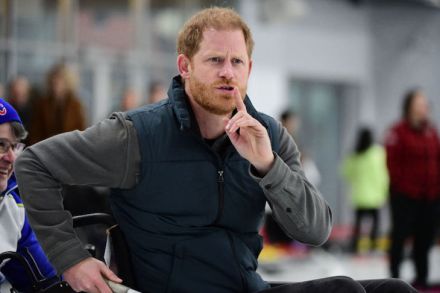
Prince Harry’s visit to London this week, to celebrate the tenth anniversary of the Invictus games, was largely overshadowed by the news that his father was ‘too busy’ to see his errant younger son. This may have been despite or perhaps because of the King’s more active public profile thanks to his positive response to his cancer treatment. If the Duke of Sussex was in any way hurt or offended by the snub, he has given no public sign of it. Instead, he has headed down to Nigeria on a 72-hour whistlestop tour to promote his and Meghan’s work on mental health charities, as well as meeting members of the country’s armed forces. Husband and wife were reunited at the appropriately named VIP Windsor Suite at Heathrow, and headed down to Abuja.

Apple’s tone deaf advert shows the tech firm is losing its way

From our UK edition

Apple has a reputation for advertising that not only sells their products effectively, but sets a standard few of their competitors could ever hope to attain. Their famous advert for the Mac, which launched forty years ago, was directed by Ridley Scott, fresh from Blade Runner, and channelled Orwell’s Nineteen Eighty-Four to thrilling and iconic effect. But this genius for marketing makes their latest, much-castigated promotional film for the new iPad, ‘Create’, both bewildering and disturbing. It is utterly inexplicable that their highly-paid teams of marketing experts and PRs would ever have believed it to be a good idea. https://www.youtube.com/watch?

Did the King snub Prince Harry?

From our UK edition

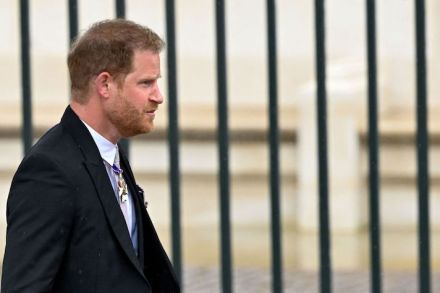
Prince Harry’s occasional visits to Britain are regarded by many with the sense of unease that most people reserve for unexpected tax bills, visits from distant relatives and Jehovah’s Witnesses turning up on the doorstep on Sunday mornings. It would seem that his father feels rather similar about the prospect of seeing his errant son, and it has been briefed that, although Harry is in London to celebrate the tenth anniversary of the Invictus Games, there will be no meeting between Charles and the Duke of Sussex on this occasion, despite or perhaps because of the recent good news that the King’s cancer treatment is proceeding positively.

How progressive will the new Doctor Who be?

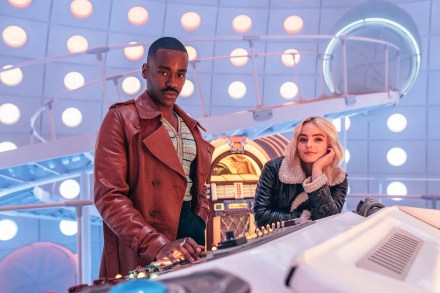
The fourteenth series of Doctor Who returns to international screens imminently — and this time there’s a twist. Thanks to the heavy financial investment of Disney+, who have become co-financiers with the BBC, the show now has a considerably higher budget than it has done before, of around $130 million per season. Little wonder that the BBC’s director-general Tim Davie commented, only slightly tongue in cheek, that “we’ve got to thank – a lot – our partners, Disney+, who came on board so that the Doctor can travel even more widely across the planet in a slightly flashier Tardis.

doctor who

Remembering the postmodern Paul Auster

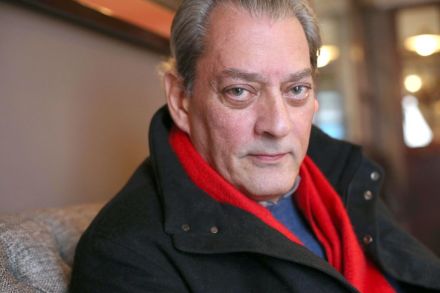
In Salman Rushdie’s new memoir Knife, there is a powerful and moving moment — amid the many other powerful and moving moments — in which Rushdie visits his ailing friend Paul Auster at the latter’s house in Brooklyn and describes his sorrow at seeing him so reduced by illness. It may have been that the extent of the cancer that killed Auster had not been made public knowledge, although a statement was released about his condition, until Rushdie’s description of his encounter — and some might accuse him of indiscretion or indelicacy. Yet the news of Auster’s death, anticipated though it undoubtedly was, has meant that such questions recede almost immediately — and instead a consideration of his legacy as a writer, rather than an invalid, can begin.

paul auster

The reassuring return of King Charles

From our UK edition

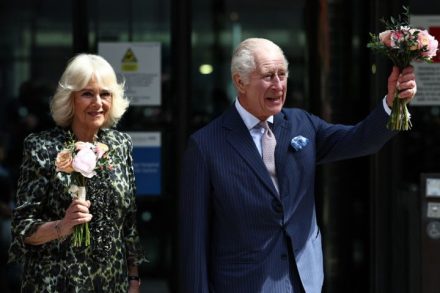
Illness, like death, is society's greatest leveller, and so the news that the King had been affected by cancer led to an outpouring of sympathy and compassion that few other circumstances might prompt. Since he came forward earlier this year to share his diagnosis, Charles – sometimes seen as a remote and inaccessible figure, especially when Prince of Wales – has acquired a universality and straightforwardness that may have been present before, but was largely concealed beneath protocol and a quick temper. Now, he has acquired the common touch. It was this accessibility that was on full display today as he visited the Macmillan Cancer Centre at University College Hospital.

The King’s improving health is a relief for the country

From our UK edition

Today it was announced that, after a very positive response to his treatment for cancer, King Charles will resume public-facing duties next week. The statement went on to say that both he and the Queen will be making a joint visit to a cancer treatment centre next Tuesday, in a conscious nod to the help that he has been receiving over the most recent months in his illness. He will also be hosting the Emperor and Empress of Japan for a state visit in June, all being well. It concluded that ‘as the first anniversary of the coronation approaches, Their Majesties remain deeply grateful for the many kindnesses and good wishes they have received from around the world throughout the joys and challenges of the past year.

Is it time that Zack Snyder retired?

It was once the case that, if a planned film in a two- or three-movie series came out and wasn’t very good, the remaining films would be scrapped. The world has changed with the advent of streaming, and even though Zack Snyder’s Rebel Moon — Part One: A Child of Fire was greeted with critical contempt, its sequel Part Two: The Scargiver has slid onto Netflix, only to be met with, you guessed it, yet more dismay and horror.

zack snyder

When will Prince Harry admit defeat in his ‘frankly hopeless’ legal case?

From our UK edition

Many of us believe that Prince Harry and his recent actions could fairly be described as 'frankly hopeless'. Now, a High Court judge can be added to their number. Mr Justice Lane has dismissed Harry’s appeal against an earlier judgement that he was not entitled to automatic police protection when he moved abroad. The latest court documents, released yesterday, do not make happy reading for the Duke of Sussex. The legacy of Spare is never far away The judge has ordered Harry to pay 90 per cent of the government’s costs in the court case (well over £500,000, apparently) and has delivered a stinging rebuke to the Duke and his legal team.

Nolan

Christopher Nolan, creator of worlds

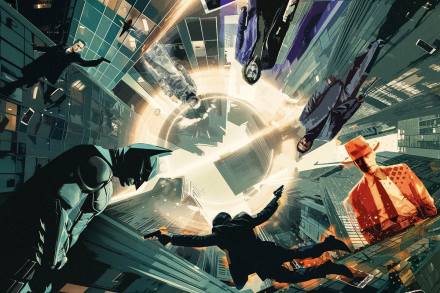
At this year’s Oscars ceremony, there was a moment that only those blind to symbolism could have failed to pick up. The presenter of the Best Director award was none other than Steven Spielberg, himself the most commercially successful film director who has ever lived. The recipient was Christopher Nolan, whose films so far this millennium have grossed over $6 billion worldwide, making him the seventh-highest earning filmmaker of all time. Those above him — no disrespect to the likes of the Russo brothers, David Yates and even Michael Bay — are journeymen directors whose franchise work makes a lot of money without bothering the Academy; the auteur-ish likes of Peter Jackson, James Cameron and Spielberg have all now been rewarded with their own Best Director Oscars.

Michael Douglas dazzles in Franklin

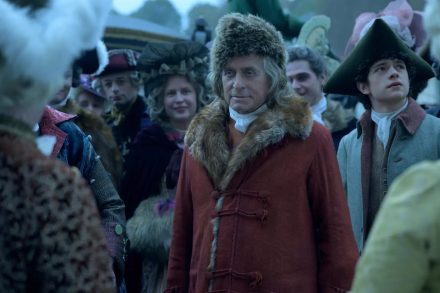
In one of his always entertaining books about Hollywood, screenwriter William Goldman offered a candid insight into why one picture he wrote, 1996’s The Ghost and The Darkness, didn’t work. He blamed its failure on the casting of Michael Douglas in a prominent role as a nineteenth-century big game hunter, describing Douglas the epitome of the “flawed, contemporary American male.” Certainly, compared to his peers, Douglas has taken on remarkably few costume drama roles. Instead, he became best known for icy performances in psychosexual thrillers like Fatal Attraction and Basic Instinct, in which he played alpha males slowly dismantled by powerful and intellectually superior women, to say nothing of his iconic and deservedly Oscar-winning performance as Gordon “Greed is good!

franklin