Alexander Larman

Alexander Larman is an author and the US books editor of The Spectator.

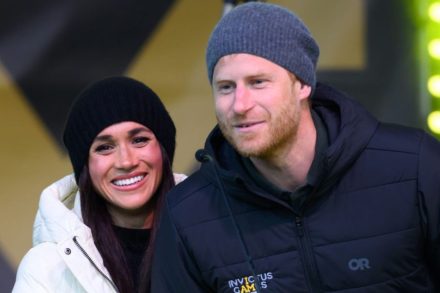
King Charles and Harry won’t be reconciling any time soon

From our UK edition

The news that appeared in the Sunday newspapers was intriguing, to say the least. A meeting has taken place at (appropriately enough) the Royal Over-Seas League club between Meredith Maines, the latest in Prince Harry’s apparently endless line of California-based press officers, Liam Maguire, who has that similarly thankless task in this country, and Tobyn Andrae, who acts as the King’s communications secretary. Few will be convinced that this is the beginning of a renewed bond between father and son A well-briefed source told the Mail on Sunday, not sparing the clichés, that 'there’s a long road ahead, but a channel of communication is now open for the first time in years'.

The resistible rise of Pedro Pascal

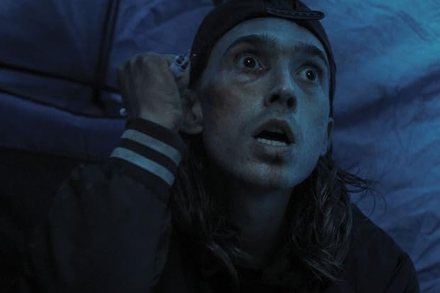
A British film fan recently took to social media to share an unusual experience that had happened to her while visiting the Picturehouse cinema in central London. She was standing in the foyer, watching the trailer for the forthcoming superhero picture The Fantastic Four: First Steps, when she became aware of a middle-aged man standing next to her, enjoying the same preview. He then said, in apparent surprise, “Look! I’m in that!” She turned to him, expecting to see some character actor with a one-line role, and it was none other than Pedro Pascal: film and television star, self-appointed nemesis to J.K. Rowling and “the internet’s daddy.

King Charles’s bromance with Macron is true soft power

From our UK edition

As the once-promising bromance between King Charles and Keir Starmer appears to be fading, the monarch has found another leader on the world stage with whom he has a greater amount in common. As the state visit of the French President Emmanuel Macron gets underway with much earnest discussion about what this particular cross-Channel 'special relationship' involves (and a great deal of relief that Macron, unlike Donald Trump, can be trusted to behave himself and conduct himself with dignity and restraint on the world stage), the most important personal relationship is not that between Starmer and Macron, but between the Frenchman and the British king.

A memoir doesn’t always have to be true

From our UK edition

The news that Raynor Winn’s bestselling memoir The Salt Path may not have been the whole truth has been met with a mixture of outrage, hilarity and ‘I told you so’. Many readers have smugly informed the world that Winn’s journey along the Salt Path with her husband Moth (Moth!) was so obviously a work of fiction that they saw through it months before anyone else. The fact that they have waited until now to make their dissent public suggests they, like so many others, may have been wise well after the fact. Personally, I watched the news unfold with more than usual interest, because it took me back to my own dabblings with memoir.

Is this the end of the Jeffrey Epstein case?

The death of the financier and pedophile Jeffrey Epstein at Manhattan’s notorious Metropolitan Correction Center has been ruled to be a suicide, and one that took place entirely by Epstein’s own hand, without any external interference. At least, that’s the story according to the Department of Justice and the FBI, who have also announced for good measure that the so-called Epstein Files, which supposedly contained the details of his high-profile clients, do not exist. After the disappointment of the decidedly low-profile release of the JFK-assassination files earlier this year, this is a second blow for conspiracy theorists who have been assured by the government that there is definitely, 100 percent nothing to see here. Will this be enough for them?

Jeffrey Epstein in Mar-a-Lago (Getty)

Elio and the decline of Pixar

The news that Pixar’s latest picture, the alien-contact family comedy Elio, has been an egregious flop at the American box office, grossing a mere $20.8 million on its opening weekend, has been greeted with both surprise and disappointment. Surprise, because Pixar has long been seen as the gold standard of contemporary animation, and disappointment, because its films are not supposed to flop. No fewer than 13 of their pictures are in the 50 highest-grossing animated films of all time roster, and nine have won Best Animated Feature at the Oscars, most recently 2020’s Soul. And if there had been rumors that the company was in trouble, these were apparently put to bed by the enormous, epochal success of Inside Out 2 last summer, which grossed $1.7 billion at the box office.

elio disney
Diddy

Diddy is finished

In the end, the verdict in the most talked-about trial of the year, perhaps the decade, came in far quicker than most commentators had expected. Judge Arun Subramanian had wisely suggested that he wanted a unanimous verdict on the charges that Diddy had been arraigned on and that he wanted this verdict to come in before the 4th of July holiday. Many had assumed, given the sheer weight of evidence against Diddy (real name, as we were informed many times, Sean Combs), that it would take at least a week to sort through the often sordid and distressing material that the jury were presented with over the course of the seven-week trial. In the end, however, it took just over a day of deliberations.

The wildly misguided My Oxford Year

When I studied English literature at Oxford about two decades ago, the issue of tutor-student relations was a vexed one. On the one hand – so the reasoning went – students were adults, over the age of consent and entitled to make their own decision as to whether they wanted to indulge in sexual congress with the men and women responsible for inculcating a knowledge and, hopefully, love of their subject into them. On the other, there were clear – although sometimes blurred – conflicts of interest relating to these invariably older figures also on occasion being responsible for marking their favored students’ examinations.

my oxford year

The Royal Train’s retirement is a loss to Britain

From our UK edition

King Charles is a man acutely aware that the monarchy has to be seen to provide value for money in these straitened times. Therefore, to coincide with the announcement that the royal household is to be given over £130 million of public money for the next two years to complete works on Buckingham Palace, it has been revealed that the cash-guzzling royal train is to be scrapped. It is true that, from any economic perspective, the regal locomotive does not represent a worthwhile investment; it only made two trips last year, each lasting two days, and the total cost was nearly £78,000.

Take me back to Glastonbury

From our UK edition

Judging by the coverage of this year’s Glastonbury festival, and the reaction in certain quarters, you would be forgiven for thinking that it was little less than a hard-left, Jew-hating Nuremberg rally. It is an impressive achievement to unite the government, led by the Prime Minister, and the opposition in blanket condemnation of two of the acts performing. But the groanworthily named ‘Bob Vylan’ – and the more up-and-at-‘em Kneecap – managed to raise their profiles far beyond what their mediocre music warrants by making various anti-Israel, pro-Palestine comments during their sets.

How the drive-thru took over Britain

From our UK edition

Britain has received many things from America that we have little reason to be grateful for: Black Lives Matter, Instagram, the word ‘gotten’ – and the brief and unlovely period that Meghan Markle was a resident of this country. Yet one of the most enduring American imports is something that we no longer much notice: the drive-through – or ‘drive-thru’ – restaurant. The all-American tradition of stuffing yourself with burgers and fries while sitting in the comfort of your car is here to stay. Thanks, America There are now over 2,600 drive-thrus in Britain. A good number, of course, are McDonald’s – 1080, to be exact – but such is the growing allure of the drive-thru that others are getting in on the act – not least my beloved Greggs, which has 50 such outlets.

James Bond should be more like Paddington Bear

From our UK edition

Denis Villeneuve, the Oscar-nominated director of such blockbuster behemoths as Dune and Blade Runner 2049, has been hired to reboot the James Bond franchise. Villeneuve is a hugely capable director, somewhat in the Christopher Nolan school of blending epic set-pieces with an intellectual and emotional core. As the first auteur to be hired to direct a Bond film – a gig he has made clear he’d like for the last decade – he promises to bring a unique sensibility to it that will, hopefully, ensure that critics and audiences alike go doolally when it’s released sometime around 2027. I will not be one of them. Much as I admire Villeneuve, I don’t think I’ve laughed once during any of his films, which tend to take themselves very seriously indeed.

F1 is forgettable, but a lot of fun

In a largely patchy summer for blockbusters – the excellent 28 Years Later aside – Joseph Kosinki’s F1 stands out for two distinct reasons. The film has arrived at an interesting time for the sport, which is finding increased popularity in the United States among demographic groups that previously may have ignored it – such as younger women – due to the success of the Netflix show Drive to Survive, accordingly name-checked in the movie. That show gives a behind-the-scenes look at Formula One racing and is now onto its seventh series.

f1

Starmer may regret bringing forward Trump’s state visit

From our UK edition

One of the most notable features of Keir Starmer’s otherwise undistinguished premiership is the bromance that he seems to have formed with King Charles. Both men seem to have a shared sense of moral values and a reticence of character that appears to have served them well in what, up until now, has been a harmonious working relationship. However, the first serious cracks in their partnership might be about to appear, and they come courtesy of none other than Donald Trump. It was announced earlier this year that the President would be hosted in Britain on a state visit, as he had been in 2019.

Elizabeth II deserves better than this awful tribute

From our UK edition

The winner of the contest to design a memorial to the late Elizabeth II has been announced, and it’s not very good. When the shortlist of five designs was unveiled last month, the most striking feature of the various hopefuls was how little they had to say about the much-loved Queen, or the country she ruled over. Instead, they were empty displays of kitsch, with the only halfway palatable one being Tom Stuart-Smith’s design of an oak tree from Windsor Great Park. Had that been picked, I would have shrugged and sighed, but at least it was inoffensive enough.

Why television can’t depict the posh

From our UK edition

In her 1954 essay ‘The English Aristocracy’, the author Nancy Mitford popularised the descriptions ‘U’, i.e. upper-class or aristocratic, and ‘non-U’, to denote household terms. Although she did not coin the phrase (that credit belongs to the otherwise forgotten linguist Alan S.C. Ross), she brought it to wider public attention. When her friends John Betjeman and Evelyn Waugh added their own contributions, the result was the 1956 book Noblesse Oblige: An Enquiry Into the Identifiable Characteristics of the English Aristocracy. Language termed ‘U’ included ‘loo’ rather than ‘toilet’, ‘vegetables’ rather than ‘greens’, and saying ‘what?’ rather than the apparently more polite ‘pardon?

Whatever will Meghan think of selling next?

From our UK edition

Well, you can’t say that we weren’t warned. Repeatedly. At the beginning of this week, the Duchess of Sussex wrote in a subscriber newsletter, in that inimitably faux-chummy way that she has perfected: First off, a sincere thank you for making the debut of As Ever absolutely extraordinary. We had a feeling there would be excitement, but to see everything sell out in less than an hour was an amazing surprise. We are pleased to share that on 20 June, we're going live with the products you love – plus, some new delicious surprises.  ‘Absolutely extraordinary’ is one way of describing the profoundly underwhelming launch of a few pieces of overpriced tat.

28 Years Later is the movie of the summer

Was anyone out there desperate for a third instalment of the 28 Days Later series? It has been nearly two decades since 28 Weeks Later. Many who were once thrilled to the adventures of hapless humans attempting to dodge the ravages of surprisingly fast-moving zombies have moved onto other genre fare, not least The Last of Us. However, the astonishingly visceral trailers for 28 Years Later, soundtracked by a vintage audio recording of Rudyard Kipling’s poem ‘Boots’, were some of the most compelling and attention-grabbing trailers ever made. So does the film live up to its advertisements? Thankfully, it does.

28 years later

Should we worry about the Princess of Wales?

From our UK edition

The announcement, when it came, was a strangely botched one. The official Ascot carriage list had stated at 12 p.m. that the Prince and Princess of Wales would be riding in the second carriage in the royal procession, accompanied by their friends Mr and Mrs Justin Rose. It was already known that Prince William would be presenting the prizes at today’s race meeting, so there was inevitable excitement at his presence and that of his wife. Catherine always brings a touch of glamour to whatever occasion she graces, helped by, of course, the finest couture that money could buy.

The lost art of late dining

From our UK edition

One of the most memorable dinners I ever had was about 20 years ago, at a Michelin-starred restaurant in Fitzrovia called Pied à Terre. It’s still going, and indeed remains a stalwart of the city’s fine dining scene, but what I especially remember, rather than the food or wine, was how deliciously louche an experience it was. I couldn’t get a booking before 9 p.m., and by the hour that I turned up, it was packed to the rafters with well-heeled diners. My guest and I were kept happy with complimentary champagne until we finally sat down for dinner sometime after 10 p.m. In my (admittedly hazy) recollection, we didn’t finally leave the restaurant until well after 1 a.m. As we were staggering out, I asked our waitress whether she minded being kept out so late.