Alex Peake-Tomkinson

Divine revelations: I, Julian, by Claire Gilbert, reviewed

From our UK edition

Claire Gilbert considers Julian of Norwich to be the mother of English literature, and believes she should stand alongside Chaucer. What seems indisputable is that Julian was the author of the first work written in English by a woman. This rather wonderful fictional autobiography was published to coincide with the 650th anniversary of Julian first experiencing, in May 1373, the series of 16 visions she wrote about in Revelations of Divine Love. It comes garlanded with praise from, among others, Jeremy Irons and Rowan Williams, the former Archbishop of Canterbury.

The view from on high: The Sleep Watcher, by Rowan Hisayo Buchanan, reviewed

From our UK edition

The Sleep Watcher, the third thoughtful novel by the gifted Rowan Hisayo Buchanan, features a narrator who floats free from her body at night and circles around invisibly, observing her family and friends. This departure into the supernatural from the author’s previous work does not leaven the sadness of her writing, and the book is even more melancholic than her Starling Days (2019), which opened with the protagonist contemplating suicide.   Sixteen-year-old Katherine, or Kit as she is known, does not always like what she sees as she wanders about unobserved – though it does allow for some moments of comedy.

Ghosts of the past: Old God’s Time, by Sebastian Barry, reviewed

From our UK edition

Nothing is quite what it seems in Sebastian Barry’s latest novel, and that isn’t meant entirely as a compliment. While Old God’s Time is a powerful story, I will surely not be the only reader who’s occasionally baffled by its cast of ghosts presented initially as living people. After 200 pages, I lost count of the number of times one character explains to another that the person they think they have just seen is actually dead. The protagonist is the recently retired and somewhat haunted policeman Tom Kettle, who feels ‘his pension was his gun, his weapon against work’. He now lives in a lean-to annex of a Victorian castle in Dalkey, overlooking the Irish Sea, where he catches only glimpses of his landlord and neighbours.

The house in Ghent haunted by Hitler

From our UK edition

In 2000, the author Stefan Hertmans was disturbed to discover that the house in Ghent he had lived in for more than 20 years and restored from dilapidation had once been home to a Flemish collaborator with the SS, Willem Verhulst. On the pink and brown marble mantelpiece which Hertmans had become so fond of Verhulst had kept a bust of Hitler. The fact that Hertmans would use this as a springboard to write a work of auto-fiction seems inevitable, given that his International Man Booker longlisted novel War and Turpentine (2016) and his later novel The Convert (2019), have their roots respectively in notebooks belonging to his grandfather and a historical essay about the village in Provence that Hertmans now lives in.

Too close to home: Nonfiction, by Julie Myerson, reviewed

From our UK edition

Julie Myerson has, somewhat confusingly, written a novel called Nonfiction. The confusion of course is the point, because this is her squarest attempt so far at auto-biographical fiction. The French author Serge Doubrovsky is widely credited with writing the first ‘autofiction’ when he published Fils in 1977. Autobiographical novels have proliferated ever since, notably by Karl Ove Knausgaard, Rachel Cusk and Edward St Aubyn. Hari Kunzru, when asked to discuss similarities between himself and his protagonist in Red Pill (2020), said: ‘It was just the simplest solution to a set of problems to give him the furniture of my biography.’ Myerson’s narrator is a novelist whose father dies by suicide and who has a child with a drugs problem.

The parent snatchers: The School for Good Mothers, by Jessamine Chan, reviewed

From our UK edition

Frida Liu, the 39-year-old mother of a toddler named Harriet, has a very bad day which will haunt her for the length of this novel. She is divorced from Harriet’s father, a middle-aged man called Gust who has left her for a 28-year-old Pilates instructor called Susanna. Harriet will only fall asleep, Frida explains, ‘if I’m holding her hand’. As a consequence, Frida herself has been averaging two hours sleep a night when she finally cracks and decides to leave her daughter unattended so that she can collect some papers from her work place. After her neighbours hear the child crying they call the police and Harriet goes to live with Gust and Susanna.

Christina Patterson overcomes family misfortunes

From our UK edition

The journalist and broadcaster Christina Patterson’s memoir begins promisingly. She has a talent for vivid visual description, not least: ‘We are a pink and navy family. Two pink girls, a navy boy and a navy wife.’ Her early family holidays in Sweden, where her mother is from, are full of lingon-berries, hammocks and mini-golf. She recounts the story of her parents’ courtship as students and says of their relationship: ‘Love at first sight. Love for nearly 50 years. Love till death do us part’ — ominously pointing out how easy they have made love and marriage look. Most arresting, however, in this early part of the book, is her depiction of her elder sister Caroline’s nervous breakdown as a teenager.

Funeral gatecrasher: The Black Dress, by Deborah Moggach, reviewed

From our UK edition

Here is a rare dud from the usually reliable Deborah Moggach. Her protagonist, Pru, finds herself alone at 69 after Greg, her husband of decades, leaves her out of the blue. There is a further loss to come for Pru, and Moggach is good on her ‘howling loneliness’; but what she decides to do about it doesn’t quite ring true. Urged on by her sexy, bolshy friend Azra (who was Linda from Sunderland before a sudden reinvention) to meet someone new, Pru begins searching out the funeral notices of strangers, so that she can gatecrash the ceremonies and hit on the widowed husbands. Azra has told her that widowers are less likely than divorcees to be bitter, and that young women don’t understand bereaved men.

O father, where art thou? Fox Fires, by Wyl Menmuir, reviewed

From our UK edition

Wyl Menmuir’s first novel, The Many, was a surprise inclusion on the 2016 Booker Prize longlist. It drew praise for its discomfiting prose, but the fact that it had been written in a VW camper van on the north Cornish coast — where it was set — also drew attention. The village in The Many appeared to be forgotten by the outside world, and the setting for Fox Fires is similarly isolated. Nineteen-year-old Wren Lithgow arrives in a mysterious European city state called O with her concert pianist mother. The peril they are in isn’t laboured, but the reader realises it by degrees — as Wren does.

Women of the streets: Hot Stew, by Fiona Mozley, reviewed

From our UK edition

For a novel set partly in a Soho brothel, Hot Stew is an oddly bloodless affair. Tawdry characters drift in and out of each other’s lives but rarely seem to capture the author’s full imagination. Fiona Mozley’s first novel, Elmet, concerned a self-sufficient family living in Yorkshire and occupying ‘a strange, sylvan otherworld’, and was shortlisted for the Booker Prize in 2017. This second book is a decided change of tack. The prose sometimes has an appealing vagueness: After the war, the concrete came, and parallel lines, and precise angles that connected earth to sky. Houses were rebuilt, shops were rebuilt, and new paving stones were laid. The dead were buried. The past was buried. There were new kinds of men and new kinds of women.

A toxic atmosphere: Slough House, by Mick Herron, reviewed

From our UK edition

Mick Herron has been called ‘the John le Carré of his generation’ by the crime writer Val McDermid, and in the 11 years since the first of his ‘Slough House’ novels appeared they have become a best-selling phenomenon. Herron echoes le Carré’s horror at Brexit, which in this latest instalment is only referred to as ‘You-Know-What’. Slough House is, in fact, nowhere near the Berkshire town but an office building close to the Barbican, and no less drab for it. This is where a bunch of ‘slow horses’, spies who have blotted their copybooks in various ways, nominally work.

Dreading demobilisation: The Autumn of the Ace, by Louis de Bernières, reviewed

From our UK edition

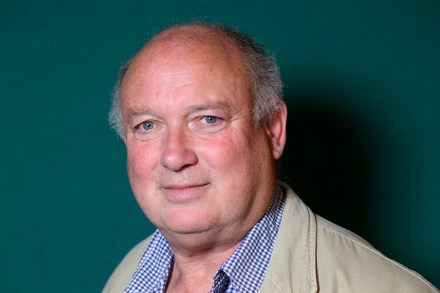
The Autumn of the Ace begins in 1945, as the second world war ends, but both Louis de Bernières and his protagonist Daniel Pitt appear reluctant to leave warfare behind. Pitt is a flying ace, but so nervous about returning to civilian life that he argues against handing back his service weapon. Eventually he capitulates. During the war, he lost two toes after being tortured by the Gestapo but he nonetheless appears to prefer physical peril to the prosaic dysfunctionality of his family life. His mother and one of his daughters are dead, his marriage has disintegrated and he has fathered two children by his wife’s bohemian sister. His son Bertie (by his wife) refuses to speak to him, and this conflict forms one of the central dramas of the book.

Gay abandon: Islands of Mercy, by Rose Tremain, reviewed

From our UK edition

Rose Tremain has followed her masterly The Gustav Sonata with an altogether different novel. In 1865, Clorinda Morrissey, a 38-year-old woman from Dublin, arrives in Bath and sells a ruby necklace in order to set up Mrs Morrissey’s High Class Tea Rooms. Mrs Morrissey believes that ‘the future was going to be perfumed with raspberry jam and freshly baked scones and fragrant lemon cake’. The tea rooms also, however, once open, become the scene of Jane Adeane — a highly skilled nurse — rejecting a proposal from Dr Valentine Ross, her colleague at her father’s surgery.

His latest disturbing short stories show Richard Ford very much on song

From our UK edition

Sorry For Your Trouble (Bloomsbury, £16.99), Richard Ford’s 13th book of fiction, shows a writer still very much on song. The mainly male middle-aged protagonists of these nine stories seem often to be assessing their regrets but coming to terms with them. In ‘Second Language’, a man is enchanted by his glamorous second wife but able to accept when, after two years, she tells him (for no clear reason) that the marriage is over. Alongside multiple divorces, there are plenty of sudden deaths here — not least that of a wife who simply lays her head on her hands and stops breathing. A doctor later diagnoses cancer, but the conclusion is: ‘Dying was likely the only real symptom she’d experienced.

Violence and infidelity on sun-drenched Hydra: A Theatre for Dreamers, by Polly Samson, reviewed

From our UK edition

The beautiful Greek island of Hydra became home to a bohemian community of expats in the 1960s, including the Canadian singer-songwriter Leonard Cohen and his Norwegian lover and muse Marianne Ihlen. The legacy of their relationship is the songs ‘So Long Marianne’, ‘Hey, That’s No Way to Say Goodbye’ and ‘Bird on the Wire’. Their story is so intoxicating that it seems surprising it has not featured in a novel before, but perhaps others have been discouraged by the prospect of portraying someone as dauntingly well known as Cohen. Polly Samson rises beautifully to the challenge in her supremely accomplished A Theatre for Dreamers.

Tales from behind the veil: Moroccan women talk about lies and sex

From our UK edition

The Moroccan-born Leïla Slimani has made her name writing novels of propulsive intensity. Lullaby, the story of a nanny who kills the two children in her care, was the first to be published in English (it was also the most read book in France in 2016). Adèle, about a sex addict who takes little pleasure from increasingly violent and self-destructive sexual encounters, came next. It was while on a book tour of Morocco discussing Adèle that Slimani hit on the idea for Sex and Lies. Many young women approached her at readings, wanting to tell her about their own sexual experiences, and it is these stories — that ‘shook me, upset me, that angered and sometimes disgusted me’ — that she has collected in this slim volume.

Dieting to death: a black comedy of boarding school life

From our UK edition

It sounds in bad taste, but Scarlett Thomas has written a riotously enjoyable novel about a boarding school full of girls with eating disorders. It’s not that Thomas doesn’t take eating disorders seriously; she takes them so seriously that one of the girls dies. But there are few more vivaciously original novelists around today, and surely none of them is having as much fun while making serious points. Elsewhere, Thomas has written compellingly about her own orthorexia (or obsessive desire to control her diet); but this doesn’t mean that she is above lampooning the hysterical pronouncements of the diet-obsessed — not least that fruit, unless you pick it in the wild yourself, contains so much sugar that you may as well eat Haribo, which is nicer, after all.

Staring into the abyss

From our UK edition

Rowan Hisayo Buchanan has achieved that rare feat, in her second novel Starling Days, of writing a convincing novel about depression which manages, miraculously, not to be in itself depressing. Her success is partly due to the fact that her protagonist, Mina, is not flattened by her despair and remains alive enough to become fascinated by another woman, Phoebe, her husband’s best friend’s sister. When Phoebe asks her to say something about herself, Mina considers what she might voice: I want to run my tongue along the dent in your collarbone that your top has made visible. Nope. Sometimes I want to die and sometimes I want to buy a box of tomatoes and stand by the fridge eating them out of a paper carton and I don’t understand how I can hold both desires. Nope.

An outsider inside

From our UK edition

It’s not immediately obvious who the survivors in Tash Aw’s formidable new novel are, or who the narrator even is, or who has been killed. We know there has been a murder, however, or a culpable homicide not amounting to murder, as the narrator quotes the person being addressed as describing it. Details reveal themselves gradually: the narrator is a Chinese Malaysian man called Lee Hock Lye — known to his friends as Ah Hock — who is recounting the story to a local journalist of how he ended up in prison (for what part, in what crime exactly, we don’t know yet). His descriptions of the night of the killing are vivid: ‘I walked through the long grass — it was stringy and sharp and slashed my legs right up to my knees.

A tall story from Thanet

From our UK edition

Maggie Gee has written 14 novels including The White Family, which was shortlisted for the Orange Prize (now the Women’s Prize). Blood, her latest, is a bizarrely misfiring black comedy. The setting is Thanet, which was the only Ukip-held council in Britain until March last year, when almost half of its councillors resigned and formed a breakaway group. The choice of Thanet is not accidental, and one’s initial hope was that this might be the first great Brexit novel. Brexit is mentioned, but the narrative is dominated by 38-year-old ‘buxom bruiser’ Monica Ludd, an unconventional deputy head at a local secondary school, who we are repeatedly told is six foot.