Alex Massie

Alex Massie

The Yes movement slowly moves through the Kubler-Ross stages of grief

From our UK edition

No-one has died. No-one has been stabbed. Someone, I suppose, may have been punched. So let's retain some sense of perspective as we consider and try to make sense of the last few days in Scotland. It is only day five. People deal with grief at different speeds. So, pace Ms Kubler-Ross, it shouldn't be a surprise that many Yes voters are still in Denial. Many others have made it to Anger. Some have got as far as Bargaining. Most are certainly still in Depression. Only a few have reached Acceptance. True acceptance, I mean. There's a lot of Yes we lost but if you look at it differently we kinda won. The settled, sovereign, will of the Scottish people is merely a flesh wound.

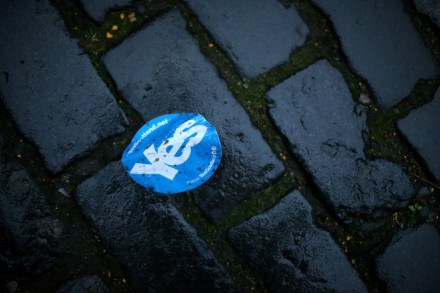
With malice toward none and with charity towards all, now the real work begins

From our UK edition

Relief, actually. Not joy. A battle won is better than a battle lost but still an exhausting, bloody, business. There is no need to bayonet the wounded. It would, in any case, be grotesque to do so. Scotland voted and made, in my view, the right choice. The prudent choice. The bigger-hearted choice. But 45 per cent of my countrymen disagree. That's something to be respected too. Moreover a good number of No voters did so reluctantly and not because they were necessarily persuaded by the case for Union but because they felt the Yes campaign had not proved its own argument beyond a reasonable doubt. That's an important qualification. A reminder that the Union is a contract and support for it remains provisional.

Yes or No, the little white rose of Scotland will bloom again

From our UK edition

And so our watch is all but over. Who knows what comes tomorrow but at least and at last the final reckoning is upon us. It is choosing time and there's no escape. Few people would wish the campaign any longer. Many voters tired of it some time ago. Their minds were made-up and would not change and they just wanted to move on to the next story. Whatever it may be. But I can't agree with the people who fret that this has been a nasty and divisive and awful experience. It hasn't. I mean, of course it's been divisive and of course passions have been running high but that's because it matters. You can't have a non-divisive referendum. This is a good thing I think and I think this is an argument we've needed to have. If not now, when?

Is Scotland confident enough to vote No?

From our UK edition

We hold this truth to be self-evident: we are not an oppressed people. We have some liberty to chart our own course. We are, after all, choosing our path this week. We do not crave self-determination because we have always had that power. And many others besides that significant liberty. We are a free people. This is obvious yet also something worth recalling in these final hours. I have my own reasons for voting No on Thursday and, in truth, they have little to do with very much that has been said by the official Better Together campaign. But this kind of choice, this kind of referendum, inevitably prods one towards endorsing one team or the other. It is Rangers or Celtic and, in the end, there's no room for Partick Thistle or Queens Park or anyone else.

Why I am voting No

From our UK edition

[audioplayer src="http://traffic.libsyn.com/spectator/TheViewFrom22_11_Sept_2014_v4.mp3" title="Fraser Nelson, Tom Holland and Leah McLaren discuss how we can still save the Union" startat=50] Listen [/audioplayer]Once upon a time, a long while ago, I lived in Dublin. It was a time when everything seemed possible and not just because I was younger then. The country was stirring too. When I arrived it was still the case that a visa to work in the United States was just about the most valuable possession any young Irishman or woman could own; within a fistful of years that was no longer the case. Ireland was changing. These were the years in which the Celtic Tiger was born. They were happy years of surprising possibility. Years later I lived in the United States and my perspective changed.

Come in Britain, your time is up

From our UK edition

How do you kill an idea? That is the Unionist quandary this weekend. For a long time now the Better Together campaign has based its hostility to Scottish independence on the risks and uncertainties that, unavoidably, come with independence. This, they say, is what tests well with their focus groups. No-one gives a stuff about all that identity crap, they say, so there's no need to talk about it. Instead, hype the unknowns - of both the known and unknown variety - and bang on and on about all that risk and all that uncertainty. Which, like, is fine. Until the point it ceases to be fine. Until the point at which it stops working. Which, like, would be right about now. YouGov's previous poll was an Oh fuck moment for Unionists.

The surprise winners from the referendum? Scotland. Politics. Big ideas are back at last

From our UK edition

[audioplayer src="http://traffic.libsyn.com/spectator/TheViewFrom22_4_Sept_2014_v4.mp3" title="Isabel Hardman, Fraser Nelson and Hamish Macdonell discuss the referendum" startat=700] Listen [/audioplayer]Let us take a trip to America in 1976. The unelected incumbent president, Gerald Ford, is being challenged for the Republican party’s nomination by Ronald Reagan — and does not take it seriously. Sure, Reagan may have served as governor of California but, still, come on, is this Grand Old Party really going to choose a two-bit B-movie actor as its standard-bearer? And isn’t he the candidate of fruitcakes and loonies? Say what you will about Gerry Ford but you know where you stand with him. But not everyone sees it that way. Reagan is winning in places he shouldn’t have a chance.

Alex Salmond is within sight of his promised land: Scottish independence is more than just a dream.

From our UK edition

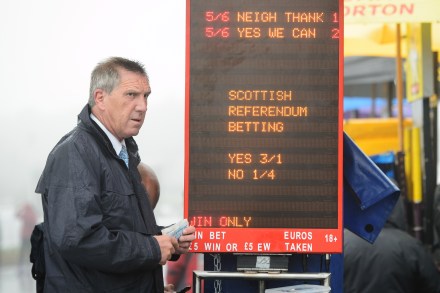
I don't want to appear too immodest but, you know, I told you so. Back in February I wrote an article for this paper warning that Scotland's independence referendum would be a damn close run thing. That was true then and it remains true now. Today's YouGov poll reports that, once undecided voters have been removed from consideration, 47 percent of Scots intend to vote for independence while 53 percent will back the Unionist cause. If the odds remain against Alex Salmond it's also the case that the price on independence is shortening. Paddy Power's over/under calculation of a Yes vote now stands at 46.5 percent. A few weeks ago it was at 42.5 percent. It's a kind of quickening.

Douglas Carswell’s defection is a disaster for David Cameron and great news for Ed Miliband

From our UK edition

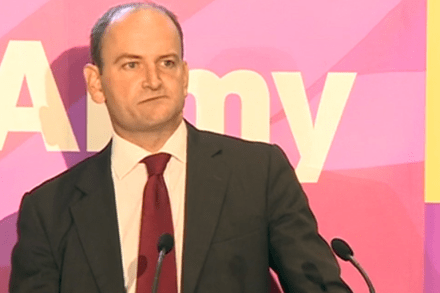
I like Douglas Carswell. He thinks for himself and has always, I think, added some welcome colour to parliament. But I don't understand his defection to UKIP at all. If nothing else it makes it more likely that Ed Miliband will be Prime Minister next May. Which in turn dramatically reduces the likelihood there will be an EU referendum in the next parliament. Which is the the matter with which Carswell is most concerned. He is leaving the Conservatives because he thinks - correctly - that David Cameron will eventually recommend that Britain remain a member of the European Union. Fine. But it is quixotic to leave a party that can actually deliver what you want and join one that can't. That is what Carswell has done.

Not Tonight, Darling

From our UK edition

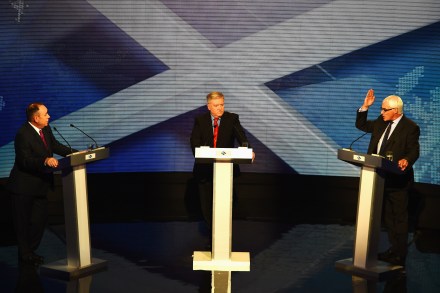
Well that was a gubbing. No doubt about it. Alex Salmond won last night's debate against Alistair Darling just as thoroughly as he'd lost their first encounter. Sure, some Unionists tried to put a cheerful spin on it - "We'll take that" one senior Labour figure told me - but don't you believe any of it. Salmond, as predicted, was much better than he had been in the first debate. Darling, as predicted, was much worse. File this encounter in the drawer marked reversion to the mean. Darling had many problems last night but among the greatest was the fact he's not a Tory. Time and time again Salmond stuck him with the "in bed with the Tories" jibe and took great pleasure in seeing Darling squeal and wriggle. It's not fair! Well, tough.

Alex Salmond vs Alistair Darling, the Rematch

From our UK edition

Like Paradise Lost, no-one - not even humble freelance hacks - ever wished the Scottish independence referendum campaign longer. We are, most of us, exhausted. Almost all passion has been spent. Which is just as well since, frankly, people are beginning to lose the run of themselves. Take the ice bucket challenge. (Readers unfamiliar with social media may be unfamiliar with this. It is a fundraising challenge - originally for Motor Neurone Disease research - in which the hapless gallant stooge is soaked by a bucket of iced water. All to prove what a good egg they are. They then nominate other folk to be soaked to prove what grand eggs they are. And so on.) Clearly this is the sort of thing that must be ruined by politicians.

Boris Johnson is not fit to be leader of the Tory party, never mind Prime Minister

From our UK edition

Awkward, especially here, I know, but there you have it. But, look, if any other high-profile politician were suggesting the burden of proof in criminal trials should be switched from the accuser to the accused we'd be properly - in both senses - appalled. So we should be appalled that Boris suggests in his Telegraph column today that anyone travelling to Iraq or Syria should be presumed a jihadist unless and until they can prove otherwise. The state will not have to make a case you convict you but you must make a case to avoid conviction. And, lo, centuries of criminal law are undone. Worse still, I think, Boris considers this 'a minor change' to the law. What, one wonders, would constitute a major change? 'It is hard' Boris laments, 'to press charges without evidence'.

The Matter of Scotland: Try, try and try again.

From our UK edition

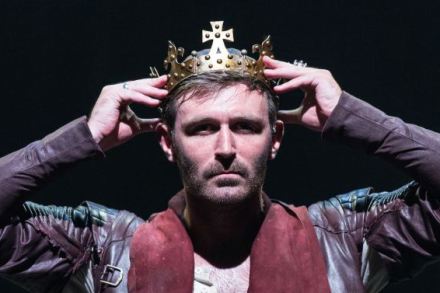
PG Wodehouse, who was only the twentieth century's greatest English-language novelist, once remarked that there existed just two ways to write: "One is mine, making a sort of musical comedy without music and ignoring real life altogether; the other is going right deep down into life and not caring a damn." I feel something similar about theatre. I can - and do - enjoy a comedy or farce and, blimey, there's always room for laughter in this - or any other - world. But, in general, I prefer my theatre punishing and draining and liable to leave you exhausted and feeling like the marrow's been sucked from your bones. I don't go to the theatre to be entertained. I want to be appalled - and, yes, occasionally cheered - by humanity in all its many forms.

English voters send a message to Scotland: we can’t go on living like this

From our UK edition

Way back in the olden days, Scottish Labour won the 1999 elections to the Scottish parliament, at least in part, on the back of the slogan Divorce is an Expensive Business. (The SNP's promise to raise income tax - the naffly named 'Penny for Scotland' - helped too. The Nationalists have never since risked making an overt case for higher taxes.) Anyway, these costs run both ways. That's made clear by new polling from England in which the extent of the oft-threatened, never-yet-delivered, English backlash to devolution is revealed. It makes depressing reading for Unionists. True, only 19% of those surveyed think the UK would be better off without the troublesome, whining, Jocks.

Britain abandons foreign policy. And abandons debates about foreign policy too.

From our UK edition

Cynics have long suspected that Britain's foreign policy is as independent as its nuclear deterrent. Cynics have a point. Perhaps, as some suggest, it's time to concede the game's a bogey and cease even pretending to pretend this remains a country of at least some modest importance and influence. Except, if we choose to, we do retain some influence, even some importance. Nevertheless, we certainly do not have an Iraq policy at present. Nor do we really have an ISIS policy. The Foreign Secretary is long on what we're not doing and very short on what we are. Of course this reflects past misadventures. Not just those pertaining to Iraq but others too, including last year's parliamentary determination to avoid having a Syria policy too. So, yes, Prudence runs foreign policy these days.

After Scotland, whither Britain? Divorce is a costly business.

From our UK edition

If, like me, you missed Andrew Neil's BBC programme exploring What the Hell Happens to the United Kingdom if Scotland Votes for Independence Next Month you might be interested to know that it remains available on the BBC iPlayer here. Prudently, dear reader, I liked it. It's a film best viewed as a companion piece to James Forsyth's Spectator cover story published last month. A call to arms to England - and Westminster in particular - to ponder the consequences and implications of Scottish independence. There is little sign that much thought has been devoted to these issues.

We may not think ourselves at war with ISIS but they are pretty sure they are at war with us.

From our UK edition

John McTernan's column in today's Telegraph about Kurdistan - and our, that is the West's, debt of honour to the Kurds - is a piece of which, I think, the late Christopher Hitchens would have been proud. The Kurds had no greater western defender than Christopher and he would, I believe, have been appalled by the pusillanimity on display in Whitehall and the White House alike in recent days. Granted, 'because Christopher Hitchens would have supported it' is an insufficient justification for military action. Then again, the witless self-abasement of the so-called Stop the War coalition is no reason to oppose it either. (By Stop the War, of course, they mean let someone vile win the war.) Nevertheless, some lessons can be absorbed too thoroughly. Why bother?

Alex Salmond remains trapped in a currency quagmire with no way out in sight

From our UK edition

It has not been a happy few days for supporters of Scottish independence. It remains too soon to say whether - unusually - last week's debate between Alistair Darling and Alex Salmond has had any long-term impact on the race but the short-term impact has certainly been bad for the nationalists. Not just because the tone - and detail! - of the press coverage has reinforced the idea that Darling won the debate (an idea bolstered by the fact it's true) but because every day that passes in this fashion is another day in which the Yes campaign is not getting its message across.  Every day that's spent talking about the things your opponents want to talk is another day not spent talking about the things you want to talk about.

Secret oil fields! Skewed polls! The Yes campaign is losing the plot

From our UK edition

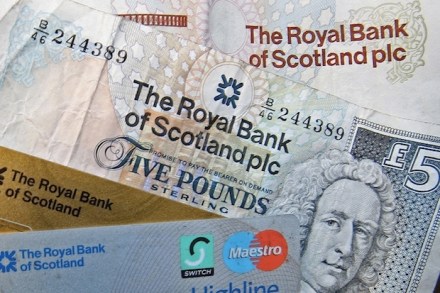
 Edinburgh When the histories of the Scottish independence debate are written, 13 February 2014 will be seen as a crucial date in the story. It was then that George Osborne suggested that no Westminster government, of any party, could countenance a currency union with an independent Scotland. Such an arrangement might be good for Scotland but it would make little sense for the rump United Kingdom. And with that observation, boom went much of the nationalists’ economic credibility. Osborne and his accomplice Alistair Darling might seem an improbable double act (though Osborne’s record in office bears a passing resemblance to Darling’s plans had Labour won) but together they might just have saved the Union.

Alex Salmond took a beating last night. And his supporters know it.

From our UK edition

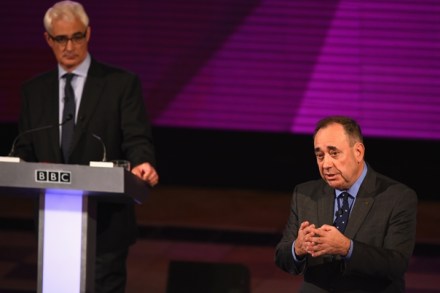
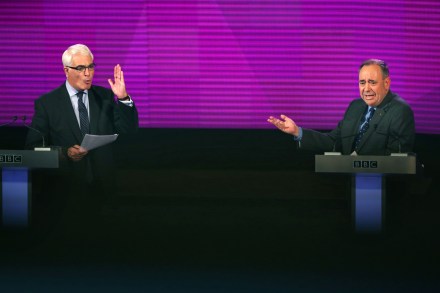
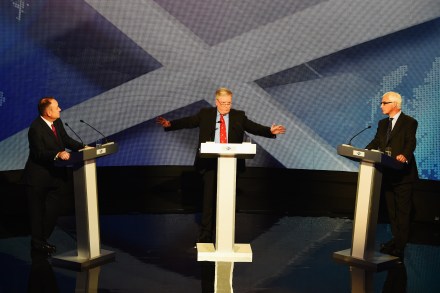
How about those twin imposters, triumph and defeat disaster? The reaction to last night's debate between Alex Salmond and Alistair Darling reveals as much as anything that happened in the debate itself. And the story it tells is that Darling won a handsome victory. His performance was far from faultless. I don't understand why he was so evidently discomfited by the idea of agreeing with David Cameron that Scotland could survive quite comfortably as an independent country. Nor was I impressed by his response to the question of what greater powers might be devolved to Scotland after a No vote. Mentioning road tax was a blunder. But at least he did not talk about aliens. At least Darling did not made a chump of himself in that fashion.