Alex Massie

Alex Massie

Neither the Tories nor Ukip deserve to win the Rochester by-election

From our UK edition

Let's be honest, just for a moment. The Rochester and Strood by-election has been a disgrace. It has been a sewer race during which the two leading protagonists have done their best to demonstrate their lack of fitness for office. In this, if nothing else, they have been successful. I wouldn't expect anything better from Mark Reckless and Ukip. We know who they are; the type of people they are. So it's no great surprise that Reckless is happy to allow people to think Ukip's revolution will lead to the repatriation of immigrants. As usual, Ukip are living down to expectations. But so, alas, are the Conservatives. Their own candidate, Kelly Tolhurst, is just as repellent as Mr Reckless.
Scotland’s Neverendum begins and there’s nothing Unionists can do to stop it

From our UK edition

Oh look, it's a Neverendum. Who could have predicted that the SNP (and the wider Yes movement) would treat defeat in the independence referendum as just a temporary set-back? Well, some people did. Here's a thing from April: 55-45 will now be reckoned a decent result [for Unionists] but it’s not an outcome that will settle the matter. Not even for a generation. Of course, during the campaign itself the Nationalists had to pretend that a No vote would put the question of independence to bed for a generation. They were kidding and anyone who chose to believe assurances that the SNP had no desire for a Neverendum is guilty of egregious gullibility. Because without independence what is the SNP for? What else binds its disparate parts together? What else settles all other arguments?

Hillary Clinton and the Audacity of Inevitability

From our UK edition

Here we go again. We last travelled down this road eight years ago. Then, as now, Hillary Clinton was laying the ground for a run to the White House. Then, as now, she presented herself as the inevitable candidate. So inevitable that it was scarcely worth anyone's time or effort to oppose her. Hillary was going to win and the Clintons have long memories. We know what happened next. It turned out there was an alternative after all. One, moreover, who had opposed the Iraq War and who enjoyed the only personal characteristics that could plausibly defeat Hillary's It's time for a woman candidacy. One who could ask America to move on from the Clinton-Bush era and begin afresh. And yet here we are again. Polls suggest it will be different this time.

Does anyone actually want to win the next election?

From our UK edition

A battle lost is worse than a battle won and there are fewer Pyrrhic victories in politics than you think. One of the staples of pre-election punditry, however, is that someone will always pipe up with the suggestion This is a Good Election to Lose. It is almost always bunk. Not least because, with the notable exception of the Liberal Democrats, major political parties are in the business of acquiring, then exercising, power. Shorn of that they lose their point. So there's that. Nevertheless if you suspect there might be a but lurking a couple of lines in the future your premonition would, in this instance, be correct. But this might actually be a rare exception to the general rule. This could be an election it really is better to lose than to win.

Alex Salmond’s School of Denial

From our UK edition

Alex Salmond is on his way out. The First Minister gives every impression of enjoying - or at least making the most of - his farewell tour. And why not? Far from weakening the SNP, defeat in September's referendum has - at least for now - strengthened the party. Its supremacy is unchallenged and while recent polls putting the Nationalists on 50 percent of the vote are unlikely - surely! - to last forever this is the kind of problem worth having. Nevertheless, the First Minister's final days in office have also reminded us that policy and, indeed, philosophy are not necessarily Salmond's strengths. Unusually, First Minister's Questions proved a useful exercise this week. Both Jackie Baillie, Labour's temporary head at Holyrood, and Ruth Davidson pressed Salmond on education.

Educational apartheid is Scotland’s greatest national disgrace

From our UK edition

A while back I was speaking at one of those How did it all go so wrong? post-referendum discussions and, as expected, the air was thick with recrimination. The good people of Glasgow - rebranded as Yes City - were unhappy and indignant. Eventually, however, talk turned to what might be done next. I made the suggestion that, just perhaps, Scotland's political and blethering classes might pay some attention to the powers the Scottish parliament currently enjoys. I mean, I said, it is not as though there are no big arguments to be had within the confines of Holyrood's truncated responsibilities. Not as though there are no large problems that needed fixing long ago. We were way past the point, I said, at which we could ignore the appalling reality of Scotland's apartheid education system.

Boom! Bombshell poll annihilates Labour in Scotland

From our UK edition

Grotesque. Unbelievable. Bizarre. Unprecedented. Today's Ipsos-Mori opinion poll is the most astonishing survey of Scottish political opinion in living memory. Perhaps, even, the most remarkable survey of all time. It is, of course, a snapshot not a prediction. The actual election will not produce anything like these numbers. I don't believe the SNP will win 52% of the Scottish vote in May. I don't believe the Labour party will take 23% of votes. And I don't actually believe the Conservatives will only be supported by 10% of voters. Still, there is something happening in Scotland right now. The electorate is volatile. Just a month ago Survation reported Labour's support (amongst decided voters) at 39% and the SNP on 35%.

Jim Murphy is Scottish Labour’s only hope

From our UK edition

At the risk of intruding into someone else's calamity, if you can't enjoy this what can you enjoy? By this I mean, of course, Scottish Labour's meltdown. (Suggestions the party is not actually an iced lollipop should not be taken too seriously.) The thing to remember about Labour in Scotland is they've never been as popular as they like to think. They've only ever been the largest minority. A large and zombified minority, to be sure, but a minority nonetheless. They never - ever - spoke for a majority of Scots. They only claimed to. They still do. That's the astonishing thing. They are the people's army, the political will of the Scottish people made flesh. And how dare anyone else suggest otherwise. Inconveniently, a fair few folk have dared make just that suggestion. The bastards.

Alas, poor Johann Lamont: a symptom, not the cause, of Labour’s decline in Scotland

From our UK edition

It was the wee things that did it. Things like vision, inspiration, confidence and all the other details that coalesce into that strange something called leadership. There are many types of leader and leadership is another of those things easier to see than define but all successful leaders share one essential quality: they can choose a hill and persuade their followers that's the place they must die. Johann Lamont never had a hill. By the end she didn't have much of an army either. Scottish Labour is a party suffering from some kind of political dementia right now. It kind of remembers being a contender and it still stands before a mirror shadowboxing but the moves are slower now and less convincing all the time.

A federal UK? Home Rule all round? We have been here before.

From our UK edition

There are fewer truly new things in politics than you think. The present constitutional uncertainty - which, it should be said, could scarcely have been avoided - is no exception. We have been here before, all of us, even if we choose to forget our previous gallops around this track. A century ago - on September 18th, to be precise - a bill for Irish Home Rule was finally passed. It had taken three attempts and nearly 30 years but it was passed at last. There would, once again, be an Irish parliament. Or there would have been had it not been for the Kaiser's War. The guns of August delayed Home Rule; Easter 1916 (and, especially, the response to Padraig Pearse's mad provocation) killed it. Nothing would recover; nothing would be quite the same again.

The UKIP effect: killing the thing you love

From our UK edition

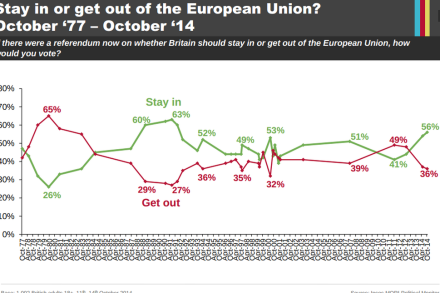
This chart, courtesy of Mike Smithson, shows Ipsos-Mori's polling on British membership of the European Union. It shows support for leaving the EU is no higher now than it was 20 years ago. I'll wager this surprises you. As you can see, there has always been a constituency for leaving the EU. Public enthusiasm for the european project has always been conditional. Despite that, the unhappiness of a known known has generally proved more attractive than the uncertainty of a known unknown. (This, ahem, is also true of certain other constitutional questions with which we have wrestled recently.) But how can this be? How can UKIP be soaring in the polls even as public support for their greatest proposal sags?

Tories reveal innovative new election strategy…

From our UK edition

It is a bold approach but, who knows, perhaps it is just crazy enough to work. I mean, what could possibly go wrong with a strategy on immigration best summarised like this: UKIP ARE RIGHT. DON'T VOTE FOR THEM. Thank heavens for Ed Miliband, eh? He's the Tories' last, best, weapon. What a cheery thought that is.

I vow to thee, my Scotland, a small number of earthly things

From our UK edition

Politics is a funny old game. I could have sworn the Yes campaign lost the Battle for Scotland in pretty decisive fashion last month. Scotland voted to remain a part of the United Kingdom. It did not vote for something that might be reckoned some kind of Independence Within the United Kingdom for the very good reason that was not the question asked. The country may not have rejected independence - and endorsed the Union - overwhelmingly but it did do so decisively. But to hear SNP and Yes supporters speak these days you'd think nothing of the sort had happened at all. They lost the war but think they have a mandate to dictate the terms of the peace. [Note to bone-headed literalists: it wasn't an actual war.

The sad but inevitable downfall of Kevin Pietersen. A tragedy in two innings.

From our UK edition

Kevin Pietersen's autobiography is the saddest book of its type I've ever read. By its end you begin to think that KP and the ECB deserved each other and realise that, a) no-one deserves that and, b) there's no way this marriage of convenience - for such it was - could ever have ended happily or with each side fondly wishing the other all the best in their future endeavours. And it was a contractual arrangement from the very start. Pietersen's book is clear about that: KP "tried too hard" to fit in with England and Englishness. He now realises South Africa is his "real home" and he should never have pretended to be anything other than "a South African with English heritage".

Boris Johnson asks voters to decide if he’s a fool or just a cynic. What a choice!

From our UK edition

Boris is at it again this morning. Revealing, that is, why he cannot be trusted with office. To be charitable, I wouldn't trust many newspaper columnists with the keys to power.  But, of course, most Grub Street residents have no interest in being crowned Emperor. Boris does. Which is why his columns for the Daily Telegraph are so troublesome. You will remember the recent occasion when he suggested the burden of proof in criminal trials be reversed. That was revealing, but in a bad way. So is today's column in which he proposes setting quotas for immigrants from other EU countries. As is so often the case you are left to wonder which is worse: Boris meaning this or Boris not meaning this but writing it anyway. Neither answer is reassuring.

Chris Grayling is an advertisement for a Labour government

From our UK edition

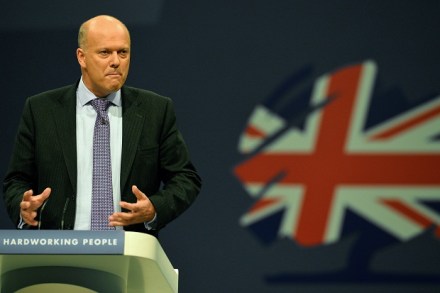
Thank heavens for Ed Miliband, eh? The leader of the opposition remains the single most compelling reason to hope the Conservatives remain in power next May. A shame, then, that cabinet ministers appear determined to promote the idea that a Labour victory would be garlanded with at least some silver promise. Chiefly, Chris Grayling would no longer serve as Justice Secretary. This is a non-trivial consideration that's worth pondering before anyone casts their ballot next May. There is some dispute over whether the Conservative's plans to rewrite Britain's human rights legislation can really deliver all they promise; some disagreement, therefore, over whether they're as dangerous as they initially appear. Is a half-baked nonsense worse than a fully-baked monstrosity?

David Cameron’s message to Britain: winter is here but spring is coming

From our UK edition

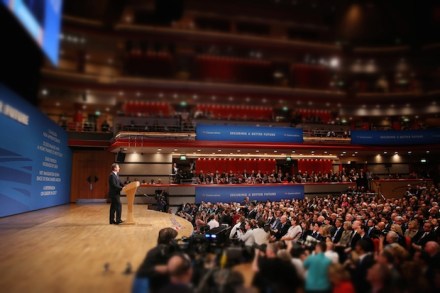
Better than Miliband is as fine a demonstration of the soft bigotry of low expectations as you possibly hope to find. Nevertheless, David Cameron's speech to the Tory conference today was better than Miliband's chat in Manchester last week. Quite a lot better, in fact. It was almost, gosh, good. listen to ‘Podcast special: David Cameron's speech’ on audioBoom True, it's not altogether clear how the promised tax cuts - for ordinary and less ordinary hard workers alike - will actually be paid for and, in the context of speech that promised no unfunded tax cuts, this might ordinarily be seen as a small problem. Presumably they will be back-loaded to come into force once the national accounts are balanced in 2018. If they are balanced by 2018, that is.

Once upon a time David Cameron had a story to tell; he needs to remember it and tell it again

From our UK edition

It is easy to inflate the importance of speeches made at party conferences. Particularly when those speeches are the last such set piece events before a general election. But they are still, in the end and at bottom, a distillation of what matters most to a leader. A guide to his priorities; a demonstration of his faith. Somewhere along the line David Cameron has lost that faith. He was elected leader of the Tory party in desperate times and became Prime Minister in dismal times. In both instances he triumphed, at least in part, because he persuaded his audience that though he might look like a traditional Tory he was in fact a rather different type of Tory from those voters had grown fond of despising. Once upon a time, you see, David Cameron had a story to tell.

ISIS are a scourge on humanity; the UK must play its part in confronting this horror

From our UK edition

Doing nothing is always an option. Sometimes it can even be a sensible policy. There is much to be said for modesty and restraint and an awareness that unforeseen consequences lurk around every corner. Even so, doing nothing has consequences too. But the United Kingdom is not going to war in Iraq again. It is not going to war in Syria either. There are two parts to the battles against ISIS: an on-the-ground war and an in-the-air police action. We are, today's vote in the Commons permitting, taking part in the latter element of the battle. A punitive action designed to make it easier for those doing the real fighting - the Kurds and others - to prevail. So let's not exaggerate the military significance of deploying half a dozen jets to hit ISIS.

Beware: Scottish Labour is a zombie party and the undead still walk

From our UK edition

David Mundell, MP for Dumfriesshire, Clydesdale and Tweeddale, is not often granted much respect. He is not a natural television performer, which does not help. He is a Scottish Conservative, which does not help either. But give him this: he predicted that the Scottish National Party would enjoy a surge of new members if Scotland voted No to independence. But what a surge it has been. The SNP has doubled its membership in a week. More than doubled it, in fact. The party now claims more than 60,000 paid-up members. To put this into some perspective, that's akin to a UK-wide party having 600,000 members. The combined membership of the Conservative and Labour parties is less than 400,000. Much less.