Alec Marsh

Alec Marsh’s latest novel, Cut and Run, is published by Sharpe Books.

Forget Dry January: give up social media instead

From our UK edition

Any moment now it will begin – and then it won’t stop for a month. Because as we enter the new year, the twin horsemen of the joyless apocalypse – the anti-booze and anti-meat lobby – pounce upon the January blues like a starved dog on the Christmas leftovers. And they are merciless. Give up drinking for the month, they’ll shout – that’ll really help you through the darkest days of the year. Or, better still, become a vegan for 30 days – oh, the horror of ‘Veganuary’ – and forgo meat, fish and dairy products at precisely the same time as almost nothing is growing out of the wintry, fallow soil in our hemisphere. Yes, that makes sense. About as much sense as asking Prince Andrew for a lecture on integrity.


York is Britain’s Florence

From our UK edition

Have you been to York? Have you sauntered along its narrow, meandering medieval streets, with their peculiar names – such as Swinegate, Lendal, Ogleforth, or Fossgate – that evoke a pre-modern age? Have you strolled up Museum Street, passing medieval walls and imposing crenellated stone gateways – known as bars for some reason, where severed heads were once displayed on spikes? Have you turned a corner in this city and suddenly found yourself confronting the enormous west façade of York Minster, soaring above you? York is magnificent, as magnificent as any medieval city in Christendom Because if you have, then you will know something about this great city – something you may not have voiced.

The timeless appeal of Clacton Pier

From our UK edition

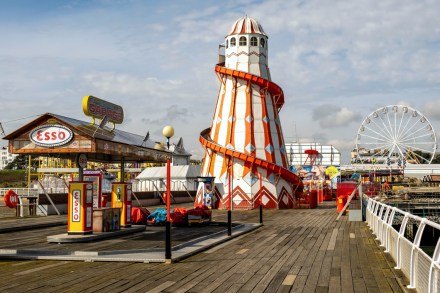
You approach the pier at Clacton-on-Sea by passing under an elegant bridge, one which in Venice you would probably stop to admire. But this is Essex and the stonework is emblazoned with the town’s coat of arms and motto, Lux, salubritas et felicitas – light, health and happiness. Here you can admire the turning blades of the 172-megawatt Gunfleet wind turbine array or the grey masses of distant container ships Those familiar with this East Coast town will know that these qualities are in pretty short supply here – the constituency in which Nigel Farage hopes to be elected the next MP. Indeed, if George Orwell were chronicling Britain’s social failures today, this would be just the place to come.

I’m a middle-aged man in Lycra – and I’m proud

From our UK edition

It began after pint of beer on a Friday evening and a grudging realisation that, well, getting a little bit more active would be no bad thing. Before I knew it, I’d talked myself into doing a 60-mile cycle through the Essex countryside the following Sunday morning – part of an organised cycle race, charmingly called the Tour de Tendring. Setting off from Harwich in a borrowed Lycra two-piece cycling outfit – looking like a human love handle mated with a mobility scooter – I set off at 8.30 a.m., pedalling into the unknown. What would give up first, my knees, the gears on my rusty old, steel-framed Dawes Galaxy or my spirits?

Penknives aren’t dangerous

From our UK edition

The company that makes the world-renowned Swiss Army penknife has decided to introduce a range of penknives that come... wait for it... without knives – citing increased regulations ‘due to the violence in the world’. It isn’t the knives that need changing, but rather the poorly-applied laws The problem is that a Swiss Army penknife without a knife isn’t a penknife, it’s a multi-tool, which is an entirely different kettle of fish (and you couldn’t possibly gut a fish with one of them – unless you’re going to unleash the corkscrew, Phillips screwdriver or tweezers on your trout). It isn’t the knives that need changing, but rather the poorly-applied laws.

Why the old are getting younger

From our UK edition

Researchers at the Humboldt University of Berlin have discovered that we no longer consider ourselves old until we’re 74. What’s more, by the time you reach 74, you think old age begins at 77. Which is something to celebrate – just don’t tell the Department for Work and Pensions or they’ll get more bright ideas about pushing back the state retirement age still further (it’s already due to rise to 68 in the 2040s already, don’t forget). Sexual selection is increasing the prevalence of neoteny – that is the retention of juvenile traits As well as perceptions, of course, the facts about our ageing society speaks for themselves: when I was born in the 1970s the median age in Britain 30. Now it’s just over 40. There are now 15.

Why we read crime fiction

From our UK edition

An exhibition dedicated to 20th century British crime fiction has opened at Cambridge University Library. The artefacts on show range widely through the history of the genre, from items associated Charles Dickens, Wilkie Collins and Conan Doyle right up to modern exponents of the form, Val McDermid and Ian Rankin.  Lurking somewhere in many of us is the awful capacity to commit the worst of crimes What’s surprising about the exhibition in a way is that it’s so relatively unusual – when, after all, was the last time you heard of a show dedicated to crime fiction? It remains the biggest seller by genre and continues to inspire some of the most popular television and film.

The irresistible horror of the farm shop

From our UK edition

Picture the scene; you’re Kate Middleton and it’s Saturday lunchtime. You’re out enjoying suburban Windsor. The Audi is safely stowed – along with hundreds of other cars mostly produced in Germany, the Czech Republic or the West Midlands – in a nearby car park the size of the deck of the USS Harry S. Truman and about as eco-friendly. The farm shop is a kind of Peppa Pig World for adults There’s a faux 1950s Citroen van-lookalike with corrugated panels from which a pair of stressed teens in brown aprons are selling overpriced macchiatos, almond lattes and stone-cold hot chocolates, to a lengthening queue of gilet-wearing mums and dads. Most of them are too busy pretending not to watch their children tormenting each other to notice they are being royally ripped off.

Are school reunions really that bad?

From our UK edition

Outside a visit to the dentist, there are few things in life as unappealing as a school reunion. That’s particularly the case when it marks an anniversary with a big number attached. In our case, 30 years. On the face of it, it’s a micro-disaster in the making. The plan is to take a hundred or so men and women – many of whom are deep in the grip, knowingly or otherwise, of a mid-life crisis – wrench them away from their daily lives and transport them back to the boarding school where they were all teenagers together. You then throw in a free bar and disco – and let them get on with it.

What critics get wrong about Zulu

From our UK edition

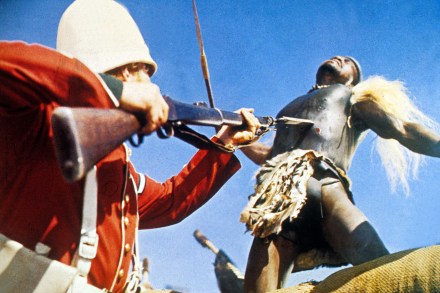
It is a great mystery how Zulu, a tale of imperial derring-do from the Anglo-Zulu war of 1879, has avoided being cancelled. On the face of it, this is a film that revels in one of the most heinous, most blood-thirsty chapters of our colonial past, one tinged with technologically enabled white supremacy. Here is a war film about 140 white Europeans who take on a Zulu force of 4,000 and defeat them, thanks largely to the rapid and orchestrated fire of short-chamber Martini-Henry rifles. (‘And a bayonet,’ as Nigel Green, as colour sergeant Bourne, puts it, ‘with some guts behind it.

Raise a glass to the age-old charm of port

From our UK edition

When Christmas comes, there are few guilt-free pleasures that match the sheer wonder of port (aside from re-watching Dr Strangelove in the wee hours on BBC2). Sweeter than a mince pie and more intoxicating than a pre-Christmas visit to your GP’s waiting room, a glass of port is guaranteed to lift your spirits. And by the time you’re onto your third, if you’re lucky, you should feel so elevated that either you’re on cloud nine or fast approaching it. It’s like the 18th century in a bottle – but the good parts of it, not the pox, the rotting teeth or gangrene That’s the joy of port. For more than 300 years, Britons have been devotees of this very special outpouring of Portugal’s Douro Valley.

It’s time to ditch the Christmas turkey

From our UK edition

This year A Christmas Carol is 180 years old, first published in December 1843. It had sold out by Christmas Eve. And it has a lot to answer for, not simply ­­because it ultimately spawned Kelsey Grammer’s Christmas Carol musical, but because it is credited with having popularised the idea of turkey as a festive staple. As you’ll recall, turkey is what Scrooge has sent to his clerk Bob Cratchit once he’s had his Damascene moment – and the idea took off. Within a few short years (1861 in fact), Mrs Beeton had declared that ‘a Christmas dinner, with the middle classes of this empire, would scarcely be a Christmas dinner without its turkey.

What Ridley Scott gets wrong about history

From our UK edition

The film director Ridley Scott says that those who worry about the historical inaccuracies in his new biopic of Napoleon should ‘get a life’. Or as the told The Sunday Times last week: ‘When I have issues with historians, I ask: “Excuse me, mate, were you there? No? Well, shut the fuck up, then.’ If you’re not careful you can end up changing history You don’t need to be Alan Bennett to cock an eyebrow at that. While I’ve not yet seen Napoleon – and I will because I’m sure it’ll be a cracker (it’s Ridley Scott, after all, and Joaquin Phoenix) – I have read about its various delusions, not least Scott’s decision to have Bony present at the execution of Marie Antoinette or ­his army firing their cannon at the Pyramids which they did not.

We need an international University Challenge

From our UK edition

As the autumn nights close in and the heating goes, there are few pleasures so improving for body and soul than half an hour spent in the company of University Challenge. Not only do you learn a bit (well, until you forget it) but nothing makes a middle-aged man or woman of a certain disposition quite so happy as knowing that they can still best a bunch of 19-year-olds when it comes to elite trivia. So here’s a thought – why do we keep this beloved split-screen televisual wunder-quiz to ourselves? Why do we hoard it? After all, we were gracious enough to give the world the blessing of football. We gave them golf. We gave them rugby. We birthed the modern Olympics. We even gave the world badminton.

Is a Great British Space Race about to take off?

From our UK edition

Brits have, for many years, taken a back seat in the Space Race, but that could soon change. An all-UK team of astronauts could soon be heading into orbit, as a result of a deal signed by the UK Space Agency and Axiom Space, an American company that organises visits to the International Space Station (ISS). If the mission gets off the ground – and that does remain a big 'if' – it will remove a stain that has marked Britain since the 1950s when we ceded our space ambitions to America. In the early days of the Space Race, there were three competing powers: the Soviets, the US and Britain. But the UK – despite successfully developing its own orbital launch capability, a rocket named Black Arrow – effectively fell out of the race before it really took off.

The joy of shaving brushes

From our UK edition

Have you ever considered the harm that men’s daily shaving regime does to the world? I know, if you considered the harm of everything you do on a daily basis then none of us would get up in the morning, but… Think of it: assuming there are three billion men in the world who each day squirt a dollop shaving foam onto their faces and each, therefore, working their way through something like four or five aerosols of shaving foam a year. All told, that means that in the region of 15 billion cans of foam are used (just for men, as the commercials, say), a proportion of which may be recycled or failing that sent to fill huge holes in Canvey Island or Turkmenistan. Fortunately, instead of Taliban-style enforced beard-growing, there is another greener solution.

A driver’s case for 20mph limits

From our UK edition

Speeding kills, we’re told. But in the right circumstances, exceeding the limit is no bad thing. Take motorways: few drivers seem to stick to 70mph, yet most journeys are perfectly safe. Indeed, when I’m behind the wheel, I like putting my foot down as much as the next driver. Fortunately in the 30 years since I passed my test I’ve been pretty lucky; I’ve clocked up two or three speed awareness courses, but somehow I’ve managed to keep hold of my licence. Yet despite my run ins with the DVLA, I firmly believe there’s a case for 20mph limits in certain areas. This new speed limit has been rolled out on residential roads in Wales and parts of London, sparking a backlash from motorists. Perhaps, though, telling motorists like me to slow down is no bad thing. Why?

Mad Max meets Mr Toad: The Morgan Super 3, reviewed

From our UK edition

When you first lay eyes on Morgan’s new Super 3 – a three-wheeled car categorised, intriguingly, as a motorbike in the US – it does take a moment to get your bearings. First, in an age when all cars essentially look the same, this one appears to be back to front. Set wide, two front wheels protrude from a bullet-shaped body which tapers off to a narrow, wasp-like tail. At first glance, it looks a bit like a 1930s Bugatti mated with a bobsleigh. But as your eyes adjust to this unconventional layout and configuration – still strange, despite the fact Morgan began making three-wheelers in the 1910s – you begin to see the wood for the trees. There is no roof, nor is there a windscreen, not really.

Why the British seaside still reigns supreme

From our UK edition

It’s the time of year to revisit one of life’s great imponderables. British seaside holidays. Why do we do them? Which other experience – save perhaps attending a British boarding school in the past – does as much to remind you of the essential unfairness of life? Forget the costs involved (if Marianna Mazzucato wants to get Britons worked up about ‘rent-seeking’ she should start with holiday cottages) we have the weather to contend with. Like gazpacho, the British seaside holiday would be idyllic if the whole thing were only 20 degrees warmer, but it just wouldn’t work There you are on the beach, having spent 15 minutes viciously applying suntan lotion to your protesting children, only to complete the task at very the point that it starts to rain.

Get ready for the petrol station renaissance

From our UK edition

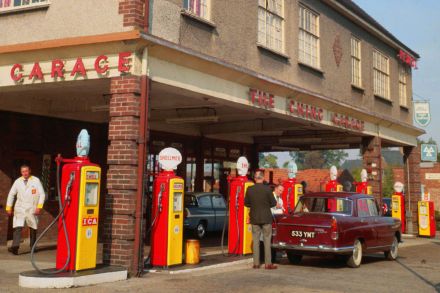
Do you have a favourite petrol station? I do. It’s a scruffy little place in East Bergholt in the wilds of north Essex. It has two elderly-looking pumps that I think have padlocks on them when no one is around. I’ve never managed to buy fuel from them, but I’m determined to before it’s too late. Where it takes about two minutes to fill up a car with petrol or diesel, even the fastest electric car chargers take 30 minutes Because with the headlong rush to buy electric cars (or EVs as they’re so romantically known) fast coming, the humble British petrol station seems under threat.