Alan Judd

Alan Judd’s latest spy novel, ‘Queen & Country’, is published by Simon&Schuster.

Hasty exit strategy

From our UK edition

For years after the rug was pulled from under it, the British Empire — with a quarter of the globe, the largest the world has known — seemed an unfashionable subject for historians. Did they fear political incorrectness, or was it simply that they had to wait for sufficient archival material to emerge? Whichever, there is now some very welcome sprouting in this part of the historical garden, already well-watered by the Cambridge historian Ronald Hyam, and few shoots could be more welcome than Calder Walton’s important contribution. Walton draws on recently released MI5 files to reveal the role of intelligence in the transitions from colony to independent state.

A narrow escape

From our UK edition

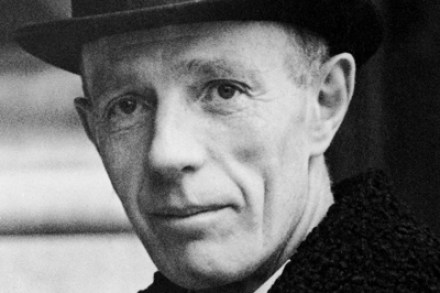
C.J. Sansom is deservedly famous for his Shardlake crime novels, featuring a 16th-century lawyer on the fringes of the court. But he has also written two successful novels with 20th-century political themes. The first, Winter in Madrid, is a compelling evocation of Spain in 1940. His latest, Dominion (Mantle, £18.99), is set in Britain in 1952. But not the Britain we know; rather, one that made peace with Germany in 1940, with Halifax (pictured) rather than Churchill becoming prime minister, succeeded by the aged Lloyd George (an admirer of Hitler) and then Beaverbrook. By 1952 Britain has fallen increasingly under Nazi dominion, elections have been suspended and the opposition — led by Churchill, Attlee, Macmillan and Bevan — has been driven underground.

An exhausting mixture of boredom and concentration

From our UK edition

The wartime code-breaking successes of Bletchley Park are deservedly well known.  The story of how they decrypted German and Japanese codes, most famously the Enigma, has been the subject of histories, novels and films, so much so that Bletchley is glamour. Much less well known, however, and much less glamorous — rarely even thought about — is the story of how those clever cryptologists got the coded radio signals they worked on. Where did their daily and nightly fodder come from?  It certainly wasn’t from sticking an aerial in the attic and waiting to see what came out of it.

The English inquisition

From our UK edition

Early on in this fascinating history Stephen Alford makes an important point: because Elizabeth I and the settlement between monarchy, church and state survived, because the threat of foreign invasion was thwarted or failed to materialise, and because the sense of national identity fostered by the Tudors proved robust, we see that first Elizabethan age as a confident and assured success story. But to those involved it was far more precarious, with victory anything but assured and survival a daily challenge. Alford dramatises this by imagining Elizabeth’s assassination in St James’s Park, followed by invasion by the superpower, Spain.

Downton for adults

From our UK edition

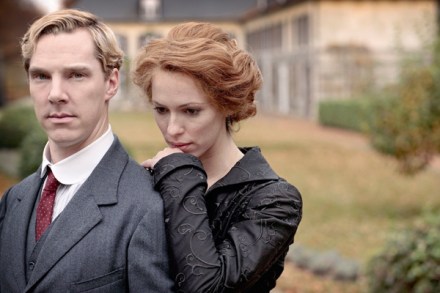
For five weeks from 24 August BBC2 is doing a brave thing: serialising Parade’s End, Ford Madox Ford’s quartet of first world war novels. Arguably the first great modernist English novel and, according to Graham Greene, the greatest novel in English to come out of that war, this £12-million project is a brave thing to do for three reasons: it is the world of Downton but not Downton. It is not what we expect of war novels. And it was written by Ford Madox Ford. Ford Madox who? is the response that anyone writing about Ford has come to expect. He’s often confused with the Pre-Raphaelite painter Ford Madox Brown, his maternal grandfather, or even with Henry (no relation).

Mission accomplished

From our UK edition

Two shots killed Osama bin Laden, one in his chest and one in his left eye. ‘Two taps’ is standard practice for close-quarter shootings — firing twice takes virtually no longer than firing once and you increase (without quite doubling) your chance of an instant kill. He was in his top-floor bedroom, in the dark, and his killers wore night-vision goggles. He died 15 minutes after the first sounds of attack — the roaring of helicopters, the crash-landing of one outside the compound, the blowing of a steel door in the wall. During those fateful 15 minutes he waited with one of his wives in the pitch black of that small room, paralysed perhaps by fear or indecision and hampered by the design of his house.

Ways of making men talk

From our UK edition

Eric Rosenbach is a former academic who is now deputy assistant secretary of defence in Washington. Aki Peritz used to work for the CIA and now advises the Third Way think tank. Their book, therefore, is not a breathless account of terrorist-hunting nor the sensational inside story of how, in Obama’s words, ‘We got him’ (bin Laden). Rather, it is an exposition of legal, bureaucratic, political and military developments within the US following 9/11, illustrated by summaries of how various terrorists were killed or captured. If you want thrills and spills, go elsewhere, but if you are a student of counter-terrorism or are interested in the legal limbo of rendition, detention and targeted killings, you should probably read it.

Motoring: Snow patrol

From our UK edition

The American poet Robert Frost wrote memorably of pausing on his pony in the snow and looking longingly into woods that were ‘lovely, dark, and deep’, regretting that he had promises to keep and ‘miles to go before I sleep/And miles to go before I sleep’. In another poem he described a woodland path as the road not taken; instead, he took ‘the one less travelled by/And that has made all the difference’. I felt he was with us in spirit in Finland last week as I gazed into the mysterious depths of snow-clad, brooding conifers and wondered at the fragile, frost-feathered glory of a birch wood.

Motoring: Value for money

From our UK edition

The concept of cheap and cheerful appeals for the obvious reasons: the prospect of something-for-(nearly)-nothing; the assumption that it does exactly what it says on the tin; the lack of pretentiousness — suggesting that its owner is also virtuously free of that forgivable vice — and the freedom from burdensome excess. However, the assumption that cheap and cheerful go naturally together is about as accurate as the identification of poverty with virtue: occasionally yes, often no. It’s different with cars — at least, it is now. Hitherto cheap cars were often shoddily assembled from poor materials by workers who didn’t care and managers who failed to manage all but their pension funds. They were rusting before they left the factory.

Bookends: The year of living dangerously

From our UK edition

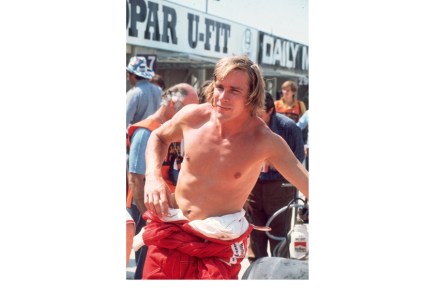
Most people who recall 1976 do so for its appallingly hot summer, when parks turned brown and roads melted. Some will also remember that the celebrity culture throve then as now and that none was more celebrated than James Hunt, Formula One world champion. He was even more celebrated than that most famous soap opera, the marriages of Richard Burton and Elizabeth Taylor; Hunt, who had a natural gift for celebrity, contrived to yoke theirs to his by handing his wife to Burton, who divorced Taylor to marry her. The two men remained good friends. A few others will remember 1976 for the nature of Hunt’s triumph that year, his dual with the reigning world champion, Niki Lauda, and his last second victory by one point.

Motoring: Fashion statement

From our UK edition

In The Spectator of 27 August I reviewed the new Range Rover Evoque despite not having driven it; a narcissistic exercise to see how accurately I could predict my own impressions. Having now spent a week with it, I can proudly proclaim that I passed my self-set, self-assessed test handsomely, albeit not quite with an A*.    I predicted that, although no bigger or more powerful than a Ford Focus, the Evoque would perform like a proper 4X4 SUV but with car-like handling and an interior that makes you feel better about life as soon as you get in it. It would be neater and nippier than the usual Land Rover product, an engaging, socially acceptable Chelsea tractor that could do for Jaguar Land Rover what the Mini did for BMW.

Motoring: Extreme driving

From our UK edition

One week, two convertibles. The first, a 40-year-old held together by rust, with doors so warped I’ve taken them off, the windscreen secured by baler twine to keep out the rain when it stands but removed when we go anywhere, no lights, free road tax, cheap insurance, and a first-time starter that does all you ask of it, eventually. Neither old enough to be interesting nor rare enough to be valuable, it is of course my tractor, a Universal, a Romanian Fiat built under licence. It belonged to my father and I paid the man who bought his farm £200 for it. It is massively overengineered and quite wonderfully slow.

Motoring: Question of speed

From our UK edition

I should have used the Discovery 3 to tow an ancient and heavy horse-trailer loaded with well over a ton of logs. Its V6 direct-injection diesel, with plenty of low-end torque, would have smiled; in low ratio first, on rough ground, it pulls it on tickover. But I felt it was time the 39-year-old Series 3 Land Rover — 2,286cc petrol, straight four — had a run-out. All went swimmingly — if snails can swim — until the last hill before home, half a mile of steeply ascending bends. I had hoped to do it in second — the queue behind already stretched out of sight — but by the last bend that valiant old engine was losing breath.

Motoring | 24 September 2011

From our UK edition

The imminence of paying for a 17-year-old to learn to drive brings with it the unwelcome question of insurance. Rather more welcome is recent publicity about insurance revealing yet another conspiracy against the consumer. Some premiums have jumped by up to 40 per cent. The reason usually given — uninsured drivers for whom we all end up paying — is only part of the story, and not the major one. That honour goes to the automotive ambulance-chasers, the scam whereby accident management companies and credit hire operators are in league with insurance brokers — all three sometimes owned by the same private equity company.

The human factor | 17 September 2011

From our UK edition

Accounts of the secret world usually fall into one of two camps, the authoritative or the popular.  The authoritative — such as Christopher Andrew’s history of MI5 and Keith Jeffery’s of MI6 — are officially sanctioned, based on the file record and reliable. They are incomplete because, inevitably, there are episodes the authors are not (yet) permitted to publish, and Jeffery’s ends anyway in 1949. The popular accounts, which invariably claim to be complete and uncensored — and never are — tend to be drawn partly from the National Archive, partly from anonymous retired officials and partly from other popular accounts, some by disaffected former employees.

Motoring:  Feel-good factor

From our UK edition

 Feel-good factor The sloping rear roof-line, especially in white, prompted comparisons with a squashed fag packet. It’s a profile that’s supposed to appeal to younger owners. When I first saw it, lowered from the heavens by a crane during a preview party at the Orangery in Kensington Gardens, I wasn’t convinced. But I’ve a poor record at predicting future taste — I thought the Mercedes 190/C Class would never catch on, that the Jaguar S-Type would — and early indications are that I’ve got it wrong again. The car has garnered more than 20,000 advance orders and when Autocar did a photo shoot in New York a passer-by crossed the street to say, ‘I don’t know what it is but I need to know where I can get one.

The ne plus Ultra

From our UK edition

The story of Bletchley Park, MI6’s second world war code-breaking operation, has grown with the telling since the early 1970s accounts — although, as Briggs points out, Bletchley’s first public disclosure was in Time magazine in December 1945. The story of Bletchley Park, MI6’s second world war code-breaking operation, has grown with the telling since the early 1970s accounts — although, as Briggs points out, Bletchley’s first public disclosure was in Time magazine in December 1945. In recent years it has become the stuff of fiction, film and feature, and almost anyone who was there and is still alive is guaranteed a publisher.

Motoring: Simple love

From our UK edition

I recently met a gentleman of Dorset who kindly showed me his car collection. It included an Austin Champ, the Jeep look-alike in service with the military 1954–66. Originally intended as an alternative to the Land Rover, it couldn’t hack it alongside Solihull’s finest — less adaptable, less reliable, more complex, twice as expensive. Yet it is now something of a cult car. It’s a big butch bruiser, with a high bonnet like a shaven head about to butt you. Rigorously utilitarian, many examples were shorn of any comfort or convenience (roofs, windows, doors) but they sprouted plenty of extras, including mountings for your .303 Vickers or .30 Browning.

Bookends | 16 July 2011

From our UK edition

I like books with weather and there’s plenty in this one, all bad, which is even better. Set in London during a cold winter, Blue Monday (Penguin, £12.99) is the first of a new series for Nicci French, the successful husband and wife author team. I like books with weather and there’s plenty in this one, all bad, which is even better. Set in London during a cold winter, Blue Monday (Penguin, £12.99) is the first of a new series for Nicci French, the successful husband and wife author team. The central character is a consultant psychoanalyst called Frieda Klein, and the plot revolves around identity and identity transfer.

Blue Monday

From our UK edition

Alan Judd has written the Bookends column in the latest issue of the Spectator. Here it is for readers of this blog: I like books with weather and there’s plenty in this one, all bad, which is even better. Set in London during a cold winter, Blue Monday is the first of a new series for Nicci French, the successful husband and wife author team. The central character is a consultant psychoanalyst called Frieda Klein, and the plot revolves around identity and identity transfer. The first 40-odd pages are a kaleidoscope of scenes and points of view, which make it read as if written for the small screen (Nicci French has been successful there, too), but once we settle down with Frieda the story picks up and gathers pace all the way to the end.