Adam Creighton

Getting it wrong on higher education

From our UK edition

Dynamic New Labour always talks about the so-called "skills crisis"; the "need" for more funding for higher education. But we mustn’t forget that blunt spending increases for higher education may encourage an ever-larger proportion of the population to stagnate in courses that will neither teach them anything particularly useful nor improve their chances of finding employment. Worse, there may already be a tendency - even without government subsidy – for people to get too much education. I look at these concerns in a US context in a piece for the American Spectator. The issues, however, are universal. Last week the Brown government made a classic false economy with higher education spending.
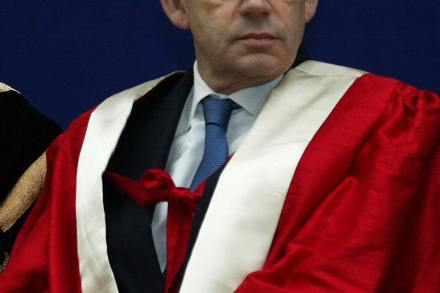

Why save?

From our UK edition

The Chancellor made much today about the government’s attempt to encourage saving. But with up to 40 per cent of people’s income taken away from them before they even get to see it (PAYE and NI) and another 18 and a half per cent of it taken away again when they spend it (VAT), what’s left to save with? It is little wonder that the household saving ratio is now under 4 per cent.  Meanwhile, all the big issues in life have progressively been taken out of our hands since the War: social security, health, education. (Darling even proudly announced today the building of 70,000 new homes—should the government really be in the business of building our homes?).

Darling’s regressive tax increases

From our UK edition

With the tax hike on alcohol and cigarettes, Labour, supposedly the party of working people, is effectively increasing taxes on the poor as a much larger proportion of poorer people’s incomes are spent on alcohol and cigarettes. Every economist knows that these kinds of tax increases are regressive.   The public health argument for these tax rises is dubious in the extreme. Alcohol and cigarettes are already prohibitively taxed and price increases like today’s are unlikely to deter anyone who enjoys a regular smoke or a pint. Rather, the tax will result in a direct transfer of wealth from drinkers’ pockets to government coffers.   Smoking and drinking can produce unfortunate social results.

Debt-ridden Britain

From our UK edition

Despite the sophistry of the Budget speech, the fact remains that Britain—after 10 years of solid economic growth—still has an enormous stock of debt, around 40 per cent of GDP. Moreover, it’s growing; this year there will be another £15 billion of borrowing to fund a bloated and enormous state. Darling made many comparisons to the state of British finances in the 1980s and early 1990s, but these comparisons through time are completely unfair given the different state of the economy then. The more relevant comparison is to that of other governments since Labour came to power.

A fixed rate fix

From our UK edition

Darling banged on about how the government would encourage or facilitate the growth of a long-term, fixed-rate mortgage market for home buyers, especially first time buyers. Reviews and committees are apparently to be set up to examine this product in more depth. London is, probably, the world centre of new financial product development and it seems odd that such products would not have been developed and marketed already if they were economically feasible. The likely reason they have not is that fixed rate mortgages are more expensive than variable rate mortgages: someone has to bear the risk of underlying interest rates moving around, either the bank or the borrower.

Taxing the patience of business

From our UK edition

The Chancellor’s claim that his Budget provides a stable tax regime for business is absurd. Far from providing a stable tax regime, Labour has repeatedly tinkered with the system, increasing confusion and weighing down businesses with paper work, retarding business creation. The government has changed corporate tax rates in seven of its 11 years in office. Such constant fiddling has more to do with looking dynamic than any desire to provide a sensible tax policy. And don’t be under the impression that there is a single rate of corporate tax: that would be much too simple! The government currently treats companies like people and taxes them more as they earn more. Apparently, Labour’s business-friendly ethos extends to taxing companies more for being successful.