Who’s afraid of bitcoin?
In association with BitMex.
Gangsters’ paradise?
Washing a million crisp, cocaine-tainted banknotes is no easy feat these days. Walk up to a teller and attempt to deposit them in a bank and there’s a good chance you’ll be turned away and the police called. You could, I suppose, call Saul, your friendly diamond dealer, and try to wash your ill-gotten gains through precious stones, but fencing those diamonds at close to what you paid for them will prove immensely difficult. Although ‘bitcoin facilitates money laundering’ is a common refrain, enlightened ‘hodlers’ — as people who own bitcoin for the long term are known — understand that it’s a terrible way to launder money. For a start, bitcoin transactions are recorded on an open public ledger.

The wildmen of bitcoin: that’s right, not all money men wear suits
Bitcoin, we’re told endlessly, is both the currency of choice for tax-dodging criminals and a vehicle to instant wealth for incautious dreamers (who in reality are destined to lose their money). But that’s not how many of the entrepreneurs who have latched onto it see things. There’s a kind of utopian ideology emerging from crypto-currencies. If the archetypal internet pioneer was a ponytailed nerd in a T-shirt who believed in the liberalisation of information and free fruit juice for all, pioneers of bitcoin are more likely to be found in surplus army gear, coveting some obscure corner of the globe as their own little micro-state where like-minded people can escape the oppression of the traditional nation-state.


Beyond democracy: could seasteads and cryptocurrencies replace the nation state?
For the past 20 years I’ve been working to enable start-up societies: permanent autonomous zones on land or at sea intended to accelerate economic development and to serve as laboratories for voluntary political experiments. For just as long (in fact since I first read The Sovereign Individual), I’ve been interested in the potential of digital cash, which is finally arriving in the form of bitcoin and the emerging cryptocurrency industry. Start-up societies and cryptocurrencies have many parallels. Both grew from individualist movements seeking ways to take their philosophy from online message boards to the real world. Both seek to decentralise power in order to disrupt traditional institutions seen as having been captured by selfish elites.

Breaking the bank | Who’s afraid of bitcoin?
Sam Reed, 29, is co-founder and chief technology officer of the Bitcoin Mercantile Exchange (BitMEX), the largest crypto trading platform, and the 26th-largest exchange of any type in the world. His story — of how he went from itinerant web developer to co-founder of what some have called the ‘Goldman Sachs of bitcoin’ — is both inspiring and a bit jealousy-inducing. Living, he says, a relatively quiet life in Hong Kong in 2014 after trying, and failing, to launch a series of internet start-ups (‘I was doing a ticketing start-up to compete with Ticketmaster, which is kind of a dumb thing to do’), he started giving workshops and presentations to aspiring web developers. One of these presentations changed his life.
The problem bitcoin solves
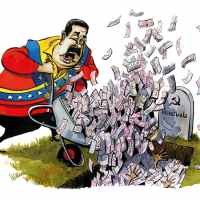
Paul Krugman, blogger, fiat-currency enthusiast and winner of the Nobel Prize in Economics earlier this year justified his scepticism about cryptocurrencies in the New York Times. He asked readers to give him a clear answer to the question: what is the problem cryptocurrency solves? He wrote: ‘Governments have occasionally abused the privilege of creating fiat money, but for the most part governments and central banks exercise restraint.’ He added that, unlike bitcoin, ‘fiat currencies have underlying value because men with guns say they do. And this means that their value isn’t a bubble that can collapse if people lose faith.’ Case closed, apparently.

All change: is the bitcoin revolution coming?
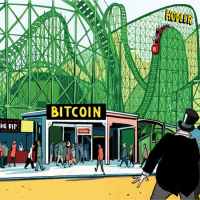
An elaborate scam for ripping off gullible investors. A black-market currency for gun-runners, drug dealers, pimps and terrorists. A bubble that makes a 17th-century Dutch tulip look like a solid investment, and a drain on global energy. There are so many different ways the digital currency bitcoin is going to destroy the world it’s sometimes hard to keep track of them all. Everyone from Warren Buffett to Mark Carney has told us bitcoin is a serious threat to financial stability and any sane person should stay away. True, there are plenty of reasons to be suspicious of bitcoin. It’s volatile, complicated and largely unregulated. But given the appetite that clearly exists for it (market capitalisation at the time of writing was £85.
Editor’s letter | Who’s afraid of bitcoin?
It wasn’t so long ago that only the most committed bores spoke of money in abstract terms: money as a mere ‘concept’ (the rest of us got on with earning it). Today, that’s not the case. Thanks to bitcoin, everybody seems to have accepted money really is just an idea, one that in its current, government-controlled form might be due an upgrade. Last year, bitcoin came — seemingly out of nowhere — to dominate financial news for what felt like months, forcing a re-evaluation of traditional notions of value and currency. The world watched as the price of a single bitcoin tore ever upwards, hitting a peak in December of £14,354.