Young people

The ‘boring twenties’, population decline & happy new year

From our UK edition

35 min listen

A far cry from the ‘roaring twenties' of the early 20th Century, the 2020s can be characterised as the ‘boring twenties’, argue Gus Carter and Rupert Hawksley in our new year edition of the Spectator. Record numbers of young people are out of work but even those with jobs face such a dire cost-of-living situation that they have no money left over to spend on fun. Traditional cultural outings – like going to the theatre – are increasingly confined to older, richer generations. This is long-standing issue, but compounded by Labour’s economic policies. A slightly downbeat start to the new year here at the Spectator, but at least the episode provides a free dose of fun.

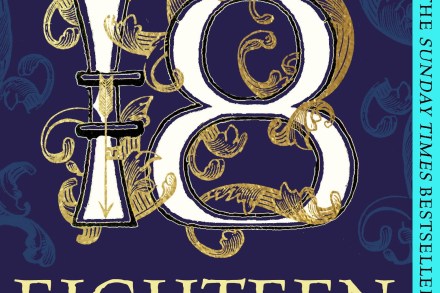
Alice Loxton: Eighteen – A History of Britain in 18 Young Lives

From our UK edition

40 min listen

My guest on this week’s Book Club podcast is the historian Alice Loxton, whose new book Eighteen: A History of Britain in 18 Young Lives is just out in paperback. In it, she tells the story of the early lives of individuals as disparate as the Venerable Bede and Vivienne Westwood. On the podcast, Alice tells me about Geoffrey Chaucer’s racy past, what Bede was like before he was venerable, and why her editor wouldn’t let her take her characters to Pizza Express. She also reassures me that – in a post-Rest is History world, where history is more exciting and accessible than ever – there is still a place for the fusty old historians.

On embracing the winter years

Batavia, New York I sit in hospice at the bedside of my beloved Aunt Jane — who never let us use the honorific, as “Aunt” made the perennially youthful Jane feel old — and the jukebox in my mind plays its saddest song: “Who Knows Where the Time Goes?” by Fairport Convention. Jane, who is eighty-nine and till a few weeks ago looked twenty-five years younger, was my hip and happening aunt of the 1960s who lived in Buffalo and dated pro athletes and bopped along to WKBW’s Top 40. She taught my brother and me to write letters, which is why I still have an autographed photo of Minnesota Vikings kicker Fred Cox, and my brother has his signed picture of Rams quarterback Roman Gabriel.

years

Young and jobless: Is the government letting down China’s Generation Z?

From our UK edition

32 min listen

Hidden in March’s GDP figures was a shocking statistic – a fifth of Chinese 16 to 24 year olds are out of work. This is a near record high, and the economic background to a fresh wave of disillusionment among China’s young. It has led to the creation of a new meme – you’ve heard of lying flat, but young people are now comparing themselves to a Republican-era literary character, Kong Yiji. On this episode, I'm joined by the journalist Karoline Kan, author of Under Red Skies: The Life and Times of a Chinese Millennial. We talk about the Kong Yiji trend, why prospects are so thin for the most educated Chinese generation, and what this all means for the government's claims to economic competence.

Embrace the gerontocracy

America is a young nation — and young at heart. Our national ethos is centered on those four words in the Declaration of Independence, “the pursuit of happiness.” In order to pursue anything, you need a certain vigor. America had vigor even before the youth culture of the Sixties revolutionized how we thought about age. That decade ushered in the famous slogan “don’t trust anyone over thirty.” We’re not nearly so politically incorrect now, but the mentality still holds. America is forever prodding and poking its young, waiting for some wellspring of Talmudic wisdom to come gushing forth. What does Gen Z think?! Gen Z would just like to finish high school, thank you very much.

gerontocracy

Young people have never paid attention to the BBC

From our UK edition

In January, the director-general of the BBC, Lord Hall of Birkenhead, announced that the corporation intended to shift away from making programmes enjoyed by older members of the public to concentrate on the ‘lives and passions’ of young people, in particular 16- to 30-year-olds. Of course Hall was not the first BBC employee to take an obsessive interest in young people, and nor was his mantra anything other than the norm in a country where older people, who are comparatively well off, pay their taxes, commit little crime, consume like crazy and indeed pay the licence fee, are held in a certain contempt. A month before Hall made his statement, the BBC had devoted considerable airtime to yoof and its wants, needs and aspirations regarding the general election.